Regulatory Landscape: Why Pretreatment Compliance Is Non-Negotiable in 2026
Mining and metals plants near Veedersburg meet sewer pretreatment limits by characterizing wastewater acidity (pH 3.1–4.6 typical), dissolved metals (iron, arsenic, manganese), and suspended solids, then running a three-stage pretreatment train. This system sequence utilizes pH adjustment to circumneutral levels (6.5–8.5), chemical coagulation to aggregate metal hydroxides, and solids removal via flotation or filtration. Under 40 CFR 403, the Indiana Department of Environmental Management (IDEM) and EPA enforce these standards. EPA’s National Enforcement Initiative targets pass-through and interference violations, levying civil penalties up to $385,000 alongside mandatory equipment upgrades.
EPA’s National Enforcement Initiative entitled Keeping Industrial Pollutants out of the Nation’s Waters explicitly targets mining and primary metals manufacturing facilities for pretreatment violations under federal law (Williams Mullen, 2017). Federal regulations under 40 CFR 403 strictly prohibit industrial discharges that cause "pass through" (contaminants passing untreated through the Publicly Owned Treatment Works into receiving waters) or "interference" (discharges that disrupt POTW biological treatment operations or sludge disposal). In addition to flow rate restrictions, industrial facilities must strictly adhere to federal pH prohibition standards (typically prohibiting discharges with a pH lower than 5.0) and maintain immediate slug loading notification protocols (Williams Mullen, 2017).
The financial and operational consequences of non-compliance are severe, as illustrated by the federal Clean Water Act enforcement action against EMD Millipore Corp. (Williams Mullen, 2017). In that case, periodic pretreatment violations between 2011 and 2015 introduced excess organic waste, cBOD, and ammonia nitrogen into the receiving municipal system, causing pass-through and interference. The resulting federal consent decree mandated a $385,000 civil penalty, compulsory wastewater treatment system upgrades, annual operator training, and ongoing quarterly monitoring (Williams Mullen, 2017).
In Indiana, the Indiana Department of Environmental Management (IDEM) administers the federal pretreatment program under 40 CFR 403. While local POTWs serving Fountain County and surrounding municipalities issue individual industrial user permits under local sewer use ordinances (SUO), EPA retains direct concurrent enforcement authority. A facility cannot rely on informal POTW agreements; compliance with local numerical limits, written slug control plans, and formal reporting is federally enforceable.
Characterizing Mining/Metals Wastewater in the Veedersburg Region
Characterization data from coal region mining discharges geochemically analogous to Indiana coal measures shows raw acid mine drainage (AMD) exhibits pH levels between 3.13 and 4.58 (OSMRE, 2023). Mining, ore washing, metal refining, and equipment maintenance operations generate streams heavily laden with acidity, dissolved heavy metals, and suspended mineral particles (Genesis Water Technologies, 2023). Understanding the raw matrix is essential to engineering an effective pretreatment process prior to POTW release.
Dissolved metal concentrations in regional mining streams present significant compliance challenges. Research by the Office of Surface Mining Reclamation and Enforcement (OSMRE, 2023) evaluated representative mine drainage sources containing 10 mg/L to 60 mg/L of dissolved iron (Fe) and up to 10 mg/L of dissolved aluminum (Al). Metalloids such as arsenic and manganese are also routinely present in untreated mining process water (Genesis Water Technologies, 2023). When these metals discharge to a POTW without pretreatment, they inhibit nitrifying bacteria in municipal activated sludge systems and accumulate in municipal biosolids.
Process streams may also exhibit brackish characteristics, elevated total dissolved solids (TDS), and high total suspended solids (TSS) (Genesis Water Technologies, 2023). While net-alkaline municipal wastewater can neutralize limited acidity when co-treated, industrial facilities discharging directly into municipal sewers must provide complete on-site treatment to meet local sewer use ordinance limits. Sizing a compliant system requires rigorous characterization across several key design parameters to fulfill IDEM and local POTW permit applications.
| Wastewater Parameter | Raw Mining/Metals Stream Range | POTW Pretreatment Target / Significance |
|---|---|---|
| pH | 3.13 – 4.58 (OSMRE, 2023) | 6.5 – 8.5 (Prevents pipe corrosion & biological inhibition) |
| Dissolved Iron (Fe) | 10 – 60 mg/L (OSMRE, 2023) | < 3.0 – 5.0 mg/L (Prevents oxygen demand & sludge fouling) |
| Dissolved Aluminum (Al) | < 0.5 – 10 mg/L (OSMRE, 2023) | < 1.0 – 2.0 mg/L (Prevents toxicity to POTW biomass) |
| Suspended Solids (TSS) | High / Variable (Genesis Water Tech, 2023) | < 250 mg/L (Avoids POTW surcharge fees & line clogging) |
| Oil & Grease / FOG | Variable (Equipment washing) | < 100 mg/L (Prevents sewer line blockage & DAF interference) |
Three-Stage Pretreatment Train: pH Adjustment → Coagulation/Flocculation → Solids Removal
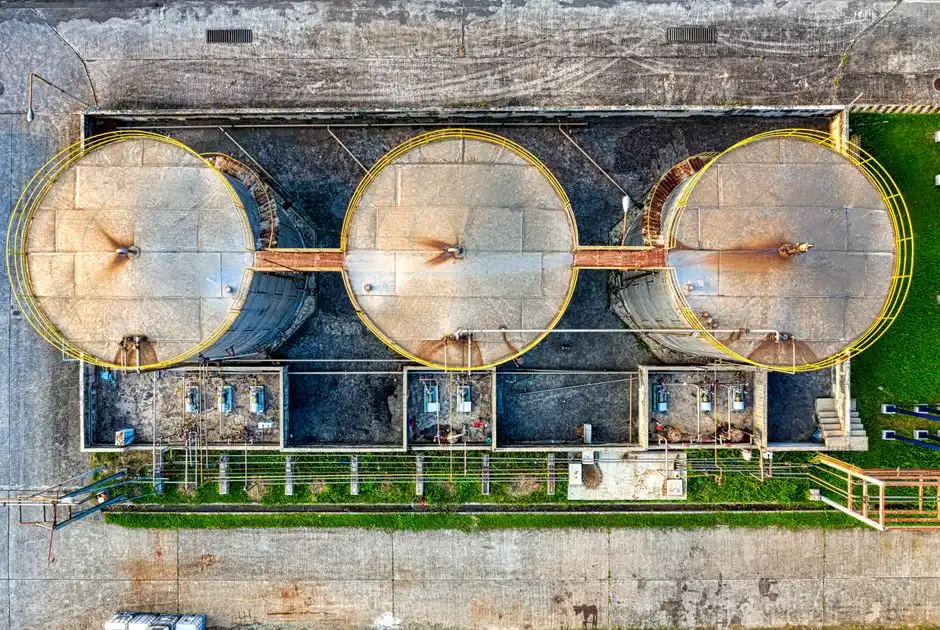
Experimental co-treatment data from the Office of Surface Mining Reclamation and Enforcement (OSMRE, 2023) demonstrates that blending acid mine drainage with alkaline wastewater at a 10% ratio raises effluent pH to 7.44–8.27 within 2 hours of settling. To achieve consistent compliance without relying on POTW dilution, mining and metals facilities utilize a standardized three-stage physical-chemical pretreatment train designed for high metals and solids loading.
Stage 1 — Neutralization and Metal Hydroxide Precipitation: Raw process water flows into a primary reaction tank where alkaline reagents—such as sodium hydroxide (caustic soda), calcium hydroxide (hydrated lime), or sodium carbonate (soda ash)—raise the pH from acidic levels (3.1–4.6) to circumneutral (6.5–8.5). Raising the pH converts soluble trivalent and divalent metal cations (Fe³⁺, Al³⁺, Mn²⁺) into insoluble metal hydroxide precipitates (Genesis Water Technologies, 2023). Installing continuous PLC-controlled chemical dosing for pH adjustment and coagulation maintains closed-loop feedback control, buffering against sudden acidic slug loads.
Stage 2 — Chemical Coagulation and Flocculation: Precipitated metal hydroxides form fine pin-floc particles that settle slowly. Inorganic coagulants such as ferric chloride, aluminum sulfate (alum), or polyaluminum chloride (PAC) are rapidly mixed to neutralize surface charges on colloidal solids. High-molecular-weight anionic or cationic polymers are then added in a slow-mix flocculation zone to bridge small particles into dense, fast-settling flocs. Research demonstrates that sweep coagulation at elevated iron and aluminum concentrations aggregates fine organics, reducing ultimate biochemical oxygen demand (BOD) by up to 40% prior to secondary treatment (OSMRE, 2023).
Stage 3 — Physical Solids Separation: Clarification separates aggregated metal hydroxides and suspended solids from the liquid stream. High-rate separation options include using industrial DAF systems for high-efficiency solids and FOG removal across flow rates from 4 to 300 m³/h, or compact lamella clarifiers with 30% chemical savings operating at surface loading rates of 20 to 40 m/h. For stringent discharge limits, downstream multimedia filtration for polishing pretreated effluent removes residual fine suspended solids. Variable particle loads up to 2000 microns can also be managed using specialized media backwash filters or centrifugal separators (Genesis Water Technologies, 2023). Similar physical-chemical treatment strategies are documented in a Stillwater-area mining pretreatment case study and a regional Hyden mining pretreatment compliance guide.
| Treatment Stage | Primary Chemical / Mechanism | Target Parameters & Performance |
|---|---|---|
| Stage 1: pH Adjustment | NaOH, Ca(OH)₂, or Na₂CO₃ dosing | Adjusts pH from 3.1–4.6 up to 6.5–8.5; converts metals to hydroxides (OSMRE, 2023) |
| Stage 2: Coagulation & Flocculation | FeCl₃ / PAC + Anionic Polymer | Aggregates pin flocs; sweep coagulation cuts ultimate BOD up to 40% (OSMRE, 2023) |
| Stage 3: High-Rate Separation | DAF, Lamella Clarifier, Media Filter | Removes TSS >95%, handles 20–40 m/h loading (Genesis Water Tech, 2023) |
Technology Selection Matrix: Matching Equipment to Your Wastewater Profile
Dissolved air flotation units processing mining effluent cover hydraulic throughput capacities from 4 to 300 m³/h across standardized skid configurations. Selecting the appropriate primary separation equipment depends on hydraulic flow, solids concentration, presence of free or emulsified oils, and footprint availability.
Facilities handling light mineral solids, oils, or variable greasy scum benefit from DAF technology, which uses micro-air bubbles to float aggregated solids to the surface for continuous skimming. Conversely, operations with high-density metal hydroxide solids and predictable flows achieve optimal performance using lamella plate clarifiers. Lamella units utilize inclined plate packs to achieve surface overflow rates between 20 and 40 m/h, reducing equipment footprint by up to 80% compared to conventional circular clarifiers while cutting chemical demand by up to 30%.
When municipal POTW permits establish strict TSS limits (e.g., < 30 mg/L) or when pretreated effluent is targeted for internal plant washwater reuse, granular multimedia pressure filters provide secondary polishing. If complete organic removal and high-purity water recycling are required, plant managers can review an MBR versus conventional comparison for mining wastewater. Membrane bioreactors achieve effluent filtration below 1 micron and reduce footprint by 60%, though they incur higher operational costs and require stringent membrane fouling controls.
| Technology | Optimal Stream Profile | Hydraulic / Loading Capacity | Key Operational Benefit |
|---|---|---|---|
| Dissolved Air Flotation (DAF) | High FOG, variable TSS, light flocs | 4 – 300 m³/h (13 standard sizes) | Handles variable scum & low-density solids efficiently |
| Lamella Clarifier | High-density metal hydroxides, high flow | 20 – 40 m/h surface loading | Small footprint; reduces chemical usage up to 30% |
| Multimedia Filtration | Low TSS polishing, downstream RO feed | Standard pressure vessel ratings | Automated backwash; consistent sub-10 micron removal |
| Membrane Bioreactor (MBR) | High-purity reuse, stringent organic limits | Effluent filtration < 1 µm | 60% footprint reduction; complete solids separation |
Slug Control, Monitoring, and Permit Renewal: Staying Compliant Year-Round
Clean Water Act enforcement actions mandate that industrial dischargers maintain formal slug control plans, conduct at least quarterly wastewater monitoring, and perform annual operator training (Williams Mullen, 2017). Operating a physical-chemical pretreatment train requires ongoing administrative and operational rigor to maintain compliance under IDEM oversight.
Industrial user permits issued under 40 CFR 403 require facilities to prevent slug loadings—defined as any discharge of a non-routine, episodic nature, including accidental spills or sudden batch dumps of concentrated acidic or metal-laden solution. As shown in the Millipore enforcement action, failing to notify the POTW immediately upon discovering a slug loading constitutes a severe violation resulting in federal penalties (Williams Mullen, 2017). Facilities must install continuous inline pH and flow monitoring instruments tied to automatic diversion valves that route out-of-spec wastewater into an offline equalization or spill basin.
Permit renewal cycles typically occur every five years through the local POTW or IDEM. To ensure smooth renewal, plant engineers must maintain complete record-keeping, including daily chemical consumption logs, continuous pH/flow telemetry data, certified laboratory analytical reports, chain-of-custody documentation, and hazardous sludge disposal manifests. Integrating automated chemical dosing, continuous instrumentation, and comprehensive operator training guarantees reliable year-round compliance for mining and metals operations across Indiana.
Frequently Asked Questions
What capital budget inputs should an engineer request when pricing a 50 m³/h mining pretreatment skid?
Because equipment costs vary based on metallurgy, automation level, and exact raw water chemistry, buyers should avoid relying on estimated budget numbers. Buyers should request vendor proposals specifying structural materials (e.g., 304 vs 316L stainless steel for acid resistance), skid dimensions, integrated dosing pump counts, motor power requirements, and PLC control panel specifications. Requesting an itemized bill of materials for the reaction tanks, chemical skid, separation unit (DAF or lamella), and control system provides an exact basis for capital budgeting.
How should engineers evaluate lead times and vendor selection for skid-mounted DAF systems?
Standard skid-mounted industrial DAF units typically involve manufacturing lead times ranging from 12 to 18 weeks depending on tank fabrication and control panel assembly. When selecting a vendor, buyers must evaluate compliance risk and technical capabilities by requesting documented references for similar heavy-metals or mining applications, checking standard component availability (such as pump and instrument brands), and verifying compliance with local electrical standards (such as UL 508A panel certification).
How are chemical dosing pumps sized to handle variable acidity and prevent pH non-compliance?
Dosing pump sizing requires determining the maximum acid load under peak flow and lowest raw pH conditions. Engineers must specify metering pumps with a wide turndown ratio (at least 100:1) and utilize dual-stage pH control: a fast-response primary dosing tank for bulk acid neutralization followed by a secondary fine-tuning tank. Installing redundant (lead/lag) variable-speed diaphragm pumps controlled via 4-20 mA signals from continuous pH sensors prevents chemical overfeeding and guards against acidic slug pass-through.
How does acid mine drainage co-treatment with municipal wastewater affect pretreatment permit requirements?
While research shows co-treating acid mine drainage with municipal wastewater can neutralize acidity and achieve over 90% phosphate removal via iron precipitate formation, raw mine drainage can introduce heavy metal loadings (OSMRE, 2023). If a local POTW proposes receiving raw or partially treated mine wastewater, the industrial discharger must ensure the permit explicitly defines the accepted chemical mass loading, mass-based discharge limits, and monitoring points to prevent accidental pass-through or interference liability under 40 CFR 403.