Which Rules Control a Mining Plant's Sewer Discharge?
Mining and metals plants near Malvern generally meet sewer-discharge requirements through an indirect-discharge pretreatment program, not by treating against an NPDES permit for the sewer connection. EPA states that POTW local limits address the specific needs of the treatment works, its sludge, and receiving waters, and apply at the industrial user’s point of connection to the collection system. A defensible treatment train equalizes variable flows, adjusts pH, removes metals and solids, filters residual particles, and demonstrates compliance against the controlling categorical standard, industrial-user permit, and POTW local limits. Exact Malvern-area numerical limits must come from the receiving POTW and should not be assumed from federal rules or another municipality.
A direct NPDES discharge goes from the facility to waters of the United States. An indirect discharge enters a POTW collection system and is controlled through Clean Water Act Section 307(b), the POTW pretreatment program, and the industrial-user permit. EPA’s Local Limits Development Guidance, published in 2021, explains that municipalities owning or operating POTWs develop pretreatment programs under Section 307(b) and 40 CFR Parts 122, 123, 124, and 403. It also states that the controlling obligation for an indirect discharger is the permit or equivalent control mechanism issued by the POTW, or an applicable regulatory requirement; if guidance conflicts with a permit or regulation, the permit or regulation controls.
Categorical status must be established from the actual operation. Part 437 may govern ore mining and dressing, while Part 433 may govern metal finishing. The plant should document which processes create the wastewater, whether they are subject to categorical pretreatment standards, and which federal, state, or local requirements also apply. See the mining-plant sewer pretreatment compliance guide for a parallel permit-interpretation workflow.
| Control document | What it establishes | Document to request |
|---|---|---|
| Industrial-user permit | Authorized pollutants, limits, monitoring, sampling, reporting, and enforcement conditions | Current permit and all appendices or modifications |
| POTW local limits | Site-specific numerical or narrative discharge requirements and maximum allowable headworks loading | Current local-limits table and calculation basis |
| Sewer-use ordinance | Prohibitions, discharge-point requirements, fees, monitoring, and enforcement authority | Current adopted ordinance and industrial-user procedures |
| Categorical determination | Applicability of Part 437, Part 433, or another category and subcategory | Written facility classification supported by process description |
| Sampling protocol | Point-of-connection discharge location, sample type, timing, preservation, and analytical methods | POTW-approved protocol and laboratory requirements |
EPA defines pass-through as a discharge that exits the POTW in quantities or concentrations that, alone or with other discharges, cause an NPDES violation, and interference as a discharge that inhibits or disrupts POTW operations or sludge processes and causes an NPDES or more stringent state or local violation. The design should therefore address both concentration and loading. No verified Malvern-area numerical limit was supplied in the research; do not import a limit from another municipality. Obtain the receiving POTW’s current written requirements before procurement.
Characterize the Wastewater Before Selecting Equipment
Site wastewater data, rather than a generic mining profile, must establish equipment size and process selection. The key screening profile in HydropureWater’s pretreatment article, published in 2026, identifies pH of 2–4 in raw acid mine drainage and spent process solutions, total suspended solids from hundreds to several thousand mg/L, dissolved metals including Pb, Cu, Zn, Cd, Ni, and As, and elevated sulfate and TDS in leach-pad runoff and brine streams. Those values are screening references, not a substitute for plant data.
Characterize each stream under normal production, startup, shutdown, storm, and batch-discharge conditions. Record average and peak flow, discharge pattern, pH range, suspended solids, dissolved and total metals, oil and grease where present, temperature, and the originating process. For flows that enter the regulated sewer stream, establish the flow-metering method and data location. A single grab sample cannot define variable mine drainage or periodic process releases.
| Design input | Why it changes the treatment decision | Required evidence |
|---|---|---|
| Average and peak flow | Sets equalization, chemical-feed, clarification, filtration, and turndown requirements | Continuous flow record plus operating schedule |
| pH range | Determines reagent demand and the precipitation operating window | Trend data across representative production states |
| TSS and settleability | Distinguishes dense hydroxide sludge from light or colloidal solids | Settled-solids and filtration tests across representative samples |
| Dissolved metals | Defines precipitation targets and confirms whether filtration alone is inadequate | Total and dissolved analytical results |
| Oil and grease | May make flotation more suitable than gravity clarification | Representative analytical data and stream-origin review |
| Sulfate and TDS | Affects reagent consumption, residual chemistry, and solids production | Site-specific laboratory analyses |
Determine whether the stream contains free oil, colloidal fines, or predominantly metal-bearing hydroxide solids. That distinction drives the choice between DAF, lamella clarification, or a combination. Automatic equalization and dosing also require defensible flow-meter, pH, and flow-proportioning data. The heavy-metal chemical precipitation design specifications provide a useful treatment-development starting point, but reagent doses must be established through jar testing with the actual wastewater.
Build a Treatment Train from Source Control to Final Polishing
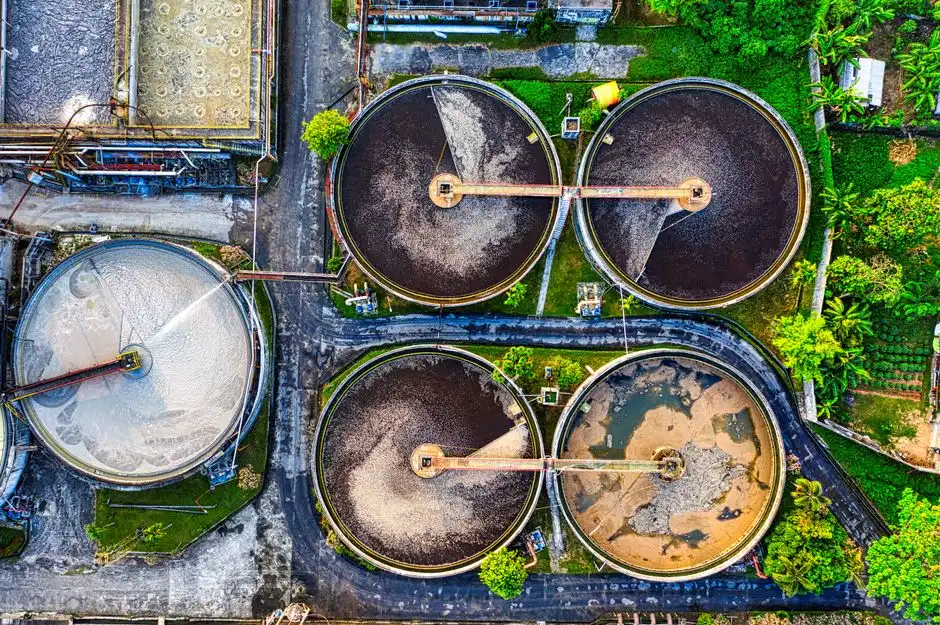
A practical pretreatment train starts before treatment: segregate clean stormwater and uncontaminated process water, then route acidic, metalliferous, oily, and high-solids streams according to their treatment requirements. This prevents avoidable hydraulic loading and avoids mixing chemistries that would increase reagent consumption or sludge production. Equalization follows the flow survey; it damps batch releases and gives chemical dosing a more stable influent.
- Source control and segregation. Identify clean, contaminated, and variable streams before selecting a unit operation.
- Equalization. HydropureWater’s 2026 pretreatment article recommends 8–24 hours of average daily flow for mining flows while requiring the final basin volume to follow site-specific flow and permit analysis.
- pH adjustment. Use staged dosing before precipitation. The supplied article identifies lime and sodium hydroxide as common pH-control reagents and warns that moving away from the metals-precipitation optimum can materially reduce removal efficiency.
- Metal hydroxide precipitation. Select lime or caustic from jar-test results, target metals, residual chemistry, and sludge-generation consequences.
- Coagulation and flocculation. Form particles that can be separated reliably. A PLC-controlled automatic chemical dosing system can feed pH adjusters, coagulants, flocculants, and specialty chemicals.
- Solid separation. Select DAF for oil, grease, or colloids; select lamella clarification for concentrated metal-bearing hydroxide solids.
- Final filtration. Use an automated-backwash multi-media filter as a suspended-solids and colloid barrier rather than assuming clarification alone will meet the permit.
- Residuals management. Dewater clarifier or flotation sludge and evaluate filtrate return to the treatment headworks.
| Stage | Primary function | Sizing input | Retained performance evidence |
|---|---|---|---|
| Equalization | Buffer flow and batch variability | Flow duration, peak discharge, operating schedule | Level trends and controlled release records |
| pH adjustment | Establish the precipitation condition | pH range, alkalinity, flow, reagent selection | Influent and effluent pH with chemical feed |
| Precipitation and flocculation | Convert dissolved metals into separable solids | Jar tests, target metals, residuals, sludge properties | Metal results, dose rates, sludge solids generation |
| DAF or lamella | Remove precipitated or floatable solids | Flow, solids loading, settleability, footprint | Removal performance and peak hydraulic response |
| Multi-media filter | Remove residual particles and colloids | Filtration rate, loading, backwash sequence | Differential pressure, filtrate TSS, backwash records |
| Dewatering | Reduce sludge volume for handling | Sludge rate, solids content, filtrate return | Cake solids, filtrate quality, cycle records |
HydropureWater’s supplied DAF information covers 4–300 m³/h and lists metalworking and municipal pretreatment applications. Its lamella clarifier specification combines flocculation, sludge recirculation, inclined-plate separation, and 20–40 m/h surface-loading rates. The supplied plate-and-frame press specification provides 1–500 m² of filtration area with manual, hydraulic, or automatic PLC control. These are equipment-selection references, not proof that a proposed train will satisfy a Malvern-area permit.
Choose Between DAF and Lamella Clarification
DAF is the stronger candidate when oil, grease, fine colloids, or floatable material are important removal targets; lamella clarification is generally more suitable when the objective is to separate dense metal-hydroxide flocs at comparatively high flow or where footprint is constrained. Neither conclusion should rest on a generic loading comparison. Jar tests, and pilot testing where warranted, must use site wastewater and reproduce the proposed pH, coagulation, solids loading, and peak-flow conditions.
| Decision factor | Choose DAF when | Choose lamella clarification when |
|---|---|---|
| Wastewater character | Oil, grease, colloids, or floatable solids are material | Metal-bearing hydroxide flocs dominate |
| Hydraulic objective | Reliable removal of light or floatable fractions is required | High flow and compact solids separation are priorities |
| Supplied equipment evidence | DAF capacity range is 4–300 m³/h | Lamella surface-loading specification is 20–40 m/h |
| Whole-system evaluation | Assess float-sludge handling, recycle, and chemical demand | Assess sludge blanket, recirculation, flocculation, and carryover |
Compare chemical consumption, sludge volume, dewatering demand, turndown, maintenance access, controls integration, and performance under peak hydraulic loading. A lower purchase price can be offset by poorer solids capture, more polymer consumption, unstable operation, or a more expensive sludge-disposal route. The mining-wastewater DAF and clarifier comparison and the broader mining and metals DAF versus clarifier selection guide provide decision inputs, but supplier guarantees should use site-specific wastewater.
Verify Compliance at the Point of Discharge
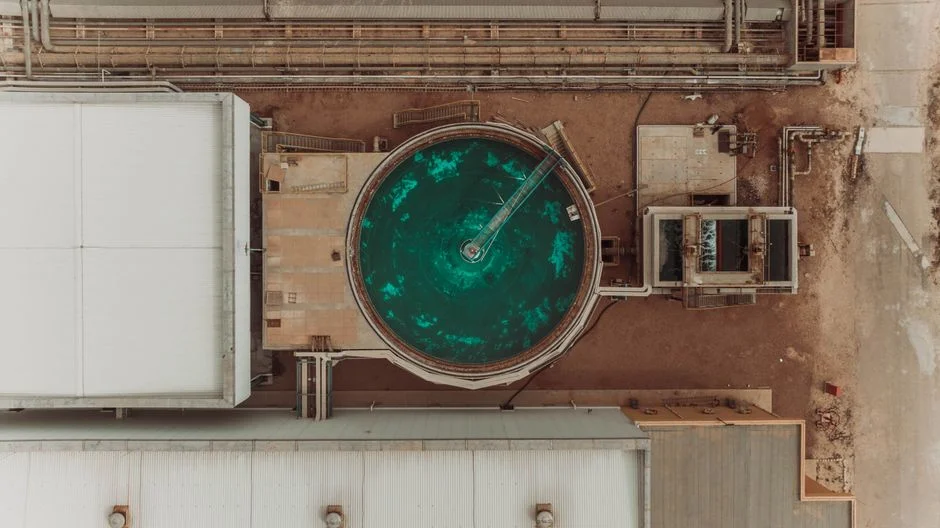
Commissioning must demonstrate performance at the industrial user’s end-of-pipe discharge, where EPA states that POTW local limits apply. Before ordering equipment, freeze the design basis: numerical concentration limits, mass-based limits where applicable, monitoring frequency, averaging period, sampling method, pH requirement, reporting, and enforcement terms from the current industrial-user permit and POTW documents.
Federal examples illustrate why the distinction matters. HydropureWater’s 2026 pretreatment article lists representative Part 433 values of 3.38 mg/L daily maximum and 2.07 mg/L monthly average for copper, and 2.77 mg/L daily maximum and 1.71 mg/L monthly average for total chromium. The same source identifies Part 437 zinc limits of 1.0 mg/L daily maximum and 0.5 mg/L monthly average. These are federal examples, not verified Malvern-area requirements or substitutes for the receiving POTW’s permit.
| Acceptance activity | What to test | Evidence to retain |
|---|---|---|
| Baseline performance test | Representative operation and the controlling point-of-connection discharge | Signed report, analytical results, deviations, and corrective actions |
| Peak-load test | Hydraulic and chemical-response behavior under representative peak conditions | Flow, pH, dose, solids, and metal trends |
| Automatic-control challenge | Sensor, dosing, diversion, and fail-safe response | Control narrative, alarm tests, and trip records |
| Residual handling check | Sludge capture, dewatering, filtrate return, and handling route | Mass balance, cake characteristics, and disposal documentation |
| Operational handover | Operator procedures, calibration, maintenance, and sampling readiness | Training records, calibration logs, and SOPs |
Trend pH, flow, metal concentrations, suspended solids, chemical dose, clarification performance, filtration differential pressure, and sludge generation. Automatic pH and feed control should include high-high, low-low, diversion, and fail-safe responses so off-spec wastewater is not sent to the sewer. Use the PLC-controlled automatic chemical dosing system as an example of integrated feed control, then verify its alarms and interlocks under site conditions. Performance testing should precede reliance on the system for compliance.
Frequently Asked Questions
What will pretreatment cost for a mining or metals plant near Malvern?
No defensible project price can be calculated from flow alone. Request a capital estimate that separates equipment, tanks, piping, controls, installation, commissioning, and residuals handling from operating costs for chemicals, sludge transport or disposal, sampling, maintenance, and electricity. Also request the unit-price basis for lime or caustic, polymer, filter media, and sludge handling. The industrial wastewater operating-cost breakdown can structure that estimate. Require a sensitivity case for chemical consumption and sludge volume because those two line items can change the operating-cost conclusion after a jar test.
How should equipment be sized without verified local limits?
Do not size the treatment train from a generic federal value or another municipality’s ordinance. Obtain the current POTW local limits and industrial-user permit, then provide the designer with average and peak flow, batch-discharge patterns, full wastewater characterization, target removal objectives, operating schedule, available footprint, and expected sludge-generation rate. Size the equalization basin and clarification equipment against those inputs. The proposed performance guarantee should name the controlling discharge parameter, sampling method, and operating condition under which compliance is demonstrated.
DAF or lamella clarification—which is the better mining wastewater choice?
Choose DAF when site data show oil, grease, colloids, or floatable material that must be removed; choose lamella clarification when metal-bearing hydroxide flocs dominate and higher flow or a compact footprint drives the decision. Test the actual wastewater before fixing the equipment. The DAF versus clarifier guide for mining wastewater provides a process-selection framework, while pilot or jar-test evidence should control the final choice.
What should a buyer require from a treatment-equipment supplier?
Require documented experience with comparable mining or metals wastewater, site-specific pilot or jar-test support, controls-integration details, enforceable performance criteria, and a complete operating and maintenance scope. Also require a written definition of what constitutes a performance failure, how it will be tested, and what corrective action is included. Before procurement, give the supplier the receiving POTW’s current written limits and permit conditions; equipment selected against an assumed Malvern-area limit creates avoidable compliance risk.
Related Equipment
- industrial dissolved air flotation system — specifications, capacity range, and technical data
- lamella clarifier for metal hydroxide sludge — specifications, capacity range, and technical data
- plate and frame sludge filter press — specifications, capacity range, and technical data