What Wastewater Does a Jeddah Hotel or Resort Generate?
A Jeddah hotel or resort needs a wastewater system built around the specific streams it generates, rather than a single average sewage figure. Guest-room sewage, restaurant wastewater, laundry effluent, pool backwash, cooling or maintenance discharges, and landscape-irrigation demand each require a defined collection route and destination. The first engineering task is a source-by-source inventory with measured average and peak flows, operating schedules, and physical characteristics. The 2018 study A Study of the Impact of Tourism on the Environment and Jeddah Citizen’s Perceptions toward Tourism in Jeddah, Saudi Arabia provides site context: it examined cleanliness, crowding, access to facilities, water availability, and air and sea quality among 115 Jeddah citizens, finding that crowding and air and sea quality were significant predictors of tourism perceptions. It does not establish treatment requirements.
The distinction between sanitary sewage and auxiliary flows matters because grease, lint, food solids, and pool chemicals change the required pretreatment. Route kitchen and restaurant discharges away from the main domestic sewage line where practical; assess laundry separately for lint and detergent load; and prevent pool backwash, spa discharges, and other high-strength flows from entering the biological plant without an engineered decision. A connection made for convenience can otherwise dictate unnecessary capacity, odour problems, and additional sludge handling.
For every stream, request average and peak flow, operating schedule, physical characteristics, and the proposed destination. The 2018 Jeddah tourism study does not provide occupancy-based flow factors, and hotel wastewater sources identify fluctuating demand and peak-season spikes without quantifying them. A defensible design needs hotel operating data rather than an assumed flow per guest. See the hotel wastewater source-mapping method.
| Wastewater stream | Information required before design | Decision to resolve |
|---|---|---|
| Guest rooms and public washrooms | Average and peak flow, occupancy profile, operating hours | Domestic sewage collection and biological treatment |
| Kitchens and restaurants | Flow schedule, grease and food-solids observations, discharge destination | Separate grease or solids pretreatment |
| Laundry and housekeeping | Machine loads, lint characteristics, detergents, peak schedule | Equalization and pretreatment requirements |
| Pools and spas | Backwash volume, chemical use, discharge route | Separate management or validated treatment route |
| Cooling and maintenance streams | Frequency, flow, chemistry and contamination risk | Discharge, reuse or separate treatment |
| Landscape irrigation | Daily and seasonal demand, irrigation areas, intended water quality | Confirmed non-potable reuse route |
Choose A/O Package, MBR or a Hybrid Treatment Train
The WSZ and MBR packages differ in treatment architecture, commercial flow basis, and reuse potential, necessitating a confirmed discharge or reuse requirement before selection. The underground A/O package sewage treatment plant combines anoxic/aerobic biological contact oxidation, sedimentation, and disinfection. Its listed capacity is 1–80 m³/h; it can be installed below grade with landscaping above and is designed to operate automatically.
The MBR membrane bioreactor system combines activated-sludge treatment with submerged PVDF membrane filtration. Its listed capacity is 10–2,000 m³/day, and the specified filtration is below 1 micrometre. This configuration occupies 60% less space than conventional systems. MBR systems are compact and modular, avoid a separate clarifier, and suit fluctuating loads.
A practical selection rule follows from these differences. Consider A/O when the treatment objective is a straightforward biological route, compact burial, and low operator involvement. Consider MBR when the confirmed reuse or discharge basis requires higher-quality membrane separation and the footprint is constrained. Consider a hybrid when the hotel has separated, high-strength flows that require pretreatment before a compact biological or membrane-based main plant. These are screening decisions; the environmental authorization, sewer connection, and reuse rules must be confirmed during design.
| Selection issue | WSZ A/O package | MBR system |
|---|---|---|
| Listed capacity | 1–80 m³/h | 10–2,000 m³/day |
| Process scope | Anoxic/aerobic contact oxidation, sedimentation and disinfection | Activated sludge with submerged PVDF membrane filtration |
| Physical arrangement | Below grade, with landscaping above | Compact modular arrangement; no separate clarifier |
| Automation | Fully automatic operation without an operator | Request control, membrane maintenance and operating strategy |
| Expansion logic | Confirm whether additional units can share the same process and utilities | Confirm how added modules affect membranes, controls and treatment train |
| Reuse assessment | Define the required quality and obtain approval | Evaluate MBR effluent against the confirmed non-potable application |
| Key commercial check | Clarify whether 1–80 m³/h is operating capacity | Clarify whether 10–2,000 m³/day is daily production capacity |
Use the hotel wastewater treatment technology comparison as a secondary reference, but compare bids on the same inputs: design flow, treatment objective, civil works, controls, effluent basis, sludge handling, and support.
Build the Jeddah Hotel Treatment Process
A hotel treatment train follows a defined sequence: incoming streams, screening and equalization, stream-specific pretreatment, biological treatment, solids separation, disinfection, and finally reuse or permitted discharge. Equalization protects downstream biological processes from short-duration peaks, while screening protects pumps, valves, and process equipment from material that could disrupt treatment.
Fine screening is the first unit to assess. The GX rotary mechanical bar screen is designed for continuous-duty screening and removes suspended solids, rags, plastics, and fibrous debris. Its installation suitability must be checked against the hotel’s flow characteristics and collection layout.
For high grease, oil, solids, or colloidal loads, add a dedicated pretreatment stage. The DAF pretreatment system has a listed range of 4–300 m³/h across 13 models and automatic skimming. Justification for this stage should be established from kitchen and laundry discharge data.
For the main biological stage, the WSZ arrangement combines A/O contact oxidation, sedimentation, and disinfection in one buried package. In the MBR arrangement, submerged membranes integrate biological treatment and membrane filtration. These configurations are not interchangeable during tender evaluation, as hydraulic loading, clarification requirements, control response, maintenance, and expansion differ.
Solids management is part of the process. Define where screenings, DAF scum, settled solids, and membrane residuals go, including storage, removal, transport, and final treatment or disposal. Where the selected process produces sludge requiring further dewatering, the plate and frame filter press is an option for evaluation based on sludge characteristics.
Size the Plant for Occupancy Peaks and Future Expansion?
The plant must be sized for hotel demand peaks, not only annual averages. Request occupied-room flow assumptions, seasonal occupancy profiles, visitor and staff population, laundry loads, pool refill and backwash schedules, kitchen discharge data, irrigation demand, and any permitted discharge restrictions. Tourism seasonality creates wastewater-production spikes, requiring capacity or modular expansion for peak conditions.
Keep four design concepts separate. Average daily flow describes the central daily load; peak-day flow governs equalization and storage; peak-hour flow governs instantaneous hydraulic capacity; and peak-load criteria govern biological and treatment performance. A supplier’s single capacity figure may not address all four. Require the design basis and calculation behind it.
Commercial flow units also need conversion before comparison. WSZ capacity is listed as 1–80 m³/h, while MBR capacity is listed as 10–2,000 m³/day. These ranges cannot be compared numerically without confirming whether each quoted figure represents operating capacity or daily production capacity. Ask each bidder for the hydraulic profile, peak-load performance, redundancy, control philosophy, installation constraints, and future expansion method. Use the regional hotel wastewater treatment guide as a check on the completeness of the sizing request.
| Sizing input | Evidence needed from the hotel | Supplier response required |
|---|---|---|
| Guest and staff demand | Occupied rooms, daily visitors, staff and seasonal profile | Stated design basis and peak-day calculation |
| Laundry and kitchen | Equipment schedules, loads, batch flow and discharge observations | Equalization and pretreatment design |
| Pool and maintenance | Backwash and discharge schedule and volume | Collection and treatment allocation |
| Irrigation | Demand and intended reuse application | Effluent quality, storage and distribution basis |
| Future demand | Planned rooms, facilities and operational changes | Expansion method, utilities and effluent-route constraints |
Modular expansion is useful only if the proposed treatment process, utilities, controls, and effluent route can accommodate additional modules. Ask the bidder to show that integration rather than relying on a general statement of expandability.
Define the Effluent Destination Before Buying Equipment?
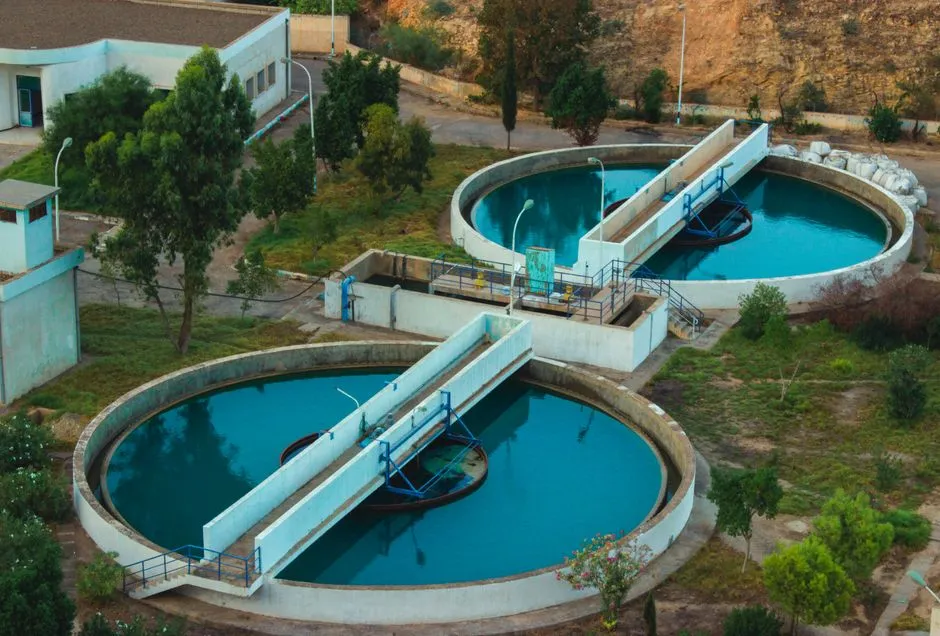
The receiving route determines the treatment design. Establish whether the plant will discharge to a permitted sewer, operate under a specific environmental authorization, or support a defined non-potable reuse application. The supplier must design to the receiving route and associated sampling and monitoring conditions.
SLS The Red Sea uses treated sewage effluent exclusively for landscape irrigation and operates on 100% renewable electricity generated by solar panels, according to information published by slshotels.com. This demonstrates a specific non-potable reuse practice at a Saudi resort, but it does not establish a Jeddah-wide rule or authorize reuse at another property.
MBR effluent can support landscape irrigation and dust control. It does not establish suitability for potable water, guest bathing, or other direct-contact reuse, which require separate technical validation and approval.
Request the applicable Jeddah and Saudi discharge, sewer-disconnection, and reuse conditions from the competent authority or receiving utility. Include the confirmed route, intended reuse, sampling requirements, and storage or distribution needs in tender documents. The domestic sewage treatment equipment options can support this destination-first review.
Plan Procurement, Installation and Lifecycle Support?
Convert the technical selection into a request for comparable bids. Ask each supplier to state its design flow and load basis, process description, effluent basis, guarantees, civil and mechanical scope, electrical and control requirements, commissioning tests, operator training, spare parts, and maintenance support. Require explicit treatment of seasonal operation, sludge removal, disinfection, odour control, monitoring, remote alarms, utilities, and future expansion.
For the WSZ option, verify below-grade installation conditions, access arrangements, and the landscaping requirements that allow the site to retain its guest-facing appearance. For the MBR option, request membrane cleaning, replacement assumptions, spare-parts strategy, and the operating response to fluctuating hotel loads.
Commercial structure is a separate choice from technology. A Water-as-a-Service model allows a provider to design, build, and operate the plant while the operator pays a set price per volume treated. Any comparison must request the quoted rate, included services, volume measurement method, minimum charge, and responsibilities for residuals, utilities, and compliance.
Installation and lifecycle obligations should be allocated. Identify who handles civil works, power connections, lifting, odour controls, remote communications, sampling, routine visits, unscheduled repairs, and performance investigation. The final offer should demonstrate why the selected train remains operable through occupancy changes and whether its treatment train can be expanded without redesigning the receiving route.
Frequently Asked Questions
Should a Jeddah hotel choose an A/O package plant or an MBR?
Use peak demand, footprint, treatment objective, and confirmed destination requirements to decide. The WSZ A/O package is listed at 1–80 m³/h and integrates contact oxidation, sedimentation, and disinfection in a buried arrangement; the MBR is listed at 10–2,000 m³/day and combines activated sludge with submerged PVDF membrane filtration. Ask both suppliers to demonstrate the same design basis and the same confirmed effluent route.
How much does a hotel wastewater treatment system cost in Jeddah?
A responsible quotation cannot be stated without site inputs. Require bids based
Frequently Asked Questions
Should a Jeddah hotel choose an A/O package plant or an MBR system?
For a Jeddah hotel, an MBR (Membrane Bioreactor) system is generally superior to an A/O (Anaerobic/Oxic) plant due to the stringent discharge and reuse standards mandated by the Saudi Ministry of Environment, Water and Agriculture (MEWA). While an A/O system requires a large footprint for secondary clarifiers and produces lower-quality effluent, an MBR system utilizes ultrafiltration membranes to produce high-quality permeate with turbidity of less than 0.2 NTU, which is essential for compliance with Saudi standards for unrestricted irrigation.
MBR systems also offer a 30% to 50% smaller spatial footprint, which is critical given the high land costs in Jeddah’s coastal and urban development zones. Unless the hotel has excessive land available and the lowest possible capital expenditure is the only priority, MBR is the industry standard for modern hospitality facilities in the Kingdom.
How much does a hotel wastewater treatment system cost in Jeddah?
Capital expenditure for a hotel wastewater treatment system in Jeddah typically ranges from 2,500 SAR to 4,500 SAR per cubic meter of daily capacity, depending on the technology, material quality (e.g., stainless steel vs. coated carbon steel), and the level of automation. A mid-sized hotel generating 200 cubic meters per day should budget between 500,000 SAR and 900,000 SAR for the procurement and installation of a standard MBR system.
Operational expenditure (OPEX) should be calculated at approximately 1.50 SAR to 2.50 SAR per cubic meter of treated water. This includes energy consumption, membrane cleaning chemicals, and labor. Factoring in the high cost of desalinated water in Saudi Arabia, the ROI for installing a high-quality reuse system is typically achieved within 3 to 5 years through reduced water procurement costs.
How do I choose a wastewater treatment supplier for a resort in Saudi Arabia?
When selecting a supplier, prioritize firms with a proven track record of local compliance with the Saudi Standards, Metrology and Quality Organization (SASO) and active registration with the Saudi Water Authority. Verify that the supplier maintains a local service office in Jeddah or the Western Province to ensure a response time of under 24 hours for critical mechanical or biological system failures.
Ensure the supplier provides comprehensive support for obtaining the necessary discharge permits from the Jeddah Municipality or the relevant regional water authority. Ask for a list of reference projects within the Kingdom, specifically focusing on resorts or hotels, and confirm that the proposed equipment includes remote monitoring capabilities for real-time performance tracking against local environmental regulations.
Can a Jeddah hotel reuse treated wastewater for landscape irrigation?
Yes, treated wastewater can be reused for landscape irrigation, provided the system meets the quality requirements defined by the Saudi technical regulations for treated sewage effluent. The system must be designed to achieve tertiary treatment standards, specifically ensuring that biological oxygen demand (BOD) is below 10 mg/L and total suspended solids (TSS) are below 5 mg/L.
In addition to these parameters, the system must include a robust disinfection stage, such as ultraviolet (UV) sterilization or chlorination, to achieve fecal coliform counts of less than 1,000 CFU/100ml for restricted irrigation or non-detectable levels for unrestricted public access areas. Proper dual-plumbing infrastructure must be installed on-site to segregate treated water lines from potable water supplies to prevent cross-contamination.
How should a hotel wastewater system be sized for peak occupancy?
A hotel wastewater system should be sized based on a conservative per-guest consumption rate, typically ranging from 250 to 350 liters per guest per day for luxury hospitality properties in Jeddah. To account for peak occupancy during the Hajj or Umrah seasons, a peaking factor of 1.2 to 1.5 should be applied to the average daily flow to ensure the biological process is not overwhelmed.
The design must also account for high-strength wastewater characteristics typical of hotel kitchens and laundry facilities, which may require pre-treatment systems such as grease traps and lint filters to protect the downstream membrane modules from fouling. Engineers should perform a hydraulic load analysis that includes not only guest rooms but also staff housing, food and beverage facilities, and swimming pool backwash volumes to ensure the equalization tank capacity is sufficient to buffer flow fluctuations.