Which Limits Govern an Edwardsville Sewer Discharge?
Food-and-beverage plants near Edwardsville meet sewer pretreatment limits by designing to the most restrictive applicable requirement: the EPA National Pretreatment Program, the applicable categorical pretreatment standard, and the receiving POTW’s site-specific permit and local limits. EPA applies local limits at the industrial user’s end-of-pipe connection to the POTW collection system. The actual plant, permit and numerical limits must be confirmed with the receiving authority before equipment is selected; the supplied research does not establish the exact Edwardsville-area POTW or its binding limits.
The governing hierarchy begins with 40 CFR Part 403, administered through delegated pretreatment programs, and then adds the applicable food-processing category: Part 405 for dairy products, Part 406 for grain mills, Part 407 for canned and preserved fruits and vegetables, Part 408 for canned and preserved seafood, and Part 409 for meat products. These categorical standards establish process-specific requirements that must be compared with the industrial user’s permit.
EPA defines local limits as site-specific numeric or narrative discharge limits, including best management practices, intended to protect the POTW, its sludge processes and receiving waters. A POTW can apply them at the point where the industrial user connects to its collection system, so the receiving authority’s current permit controls where it is more restrictive than the categorical standard.
| Permit document | Information to obtain | Engineering use |
|---|---|---|
| Receiving POTW identity and authority | Control authority, plant contact and pretreatment-program references | Identifies the government body that issues and enforces the permit |
| Current industrial user permit | Discharge point, covered processes, conditions, monitoring and reporting duties | Defines the enforceable discharge point and compliance program |
| Local-limit table | Numeric limits, narrative requirements, BMPs and applicable averaging periods | Sets site-specific treatment targets |
| Prohibited-discharge provisions | Restrictions on slug discharges, dilution, incompatible materials and process wastewater | Determines pretreatment and equalization controls |
| Surcharge and enforcement provisions | Pollutant load calculations, surcharge rules and violation procedures | Adds commercial consequences to exceedance risk |
For context on adjacent industrial pretreatment workflows, see how chemical plants near Green Bay structure permit compliance and how petroleum plants near Titusville address pretreatment limits. Neither source establishes the applicable Edwardsville-area permit.
Characterize the Wastewater Before Fixing the Equipment List
Food-processing wastewater can change hourly because batch changes, CIP cycles and seasonal production alter flow, organic load, pH and temperature. Hixson reports that food-processing effluent may be 10 to 100 times stronger than domestic wastewater in BOD5 and COD terms. That variability makes equalization a design requirement rather than an optional accessory and means that equipment capacity must be based on measured operating data.
Six parameters should anchor the design basis: BOD/COD, TSS, FOG, total phosphorus, pH and temperature. HydropureWater reports raw wastewater from dairy and meat processing at 1,000–10,000 mg/L BOD and identifies FOG concentrations reaching several thousand mg/L in fryer, rendering and stickwater streams. These are reported application ranges, not Edwardsville permit limits.
| Required input | What to measure or obtain | Why it affects equipment selection |
|---|---|---|
| Forward flow | Representative wastewater flow and production schedule | Sets hydraulic capacity for screening, equalization, DAF, biology and dosing |
| Peak-to-average ratio | Continuous or production-resolved flow records | Tests whether equalization and treatment can absorb batch and CIP peaks |
| Raw BOD and COD | Representative laboratory characterization | Defines biological oxygen demand and reactor loading |
| Raw FOG | Representative oil-and-grease concentration | Defines DAF conditioning and hydraulic loading |
| Supporting constituents | TSS, total phosphorus, pH and temperature | Drives solids removal, nutrient control, trim and temperature protection |
Sampling must cover normal production, product changeovers and CIP periods rather than relying only on a composite from one shift. The plant also needs a waste-characterization program aligned with its applicable categorical standard. Missing project inputs include the exact Edwardsville-area flow, analytical dataset, permit monitoring frequencies, discharge point, production schedule and future expansion plan.
For adjacent industrial applications, compare the pretreatment compliance approach for industrial plants near Menominee with the data-center wastewater and cooling-blowdown treatment framework for the Gold Coast. The transferable lesson is to connect permit conditions, raw characterization and treatment capacity; their numeric benchmarks are not local requirements.
Build a Treatment Train That Targets Each Permit Risk
The defensible sequence is screening, equalization, primary solids and FOG removal, biological treatment, chemical phosphorus control and final polishing, with stages added or omitted after reviewing the permit and influent data. Each unit operation should have a named pollutant or failure mode, a measurable design condition and an acceptance criterion.
Screening removes product pieces, packaging debris, food particles, rags and fibrous material before they damage pumps or biological equipment. Equalization then buffers production surges and concentrated CIP dumps. Hixson identifies equalization as essential to stable flow and strength entering downstream treatment; HydropureWater notes that temperature excursions above 40 °C from CIP and cooking operations are routine in its food-and-beverage design context and can interfere with downstream nitrification.
DAF is the primary option when FOG and floatable solids are the dominant risks. HydropureWater reports 25–50 mg/L oil and grease and 50–100 mg/L TSS after properly conditioned DAF across 4–25 m/h hydraulic loading. Hixson cites 74% TSS removal and 99% oil-and-grease removal in optimized poultry applications. An industrial DAF system for FOG and suspended-solids removal should therefore be evaluated against those application benchmarks, not treated as an automatic compliance guarantee.
Biological treatment addresses dissolved BOD and COD. HydropureWater reports hydraulic retention time of 8–24 hours for conventional activated sludge and 4–10 hours for MBR, with a 1.5–2.5 mg/L dissolved-oxygen setpoint where nitrification is required. The activated sludge versus biofilm comparison provides a useful selection framework for that decision.
Chemical precipitation is added when biological phosphorus uptake cannot meet the permit. HydropureWater reports biomass luxury uptake of 5–15 mg/L phosphorus and chemical precipitation polishing to 0.5–1 mg/L. Final options include an integrated MBR wastewater treatment system where low suspended solids or reuse readiness justifies its footprint and energy cost, or lamella clarification where compact solids polishing is sufficient.
| Risk | Primary control | Performance evidence |
|---|---|---|
| FOG pass-through | DAF conditioning and adequate hydraulic capacity | Oil-and-grease and TSS results across representative FOG loads |
| pH excursion | Equalization and trim control | Continuous pH record during production and CIP discharges |
| CIP overload | EQ basin, controlled release and biological loading controls | Flow and load records during a representative CIP cycle |
| Phosphorus-solids breakthrough | Flocculation and proportional chemical dose control | Total-phosphorus results with coagulant and sludge records |
Size DAF, Biology and Chemical Dosing from Real Operating Data
DAF sizing should start with forward flow, peak-to-average ratio, raw FOG and the selected surface-loading rate. HydropureWater cites 4–25 m/h hydraulic loading, an air-to-solids ratio of 0.005–0.02 and recycle at 20–40% of forward flow for food-and-beverage applications. The wastewater profile determines where within that range the design belongs: the source places a 3,000 mg/L FOG dairy stream at the conservative end, while a meat-rendering stream above 10,000 mg/L FOG pushes toward higher recycle and a longer retention model.
Biological sizing uses raw BOD, peak flow, temperature and required hydraulic retention time. HydropureWater cites conventional mixed-liquor suspended solids of 3,000–5,000 mg/L and MBR mixed-liquor suspended solids of 8,000–12,000 mg/L. These are design benchmarks; actual reactor volume also depends on the verified influent load, temperature correction, mixing, settling and the permit’s removal target.
Chemical dosing must account for phosphorus form, mixed-liquor alkalinity and flow-proportional load. HydropureWater cites 50–250 mg/L alum or 30–150 mg/L ferric chloride and reports that PLC-controlled dosing can reduce chemical consumption by 10–20% relative to manual feed. A PLC-controlled chemical dosing system should therefore be specified around measured demand, not a fixed dose.
The final proposal should include mass balances for coagulant, sludge generation, blower duty, electrical load and footprint, plus provisions for future production changes. The DAF versus lamella clarifier selection guide illustrates the type of hydraulic and solids-loading comparison expected. No Edwardsville performance guarantee should be inferred from the cited application benchmarks; the receiving permit, representative influent data and an agreed acceptance protocol must define it.
Turn Pretreatment Performance into Permitable Compliance Evidence
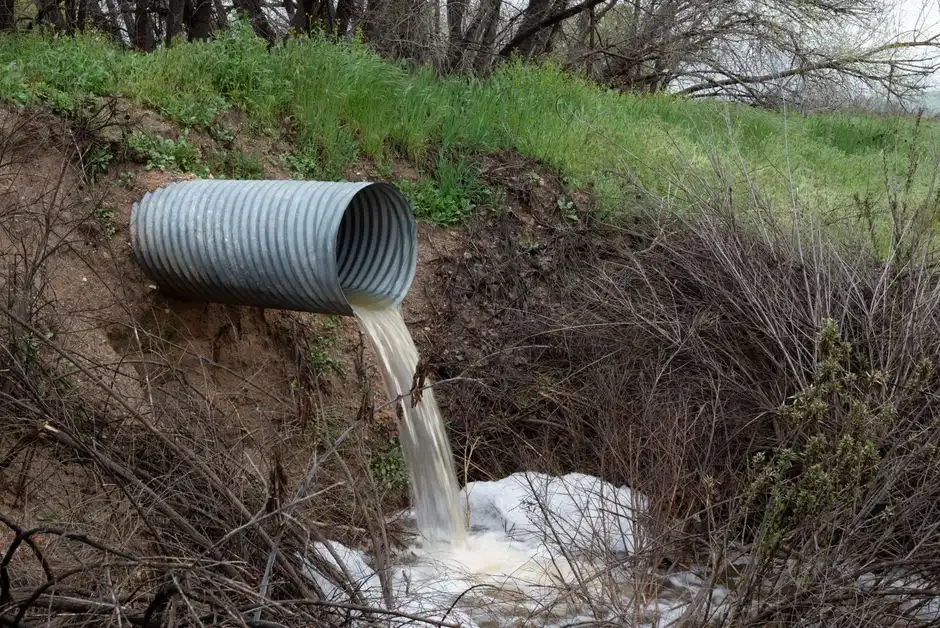
Treatment performance and permit compliance are separate demonstrations: each stage must perform as designed, and the final discharge must satisfy the permit at the required endpoint, location and sampling method. Acceptance testing should therefore exercise the complete train at design flow and representative organic, FOG, solids and nutrient loading rather than rely only on clean-water equipment tests.
HydropureWater states that food-and-beverage categorical permits commonly require 24-hour composite samples for BOD, TSS, FOG and total phosphorus at monthly-to-quarterly frequencies, with continuous pH and flow monitoring for significant industrial users. That is a general pattern only. The Edwardsville-area permit and local-limit table must establish the actual analytes, frequencies, averaging periods and continuous-monitoring requirements.
The compliance file should contain the current permit, local limits, sampling plan, chain-of-custody records, laboratory reports, calibration records, flow data, excursion alarms, corrective actions and POTW correspondence. SCADA or PLC records should connect flow, pH, temperature and equipment status. HydropureWater describes electronic reporting and automatic event-data integration as increasingly important compliance practices, while also cautioning that site-specific values must be verified against the current permit and equipment proposal.
- Verify the permit endpoint, monitoring requirements and reporting channel with the POTW.
- Calibrate continuous instruments and document each laboratory sample through custody and analysis.
- Align each operating parameter with the applicable limit and alarm setpoint.
- Record excursions, corrective actions and return-to-compliance evidence.
- Complete performance testing under representative production and CIP loading.
The pretreatment compliance approach for industrial plants near Menominee and chemical-plant sewer-limit workflow near Green Bay provide useful document-control models. Their examples do not replace the Edwardsville permit.
Choose Between DAF, Clarification and MBR
DAF, lamella clarification and MBR solve different problems and should not be treated as interchangeable. Selection follows from the dominant permit risk, confirmed wastewater characteristics, production variability, available footprint and any reuse objective. A technology recommendation before those inputs are reviewed is premature.
| Decision condition | Preferred technology | Key trade-off |
|---|---|---|
| FOG and floatable solids dominate | DAF | HydropureWater identifies it for suspended solids, FOG, oil and grease and colloidal matter; it requires conditioning and reliable hydraulic control |
| Compact final solids polishing is needed | Lamella clarification | HydropureWater reports 20–40 m/h surface loading and up to 30% lower chemical consumption with sludge recirculation and integrated flocculation |
| Low effluent solids, combined biology and membrane filtration, or reuse readiness justify added complexity | MBR | HydropureWater reports filtration below 1 μm and a 60% smaller footprint than conventional systems; membrane maintenance, energy and capital implications require review |
DAF should be compared with clarification on FOG capture, solids separation, footprint, chemical use and downstream biological loading. The DAF versus clarifier guide for Sunbury EV wastewater shows the comparison method even though its source wastewater differs from food processing.
MBR should then be compared with conventional biology on effluent quality, footprint, membrane maintenance, energy and capital implications. The MBR versus conventional activated-sludge comparison for petroleum wastewater supplies an adjacent technology framework. Neither comparison determines the Edwardsville selection without the current permit and plant data.
Frequently Asked Questions
What will an Edwardsville-area food-processing pretreatment system cost?
The supplied research does not provide a reliable equipment-price range for this project. A defensible quotation requires forward flow, representative BOD, COD, TSS, FOG, phosphorus, pH and temperature data; the selected technology; hydraulic and civil work; controls and instrumentation; chemical and sludge handling; electrical service; installation scope; and the acceptance-test basis. Request itemized capital and operating-cost estimates so the buyer can see which assumptions drive the price.
How should a pretreatment supplier be selected?
Evaluate demonstrated food-processing performance, the hydraulic and pollutant design basis, control philosophy, service support, acceptance testing and ability to supply a complete train. The supplier should identify the applicable categorical standard, show how the proposed equipment addresses each permit parameter and define measurable test conditions. A clean-water demonstration alone does not establish treatment performance under representative organic and FOG loads.
What information is needed to size the equipment and confirm delivery?
Provide forward flow, peak-to-average ratio, raw BOD, raw FOG, supporting analytical results, production and CIP schedules, discharge point and future expansion plan. The supplied research provides design benchmarks but no universal manufacturing or project lead time. Confirm the current schedule with the selected supplier after the design basis and scope are fixed.
What is the greater compliance risk: unresolved local limits or choosing between treatment technologies?
Unresolved local limits are the greater immediate risk because they determine the actual discharge target, monitoring obligations and surcharge exposure. The supplied research does not establish the exact Edwardsville-area POTW or its numerical limits. Obtain the current POTW permit, local-limit table, prohibited-discharge provisions and monitoring requirements before purchasing equipment or relying on generic benchmark values.
Related Equipment
- industrial DAF system for FOG and suspended-solids removal — specifications, capacity range, and technical data