Which Rules Control a Green Bay Chemical-Plant Discharge?
Chemical plants near Green Bay meet pretreatment requirements by identifying their applicable federal categorical standards and NEW Water permit conditions, then controlling wastewater at its source and treating it before sewer discharge. Under 40 CFR Part 403, discharges cannot cause pass through or interference at the POTW; prohibited hazards include certain pH excursions, heat above the stated limit, flammable waste, toxic gases, oils, and obstructing solids. A defensible compliance train combines equalization and slug control, pH adjustment, oil and solids removal by DAF, clarification or filtration as required, chemical dosing, and documented self-monitoring. Final equipment and performance targets must be verified against the plant’s current authorization, process wastewater profile, and NEW Water requirements.
EPA’s pretreatment standards apply to all nondomestic dischargers that send wastewater to a POTW, whether or not the POTW has an approved pretreatment program and whether or not the discharger has been issued a control mechanism or permit (EPA, “Pretreatment Standards and Requirements—General and Specific Prohibitions,” accessed 2026). A treatment supplier’s equipment specification is therefore only a design input; it is not a discharge authorization or proof that the discharge complies.
The review has three layers: EPA categorical and general standards, Wisconsin Admin Code NR 211, and NEW Water’s permit conditions, local limits, monitoring requirements, and surcharge rules. A chemical plant should also use the organic chemical plant pretreatment compliance guide as a workflow reference, then verify the current NEW Water discharge-limits letter and permit documents before fixing the design basis.
| Authority | Engineering question | Procurement evidence |
|---|---|---|
| 40 CFR Part 403 | Does the discharge cause pass through or interference, or violate a specific prohibition? | Applicable categorical standard, written applicability determination, prohibition-by-prohibition review |
| EPA categorical standards | Which production operations trigger the applicable category? | Process description, production and batch records, regulatory crosswalk |
| Wisconsin Admin Code NR 211 | How are federal pretreatment requirements administered in Wisconsin? | State requirement review and agency correspondence |
| NEW Water authorization | What local limits, monitoring, reporting, and surcharge rules apply? | Current permit, discharge-limits letter, self-monitoring schedule, applicable sewer rules |
EPA defines pass through as a discharge that exits the POTW in quantities or concentrations that cause a POTW permit violation. Interference occurs when a discharge inhibits or disrupts POTW treatment or sludge processes and thereby causes a permit or applicable statutory violation (EPA, accessed 2026). Both tests are system-level: a parameter that looks acceptable at the plant discharge point can still create a POTW problem when combined with other flows or loads.
What the General and Specific Prohibitions Require
EPA’s eight specific prohibitions create an engineering screening checklist before equipment is selected. They cover pollutants that create a fire or explosion hazard; cause corrosive structural damage; create solid or viscous obstruction; cause interference through pollutant loading; introduce damaging heat; introduce petroleum oil, nonbiodegradable cutting oil, or products of mineral-oil origin; create toxic gases, vapors, or fumes; or arrive as trucked or hauled pollutants except at POTW-designated discharge points (EPA, “Pretreatment Standards and Requirements—General and Specific Prohibitions,” accessed 2026).
The federal pH provision is specific: no discharge below pH 5.0 is allowed unless the works is specifically designed to accommodate such a discharge (EPA, accessed 2026). That is not the complete local discharge window. The plant must obtain the applicable upper pH limit from NEW Water. The source research for this article reported a local pH window of 5.0–10.0 for Green Bay industrial users, but the current permit and discharge-limits letter must control before that value is used in equipment controls (HydropureWater, 2026).
The federal heat rule prohibits heat in amounts that inhibit biological activity at the POTW. The temperature at the POTW treatment plant may not exceed 40 °C unless the approval authority grants an alternate limit upon the POTW’s request (EPA, accessed 2026). The approved limit is the plant’s controlling criterion; a cooler treatment train is not, by itself, proof of compliance.
Different contaminants also require different unit operations. Oil and grease, floatable solids, and FOG may justify DAF. Settleable solids may justify clarification or filtration. Soluble chemicals, metals, nutrients, and toxicity need an identified removal mechanism or a documented basis for relying on the POTW. A DAF designed to recover floatable material cannot demonstrate dissolved-pollutant removal merely by achieving good oil removal.
The final compliance test is operational, not cosmetic: the discharge must not cause pass through or interference at the Green Bay POTW, even when each individual measured parameter appears acceptable. Compliance evidence must connect the wastewater profile to permit limits, treatment performance, and POTW operating consequences.
Characterize the Waste Before Choosing the Treatment Train
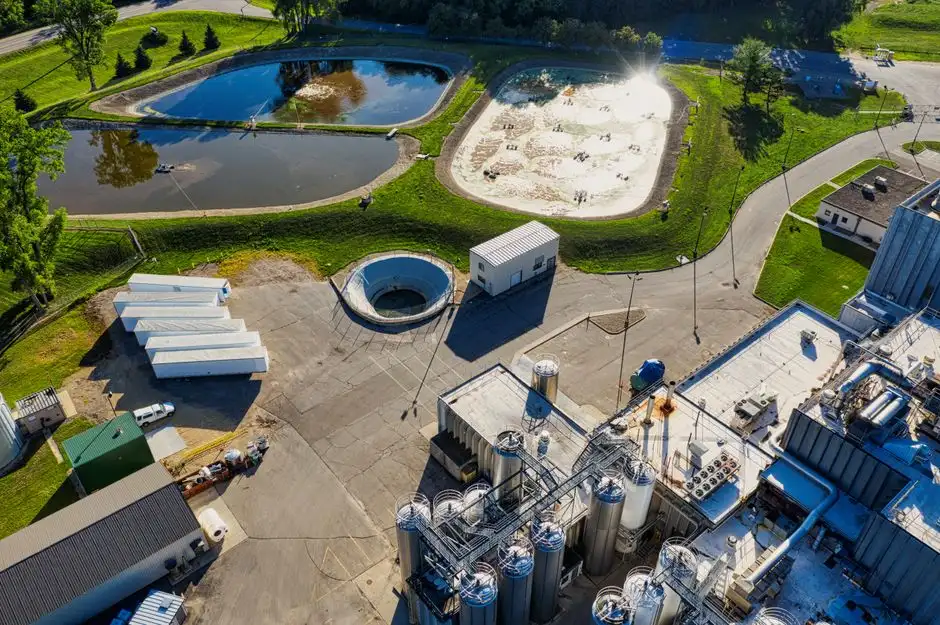
A chemical-plant treatment train should be sized from measured batch and continuous loads, not from average sewer flow or a generic package-unit capacity. The characterization package must cover flow, pH, oil and grease, suspended solids, metals, toxicity indicators, temperature, and batch-dump characteristics. Peak hourly discharge is specifically identified as required information in the industrial-user permit application described by the Green Bay source research (HydropureWater, 2026).
Keep continuous streams separate from intermittent releases during sampling and process design. Relevant streams can include spent cleaner, acid or alkaline batch dumps, floor wash, condenser blowdown, and tank bottoms. Each stream can have a different chemistry and chemical compatibility. The required equalization time and transfer controls then follow from documented batch volumes, release timing, and permitted discharge flow—not from an assumed average.
Identify the chemical plant’s applicable 40 CFR Part 403 category in writing, or document why no categorical standard applies. Product description alone is not enough because category eligibility depends on the regulated industrial operation. If the process involves electroplating, evaluate the separate metal-finishing framework and sludge implications rather than borrowing assumptions from fabricated-metals guidance.
| Required input | Why it affects design or compliance | Evidence to request |
|---|---|---|
| Flow profile | Sets equalization, pumping, treatment, and discharge-control duties | Average and peak hourly flow; continuous and batch components |
| Batch characteristics | Defines slug controls and upstream pH or ORP response | Batch volume, timing, composition, release route |
| Oil, grease, and solids | Determines DAF, clarification, filtration, and sludge duties | Representative analytical results by stream and production condition |
| Dissolved pollutants and toxicity | Determines whether solids-removal equipment is adequate | Chemical identity, toxicity basis, metals and soluble-constituent data |
| Temperature and chemistry | Defines heat load, compatibility, and reaction controls | Temperature range, pH, oxidizing or reducing conditions |
| Regulatory basis | Links equipment performance to enforceable requirements | Categorical determination, permit, limits letter, local limits |
Analytical results should represent the plant’s production conditions rather than a single clean-production-day composite. The unresolved inputs may include soluble-contaminant identity, toxicity basis, temperature, flow profile, batch volumes, chemical compatibility, residual-treatment requirements, and the current local discharge ceiling. These items should remain open design assumptions until measured or formally confirmed.
Control pH and ORP upstream of downstream biological treatment. An uncontrolled batch dump can create an immediate permit excursion and upset receiving treatment before a downstream solids unit can compensate. The DAF versus clarifier comparison for chemicals wastewater is useful for screening unit roles, but it cannot replace chemical-specific characterization.
Build a Compliance-Ready Treatment Sequence
The treatment sequence should follow the waste chemistry and the permit obligations in a traceable order:
- Segregate incompatible streams at the source and improve housekeeping.
- Equalize continuous and batch flows and apply documented slug controls.
- Remove coarse debris where needed to protect pumps and downstream equipment.
- Adjust pH within the permit envelope.
- Remove floatable oils and solids with DAF where the waste profile supports that duty.
- Use clarification or filtration for residual solids where the permit and loading basis require it.
- Provide controlled chemical dosing for coagulant, flocculant, pH adjustment, or specialty chemistry.
- Monitor the final discharge and manage DAF float, clarifier underflow, and filter backwash as linked waste streams.
DAF is appropriate where the wastewater contains suspended solids, FOG, oil and grease, or colloidal material. The source research describes a published DAF capacity range of 4–300 m³/h, but that range is not evidence that a particular machine meets this plant’s permit (HydropureWater, 2026). An industrial DAF system for chemical-plant wastewater must still be sized from measured flow, solids, oil load, flotation conditions, and required effluent performance.
A lamella clarifier is a compact solids-separation option after flocculation. The research reports a published surface-loading rate of 20–40 m/h and a chemical-consumption claim of up to 30% for the referenced lamella design (HydropureWater, 2026). Neither value is a universal design input: the engineer must verify actual hydraulic, solids, and floc conditions. The high-efficiency sedimentation tank therefore needs a project-specific process basis.
Automatic dosing is a control component, not a substitute for characterization. A PLC-controlled chemical dosing skid can meter coagulant, flocculant, pH adjusters, and specialty chemicals, but setpoints should follow compatibility review, jar testing, and a defined influent envelope. Chemical demand must be recalibrated when batch composition changes.
Sludge handling belongs in the performance basis. Metal-bearing or plating-derived sludge requires waste-characterization review. The supplied research states that F006 applies only where electroplating operations and failed TCLP testing support that classification; a process description alone is insufficient (HydropureWater, 2026). In addition, 40 CFR 403.8(b) requires POTW industrial users to develop slug-control plans for batch discharges that could disrupt the POTW (EPA, accessed 2026).
| Train element | Primary purpose | Compliance evidence |
|---|---|---|
| Source segregation and equalization | Prevents incompatible loads and attenuates batch slugs | Batch inventory, equalization calculation, slug-control plan |
| pH control | Protects treatment processes and meets the authorized discharge range | Probe calibration, control narrative, alarm and excursion records |
| DAF | Removes floatable oils, FOG, and associated solids | Loading calculation, oil and solids results, float-sludge handling |
| Clarifier or filtration | Removes residual settleable solids where required | Hydraulic and solids basis, turbidity or TSS performance where specified |
| Chemical dosing | Controls coagulation, flocculation, pH, and specialty reactions | Compatibility, dose basis, calibration, chemical-use records |
| Final monitoring | Tests compliance at the authorized point | Permit matrix, analytical results, chain of custody, corrective-action records |
Choose Equipment Against Permit Risk, Not Just Capacity
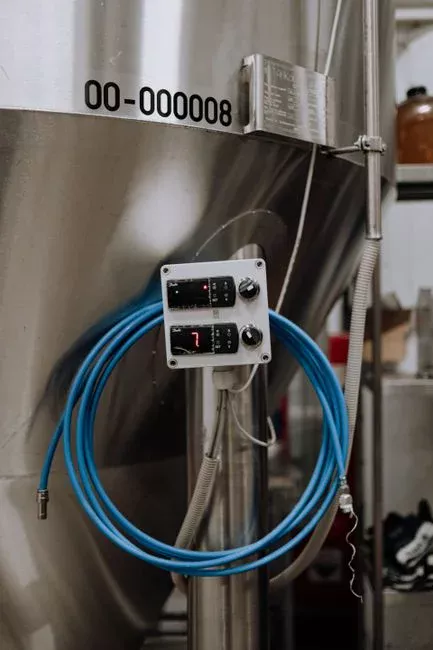
DAF, clarification, and combined treatment should be compared against the measured contaminant load and the enforceable permit risk. DAF is strongest for floatable oils, FOG, and suspended matter; clarification primarily addresses settleable solids. Neither selection should be based on product capacity alone. The deeper DAF process and industrial selection guide explains the equipment basis, while the DAF versus clarifier comparison for fabricated-metals wastewater provides a useful secondary framework, subject to the chemical plant’s own data.
New Water surcharge thresholds reported in the source research are 250 mg/L BOD, 250 mg/L TSS, and 100 mg/L oil and grease (HydropureWater, 2026). These are reported surcharge thresholds, not categorical pretreatment limits or substitutes for the permit. The plant should ask NEW Water for the current schedule and determine whether exceedance is plausible from its wastewater profile. That changes the economic case for solids, oil, or biological-load removal, but it does not replace the discharge-limit review.
| Decision factor | DAF | Lamella clarification | Combined DAF plus clarifier or filtration |
|---|---|---|---|
| Primary contaminant | Floatable oil, FOG, suspended matter, colloidal material | Settleable solids following flocculation | Floatable material and residual solids requiring a lower solids result |
| Key design basis | Flow, oil and solids load, flotation performance, skimming | Hydraulic loading, solids inventory, floc condition | Combined loading, intermediate quality, footprint and controls |
| Principal risk | Dissolved pollutants remain; poor float recovery or chemical compatibility | Oil carryover or poor floc; limited dissolved-pollutant removal | More equipment, controls, sludge handling and operating complexity |
| Permit decision | Use where floatable loads and required TSS removal justify it | Use where settleable-solids separation is required | Use when sequential removal duties must meet tighter permit conditions |
Require the supplier to provide a process basis, equipment-sizing calculations, materials-compatibility list, control narratives, electrical requirements, a performance guarantee tied to a defined influent envelope, commissioning protocol, and O&M documentation. The guarantee should identify which parameters are demonstrated, the analytical methods, sampling points, acceptance conditions, and remedy for nonperformance.
Compliance-risk review should cover permit deviations, pH or slug upsets, missed self-monitoring samples, bypass paths, and operation outside the vendor’s guaranteed envelope. Historical enforcement shows why system-level controls matter: Williams Mullen reported that EMD Millipore faced allegations involving pH, slug-load notification, and permitted flow, followed by required treatment-system upgrades, operator training, sampling, analysis, and quarterly monitoring (Williams Mullen, 2017-03-30).
Verify Compliance Before and After Sewer Discharge
The industrial-user permit process described in the source research begins with a wastewater profile, the applicable categorical standard, and a slug-control plan. NEW Water then reviews the submission, issues a discharge-limits letter with site-specific ceilings, and establishes a self-monitoring schedule (HydropureWater, 2026). Those documents form the contractual and regulatory basis for equipment guarantees; the equipment proposal alone cannot substitute for them.
The same research describes monthly facility self-monitoring and quarterly routine compliance sampling as typical practices, while making the plant’s current permit controlling for actual frequency and parameters (HydropureWater, 2026). A permit-compliance matrix should map each parameter to its limit, monitoring point, frequency, analytical method, responsible operator, record location, and escalation action.
Operating records should include calibration results, chemical-use records, flow verification, alarm tests, bypass-prevention checks, and documented responses to out-of-range results. Missed samples require an internal noncompliance assessment rather than silent omission. The organic chemical plant pretreatment compliance guide provides a useful starting point for assembling that record set.
Local permit issuance does not eliminate EPA’s independent enforcement authority over federal pretreatment standards. The evidentiary chain should therefore connect characterization, design calculations, installation, commissioning, monitoring, corrective action, and the current permit—not merely document that a purchased unit is operating.
Frequently Asked Questions
How much does a chemical-plant pretreatment system cost?
The supplied research provides no chemical-plant system cost, so a defensible quotation cannot be based on a generic price. Request a budgetary estimate tied to average and peak flow, batch volumes, pollutant loading, equalization duty, required treatment performance, site constraints, chemical compatibility, controls, sludge handling, commissioning, and performance guarantees. Ask what is excluded, especially civil work, utilities, permits, installation, and off-site waste disposal.
Should a Green Bay chemical plant choose DAF, a lamella clarifier, or both?
Match the primary contaminant and solids-removal objective to the unit: use DAF where floatable oils, FOG, and suspended matter govern the load; use clarification where settleable solids govern after flocculation. Consider combined treatment when both duties must be met. A vendor’s industrial DAF system for chemical-plant wastewater should be selected against measured loads and permit risk, not nominal capacity.
How should chemical wastewater equipment be sized for Green Bay?
Provide average and peak flow, batch volume and timing, equalization time, pollutant loads, operating envelope, duty cycle, chemical compatibility, and required effluent results. No vendor capacity alone establishes compliance. The DAF versus clarifier comparison for chemicals wastewater is a screening reference; the final calculation must use site data and the current NEW Water authorization.
Can a chemical plant comply with federal pretreatment rules without a NEW Water permit?
No. EPA states that Part 403 standards apply whether or not the nondomestic discharger has been issued a control mechanism or permit. An absent permit is not permission to discharge. Obtain NEW Water’s current requirements and applicable discharge limits, and maintain evidence of federal, state, and local compliance.
What should a pretreatment supplier demonstrate before procurement?
Require design calculations, the applicable permit basis, chemical compatibility, control narratives, commissioning tests, performance guarantees tied to a defined influent envelope, monitoring support, and O&M documentation. An PLC-controlled chemical dosing skid should also have calibrated metering, operating interlocks, chemical-use records, and a response plan for invalid or out-of-range results.