Which Treatment Fits EV Manufacturing Wastewater?
For EV or automotive manufacturing wastewater in Sunbury, choose DAF when the priority is removing emulsified or free oil, FOG and fine suspended solids; choose a clarifier when the stream contains heavy, readily settling solids and lower operating cost is the priority. A DAF-clarifier hybrid may be better for mixed oily and sediment-heavy streams. The decision should begin with wastewater analysis because DAF generally needs chemical coagulation and flocculation, while clarifiers depend on effective settling. One commercial comparison reports 95% oil-and-grease removal with DAF versus 70% with a clarifier for one food-processing stream, while a mining clarifier reportedly reduced solids by 90% (Ecologix Environmental Systems, 2026).
There is no defensible basis for selecting one separator for every plant discharge. An EV or automotive operation may generate oily wash water, paint-bearing rinses, metalworking rinses, floor washdown, cooling or process water, and sanitary wastewater, each with different contaminant behavior and treatment objectives.
Ecologix’s selection rule is straightforward: wastewater composition, treatment goals and operating constraints determine the appropriate technology. For buoyant oils, FOG and conditioned fine solids, an industrial DAF system is the stronger candidate. For heavy sediment that settles without flotation, gravity sedimentation or a lamella clarifier is generally more economical. If both contaminant fractions are significant, DAF can recover oil and float conditioned solids before clarification handles residual sediment.
This is the starting framework for DAF versus clarifier guidance for fabricated metals wastewater; the factory’s stream data and receiving-sewer requirements still control the final decision.
EV and Auto Wastewater Streams Are Not One Treatment Problem
Source segregation determines whether oils remain separable, solids remain settleable and each stream receives appropriate chemical treatment. Combining streams before characterization can dilute oily flows, increase the load on clarification and obscure the performance required from a treatment skid.
| Plant stream | Dominant contaminants to verify | Initial treatment logic |
|---|---|---|
| Vehicle and parts washing | Free or emulsified oil, FOG, wash detergents and suspended dirt | Evaluate DAF for oil and fine solids; assess clarification for settled grit separately |
| Paint and coating operations | Paint solids, binders, pigments and variable flow quality | Characterize solids and compatibility before selecting physical separation or upstream treatment |
| Machining and metalworking rinses | Suspended abrasives, colloids and metals where relevant | Assess settleable solids and filtration requirements; do not assume physical separation removes dissolved contaminants |
| Floor washdown | Oil, settled sediment, tire and abrasive particles | Consider segregation or equalization because solids and oils may separate at different rates |
| Cooling or process discharges | Heat, suspended solids, treatment chemicals and process-specific contaminants | Define reuse or discharge objectives before selecting DAF or clarification |
| Sanitary wastewater | Organic matter and pathogens | Evaluate separately from industrial streams; treatment objectives differ |
Hydraulic and contaminant variability also matters for skid sizing. Equalization can stabilize flow and contaminant loading before DAF or clarification, but it should not substitute for stream segregation. An engineer should measure each stream by shift and production condition, then document how oily, paint-bearing and abrasive flows combine in the proposed system.
Paint and coating discharges require particular caution because their chemistry may differ materially from wash water. The separate considerations used for plastics and rubber wastewater and rendering-plant COD removal illustrate why treatment objectives and contaminant characterization must precede equipment selection.
Before finalizing a train, identify where the treated water will go. Obtain the applicable Sunbury sewer-pretreatment or discharge requirements and clarify whether the receiving authority regulates physical treatment, analytical limits, local pretreatment controls or a combination of these. Equipment selection and permit compliance are separate decisions even when both are performed during project design.
How DAF and Clarifier Removal Mechanisms Differ
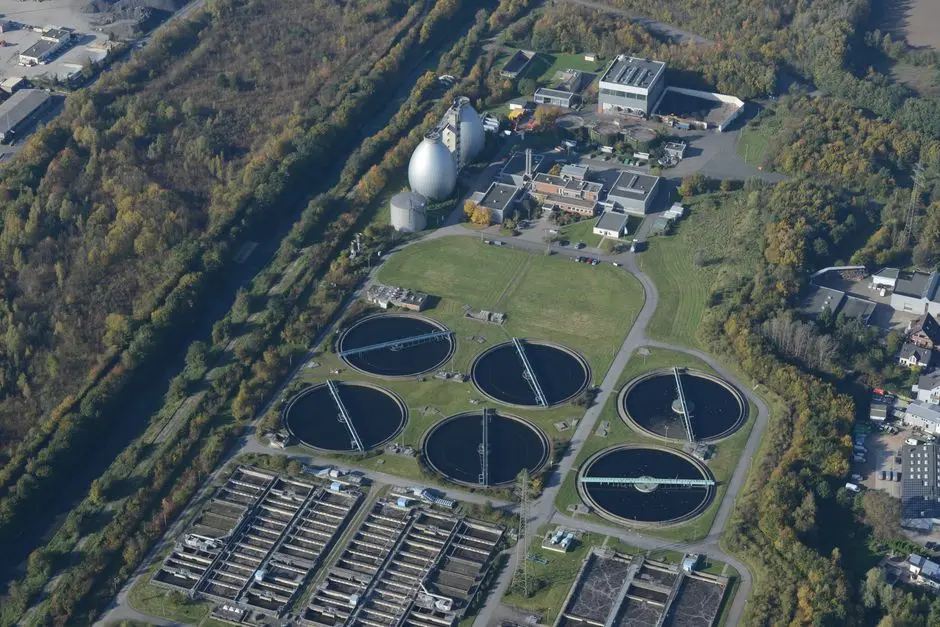
DAF separates floatable material through bubble attachment, while clarification separates heavier material through gravity; the distinction determines which stream properties can be removed effectively.
In DAF, dissolved air forms microbubbles that attach to conditioned particles. The combined material rises to the surface, where a skimmer removes it. PEWE describes 20–30-micron bubbles generated by its regenerative turbine aeration system, while Clearwater Industries describes 30–50-micron microbubbles in its DAF systems (PEWE, 2026; Clearwater Industries, 2026-04-27). These are supplier-specific generation characteristics, not universal DAF specifications. Actual flotation performance depends on the wastewater, conditioning regime and equipment configuration.
Clarification is gravity-driven. Heavier solids settle into a sludge collection zone and are withdrawn from the bottom. A lamella clarifier uses inclined settling surfaces to increase effective separation area within the vessel footprint, making it a relevant option for streams containing readily settleable material.
Chemical conditioning is central to many DAF applications. Clearwater Industries states that proper coagulation and flocculation are necessary for optimal performance because conditioning increases particle size and improves contact with microbubbles. After conditioning, the skimmer removes floated solids while heavier material can settle into the DAF collection zone (Clearwater Industries, 2026-04-27). Therefore, DAF and gravity separation are not mutually exclusive within one DAF package.
Neither mechanism reliably substitutes for biological treatment of soluble or dissolved organics. PEWE identifies insoluble TSS, BOD and FOG as targets for its DAF systems and also describes DAF as pretreatment ahead of municipal biological treatment (PEWE, 2026). This distinction matters when a factory is evaluating a complete treatment train rather than a separator alone.
DAF Versus Clarifier: Decision Matrix for Factory Wastewater
DAF earns its place when oil capture and fine-solid removal justify added conditioning and mechanical complexity; clarification is favored when the dominant objective is economical removal of heavy settleable solids.
| Decision criterion | DAF | Clarifier |
|---|---|---|
| Oil and FOG | Strong fit for free oil, emulsified oil and FOG when particles are conditioned appropriately | Not the primary mechanism for buoyant oily contaminants |
| Fine and colloidal solids | Can remove conditioned fine floc through flotation | Performance depends on settling characteristics; inclined plates may improve separation of suitable solids |
| Heavy sediment | Heavier material may collect in the bottom zone | Primary fit for readily settling solids |
| Chemical conditioning | Often required; coagulation and flocculation improve particle size and bubble attachment | May still be required for poor-settling material, but flotation is not the objective |
| Mechanical complexity | Requires air generation, recycle or saturation, conditioning, skimming and solids handling | Generally less mechanically complex |
| Operating cost | May be more cost-effective for particular oily contaminants | Generally lower operating costs |
| Sludge or float handling | Produces recoverable float plus settled solids; downstream handling must accommodate both | Produces a concentrated settled-sludge stream |
| Downstream biology | Useful physical pretreatment before biological treatment | Can provide solids clarification before downstream biological treatment |
The available commercial comparison is useful only within its stated applications. In a food-processing stream with high oil content, Ecologix reports 95% oil-and-grease removal with DAF compared with 70% for a clarifier treating the same stream. In a mining facility carrying heavy sediment, a clarifier reportedly reduced solids by 90% at lower cost (Ecologix Environmental Systems, 2026). Neither result guarantees performance for EV manufacturing wastewater because the industrial stream, contaminant properties and treatment objectives differ.
For a mixed oily and sediment-heavy flow, the practical train may place DAF before clarification: DAF removes recoverable oil and conditioned fine floc, then the clarifier handles residual solids. The arrangement should be tested as a complete train because upstream conditioning changes the solids reaching both units.
Specify the automatic chemical dosing system as part of the process scope, not an accessory added after commissioning. DAF quotations that omit dosing, mixers, flow control or flocculation leave the central performance variables undefined.
Size the Treatment Train from Real Plant Data
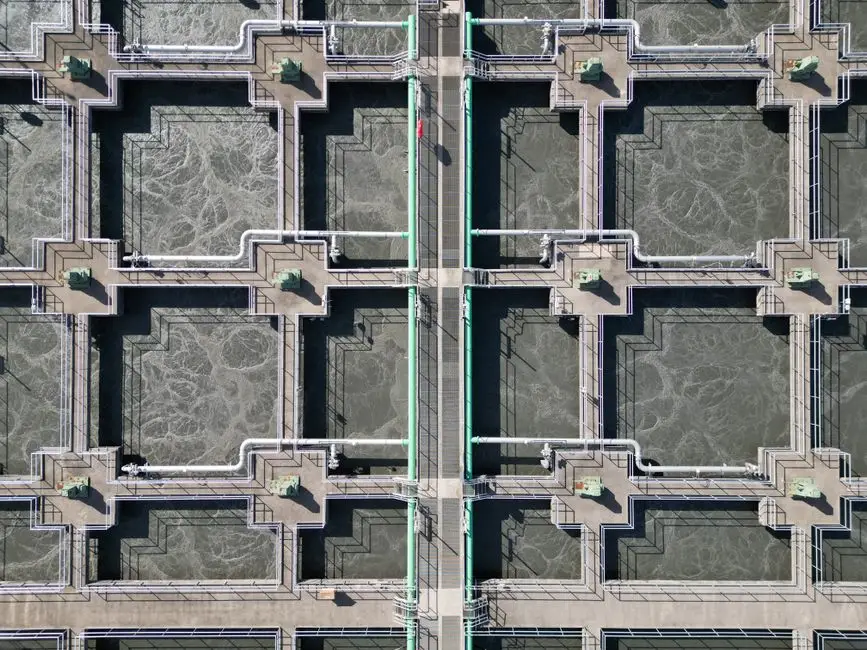
Equipment selection should begin with measured flow and wastewater characterization, then test whether catalog equipment ranges cover the required operating envelope; a catalog range alone is not a guaranteed duty.
First, measure flow by stream and shift. Average daily flow can conceal short production peaks, cleaning events or wash-water surges that determine equalization and peak treatment requirements. Characterize TSS, oil or FOG, settleable solids, pH and temperature, adding metals where the selected stream makes them relevant. Record variability across operating conditions because the mixed wastewater may be more difficult to treat than any individual sample.
Use wastewater analysis as the first selection gate, consistent with Ecologix’s guidance. It should establish whether the objective is oil recovery, solids capture, biological pretreatment or a combination. Without that basis, supplier capacity comparisons are not comparable.
| Sizing input | What the buyer should obtain | How it affects the decision |
|---|---|---|
| Hydraulic profile | Flow by stream and shift, including peak and batch-cleaning periods | Defines equalization, peak flow and treatment-train configuration |
| Wastewater composition | TSS, oil or FOG, settleable solids, pH, temperature and relevant metals | Defines the removal mechanism, chemical tests and expected loading |
| DAF equipment range | HydropureWater DAF range of 4–300 m³/h across 13 models | Compare the catalog range with required design flow and operating envelope; validate performance separately |
| Clarifier information | HydropureWater lamella-clarifier specification of 20–40 m/h surface loading | Treat as equipment information requiring validation against the selected wastewater and selected solids |
| Complete auxiliary scope | Equalization, dosing, flocculation, skimming, sludge withdrawal, standby provisions and controls | Prevents comparison of an incomplete separator against a complete treatment package |
The DAF range and lamella surface-loading figure are supplier equipment information, not field results from a Sunbury EV plant. The buyer must require the supplier to identify the assumed flow, contaminant basis and operating condition behind each offer. More clarifier selection guidance for heavy solids is useful for sediment-heavy duties, but it does not replace site-specific settling or flotation trials.
Pilot Before You Buy: Test the Decision
Pilot testing is the most direct way to determine whether chemical conditioning will produce recoverable float, manageable sludge and acceptable removal from the actual EV or automotive wastewater.
Test the worst-case stream and representative mixed wastewater. Clean-water trials establish equipment function but do not demonstrate how emulsions, paint residue, colloids, abrasives or variable detergents will affect conditioning and separation. Compare DAF and clarification using the same wastewater and agreed analytical methods.
- Establish agreed oil and FOG, TSS and settleable-solids analytical methods.
- Test the selected chemical programs and record doses, pH and mixing conditions.
- Measure oil and FOG removal, TSS capture and skimmer performance.
- Measure sludge volume, settleability and dewatering behavior.
- Record chemical consumption, power demand and operator attention.
- Evaluate downstream biological treatment, storage and discharge requirements.
Confirm whether the float is a recoverable oily waste, whether solids retain enough oil to complicate downstream handling, and whether the settled sludge can be withdrawn and managed consistently. If dewatering is required, evaluate a plate-and-frame filter press against actual sludge rather than a generic solids description.
Where an installed DAF is being modified, the 2026 DAF retrofit and upgrade guide provides a framework for evaluating existing performance, controls and treatment capacity. Pilot work remains necessary because retrofitting a separator does not change the wastewater chemistry.
Ecologix concludes that selection depends on wastewater characteristics, operational constraints and treatment goals (Ecologix Environmental Systems, 2026). A site-specific pilot therefore supplies the evidence needed to connect those general requirements to the proposed Sunbury equipment.
A Practical Selection Checklist for Sunbury Buyers
A defensible equipment decision requires a complete process and compliance basis, not a separator quotation that omits the systems needed to operate it.
- Require every proposed configuration to state its flow range, wastewater basis, contaminant basis and treatment objective.
- Request skid dimensions, material selection, utility requirements, automation, instrumentation, controls, spare parts, maintenance access and local service support.
- Confirm whether the quotation includes equalization, chemical conditioning, flocculation, skimming, sludge withdrawal, controls, commissioning and performance testing.
- Ask for comparable operating experience with oily or EV-related industrial wastewater, and distinguish general supplier claims from guaranteed project results.
- Request the chemical-conditioning basis, including the selected chemicals, expected dose range, mixing method, control strategy and operator tasks.
- Define float and sludge handling, including storage, sampling, dewatering and the disposal route.
- Verify the applicable Sunbury sewer-pretreatment or discharge requirements before freezing the equipment specification.
Compare whole-life requirements rather than purchase price alone. Ecologix states that clarifiers generally have lower operating costs, while DAF may be more cost-effective for specific oily contaminants (Ecologix Environmental Systems, 2026). The purchasing conclusion should reflect the actual stream: a DAF package with chemical dosing, air generation, skimming and float handling may be justified for an oily wash stream but unnecessarily complex for heavy sediment that clarifies effectively.
Before accepting a bid, ask the supplier to reconcile the proposed equipment with the automatic chemical dosing system, the DAF or clarifier internals, equalization and downstream solids handling. Any omitted item becomes a cost, interface or operating risk during installation.
Frequently Asked Questions
What does a DAF or clarifier for EV and automotive wastewater in Sunbury cost?
There is no defensible equipment price without the wastewater analysis, flow profile, treatment objective and complete equipment scope. Ecologix states that clarifiers generally have lower operating costs, while DAF may be more cost-effective for particular oily contaminants (Ecologix Environmental Systems, 2026). Request itemized quotations for the separator, equalization, chemical conditioning, controls, utilities, sludge handling, commissioning and service, then compare the expected chemical and utility demands for the actual stream.
How should a factory size and select a DAF or clarifier?
Measure flow by stream and shift, characterize the relevant contaminants and define the treatment objective before selecting a model. Then require a site-specific pilot using actual or representative mixed wastewater, including the intended chemical program. The pilot should establish removal performance, sludge behavior and operating demands before the final size is accepted.
What should buyers check when selecting a treatment-equipment supplier?
Require stream-specific evidence, not generic removal claims. The supplier should identify the wastewater and flow basis, provide pilot data where available, state material and utility requirements, define the controls, describe maintenance and local service, and price the complete skid. Also request the float and sludge-handling provisions so that critical auxiliary equipment is not omitted from the comparison.
Does physical clarification alone establish discharge compliance?
No. DAF and clarifiers provide physical separation, but soluble or dissolved contaminants may require additional treatment. The final train must reflect the receiving authority’s applicable sewer-pretreatment or discharge requirements for the Sunbury site. Verify those requirements with the responsible authority and tie each analytical requirement to a defined treatment and monitoring step before acceptance.