Choose the treatment architecture from peak demand and reuse goals
A Mexico City hotel or resort should select a segregated biological treatment system sized around peak wastewater flow and the intended reuse route, rather than average occupancy alone. A packaged A/O hotel wastewater treatment plant is a practical option for a compact, automated, below-grade installation, with a verified treatment-flow range of 1–80 m³/h. An MBR wastewater treatment system for advanced reuse becomes more attractive when reuse quality, compact installation or stringent solids separation drives the brief; its listed range is 10–2,000 m³/day. The final selection depends on measured flows, wastewater characteristics, available space, reuse objectives and site-specific requirements confirmed with the relevant Mexican authorities.
Hotel wastewater is not a constant feed. Occupancy, meal periods, events, laundry cycles, seasonal demand and irrigation can create peaks that are poorly represented by an average daily flow. Kitchen discharge may also carry grease and solids, while laundry and guest-room flows have different operating schedules. The design basis therefore needs both a daily load profile and a peak-hour flow calculation.
The reuse destination must be defined before choosing the process train. Toilet flushing, laundry, landscape irrigation reuse and other applications should not be treated as interchangeable because each has different water-quality, storage, distribution and backflow-control requirements.
| Decision condition | Initial architecture to evaluate | Equipment boundary from the supplied product information |
|---|---|---|
| Compact below-grade treatment is the priority and the reuse route has conventional requirements | Packaged anoxic/aerobic biological treatment | WSZ treatment flow: 1–80 m³/h |
| Advanced reuse, stringent solids separation or a compact membrane process is the priority | MBR | Listed capacity: 10–2,000 m³/day |
| Operating load is uncertain or the project requires staged deployment | One or more packaged units, subject to hydraulic review | Module arrangement depends on measured peak flow and site constraints |
These ranges are product-selection boundaries, not recommended plant sizes for a Mexico City property. The supplied research does not establish a universal Mexico City discharge limit, sewer-discharge condition, irrigation standard or reuse target. Each condition must be confirmed for the specific receiving point and reuse application.
Map the hotel's wastewater before selecting a plant
Measured flow and wastewater characterization are the inputs that turn a catalog capacity into an engineered system. Begin by separating the flows that enter the sanitary treatment train from streams that have a separate destination or require dedicated pretreatment.
- List each source separately. Request data for guest rooms, kitchen and food service, laundry, pools, spas, staff facilities and irrigation. Identify whether pool and spa discharges enter the sanitary system and whether any kitchen stream is grease-intercepted before collection.
- Record the operating pattern. Document occupancy, meal periods, events, laundry schedules, seasonal peaks, summer demand and any planned expansion. Average daily flow remains useful, but it cannot establish the hydraulic peak by itself.
- Sample the influent. Where relevant, request testing for flow, COD, BOD, suspended solids, fats, oils and grease, pH and temperature. These results determine biological loading, equalization needs, pretreatment and the need for chemical dosing.
- Map the site and receiving route. Establish the sewer connection or discharge point, flood level, subsurface utilities, electrical access, odor constraints, installation access and the proposed reuse destination.
- Match the network range to the process. A single packaged unit, multiple modules or an MBR may be appropriate depending on the documented flow range, redundancy requirement and installation arrangement.
Fibrous material, plastics and other debris can damage downstream pumps, valves or biological processes, so a rotary mechanical bar screen should be evaluated as a possible protective pretreatment step. Where oil, grease, FOG, suspended solids or colloidal material require dedicated removal, the supplied DAF equipment catalog lists 13 standard models spanning 4–300 m³/h.
The buyer should obtain actual measurements rather than relying on occupancy multipliers alone. Metering should cover meaningful operating periods and identify the maximum coincident demand. The civil engineer can then determine equalization, collection diameter, pump requirements and the number of treatment modules needed for the verified peak flow.
Compare packaged A/O and MBR treatment for hotel sites
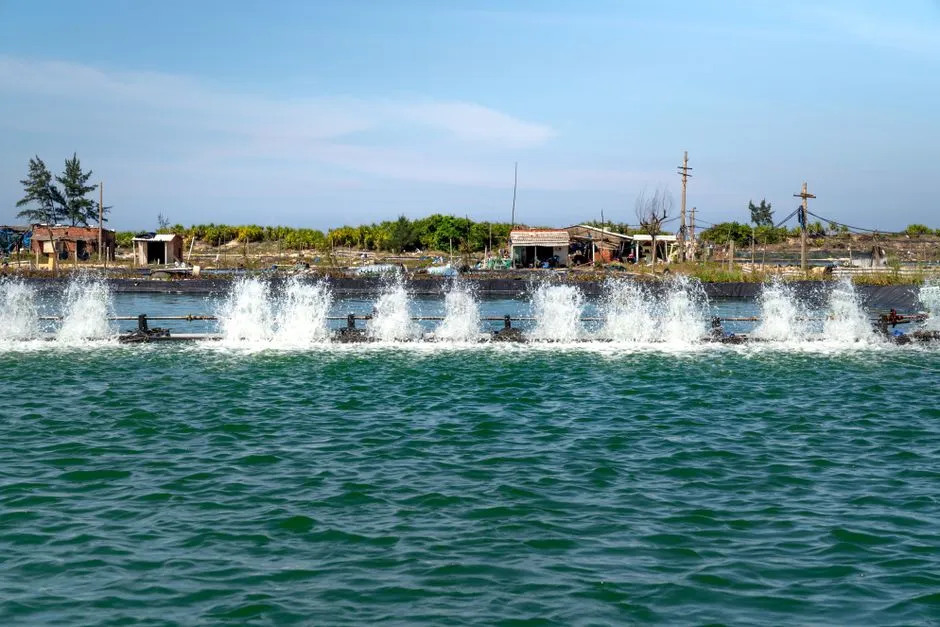
The WSZ and MBR serve different design priorities: packaged A/O treatment consolidates conventional biological treatment into a compact installation, while MBR adds membrane-based solids separation to the biological process. Neither architecture should be selected from nominal capacity alone.
The WSZ combines anoxic/aerobic biological contact oxidation, sedimentation and disinfection in one buried package. The supplied product information describes it as fully automated, requiring no operator, and suitable for installation below grade with landscaping above it. A trailer-mounted arrangement is also identified for mobile deployment. Its verified treatment-flow range is 1–80 m³/h, and the listed applications include hotels, hospitals, residential communities, factories and rural sites.
That configuration makes the underground integrated sewage treatment plant WSZ relevant where the project needs conventional biological treatment, a compact footprint and limited visible plant infrastructure. Its treatment stages must still be coordinated with the hotel's collection system, influent characteristics, discharge route and reuse requirements.
The MBR combines activated-sludge treatment with submerged PVDF membrane filtration. The supplied specification states filtration below 1 μm and lists capacities from 10–2,000 m³/day. For a hotel brief centered on higher-quality reuse, a smaller footprint or stringent solids separation, the integrated MBR treatment system is the more relevant starting point. Membrane modules also need to be considered as part of a complete treatment process rather than as an isolated replacement for biological treatment.
| Evaluation item | Packaged WSZ A/O system | MBR system |
|---|---|---|
| Listed capacity | 1–80 m³/h | 10–2,000 m³/day |
| Treatment arrangement | Anoxic/aerobic contact oxidation, sedimentation and disinfection in one buried package | Activated sludge with submerged PVDF membrane filtration |
| Installation characteristic | Below grade with landscaping above; trailer-mounted option identified | Compact process platform; final arrangement requires project design |
| Filtration specification | No membrane pore-size specification provided | Filtration below 1 μm |
| Best initial fit | Compact conventional treatment in a landscaped installation | Advanced reuse, stringent solids separation or compact installation priorities |
| Evidence limit | No verified reuse guarantee, removal efficiency or operating cost was established in the supplied sources | |
If the design brief requires a particular MBR membrane bioreactor module, its technical scope should be matched to the manufacturer’s complete process design rather than purchased as a stand-alone unit. Buyers should also require membrane cleaning, replacement, controls access and maintenance arrangements in the commercial scope. The supplied sources do not support numeric removal guarantees, reuse performance claims or operating-cost comparisons, so those items belong in the supplier’s documented performance criteria and site-specific proposal.
Add pretreatment and disinfection where the wastewater demands it
Pretreatment should be assigned by stream composition, not added as a standard package. A defensible process begins with physical protection, removes contaminants that interfere with biological treatment, and ends with disinfection appropriate to the receiving route.
For guest-room and laundry collections, evaluate a rotary mechanical bar screen where rags, plastics, fibrous debris or other material could overload downstream pumps, valves or the biological process. The screen selection should follow the measured solids profile and the accepted discharge of screenings.
Kitchen, food-service and other grease-bearing streams require a separate assessment. The supplied DAF product information lists 13 standard models from 4–300 m³/h for applications involving oil, grease, FOG, suspended solids or colloidal matter. The dissolved air flotation machine should be considered where dedicated removal before biological treatment is justified by influent testing and the collection-system design.
Chemical dosing should also be conditional. A PLC-controlled chemical dosing skid can support pH adjustment, coagulation or flocculation, but the supplied catalog establishes the equipment configuration rather than proving that every hotel requires dosing. The chemical, dose range, control response and handling requirements must follow laboratory testing and the supplier’s process design.
| Process need | Equipment to evaluate | Selection basis |
|---|---|---|
| Remove fibrous and solid debris | Rotary mechanical bar screen | Observed debris, solids loading and downstream equipment protection |
| Remove oil, grease, FOG, suspended or colloidal solids | DAF machine | Stream-specific characterization and required pretreatment duty |
| Adjust pH or perform coagulation/flocculation | Automatic chemical dosing system | Influent testing, process calculation and site safety review |
| Disinfect treated water | UV sterilizer, chlorine dioxide generator or ozone-based treatment | Application, site safety, acceptance criteria and local requirements |
| Dewater treatment sludge | Plate and frame filter press | Sludge characteristics and selected solids-handling route |
For advanced reuse, compare the available UV sterilizer, chlorine dioxide generator and ozone-based options against the intended application, operator safety, residual management, storage conditions and local acceptance. The research does not establish one universally superior disinfectant for a Mexico City hotel.
Solids handling must be included in the treatment architecture. The supplied plate and frame filter press information lists filtration areas from 1 m² to 500 m², providing a selection range where sludge dewatering is required. Final sludge handling and disposal routes remain project-specific.
Evaluate water reuse as part of the 2026 project scope
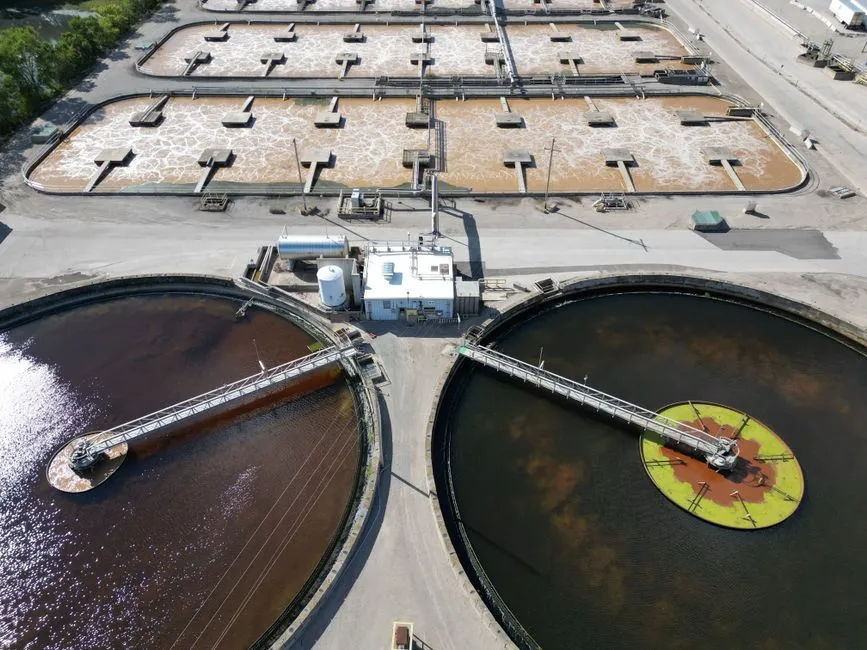
Reuse is an integrated water system, not an add-on feature attached to a treatment plant. The destination and its required water quality must be established before equipment selection, because storage, distribution, backflow prevention and treatment requirements depend on the intended use.
Classify the route first. Toilet flushing, laundry, landscape irrigation and other applications require separate technical and regulatory checks. Ask the project team to identify whether reclaimed water will be stored, how it will be distributed, whether a separate loop is required and what cross-connection controls will prevent contact with potable water or other unsafe flows.
The supplied research does not provide Mexico City reuse limits, irrigation criteria or property-specific acceptance requirements. Those values must be obtained from the competent authority and the applicable reuse guidance; they should not be inferred from generic treatment claims.
There is useful strategic evidence, but not a Mexico City design standard. A 2008 study by Redalyc and the Universidad Autónoma del Estado de México examined desalination and wastewater reuse in Los Cabos, a geographically different Mexican tourism region. It reported that Los Cabos hosted 25% of its state population and described private desalination and blackwater-reuse plants as fundamental to hotel-development water-management strategies because demand was increasing against a heavily exploited aquifer.
For a compact reuse platform, MBR offers the specified filtration below 1 μm. That does not by itself establish compliance for toilet flushing, irrigation, laundry or any other destination. Additional treatment and verification may still be required.
Where further polishing is needed, the supplied UF specification includes 2,000–40,000 L/h capacity, 0.03 μm PVDF membranes, automatic backwash and air scour. The ultrafiltration system should therefore be evaluated as a potential polishing stage, not assumed into every hotel project. Reverse osmosis is a separate high-purity process and should not be treated as the default route for hotel sewage reuse. Any RO decision requires a defined water-quality objective, concentrate-management plan and site-specific process design.
Plan procurement, installation and operating responsibilities
Procurement should begin with a complete engineering basis, not a catalog-capacity comparison. Without measured flow, wastewater characterization, reuse targets and site constraints, two quotations cannot be evaluated on the same technical and commercial basis.
- Issue a prequalification package. Include measured flow records, the wastewater characterization, reuse objectives, site drawings, available utilities, subsurface constraints and confirmation of the discharge route.
- Require a complete process flow. The proposal should cover collection, equalization, pretreatment, biological treatment, solids separation, disinfection, reuse or discharge and sludge handling.
- Test the capacity claim. Ask each shortlisted supplier to demonstrate that the proposed arrangement meets the documented peak flow and treatment-stage requirements, rather than relying only on a maximum catalog rate.
- Clarify interfaces. Define installation method, excavation requirements, controls, utilities, commissioning, training, maintenance, replacement items, local support and responsibilities for civil works.
- Use modularity where operations require it. Multiple units or a staged installation can reduce disruption around occupied guest areas, landscaped grounds and active hotel operations, provided the hydraulic and process design supports that arrangement.
The domestic sewage treatment equipment comparison provides a useful reference for packaging questions, but it does not replace site-specific design for Mexico City. The 2026 wastewater-compliance treatment guide for plant acquisitions in Mexico similarly reinforces the need to verify operating status and documentation during acquisition.
Do not publish indicative plant prices from generic capacity ranges. The supplied research contains no Mexico City hotel wastewater equipment pricing, and no reliable cost comparison can be made without the selected architecture, flow basis, wastewater loading, excavation conditions, utilities, reuse targets and supplier scope. Request itemized quotations that separate equipment, freight, installation, commissioning, civil works, controls, training, warranties and long-term service.
Frequently Asked Questions
Should a Mexico City hotel choose packaged A/O treatment or an MBR?
Choose packaged A/O treatment when conventional biological treatment, a compact below-grade arrangement and landscaping over the plant are the main priorities; the WSZ is listed from 1–80 m³/h. Evaluate MBR when advanced reuse, stringent solids separation or a compact membrane process is central to the brief; its listed range is 10–2,000 m³/day and filtration is specified below 1 μm. The decision must still follow measured peak flow and the confirmed reuse route.
What information is required to size a hotel wastewater treatment plant?
Request measured flow records, seasonal and event operating profiles, wastewater characterization and the intended reuse or discharge destination. Peak flow is a key design input because average daily flow does not represent concentrated guest-room, meal-period or laundry demand. The product ranges are 1–80 m³/h for WSZ and 10–2,000 m³/day for MBR; they are selection boundaries, not automatic recommended sizes.
What should a buyer request from a wastewater treatment supplier?
Request a complete process flow, capacity demonstration at the documented peak, treatment-stage scope, control philosophy, installation drawings, commissioning criteria, maintenance schedule, replacement items, training, warranty and local technical support. Also ask for the proposed performance test and the method used to demonstrate the claimed effluent or reuse quality. These documents allow the hotel, civil engineer and environmental manager to evaluate equivalent proposals.
How can a buyer control reuse and regulatory-compliance risk?
Confirm the property’s specific discharge or reuse route and obtain the applicable requirements from the competent Mexican authority. Define each reuse application separately and include storage, distribution and backflow prevention in the design. The research does not establish universal Mexico City reuse limits, and MBR filtration below 1 μm alone should not be treated as proof of compliance for a particular destination.
How much should a Mexico City hotel wastewater treatment system cost?
A meaningful price comparison requires the selected treatment architecture, measured peak flow, wastewater loading, excavation and site conditions, utilities, reuse treatment, civil works and the scope of commissioning and service. The supplied research contains no Mexico City hotel equipment pricing, so request itemized supplier quotations against a common engineering basis rather than relying on an unsupported price range. A useful comparison method is also summarized in the hotel wastewater system selection for another water-stressed city and the hotel wastewater comparison for packaged A/O and MBR systems.