What Wastewater System Does a Delhi Hotel or Resort Need?
A Delhi hotel or resort generally needs an on-site sewage treatment plant that treats domestic wastewater, segregates and removes kitchen FOG, handles variable occupancy loads, and enables safe reuse. An underground packaged A/O plant is suitable where footprint, automation, and straightforward operation are priorities; an MBR is appropriate where higher-quality reuse or severe space constraints justify added complexity. Kitchen wastewater must be separated at source because restaurant effluent can contain high oil and grease. Sizing should reflect peak flow: Spans Envirotech reports 15–20 KLD from a 100-room hotel and 60–120 KLD from a large 400-plus-room property with extensive food and beverage operations.
The required hotel sewage treatment plant is a treatment train, not a single tank: inlet protection or fine screening, biological treatment, clarification, disinfection, sludge management, and a controlled reuse or discharge route. A generic industrial effluent treatment plant is not the default because domestic hotel sewage has relatively high organic loading, but variable flow, food-service FOG, laundry discharges, guest expectations, and reuse requirements. Those conditions affect hydraulic loading, pretreatment, footprint, monitoring, and operating responsibility.
| Design issue | Recommended response for a hotel or resort |
|---|---|
| Treatment train | Fine screening or inlet protection, biological treatment, clarification, disinfection, sludge management, and controlled effluent routing. |
| Footprint | Evaluate an underground integrated sewage treatment plant where land and visual impact are constrained. |
| Reuse quality | Evaluate an MBR membrane bioreactor where tighter effluent quality and minimum footprint justify greater operating complexity. |
| Kitchen wastewater | Install a separate commercial grease trap or interceptor before wastewater enters the biological process. |
Guestrooms, restaurants, banquets, kitchens, laundry, and staff facilities produce different wastewater characteristics. A 2016 Journal of Advances in Science and Technology review detected high oil and grease in restaurant wastewater, confirming that kitchen flow cannot be treated as ordinary domestic sewage. The purchase specification should therefore cover biological capacity, hydraulic variation, FOG pretreatment, disinfection, sludge withdrawal, and reuse controls as one integrated system.
No packaged technology should be called “compliant” merely because it bears a technology label. Compliance depends on the complete design, installed capacity, hydraulics, site-specific consent conditions, reuse controls, monitoring, and operation. Spans Envirotech states that covered hotels must obtain Consent to Operate from the relevant State Pollution Control Board, while the applicable Delhi requirements must be confirmed directly with the Delhi SPCB.
Size the Plant for Peak Occupancy, Not Average Daily Demand
A defensible design starts with measured or vendor-estimated wastewater generation for each operating department, not with a generic per-room factor. Collect guestroom water records, restaurant and banquet consumption, laundry throughput, kitchen discharge, pool and spa make-up, irrigation, staff fixtures, and event schedules. Ask the bidder to show how each stream was converted into an average design flow and a peak hydraulic condition.
Spans Envirotech provides two useful screening references: 15–20 KLD for a 100-room hotel and 60–120 KLD for a large five-star business hotel with more than 400 rooms and extensive F&B facilities. These figures are vendor-published examples, not universal Delhi design standards. They can help identify an order of magnitude, but the selected unit and operating basis—KLD or m³/day—must be stated explicitly and checked against the actual property.
| Sizing input | Information the bidder must receive | Why it affects design |
|---|---|---|
| Rooms and occupancy | Room count, daily occupancy pattern, seasonal profile, and projected visitor nights | Establishes domestic wastewater variation |
| Food service | Restaurant seats, banquet occupancy, kitchen throughput, menus, and catering schedule | Sets peak FOG and wastewater load |
| Events | Wedding, conference, festival, and tourism calendar | Tests short-duration peak flow |
| Other uses | Laundry, pool, spa, staff areas, irrigation, and discharge route | Defines hydraulic and quality variability |
| Site and operating constraints | Plant-room area, headroom, power, access, drainage routes, and reuse applications | Controls equipment selection and civil works |
Occupancy swings can be severe. Spans Envirotech describes a 400-room hotel operating at 30% occupancy on weekdays and 95% on weekends. That condition requires equalization, hydraulic control, and biological-process resilience; the biological capacity must not be selected from a low-occupancy month. Add peak events, weddings, conferences, festivals, and seasonal tourism to the design case.
For equipment benchmarking, the published WSZ range is 1–80 m³/h, while the published MBR range is 10–2,000 m³/day. These are product capacity ranges, not evidence that either range suits a particular hotel. Require the hydraulic calculation to reconcile peak hourly flow, equalisation volume, biological loading, membrane or clarifier capacity, and the selected operating duty.
A useful bid review asks: “What recorded flow or consumption data supports this capacity, and what happens during the stated peak operating case?” If the answer is only a room-count rule of thumb, the design has not yet been demonstrated for the property.
Treat Kitchen Wastewater Separately Before Biological Treatment
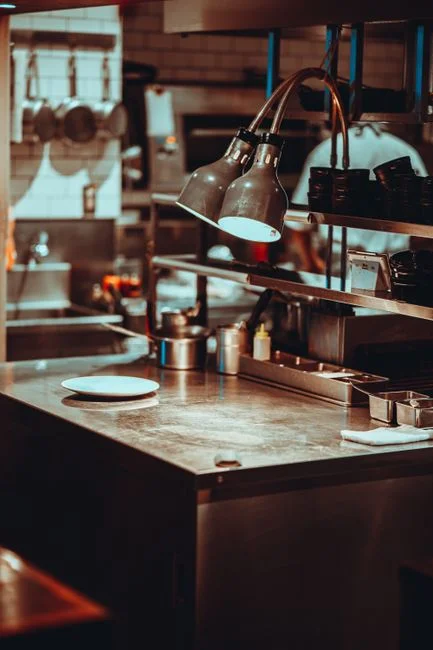
Kitchen wastewater must be segregated before it reaches the main domestic sewage stream because FOG can interfere with biological treatment and foul downstream equipment. Separate cooking, dishwashing, and food-preparation drains into a suitable commercial grease trap or interceptor. The gravity grease interceptor arrangement and its pumping-out arrangement should be shown in the process flow rather than left as an unpriced assumption.
The evidence for segregation is direct: the 2016 Journal of Advances in Science and Technology review reported high oil and grease in restaurant wastewater. Spans Envirotech further explains that untreated FOG can coat biological carrier media, inhibit biological activity, contribute to floating sludge in clarifiers, and cause pipe blockages. It therefore does not make engineering sense to send kitchen flow directly into a packaged biological unit and treat FOG removal as optional equipment.
The tender should define:
- separate collection from kitchen and food-service areas;
- pretreatment sizing based on peak kitchen throughput, service style, menu, and event catering;
- cleaning and inspection access, including how the trap remains serviceable without disrupting food operations;
- pumping-out frequency, collection method, destination, and authorized disposal responsibility;
- sludge and recovered grease records retained by the property; and
- a trigger for additional cleaning or servicing during high-event periods.
Room count alone cannot size FOG pretreatment. A 200-room hotel with limited room service and a 200-room property operating several banquet kitchens do not create the same grease load. Ask for the kitchen’s operating schedule, drain plan, trap configuration, and peak service assumptions.
The WSZ unit can provide the main biological package, while the MBR can provide biological treatment, membrane separation, and reuse capability. Neither product description removes the need for a separate grease-control design. For wider technology context, this domestic sewage treatment equipment guide explains the broader packaged-treatment context, but the Delhi bid still needs property-specific hydraulic and pretreatment information.
Compare Underground A/O, MBR and Discharge-Based Treatment
The treatment choice should follow reuse priorities, available space, operating capability, and the confirmed route for treated water. An underground A/O package is the practical default for a compact, largely automated installation; an MBR becomes the stronger option when tighter reuse quality and minimum footprint justify membrane operation and maintenance.
| Decision factor | Underground integrated A/O | MBR membrane bioreactor |
|---|---|---|
| Process basis | HydropureWater specifies A/O biological contact oxidation, sedimentation, and disinfection within a buried package. | HydropureWater specifies activated-sludge treatment and submerged PVDF membrane filtration. |
| Footprint | Buried package reduces above-ground land demand. | HydropureWater states a 60% smaller footprint than conventional systems. |
| Effluent claim | Performance depends on the selected design and permitted reuse or discharge route. | HydropureWater states effluent below 1 μm. |
| Operating emphasis | Automated operation with no operator required, according to HydropureWater's WSZ product specification. | Requires trained support for membrane cleaning, integrity checks, and replacement planning. |
| Published capacity | 1–80 m³/h. | 10–2,000 m³/day. |
| Best fit | Compact, automated general treatment where reuse requirements do not demand the highest polishing. | High-quality reuse and severe space constraints where added complexity is justified. |
Spans Envirotech gives supplier-stated MBR reference values of TSS below 1 mg/L and BOD below 5 mg/L for systems designed for toilet flushing and landscape irrigation without further polishing. Treat these as product-performance claims, not universal Delhi discharge limits. The installed train, hydraulic loading, disinfection, storage, and reuse conditions must be verified before relying on them.
Discharge-based treatment remains an option only after the property has confirmed its permitted route and required treated-water quality. The supplied research does not state current Delhi-specific numeric effluent limits, so the consultant should obtain those limits and any reuse conditions from the Delhi SPCB rather than reproduce generic CPCB language in the tender.
A mechanical inlet screen such as a rotary mechanical bar screen may protect downstream equipment where the wastewater stream requires it. Where additional final disinfection is required, a UV sterilizer can be evaluated as a defined process stage. Neither device changes the core selection rule: choose WSZ for compact automated treatment, or MBR when reuse quality and footprint dominate and the operator can support membrane maintenance.
Design for Odour Control, Automation and Guest-Impact-Free Operation
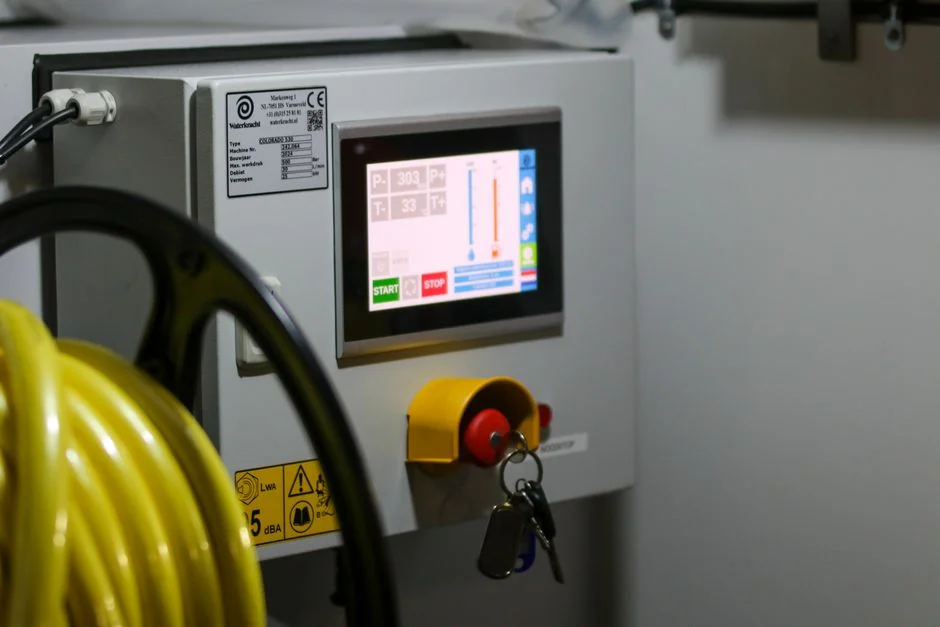
An STP located near guestrooms, food areas, or event spaces can undermine the hotel experience even when its treatment performance is adequate. Locate the plant away from occupied and hospitality-sensitive areas where practicable, cover tanks, seal effluent-handling points, and use negative-pressure ventilation connected to odour control for enclosed installations.
Spans Envirotech identifies odour control as non-negotiable for hotel STPs and describes negative-pressure ventilation, biofilters or chemical scrubbers, and tank sealing as means of preventing guest complaints. It states that all tanks and wet wells should have covers and that enclosed systems should route extracted air through odour-control equipment. Require the vendor to locate air intakes, exhaust outlets, access doors, and sludge-removal routes so the design does not simply transfer odour into a courtyard or plant-room corridor.
| Handover requirement | Evidence to request |
|---|---|
| Automation | Functional description of automatic controls, interlocks, alarms, pump duty, and remote visibility. |
| Monitoring | Spans recommends dissolved oxygen, inlet and outlet BOD/COD, sludge level, treated-water volume, and pump-status monitoring with SCADA access. |
| Maintenance | Safe access points, sludge-removal method, consumables list, routine task frequencies, and competent-person responsibilities. |
| Odor control | Tank-sealing details, ventilation arrangement, odour-control equipment, and commissioning evidence. |
| Handover | Commissioning records, operator training, recommended spares, preventive-maintenance schedule, emergency instructions, and as-built drawings. |
Hotel maintenance personnel are generalists, not specialist wastewater engineers. The operating concept should therefore minimise routine chemical handling and manual intervention. An automatic chemical dosing system may support consistent dosing, but it still requires calibrated equipment, safe chemical storage, stock control, and clear operator procedures.
Ask the supplier to define which events generate an alarm, who receives it, what immediate action is required, and when specialist support must be called. A remote dashboard is useful only if alarm ownership, response time, and escalation responsibility are assigned.
Plan Reuse Plumbing and Verify Delhi Compliance Before Purchase
Reuse should be designed as part of the wastewater system, not added after commissioning. Include a treated-water storage tank, dedicated reuse pumping, and physically separated potable and reuse plumbing. State the intended uses—such as toilet flushing and landscape irrigation—in the design basis, and confirm those uses with the Delhi SPCB before purchase.
Spans Envirotech reports that reuse can reduce hotel freshwater consumption by 20–35%. This is a supplier-reported planning figure, not a guaranteed saving for every property. Require the bidder to substantiate expected savings using the proposed reuse quantities, storage, distribution, overflow, and contamination-control arrangements.
Obtain the applicable Consent to Operate or other Delhi SPCB approvals before operation, together with the required monitoring, sampling, and compliance-reporting method. The supplied research identifies these obligations but does not provide Delhi’s current numeric effluent limits. The environmental consultant should record the applicable limits, consent conditions, sampling protocol, reporting frequency, and renewal process in the vendor brief and procurement schedule.
| Compliance or handover item | Information and responsibility to assign |
|---|---|
| Consent | Applicable Delhi SPCB approvals, consent conditions, validity dates, and the party responsible for applications. |
| Monitoring | Parameters, instruments, calibration, sampling points, analytical records, and reporting responsibility. |
| Reuse | Approved uses, storage, separation from potable water, signage, backflow controls, and operating checks. |
| Sludge | Removal method, frequency, transport, destination, authorization, records, and responsible contractor. |
| Performance evidence | STP performance data, test results, calibration records, commissioning protocol, as-built drawings, and O&M documents. |
| Certification support | Evidence required for any sustainability or green-hotel certification claimed by the property. |
Do not assign regulated sludge disposal vaguely to housekeeping. Require a named owner and an authorized route. If dewatering is included, define how the plate-frame filter press integrates with sludge withdrawal, cake handling, cleaning, and final disposal rather than treating the press as an isolated product.
Finally, cross-check the commercial offer against the selected capacity and complete treatment train. Screening, biological treatment, clarification, membrane separation where applicable, disinfection, reuse, sludge handling, controls, and documentation should each appear in the scope. Use the WSZ specification and MBR specification as structured benchmarks, not as substitutes for project-specific design and Delhi approval.
Issue a Complete Hotel STP Vendor Brief
A comparable tender starts with the same property data for every bidder. Provide room count, occupancy history, event calendar, kitchen throughput, laundry load, pool and spa demand, plant-room area, available headroom, power availability, drainage routes, soil conditions, and intended reuse applications. Include the operating philosophy: whether the property wants an automated package managed by hotel staff or a more complex membrane system supported by specialist O&M.
Require each bid to include a signed process flow, hydraulic calculation, capacity justification, treatment-performance guarantee, civil and electrical drawings, commissioning protocol, commissioning test results, O&M schedule, and priced spare-parts list. This hotel wastewater technology comparison can help frame the technical comparison, but the Delhi issue remains a site-specific approval and procurement exercise.
State clearly whether the quotation includes kitchen FOG pretreatment, odour control, UV or another disinfection stage, reuse pumping, dual plumbing, sludge dewatering, controls, commissioning, regulatory documentation, training, and first-cycle O&M support. Ask every bidder to list exclusions, assumptions, utility requirements, civil-work interfaces, delivery conditions, and approval responsibilities.
Evaluate bids on the complete scope rather than equipment price alone. Two quotations are commercially comparable only when they provide the same treatment duty, pretreatment, reuse infrastructure, automation, documentation, and operating assumptions.
Frequently Asked Questions
How much does a wastewater treatment system for a hotel in Delhi cost?
The supplied research does not provide a current Delhi price, so any single figure would be unreliable. Request itemized quotations covering design flow, treatment technology, civil works, kitchen pretreatment, odour control, disinfection, reuse pumping and plumbing, automation, Delhi SPCB documentation, commissioning, and annual O&M. Compare like-for-like scopes and ask suppliers to price exclusions separately rather than presenting a headline package rate.
Should a Delhi hotel choose an MBR or a packaged A/O STP?
Choose packaged A/O when compact, automated treatment and straightforward operation are the main requirements. Choose MBR when the permitted reuse application, minimum footprint, and supplier-stated effluent quality justify membrane cleaning, specialist maintenance, and replacement exposure. The decision should follow confirmed reuse conditions, site constraints, and the O&M capability available after handover.
What capacity does a 100-room hotel in Delhi need?
Spans Envirotech gives 15–20 KLD as a screening reference for a 100-room hotel. It is not a Delhi approval limit or a universal design rule. Require a property-specific calculation covering occupancy, restaurant service, banquets, laundry, staff areas, and peak events, then reconcile the result with the selected equipment's daily and hydraulic capacity.
Can hotel sewage be reused for landscaping and toilet flushing?
Yes, where the treatment train, disinfection, storage, pumping, and separate plumbing are designed for the intended use. Spans Envirotech identifies landscape irrigation and toilet flushing as reuse applications, but the installed conditions and current Delhi requirements must be confirmed with the Delhi SPCB before relying on any supplier-stated performance value.
What should a hotel ask an STP supplier before ordering?
Ask for the design flow and peak-case calculation, process flow, treatment guarantees, kitchen pretreatment scope, odour controls, automation, commissioning tests, regulatory documentation, as-built drawings, training, O&M support, and a named sludge-disposal responsibility. Also require every exclusion and assumption to be stated so bids can be evaluated against the same complete scope.