
Determine Which Treatment Route Applies to the Property
For a Paris hotel or resort, the correct treatment route depends first on the authorized destination of the wastewater, then on verified flows and loads—not on room count alone. A sewer connection may be feasible if the network has capacity and the authority accepts the discharge quality. A decentralized plant becomes relevant where sewer access is constrained, but it does not remove the need for technical and regulatory approval. For reuse, the intended application must be defined before treatment is selected. This pathway is consistent with the approach used in a hotel wastewater treatment comparison guide.
Begin the survey by separating guestroom and staff sanitary sewage, kitchen wastewater, laundry effluent, general wash water, outdoor washdown, and pool or HVAC discharges. Each stream has a different pollutant and chemical profile. Combining a grease-heavy kitchen stream with laundry and cleaning chemicals before characterization can make biological treatment and disinfection design less reliable.
The Paris sewer and decentralized routes require different evidence. A sewer-connected project needs confirmation of network capacity, connection conditions, pretreatment requirements and the applicable authorization. A decentralized project must define its treatment objectives, installation arrangement, monitoring, sludge destination and relationship with the competent authority. A packaged unit is not a permitting exemption.
Use the France guidance from HydropureWater only as contextual benchmarks: it states COD below 500 mg/L for discharge to sewers and below 125 mg/L for discharge to the Seine, as summarized in the France location page updated October 23, 2026. These values are not interchangeable: the property must confirm which route and authorization govern its design. For an expansion or development subject to lender due diligence, the OpenAlex technical note on small hotels and resorts addresses environmental and social assessment requirements, but it explicitly is not a complete ESA preparation guide.
Build the Design Basis from Actual Hotel Flows
Final hydraulic and process design must use verified wastewater flows, peak conditions and characterization data because the supplied research contains no Paris hotel occupancy factor or room-based sizing rule. Room count and annual water consumption can support early planning, but they cannot establish the required treatment capacity.
Request the following operating data:
- Average daily wastewater flow by stream;
- Peak-hour and peak-day flow;
- Seasonal occupancy and event-driven surges;
- Staff schedules and operating hours;
- Guestroom, food-service and laundry wastewater splits;
- COD, BOD, suspended solids, fats, oils and grease, and nutrient measurements where relevant;
- Cleaning chemicals, laundry detergents, disinfectants and pool chemicals that may affect treatment.
Size against maximum weekly and seasonal loading conditions, then test whether equalization, biological capacity, solids separation and disinfection can pass those peaks without violating the authorized discharge route. The hotel and resort wastewater system options provide a useful comparison structure, but the property data must remain the controlling input.
| Design input | Why it affects equipment selection | Evidence required |
|---|---|---|
| Average and peak flows | Determines hydraulic and biological capacity | Metered flows, operating records and peak-period analysis |
| Wastewater composition | Defines pretreatment, biological and disinfection needs | Representative sampling and laboratory analysis |
| Operating variability | Tests equalization and seasonal resilience | Occupancy, events, staffing and seasonal schedules |
| Authorized route | Sets the compliance and reuse basis | Written requirements from the competent authority |
| Site and future changes | Determines footprint, access and expansion provisions | Survey, utilities, renovation and occupancy plans |
For future-proofing, identify planned renovations, pool installations, higher occupancy, conferences or expanded laundry. Provide expansion routes, removable or isolatable stages, and an engineered bypass arrangement rather than assuming future load will remain constant.
Compare Packaged A/O, MBR and DAF Treatment
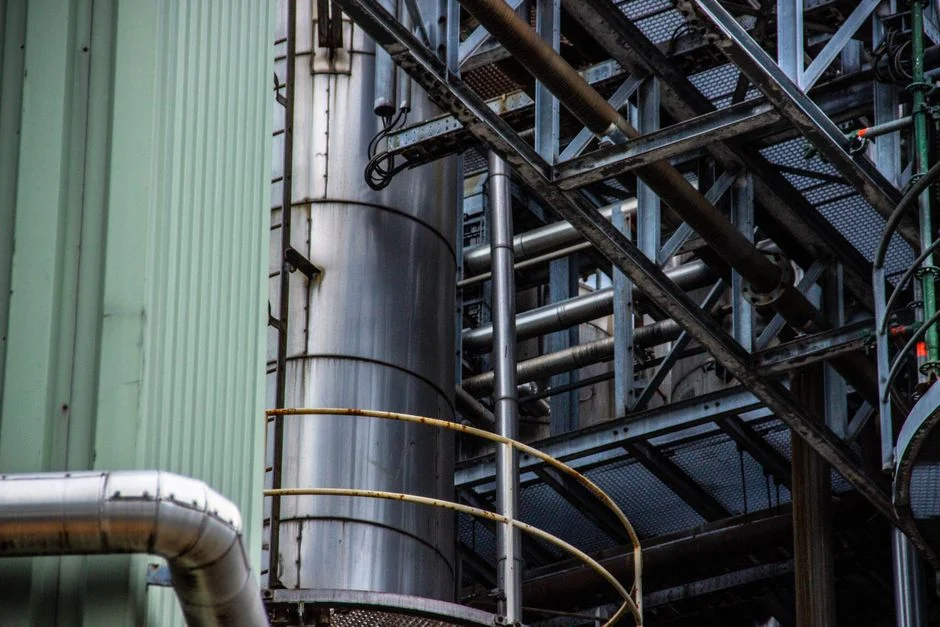
The technology comparison should follow the treatment objective: packaged A/O provides a straightforward decentralized package, MBR adds membrane solids separation and compact installation, and DAF serves primarily as pretreatment where suspended solids and grease require removal.
| Option | Relevant configuration | Catalog capacity or stated characteristic | Best fit | Main engineering issue |
|---|---|---|---|---|
| Packaged A/O | Anoxic/aerobic contact oxidation, sedimentation and disinfection in one buried, automated unit | 1–80 m³/h | Decentralized sewage treatment where the hydraulic profile and site allow a below-grade package | Must demonstrate performance at the property’s peak loads |
| MBR | Submerged PVDF membrane filtration combined with activated sludge; below 1 μm filtration | 10–2,000 m³/day; stated footprint 60% smaller than conventional systems | Constrained sites, membrane solids separation or reuse-oriented treatment | More process complexity; reuse still requires a separate authorization basis |
| DAF | Removal of suspended solids, FOG, oil and grease, and colloidal matter before biological treatment | 4–300 m³/h across 13 models | Kitchens or other streams with significant grease, oil or solids loads | Not a substitute for biological sewage treatment without process design |
The WSZ underground integrated sewage treatment plant is the simpler decentralized option in the supplied catalog: anoxic/aerobic contact oxidation, sedimentation and disinfection are integrated in a buried unit, with automated operation without a full-time operator. Its 1–80 m³/h range is an equipment envelope, not a substitute for property-specific sizing.
The integrated MBR membrane bioreactor combines activated sludge with submerged PVDF membranes. The catalog states filtration below 1 μm, a footprint 60% smaller than conventional systems and a capacity range of 10–2,000 m³/day. These are catalog specifications, not proof that a given configuration will meet a Paris authorization or reuse standard.
DAF becomes more relevant when kitchen segregation and characterization confirm material FOG, oil or suspended-solids loads. It can protect downstream biological treatment, but its skimmings and recovered solids still require a management route. A rotary mechanical bar screen may also protect pumps and downstream equipment where the collection system admits rags, plastics and fibrous debris; its necessity depends on existing collection and ragging arrangements.
MBR effluent approaching reuse quality does not establish permission to reuse it. The intended reuse application, public-health controls, distribution safeguards and authority approval must be addressed separately.
Design Pretreatment, Disinfection and Sludge Handling
A complete treatment train should run from collection and screening through equalization, FOG control, biological treatment, solids separation, disinfection and final discharge or reuse. The biological unit is only one part of that train, and residuals must be designed before equipment is ordered.
Separate kitchen streams at source where practical. If oil, FOG or suspended-solids loads are significant, place DAF after appropriate segregation and equalization so it removes material that could impair downstream biological treatment. Confirm the flow and contaminant basis before selecting the DAF model; nominal capacity alone is not a process design.
The WSZ package provides one integrated reference: anoxic/aerobic contact oxidation, sedimentation and disinfection within a buried unit. An MBR train separates activated sludge from solids through membrane filtration before the selected disinfection route. The supplied catalog includes UV-C sterilizers and chlorine dioxide generators. For chlorine dioxide, it lists capacities from 50 g/h in compact manual units to 20,000 g/h in automated industrial systems. These are equipment envelopes; dosage, contact conditions and residual controls must be derived from the treatment objective and wastewater analysis.
| Process stage | Design question | Required output |
|---|---|---|
| Collection and screening | Can the collection system exclude or remove rags, plastics and fibrous debris? | Screen or ragging strategy and debris destination |
| Equalization and FOG control | Are peak flows and kitchen grease controlled before biological treatment? | Balanced flow profile and FOG pretreatment basis |
| Biological treatment and solids separation | Can the selected A/O or MBR process meet the required loading and separation duty? | Process sizing, guarantees and controls |
| Disinfection | Which route suits the discharge or reuse application? | System capacity, controls, monitoring and chemical or UV requirements |
| Sludge handling | Where will DAF skimmings, lamella sludge or biological solids go? | Collection, dewatering, storage and authorized removal plan |
Sludge is a design output, not an afterthought. Where mechanical dewatering is required, the catalog describes a plate and frame filter press with filtration areas from 1 m² to 500 m². Select the area from sludge volume, solids concentration and required cake consistency rather than choosing the largest advertised unit.
Tie chemical dosing and pH control to characterization results. The supplied automatic dosing system is PLC-controlled for coagulants, flocculants, pH adjusters and specialty chemicals, but the required chemicals and dosing rates must be established by treatment testing and process design.
Match the Package to Paris Site and Compliance Constraints

In a constrained Paris site, equipment selection must include installation and maintainability rather than treatment capacity alone. A buried WSZ installation can preserve landscaping above the unit, while an MBR configuration may reduce the stated footprint. Neither option resolves access for membrane maintenance, lifting, inspection or sludge removal without a site-specific layout.
Confirm soil and groundwater conditions, excavation constraints, existing utilities, noise and odor sources, and access for maintenance vehicles or tanker collection. Also establish whether construction traffic, excavation and lifting operations can be accommodated without disrupting hotel operations.
The HydropureWater France location page provides a route to current French compliance resources and states that its 52 France guides were most recently updated October 23, 2026. Verify the current requirement with the competent authority. The France guidance identifies DTU 64.1, NF EN 12566-3 and SPANC requirements as relevant items, but it does not establish that all three apply identically to every Paris hotel installation.
The same France guidance references EU Directive 91/271/EEC and its 2025 recast. The competent sewer or permitting authority must determine which route, standards and discharge conditions apply to the property. Use the hotel and resort wastewater engineering guide for a structured compliance checklist, then adapt it to the Paris authority’s written requirements.
Before award, require each bidder to provide performance guarantees, general arrangement and civil drawings, O&M documentation, electrical requirements, commissioning tests, monitoring provisions, a maintenance schedule and a documented sludge-handling plan. A package that cannot be maintained at the actual site is not an acceptable technical solution.
Use a Property-Specific Selection and Procurement Framework
The final selection follows a fixed sequence: establish the discharge destination, verify wastewater quality and hydraulic peaks, resolve footprint and operating constraints, define the reuse objective, identify the authority interface and then compare technologies against the same design basis. This avoids selecting a package from catalog capacity or nominal footprint alone. A further effluent treatment supplier comparison framework can help structure bidder responses, although Paris-specific requirements must remain the controlling criteria.
| Decision stage | Question for the property | Engineering consequence |
|---|---|---|
| 1. Discharge route | Is the destination the municipal sewer, an authorized decentralized discharge, or a defined reuse application? | Sets the authority interface and treatment basis |
| 2. Wastewater basis | What are the verified flow, peak, load and chemical characteristics? | Determines equalization, pretreatment and biological capacity |
| 3. Site and operation | What footprint, access, utilities, noise and maintenance capability are available? | Determines installation architecture and service strategy |
| 4. Technology | Does the property need a straightforward automated package, membrane solids separation, high-quality reuse treatment or FOG pretreatment? | Supports A/O, MBR and DAF selection |
| 5. Procurement | Can bidders demonstrate compliance and performance on the same inputs? | Allows comparable technical and commercial evaluation |
Choose packaged A/O when the verified hydraulic profile fits an automated, below-grade treatment solution and no separate reuse-driven solids-separation requirement dominates. Choose MBR where footprint, membrane solids separation or reuse-quality objectives justify the added process complexity. Add DAF or another pretreatment stage when wastewater assessment demonstrates that FOG, oil or suspended solids warrant it.
Ask each bidder for the same complete process basis: design flow and load, treatment stages, materials, effluent guarantees, control philosophy, utilities, installation method, maintenance schedule and sludge destination. For budget comparison, require a priced scope that separates equipment, civil works, installation, commissioning, authority submissions, routine operation, major maintenance and sludge disposal. The supplied research provides no Paris equipment quotation, so a defensible price cannot be stated without a site-specific scope.
Frequently Asked Questions
Can a Paris hotel connect to the municipal sewer, or does it need an on-site treatment plant?
It may connect if the Paris network has sufficient capacity, the wastewater quality is acceptable and the competent authority authorizes the connection and any pretreatment. If sewer access is unavailable, constrained or unsuitable for the project, a decentralized treatment route may be required, with its own approval, monitoring and residual-management obligations.
Should a Paris resort choose packaged A/O or MBR?
Choose packaged A/O where a straightforward automated below-grade system matches the verified loads and the project does not require membrane solids separation. Choose MBR where footprint, solids separation or a defined reuse-quality objective justifies the additional process complexity. The decision should follow the authorized route and site constraints, not a generic technology preference.
When is DAF necessary at a hotel?
DAF becomes a stronger candidate when source-separated kitchen wastewater contains material FOG, oil or suspended solids that could impair downstream biological treatment. The wastewater characterization must demonstrate the need; DAF should not be included solely because the property has a kitchen, nor should it be treated as a substitute for biological sewage treatment.
What information should a supplier request before quoting?
Request at least a verified design flow, peak-flow basis, wastewater analysis, authorized discharge route, available footprint, reuse objective, utilities, installation constraints and applicable local requirements. For a comparable budget, ask for a priced scope covering equipment, civil works, installation, commissioning, authority submissions, operation, maintenance and sludge removal. The supplied research contains no Paris quotation, so the buyer must obtain site-specific pricing rather than rely on a generic catalog price.
Does MBR effluent automatically qualify for water reuse?
No. The treatment result must be matched to the intended reuse application, and the required technical, health and regulatory controls must be approved. A catalog claim of near-reuse-quality outlet is not evidence of permission to reuse water in a Paris hotel or resort.