Why COD and Flow Must Be Evaluated Together
Citric acid wastewater COD removal should be designed around a complete wastewater COD mass balance because concentration, organic load and hydraulic flow impose different equipment requirements. A full-scale citric acid plant found that one highly concentrated stream carried more than 90% of the total COD load, while the dilute stream carried about 80% of the flow (Svardal et al., 1993). The concentrated stream therefore drove biological loading, whereas the larger dilute stream could dominate equalization, pumping and solids-handling capacity. Sizing from an averaged factory effluent COD would conceal both issues.
COD is the oxygen equivalent of oxidizable material in water. It is useful as an organic-loading indicator, but it does not establish that every measured fraction is biodegradable, nor does it describe sulfate, ammonia, calcium, suspended solids or inhibitory compounds. The design basis should therefore separate at least the raw and filtered COD, and should distinguish high-strength streams from the larger dilute flow.
| Design quantity | What it controls | Why an average COD is insufficient |
|---|---|---|
| COD concentration | Organic concentration entering each unit | Averages conceal the highly concentrated citric acid factory effluent stream |
| COD mass load | Anaerobic and aerobic reactor loading | Concentration alone does not establish kilograms of COD per day |
| Hydraulic flow | Equalization, pumping, membrane and solids-handling capacity | The dilute stream can dominate flow even when it carries a smaller COD share |
| Stream segregation | Allocation of high-strength and dilute wastewater | Blending before characterization can erase the segregation advantage |
Use the measured flow and COD data to construct stream-by-stream mass balances before comparing reactor or clarification options. If suspended solids, oil, grease or floatable material are present, DAF pretreatment for suspended solids and floatable contaminants may form part of the train, but it does not replace biological conversion of soluble biodegradable COD.
The Treatment Train for Citric Acid Wastewater
A defensible citric acid wastewater treatment train separates the treatment problem into equalization, biological COD conversion, solids separation and final polishing. The recommended sequence is:
- Characterize and segregate the high-strength and dilute streams at their sources.
- Equalize the selected streams and control pH before biological treatment.
- Apply anaerobic COD removal to the high-strength stream where biodegradability and inhibition checks support that route.
- Combine the treated streams and complete aerobic biological polishing.
- Separate biological solids and polish further where the discharge or reuse specification requires it.
- Disinfect or reuse the final effluent only as permitted for the site.
The full-scale S3 installation provides useful configuration evidence, not a universal recipe. Its first stage comprised an equalization tank, a 10,000 m³ anaerobic reactor and a highly loaded 2,000 m³ activated-sludge plant; the second anaerobic reactor followed in 1987. A further activated-sludge plant with a 15,000 m³ aeration tank was added for simultaneous nitrification-denitrification and entered operation in 1990 (Svardal et al., 1993).
DAF is most relevant where suspended solids, oil, grease, colloids or other floatable material must be removed before or alongside biological treatment. It separates material rather than biologically converting the dominant soluble COD load. Lamella clarification has a similar solids-separation role. If the final specification requires low suspended solids or reuse, an integrated MBR wastewater treatment system combines activated sludge with submerged PVDF membrane filtration. The product catalogue specifies capacities from 10 to 2,000 m³/day; these are equipment capabilities, not a guarantee for citric acid factory effluent.
Select the anaerobic-aerobic route only when the wastewater is predominantly biodegradable and the plant can control organic loading, alkalinity, nutrients, pH and inhibitory compounds. Equalization, pH correction and reliable monitoring are part of the biological process—not ancillary tasks to be added after reactor sizing.
Anaerobic COD Removal: Evidence, Conditions and Constraints
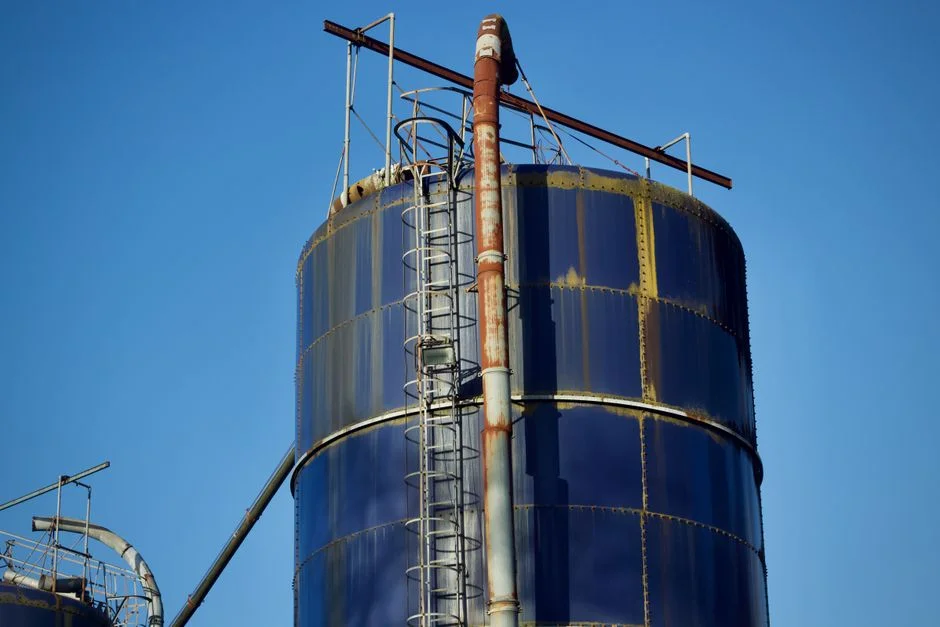
The S3 full-scale citric acid plant achieved almost 90% COD removal at an anaerobic COD loading rate of 3 to 7 kg/(m³·d) (Svardal et al., 1993). This is the clearest supplied full-scale evidence supporting anaerobic pretreatment for citric acid wastewater, but it does not establish a universal loading rate for another factory.
The same installation reduced total treatment costs to less than one third of aerobic-only treatment after the anaerobic-aerobic route was introduced (Svardal et al., 1993). That is a site-specific operating comparison, not a quotation or a general cost ratio. Capital cost, reactor construction, mixing, gas handling, sludge treatment, chemical consumption, energy and site conditions must be evaluated separately.
| Constraint reported at S3 | Potential consequence | Information required before design |
|---|---|---|
| High sulfate | Sulfate-reducing activity can contribute to hydrogen sulfide formation | Sulfate concentration, operational history, ventilation and gas-handling requirements |
| High ammonia | Elevated pH can increase ammonia toxicity | Ammonia concentration, pH, alkalinity and nitrification operating history |
| High calcium | Calcium carbonate precipitation | Calcium, alkalinity, carbonate, pH and temperature |
| Scale and solids accumulation | Poor distribution, mixing problems and loss of effective reactor volume | Solids fractionation, sludge characteristics and cleaning strategy |
S3 reported calcium carbonate precipitation at about three times the biomass growth rate (Svardal et al., 1993). Its special reactor was designed to distribute wastewater through the sludge bed and prevent sludge and lime deposition. That warning makes mixing, equalization, withdrawal and solids control central reactor-design issues.
Before defining reactor loading, request sulfate, ammonia, calcium, alkalinity, pH, temperature, COD fractionation and soluble-biodegradable-COD data. An automatic chemical dosing and pH control system can support controlled pH correction and reagent addition, but it cannot correct an incorrect loading basis. Sludge withdrawal and treatment should also be designed around the precipitation risk, with clarification or sedimentation provisions considered where required.
OpenAlex records Process Optimization on Anaerobic Treatment of Citric Acid Wastewater by Jianing Wang in 2012, confirming anaerobic treatment of this wastewater as an established optimization topic. The supplied record contains no performance data, so it should not be used to support a loading rate or removal claim.
Aerobic Polishing for Residual COD and Nitrogen
Aerobic biological treatment is the post-anaerobic stage for residual biodegradable COD and, where required, nitrogen removal. Its operating objectives are therefore broader than COD conversion alone: carbon oxidation, nitrification, denitrification and biological solids management may all affect the selected configuration.
The S3 history shows why nitrogen conditions must be evaluated early. In the first post-treatment activated-sludge plant, nitrification proceeded only to nitrite because of high ammonia and high pH. Stable nitrification was subsequently obtained in the second plant (Svardal et al., 1993). Some highly concentrated wastewater was also fed directly into the second stage to obtain more complete denitrification.
At S3, effluent NH₄-N and NO₂-N were generally below 2 mg/L, while NO₃-N was maintained below 20 mg/L with 85% nitrogen removal (Svardal et al., 1993). These results describe the cited installation. They are not universal permit limits and should not be transferred to another plant without matching influent conditions, reactor configuration and regulatory requirements.
For a conventional route, activated sludge followed by clarification can separate biomass from treated water. An integrated MBR wastewater treatment system couples biological treatment with membrane solids separation when the discharge or reuse specification requires compact, low-solids effluent. The decision between MBR and conventional activated sludge should therefore follow the required effluent quality, hydraulic variability, operating staffing and sludge-handling constraints—not a general assumption that the higher-cost configuration is always necessary.
Nitrogen design also needs the required nitrification and denitrification performance, the available carbon after anaerobic treatment, alkalinity, pH, temperature and the permitted ammonia and nitrate objectives. Without those inputs, a quoted aerobic-stage COD removal rate says little about the complete train.
Choosing Equipment for Each Treatment Objective
Match each item of equipment to the pollutant-removal task it performs; no single unit should be sold as the solution to every wastewater characteristic. Biological systems convert biodegradable organics, DAF and clarifiers remove physical solids, MBR combines biological treatment with membrane solids separation, and sludge equipment handles the solids created along the way.
| Equipment or objective | Primary role | Selection basis | Relevant product information |
|---|---|---|---|
| DAF | Remove suspended solids, FOG, oil and grease, and colloidal matter | Flow, solids inventory, floatability and required pretreatment | Dissolved Air Flotation system: catalogue range 4 to 300 m³/h |
| Lamella clarification | Separate settleable solids | Hydraulic loading, solids settling behaviour and chemical conditioning | High-efficiency sedimentation tank: catalogue surface loading 20 to 40 m/h and chemical-consumption reduction up to 30% |
| MBR | Combine activated sludge with membrane solids separation | Final solids requirement, reuse or discharge objective, flow and biological loading | Integrated MBR system: catalogue capacity 10 to 2,000 m³/day and filtration below 1 micrometre |
| Chemical dosing | Control pH and apply coagulants, flocculants or specialty chemicals | Chemical demand, dosing rate, mixing and control sequence | Automatic chemical dosing system: PLC-controlled dosing |
| UF | Provide final particulate or dissolved-solid separation where required | Influent to UF and the specified reuse or discharge quality | Size from the confirmed upstream solids load and required filtrate quality |
| Plate-and-frame dewatering | Reduce sludge volume before disposal or further treatment | Sludge volume, solids concentration, cake handling and filtrate characteristics | Plate-and-frame filter press: size from pilot sludge characteristics |
The DAF, lamella, MBR and chemical-consumption figures above are product specifications, not measured treatment results for citric acid wastewater. Likewise, sub-micrometre MBR filtration describes the equipment’s filtration capability rather than a guaranteed plant effluent value. These specifications support preliminary comparison; final sizing requires the wastewater COD mass balance, flow profile and treatment objectives.
Use this decision rule: if the objective is biodegradable COD conversion, use biological capacity and verify inhibition and biodegradability. If the objective is floatable or settleable solids, evaluate DAF or clarification. If the objective is low-solids effluent with biological treatment, evaluate MBR. If the objective is sludge-volume reduction, size dewatering from the expected solids inventory. Chemical dosing supports these functions but does not replace them.
Electrocoagulation: Useful Evidence, Different Wastewater
Electrocoagulation produced 99.5% COD removal and 94.2% oil removal in petroleum wastewater contaminated with oil and COD, according to the academic study by Abbas Muslim and Asel published by Wasit University. Those results are not evidence of equivalent performance for a citric acid factory effluent.
The petroleum-wastewater test used a 2-litre coagulation cell with four aluminium and four iron electrodes at 2 cm spacing and 12 cm submergence depth. Initial COD was 710 mg/L, initial oil was 95 mg/L, initial TSS was 73 mg/L, and the sodium chloride concentration was 0.5 g/L. Treatment used pH 7, a voltage of 10.5 V and a 50-minute treatment time; estimated energy consumption was 12 kWh/m³ (Abbas Muslim and Asel, Wasit University study).
| Evidence item | Reported basis | Applicability to citric acid wastewater |
|---|---|---|
| COD removal | 99.5% for petroleum wastewater contaminated with oil and COD | Not transferable without matching feed chemistry and pilot data |
| Oil removal | 94.2% for the cited petroleum wastewater | Relevant only if the citric acid effluent contains a comparable oily contaminant |
| Initial COD | 710 mg/L | Does not represent the high-strength citric acid stream described in S3 |
| Treatment time | 50 minutes | Cannot establish a citric acid reactor residence time |
| Voltage | 10.5 V | Cell-specific operating condition, not a design specification |
| pH | 7 | Citric acid effluent may require a different correction range |
| Energy consumption | Estimated at 12 kWh/m³ | Must be checked against the actual COD load and electricity conditions |
Performance percentage without feed composition, test conditions and energy demand is incomplete procurement information. Evaluate electrocoagulation only after characterizing the actual effluent and confirming the treatment objective. Pilot testing should establish whether coagulation and flotation provide a net advantage over biological COD removal, chemical clarification or both for the site’s composition.
Design Inputs, Pilot Testing and Performance Guarantees
A quote-ready design package must define the wastewater, the treatment envelope and the acceptance basis. Average effluent COD alone is not enough to size an anaerobic reactor, MBR or DAF system.
| Input group | Minimum information to obtain | Equipment or decision affected |
|---|---|---|
| Hydraulic profile | Average flow, peak flow, diurnal variation, batch discharges and stream segregation | Equalization, DAF, MBR, pumping and downstream solids handling |
| Organic load | Raw COD, filtered COD, BOD, COD fractionation and soluble-biodegradable COD | Anaerobic loading, aerobic polishing and chemical demand |
| Process chemistry | pH, temperature, sulfate, ammonia, calcium, alkalinity, nutrients, TSS, oils and grease | Inhibition, precipitation, nutrient balance and reactor configuration |
| Objectives | Required COD, BOD, TSS, nutrients and applicable pathogen or reuse criteria | Biological process, solids separation and final treatment |
| Pilot evidence | Biodegradability, pH response, treatment time, sludge production and loading sensitivity | Equipment sizing and operating-control strategy |
| Guarantee basis | Influent envelope, sampling method, operating conditions, energy and reagent use | Supplier comparison and contractual acceptance |
Pilot testing should establish acid hydrolysis or biodegradability, the response to pH correction, treatment time, sludge production and sensitivity to loading fluctuations. It should also examine sulfate-induced hydrogen sulfide, ammonia toxicity and calcium carbonate precipitation under representative mixing and solids-retention conditions. These are feasibility questions, not merely operating details.
Require every supplier to state whether each removal figure applies to raw influent or filtered influent, identify test duration and feed composition, and disclose energy or chemical consumption. Any final treatment step, including filtration where required, should be tied to the confirmed discharge or reuse specification.
Contractual guarantees should reference a documented influent envelope, sampling method and operating conditions—not only a headline removal percentage. The supplier should also define bypass, upset and shutdown conditions so that the guarantee does not implicitly assume dilution or perfect equalization.
Frequently Asked Questions
Is anaerobic-aerobic treatment the preferred route for citric acid wastewater?
It is a technically credible route when the wastewater is predominantly biodegradable. The S3 full-scale plant achieved almost 90% anaerobic COD removal at 3 to 7 kg/(m³·d) (Svardal et al., 1993). However, sulfate, ammonia, calcium and precipitation risk must be characterized first; a COD value alone does not prove suitability.
What flow and COD data does a supplier need before quoting an anaerobic reactor, MBR or DAF?
Request the segregated flow profile, raw and filtered COD, BOD, COD fractionation, soluble-biodegradable COD, TSS, pH, temperature, sulfate, ammonia, calcium, alkalinity and nutrient data. For an anaerobic reactor, also request the intended load basis and inhibition controls. For DAF, include oil, grease, floatable solids and peak flow. These inputs must be measured, not inferred from the factory’s average effluent COD.
How should buyers compare supplier performance claims and control cost risk?
Ask each bidder for a feed-specific test report, test duration, sampling basis, operating conditions, energy and reagent consumption, and a guarantee tied to the documented influent envelope. If no quotation exists, request itemized capital and operating-cost inputs for the proposed flow and COD load. Do not compare headline removal percentages from different feeds as if they were equivalent bids.
Can DAF alone meet a citric acid wastewater COD-removal target?
Not generally. DAF primarily removes suspended solids, oil, grease and floatable material; it does not biologically convert the dominant soluble biodegradable COD. It may provide pretreatment when floatable or settleable material interferes with downstream biological treatment, but the remaining COD still requires an adequately sized biological and polishing train.
What monitoring and pilot evidence are needed for sulfate, ammonia and calcium risks?
Monitor sulfate, ammonia, pH, alkalinity, calcium, temperature and reactor solids behaviour through representative operation. Pilot testing should evaluate hydrogen sulfide generation, ammonia toxicity and calcium carbonate precipitation under expected loading and mixing conditions. The supplier should then state the monitoring points, control limits, cleaning provisions and operating response for each identified risk.