Confirm the Jarratt discharge route and applicable limits
Food and beverage plants near Jarratt meet sewer pretreatment limits by first identifying the receiving authority, obtaining its written discharge criteria, characterizing production and cleaning streams, and selecting a treatment train matched to those requirements. Indirect dischargers to a municipal sewer must comply with federal pretreatment standards under 40 CFR Part 403; Hixson identifies common thresholds of 250 mg/L for both BOD and suspended solids, but these are not Jarratt limits unless the receiving authority adopts them. The likely treatment sequence is screening, production wastewater equalization, dissolved air flotation for suspended solids and fats, oils and grease removal, biological treatment for soluble BOD and COD, and membrane bioreactor or other polishing where required. Performance must be demonstrated with the plant’s actual wastewater and the applicable permit criteria.
The first engineering task is to identify where the wastewater goes. A discharge to a municipal sewer is an indirect discharge governed by the receiving sewer’s pretreatment program; a discharge to surface waters requires a facility-specific NPDES permit. Hixson reports that NPDES permits typically last five years and may limit BOD, COD, pH, suspended solids, nutrients, and other parameters. NCDEQ is North Carolina’s principal wastewater and water-quality regulator, but the receiving sewer authority determines the local discharge route and administration.
Before selecting equipment, request the receiving authority’s current rules, prohibited-discharge list, monitoring requirements, surcharge provisions, pretreatment permit process, and written approval requirements. Review the applicable food processing wastewater discharge standard as a compliance checklist, then document which requirements are local and which come from federal pretreatment rules. Do not use the common 250 mg/L BOD and TSS thresholds as universal Jarratt limits.
Characterize production, CIP, and utility wastewater separately
Food-processing wastewater can be 10 to 100 times stronger than domestic wastewater in BOD₅ and COD, so a diluted grab sample cannot support reliable equipment sizing. Sample representative production, cleaning, and idle periods, then segregate product-contact wastewater, equipment and floor washing, clean-in-place discharge, cooling and boiler blowdown, and sanitary flows before deciding whether they should share treatment.
Published examples show why product mix matters. Hixson reports brewery effluent at about 338 mg/L BOD₅, approximately 1,118 mg/L COD, and relatively low nitrogen; a dairy example at about 170 mg/L BOD₅, approximately 1,007 mg/L COD, and 300 mg/L TSS; and poultry-slaughterhouse examples at approximately 4,067 mg/L BOD₅, 10,906 mg/L COD, and 10,793 mg/L TSS. These are application examples, not predicted concentrations for a facility near Jarratt.
| Hixson application example | BOD₅ | COD | TSS |
|---|---|---|---|
| Brewery effluent | About 338 mg/L | Approximately 1,118 mg/L | Not stated in the cited example |
| Dairy operation | About 170 mg/L | Approximately 1,007 mg/L | About 300 mg/L |
| Poultry slaughterhouse examples | Approximately 4,067 mg/L | Approximately 10,906 mg/L | Approximately 10,793 mg/L |
The characterization program must provide peak and average flow, production schedule, product mix, cleaning-chemical inventory, pH, temperature, FOG, BOD₅, COD, TSS, nitrogen, phosphorus, and the sewer’s specific limits. CIP chemistry and concentrated cleaning discharges may justify a separate holding or pretreatment decision rather than automatic blending. The food-industry COD removal treatment train provides a useful process framework, but supplier design should use site measurements rather than values from another food operation.
Build a treatment train that protects the sewer authority
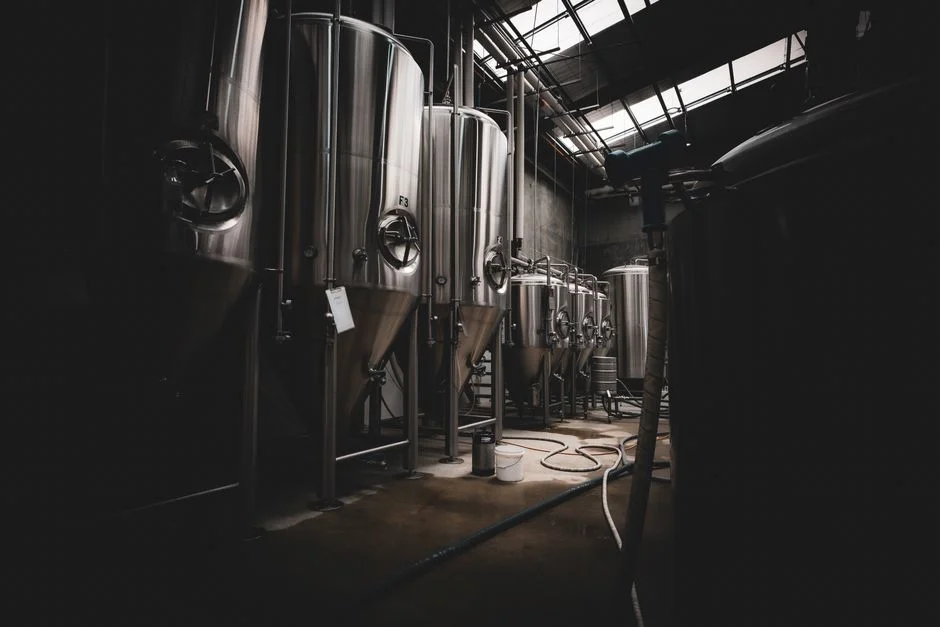
A staged food-processing treatment train is necessary because physical separation, biological degradation, and final polishing address different pollutants. The sequence should begin with segregation, screening, and grit removal, then use equalization before DAF, biological treatment, and any required polishing.
- Source control and screening: Remove product solids, packaging debris, fibrous material, and heavy inorganic material before pumps, DAF equipment, or biological systems are affected.
- Production wastewater equalization: Buffer production surges and concentrated CIP loads. Hixson identifies equalization as a method for stabilizing flow and strength and preventing shock loading.
- Dissolved air flotation: Remove suspended solids, oil, grease, FOG, and colloidal material before biological treatment. Hixson cites optimized poultry studies showing 74% suspended-solids removal and 99% oil-and-grease removal. More recent poultry results cited by Hixson show up to 99% TSS removal, 85% BOD₅ reduction, and 98% phosphate removal when coagulant selection and operation are properly optimized.
- Biological treatment: Remove soluble biodegradable organics after physical pretreatment. Hixson reports anaerobic-digestion COD removal of 89.8–96.5% in food-processing applications, with methane yields of 0.27–0.33 liters CH₄ per gram of COD removed. Biogas recovery may provide an energy benefit, but it is not the primary compliance function.
- Polishing: Add MBR or another barrier when the sewer specification, receiving-water constraint, or reuse objective requires lower solids and stronger organic removal. Hixson cites a beverage-facility MBR pilot with effluent COD of 16.9 mg/L, TSS of 3.8 mg/L, and 92.6% COD removal.
- Solids management: Define how DAF float, biological sludge, and chemical residuals will be dewatered, stored, and disposed of before final discharge approval.
| Treatment stage | Primary engineering function | Applicable evidence from Hixson |
|---|---|---|
| Screening and grit removal | Protect downstream equipment | Removes product solids, packaging debris, food particles, and heavy inorganic material |
| Equalization | Control flow and strength variation | Identified as a method for stabilizing downstream biological treatment and preventing shock loads |
| DAF | Remove suspended solids, FOG, oil, grease, and colloidal material | Optimized poultry studies: 74% suspended-solids removal and 99% oil-and-grease removal |
| Anaerobic digestion | Remove high-strength soluble organics and potentially recover biogas | COD removal of 89.8–96.5% in food-processing applications |
| MBR | Combine biological treatment with membrane solids separation | Beverage-facility pilot: effluent COD of 16.9 mg/L and TSS of 3.8 mg/L |
The equipment sequence should reflect actual treatment objectives: screening can precede an mechanical bar screen; DAF requires an appropriate industrial DAF system for food-processing wastewater; an integrated MBR wastewater treatment system belongs only where its separation and reuse benefits are justified; and plate-frame filtration can address a defined solids-dewatering requirement rather than substituting for source control.
Choose equipment by waste stream and compliance risk
Choose each stage by the pollutant it must remove and the receiving authority’s acceptance criteria, not by a generic list of advanced technologies. These options separate the primary application of each technology from the project-specific evidence required.
| If the primary problem is… | Evaluate… | Required site-specific proof |
|---|---|---|
| Suspended solids, FOG, oil, grease, or colloidal material | DAF before biological treatment | Representative solids and FOG loading, peak hydraulic condition, required removal, float handling, and authority approval |
| Dissolved biodegradable organics | Aerobic biological treatment; anaerobic digestion for high-strength streams where added controls and biogas economics justify complexity | BOD₅ and COD profile, load variation, nutrients, alkalinity demand, aeration or reactor requirements, and downstream capacity |
| Low solids and high-quality effluent | MBR | Target effluent quality, footprint, membrane-fouling exposure, operational controls, and reuse criteria |
| Solids retention or membrane-feed preparation | Ultrafiltration, possibly followed by RO where reuse requires it | Target contaminants, feed chemistry, cleaning strategy, permeate use, and proof that upstream pretreatment is complete |
| pH adjustment, coagulation, flocculation, or specialty chemical feed | Automatic chemical dosing | Required dose range, chemical compatibility, storage, metering accuracy, interlocks, and permit implications |
Do not select an MBR solely because the source is food or beverage manufacturing. It is justified where low suspended solids, strong biological treatment, compact land use, or reuse is required. Ultrafiltration can be a solids-retaining barrier or RO pretreatment step, but it does not by itself complete an industrial wastewater pretreatment train. Automatic dosing is justified only where the selected process requires it; the automatic chemical dosing system should therefore be evaluated as a controlled process component, not a substitute for process design.
Compare proposals against verified wastewater data, guaranteed process performance, control-system scope, instrumentation, sludge handling, operator training, maintenance assumptions, monitoring obligations, spare parts, and the sewer authority’s approval process. Published removal percentages are evidence that a technology can perform under stated conditions—not a guarantee for the plant’s wastewater. If reuse is in scope, an ultrafiltration system for wastewater treatment should be evaluated against the reuse target and feed conditions, not merely selected because membrane treatment is available.
Verify compliance through monitoring and operating controls
Compliance depends on sustained operation under production and cleaning conditions, not on equipment delivery alone. Establish a baseline with representative sampling, then monitor every parameter required by the sewer authorization or discharge permit. Hixson identifies pH, FOG, nitrogen, TSS, and BOD among parameters regulated for food and beverage wastewater.
Use inline pH measurement where required and establish a sampling plan for BOD₅, COD, TSS, FOG, nutrients, and other constituents named by the receiving authority. Connect production schedules and CIP events to equalization-tank level, flow, aeration, recirculation, chemical-feed, and solids-wasting data. This lets operators identify a shock load before it becomes an exceedance and adjust the appropriate control.
Retain operating records and define alarm, investigation, corrective-action, and reporting procedures. Hixson describes smart monitoring as a way to support faster response to exceedances, but the installed system must still match the parameters and reporting rules in the plant’s authorization. Recheck the applicable food processing wastewater discharge standard during operating reviews because the controlling criteria are the issued local requirements and written authorization, not generic industry examples.
Frequently Asked Questions
How should a food plant near Jarratt budget for sewer pretreatment?
Compare the complete scope—screening, equalization, DAF, biological treatment, polishing, controls, monitoring, and sludge handling—rather than pricing DAF or MBR as isolated equipment. The supplied research provides no defensible cost estimate for this route. Request itemized capital and operating quotations, chemical and sludge-disposal assumptions, utility requirements, maintenance costs, and the treatment guarantees that affect lifecycle cost.
What data should be used to size the treatment system?
Use representative peak flow, batch and CIP loading, pollutant characterization, the production schedule, and the required sewer guarantees. Average daily flow alone will miss concentrated cleaning releases and short production surges. Require the supplier to identify how each sizing value was derived and which operating conditions fall outside the guaranteed envelope.
How should a wastewater-treatment supplier be selected?
Require wastewater-specific evidence, transparent acceptance criteria, defined control and monitoring scope, maintenance assumptions, and deliverable performance guarantees. Published technology examples should support the proposed process, but project-specific testing and the receiving authority’s approval must establish suitability