What an Effluent Treatment Plant in Phuket Must Achieve
An effluent treatment plant in Phuket should be selected by wastewater profile, required effluent quality, reuse target and site constraints—not by headline capacity alone. The cited HydropureWater guide identifies DAF as effective for high-fat food-processing effluent, reporting up to 95% TSS and 80% FOG removal, while MBR systems support advanced reuse, with reported effluent BOD below 1 mg/L. HydropureWater’s DAF range is 4–300 m³/h; its MBR range is 10–2,000 m³/day. The guide cites BOD of 20 mg/L and COD of 80 mg/L for industrial discharge to public water bodies, but buyers should confirm current permits and site-specific pretreatment requirements before selecting equipment.
An ETP is the complete treatment train used to remove or control contaminants before sewer transfer, lawful discharge or reuse. Its design must resolve four outputs: the applicable compliance route, the receiving and reuse quality, verified hydraulic capacity, and the reliability needed to maintain performance through production and cleaning cycles.
HydropureWater’s 2026 Phuket engineering guide states that industrial facilities discharging into public water bodies must meet BOD of 20 mg/L and COD of 80 mg/L under the cited Phuket Provincial Notification 2023 requirements. These are stated values, not a substitute for the facility’s current permit or confirmation from the receiving authority.
The same guide gives separate pretreatment values for discharge to the municipal system: pH 5.5–9.0, oil and grease below 5 mg/L, and TSS below 30 mg/L. A sewer-acceptance case and a public-water-body discharge case are therefore different design bases.
| Design output | Information bidders must state | Buyer verification |
|---|---|---|
| Compliance route | Municipal sewer, public water body or no-discharge reuse route | Current permit and receiving-authority confirmation |
| Effluent quality | Discharge limits and intended reuse application | Applicable sampling method and operating envelope |
| Hydraulic capacity | Average, peak and batch-discharge flows | Hourly records, production schedule and equalisation assessment |
| Reliability | Available utilities, footprint, sludge route and maintenance access | Site survey and utility-capacity confirmation |
Issue the same design basis to every bidder. If the receiving route, reuse target, design flow or guarantee values differ, the quotations are not directly comparable. For reuse-led proposals, ask bidders to define the treatment duty behind an integrated MBR wastewater treatment system; for high-solids or high-fat pretreatment, ask for an industrial DAF wastewater treatment system proposal.
Match the Treatment Process to the Wastewater Profile
Process selection should begin with the dominant contaminant and hydraulic risk, because the same nominal flow can require different equipment for food processing, electronics, hospitality or textiles.
HydropureWater’s 2026 Phuket guide describes seafood and food-processing wastewater as high in TSS and FOG with rapid organic loading; electronics wastewater as potentially containing nickel and copper with extreme pH; resort and hotel wastewater as high in BOD with surfactants; and textile wastewater as containing color, salts and chemicals. These are sector profiles, not site acceptance limits, so they define the questions to test rather than the guaranteed performance.
For food-processing wastewater, DAF is a credible primary stage because it separates suspended solids, free oil and grease, and some colloidal material before biological treatment. HydropureWater’s 2026 guide reports up to 95% TSS removal and 80% FOG removal for its DAF systems, with a stated retention time of 2–4 hours. Require the bidder to demonstrate those duties against the facility’s measured fat, oil and grease, solids and flow variation rather than relying on the catalog figures alone.
For advanced reuse, biological treatment and membrane separation solve different problems. HydropureWater’s 2026 guide reports MBR effluent BOD below 1 mg/L and 99%+ pathogen removal; the associated product information specifies filtration below 1 μm and a footprint 60% smaller than conventional systems. The MBR is a candidate for reuse where those conditions fit the application, but the buyer must verify membrane configuration, permeate quality and whether additional disinfection or polishing is required for the intended use.
Membrane polishing is an additional stage, not a substitute for biological treatment. The University of Twente’s research on direct nanofiltration identifies membrane technology as a method for polishing wastewater-treatment-plant effluent for reclamation or potable-use objectives. Wageningen University and Research’s 2022 thesis documents constructed wetlands as a research approach for micropollutant removal from treated effluent. Neither source supports bypassing stable pretreatment and biological treatment.
| Wastewater profile | Principal process risk | First technical question |
|---|---|---|
| Food and seafood processing | High TSS, FOG and variable organic loading | What DAF and equalisation duty is based on measured FOG, TSS and batch flows? |
| Electronics manufacturing | Metals, extreme pH and chemical dosing demand | Which contaminants require precipitation, separation or other dedicated treatment? |
| Resorts and hotels | BOD, surfactants, foaming and reuse demand | What biological and membrane configuration meets the specified reuse application? |
| Textile processing | Color, salinity and residual chemicals | Which unit operations address pH, salinity, color and toxicity before biological treatment? |
Require representative samples covering production, cleaning and shutdown periods. Test pH, flow, COD, BOD, TSS, oil and grease and nutrients, then add metals, salinity, color or surfactants where relevant. Bid comparisons should also include the automatic chemical dosing system and rotary mechanical bar screen proposed for the actual influent characteristics.
Choose a Treatment Train That Can Be Commissioned in Phuket
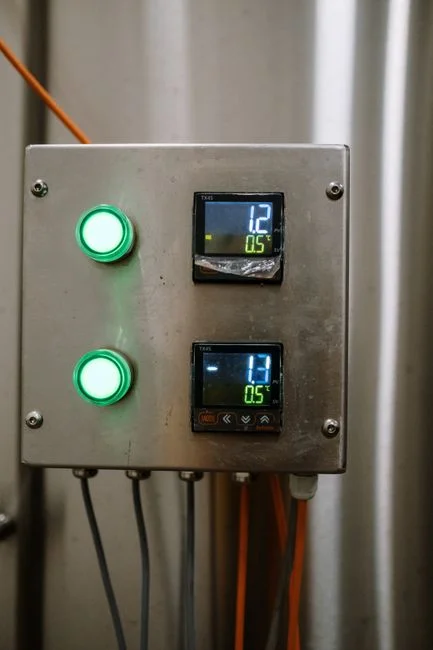
A defensible industrial ETP in Phuket follows a controlled process sequence rather than a collection of standalone tanks.
- Headworks and equalisation: remove rags, plastics, fibrous debris and suspended solids, then equalise variable production and cleaning flows.
- pH and chemical control: protect downstream biological and membrane processes from unsuitable pH or shock loads.
- Primary solids and FOG removal: recover oils and solids before they interfere with aeration or membranes.
- Biological treatment: remove biodegradable organics and support the required effluent quality.
- Secondary clarification: separate biological solids from treated liquid.
- Polishing: apply membrane or filtration where the reuse or discharge route requires it.
- Disinfection: apply the process appropriate to the intended use.
- Sludge handling: dewater and route the generated solids to an authorised destination.
The GX rotary mechanical bar screen is intended to protect downstream equipment from suspended solids, rags, plastics and fibrous debris. Automatic chemical dosing provides PLC-controlled adjustment of coagulants, flocculants and pH adjusters. These functions must be tied to measured flow and water-quality signals rather than treated as fixed additions.
DAF is the pretreatment choice where suspended solids, FOG, oil, grease or colloidal matter are the immediate problem. HydropureWater’s 2026 guide gives a DAF capacity range of 4–300 m³/h across 13 standard models. The integrated MBR combines activated sludge with submerged PVDF membranes and has a published capacity range of 10–2,000 m³/day. Neither published range establishes the required duty: average and peak hydraulic flows, batch discharges, organic loading and the operating envelope must be reconciled during design.
| Process stage | Core equipment or function | Bidder’s required design statement |
|---|---|---|
| Headworks | Rotary mechanical bar screen | Screen type, duty, extracted solids route and bypass arrangement |
| Equalisation and control | Equalisation, pH adjustment and automatic dosing | Working volume, mixing, controls and worst-case chemical demand |
| Primary separation | DAF | Measured TSS and FOG basis, hydraulic rate and sludge removal |
| Biological treatment | Integrated MBR or another biological process | Loading basis, membrane area, sludge age and seasonal operation |
| Polishing and disinfection | Filtration plus chlorine dioxide, UV or ozone where justified | Target application, objective and residual requirements |
| Residuals | Sludge dewatering filter press | Cake moisture target, operating cycle and disposal route |
Use a sludge dewatering filter press where the proposed biological or chemical stage generates enough solids to justify solids-liquid separation. A shortlisted DAF treatment train or integrated MBR treatment train must include the downstream residual route; an effluent tank alone is not a complete ETP.
Where disinfection is required, bidders should distinguish chlorine dioxide, UV and ozone by application. Ask each supplier to define the operating objective—such as a stated log reduction or microbiological target—and identify the monitoring, dose control, residual management and downstream impacts. This prevents a generic disinfection claim from being mistaken for an acceptance criterion.
Budget for Capital Cost, Operating Cost and Reuse Value
A comparable budget separates equipment price from the installed system and its operating obligations.
HydropureWater’s 2026 guide gives indicative 2025 capital-cost ranges of 800,000–2,500,000 THB for a DAF system serving 10–100 m³/h and 1,500,000–5,000,000 THB for an MBR system serving 50–500 m³/day. These are planning benchmarks, not quotations, and they do not establish what a Phuket buyer will pay. Require a priced bill of quantities, scope boundary and commercial exclusions.
The same guide gives chemical-and-power operating benchmarks of 0.8–1.5 THB/m³ for DAF and 2.0–3.5 THB/m³ for MBR. Ask bidders to state whether those figures include labor, sludge disposal, membrane replacement, chemicals, testing, standby power and other utilities. A lower unit rate can still produce a higher total cost if the exclusions are inconsistent.
HydropureWater’s 2026 guide also cites a 15–20% premium for corrosion-resistant materials such as SS316 or specialised coatings in Phuket. Require every exposed material, coating system, fastener grade and electrical enclosure rating to be listed. This is a coastal corrosion protection issue that should be checked against the actual site environment rather than accepted as a blanket allowance.
| Cost element | Information required in the normalized bid | Acceptance basis |
|---|---|---|
| Equipment and installation | Process equipment, freight, erection, connections and utilities | Itemised priced schedule |
| Civil works | Tanks, foundations, drainage, access, odour control and stormwater separation | Drawing-based scope |
| Operating resources | Chemicals, power, labor, testing, sludge removal and membrane replacement | Unit rate and stated exclusions |
| Corrosion protection | Materials, coatings, seals, electrical enclosures and replacement cycle | Site-specific specification |
| Reuse benefit | Authorized reuse volume and verified avoided freshwater cost | Approved operating scenario |
The guide’s scenario model uses freshwater costs of 40–60 THB/m³ and reports payback of 3.2–5.5 years for systems treating 50–200 m³/day and achieving 80% reuse. Treat this as a scenario, not a guaranteed return. Model savings only from reuse that is technically and legally authorized, the actual replacement cost of freshwater, and the verified volume of reuse.
Include screening, biological treatment and clarification in the operating model; where high-efficiency sedimentation is proposed, price its installed duty. Where RO and UF membranes and replacement elements are included, price membrane life, cleaning and replacement assumptions rather than treating the membrane set as a one-time purchase.
Use a Supplier Comparison and Compliance Checklist
Supplier selection should test whether the bidder can define, deliver and demonstrate the same treatment duty.
Send every bidder the same data request: complete wastewater analysis; hourly and daily flow ranges; operating and cleaning schedule; reuse target; receiving route; available footprint; electrical, water and drainage availability; sludge-disposal route; and required operating staff. Without this common basis, technical and price comparisons remain unreliable.
Require guarantees tied to defined test methods, sampling points, duration and worst-case influent conditions. Keep guaranteed discharge values separate from catalog performance claims. A bid should identify any condition that invalidates the guarantee and state whether the remedy is correction, re-performance, additional treatment or compensation.
Also request evidence of Phuket-relevant corrosion protection, spare-parts availability, commissioning personnel, operator training, response times and maintenance support. The San-Lan supplier overview describes island-service capability among selected Thai suppliers, but the buyer should verify specific claims through installation references and site visits rather than treating a directory entry as evidence.
HydropureWater’s 2026 guide states permitting planning windows of approximately 90–120 days for a new treatment system or major upgrade and approximately 45 days for system modifications. These are planning checkpoints only; the current authority must confirm the applicable route, documentation and duration.
The cited monitoring burden is weekly composite sampling for BOD, COD and TSS, with continuous pH and flow monitoring. Confirm the exact sampling frequency, sample point, analytical method, reporting format and responsible party with the permit holder and authority.
Require a handover package containing as-built drawings, PLC programs and backups, manuals, spare-parts list, training records, test results, calibration certificates, emergency procedures and preventive-maintenance schedule. Price critical valves, filter media and treatment parts against the proposed materials and service strategy; generic spare-parts lists are not enough.
Plan Permits, Commissioning and Performance Testing
The approval and acceptance sequence should connect an influent-based design to a documented operating outcome.
- Characterize the wastewater across production, cleaning and shutdown periods.
- Confirm the receiving route, reuse application and current permit basis.
- Develop the conceptual process and confirm the reuse or discharge objective.
- Size the treatment train from verified hydraulic and contaminant loads.
- Review the permit pathway with the relevant authority.
- Freeze the detailed design, guarantees and acceptance methods before fabrication.
- Complete factory testing, installation and wet commissioning.
- Stabilise clarification and biological treatment before performance testing.
- Complete operator training, documentation and handover.
Do not attempt the acceptance test with unstable biology, unqualified influent or unresolved pretreatment performance. Set the test duration, sampling frequency, test methods, guaranteed parameters and remedy terms in the purchase agreement. Generic removal-efficiency claims are not acceptance criteria.
Include monsoon-water separation, drainage and coastal corrosion protection in the civil and electrical scope. HydropureWater’s 2026 guide discusses monsoon effects on wastewater systems, but any added hydraulic allowance should come from site-specific drainage analysis rather than an unverified rule of thumb.
Link advanced reuse polishing only after the upstream train demonstrates stable performance. The University of Twente and Wageningen University and Research sources support polishing and reclamation research; they do not justify skipping pretreatment, biological treatment or acceptance testing. Where disinfection forms part of the reuse train, define the application-specific objective for a chlorine dioxide generator or UV sterilizer, then verify it during commissioning.
Frequently Asked Questions
How should a buyer select an ETP supplier in Phuket?
Select against a written site-specific proposal, not a product list. Require a defined influent basis, treatment-train rationale, guarantee conditions and test methods, evidence of Phuket installation and service capability, and a complete handover scope. Check installation references and site visits before award.
How do you size an industrial ETP for a factory?
Separate average treatment capacity from peak hydraulic demand. Verify the equipment’s published capacity range against measured hourly and daily flows, batch discharges and equalisation requirements. A published range identifies the equipment envelope; it does not prove the plant fits the site.
What should the budget for an industrial ETP in Phuket include?
Use HydropureWater’s 2026 guide’s 2025 DAF CAPEX range of 800,000–2,500,000 THB for 10–100 m³/h and MBR range of 1,500,000–5,000,000 THB for 50–500 m³/day only as indicative benchmarks. Request binding quotations that separately price equipment, civil works, corrosion protection, utilities, chemicals, sludge handling, monitoring and lifecycle replacements.
What compliance information is needed before ordering equipment?
Confirm the receiving route, current permit, applicable discharge or sewer-acceptance values, sampling method and responsible authority before ordering. HydropureWater’s cited BOD, COD and pretreatment values should be checked against current site-specific requirements rather than used as universal limits.
How long should permitting, delivery and commissioning take?
Keep three schedules separate: approvals, equipment manufacture and site works. HydropureWater’s 2026 guide gives permitting planning windows of approximately 90–120 days for a new system or major upgrade and approximately 45 days for modifications, but the current authority must confirm them. Request supplier lead times, fabrication milestones and commissioning resources separately.
Related Equipment
- industrial DAF wastewater treatment system — specifications, capacity range, and technical data