Why Snack Food Wastewater Is a High-Load Treatment Challenge
Snack food wastewater COD removal should be designed as a staged treatment train because the wastewater can contain both readily biodegradable material and constituents that inhibit biological treatment. Chemical oxygen demand (COD) represents the oxygen demand associated with oxidizable substances, while BOD(5) measures the oxygen consumed biologically over five days. A pilot study of raw snacks-factory wastewater reported oil and grease up to 6,000 mg/L, COD up to 22,000 mg/L and BOD(5) up to 10,300 mg/L (Water Science & Technology, 2012). These are characterization results for one pilot application, not universal design limits.
Frying oils, emulsified fats, cleaning chemicals, soluble sugars, proteins, suspended product and water-reuse streams can enter the wastewater system from different operations. Their interaction matters: fat accumulation can interfere with downstream biological treatment, while acidic or caustic cleaning-in-place (CIP) discharges can cause abrupt pH changes. Equalization should therefore precede biological treatment, and the production schedule should be reviewed before equipment is sized. The broader food and beverage wastewater treatment train design should separate screening, equalization, FOG removal, biological treatment and sludge handling rather than treating COD as the only design variable.
| Characteristic | Reported snack-factory value | Design implication |
|---|---|---|
| Oil and grease | Up to 6,000 mg/L | FOG control is a core pretreatment requirement |
| COD | Up to 22,000 mg/L | Biological loading and equalization require site-specific calculations |
| BOD(5) | Up to 10,300 mg/L | Biodegradable oxygen demand must be distinguished from total COD |
| Evidence scope | Pilot characterization | Use as context, not a universal snack-industry basis |
Characterize the Wastewater Before Choosing Equipment
A defensible design starts with a sampling plan that captures both normal production and short, high-impact events. OxMaint’s food-processing wastewater guidance (2026) identifies COD, BOD, suspended solids, fats, oils and grease, and the interactions between them as central parameters, while also emphasizing dissolved oxygen, MLSS and prevention of toxicant shock in biological systems. The following influent matrix should cover production, cleaning and shutdown periods, with separate samples for sanitary, process and CIP streams.
| Input to collect | Why it changes the design | Evidence needed from the site |
|---|---|---|
| COD and BOD(5) | Distinguishes total oxidizable load from biodegradable demand | Flow-weighted samples across operating states |
| Oil and grease | Defines DAF and equalization duty | Composite samples tied to frying and wash operations |
| TSS | Sets screening, flotation and solids-separation requirements | Suspended-material profile by stream |
| pH and temperature | Affects chemical conditioning and biological reaction rates | Continuous or event-based measurements |
| Flow | Defines hydraulic and treatment capacity | Average, peak and production-shift data |
| CIP composition and release timing | Identifies chemical shock and blending requirements | Cleaning schedules, chemicals used and discharge controls |
OxMaint (2026) gives a broader food-plant BOD context of 2,000–8,000 mg/L for raw discharge, but this is not a universal design value for snack plants. Sample each product and season because changes in frying intensity, soluble ingredients, water reuse and cleanup practices can alter organic loading and FOG behavior. The 2012 Water Science & Technology AnMBR study is specifically a pilot characterization; it should not be used to size a plant without current site data. Further pretreatment criteria are discussed in how food and beverage plants address pretreatment limits.
Build a Treatment Train That Protects Biological Treatment

The functional sequence is screening and equalization, FOG removal, biological COD treatment, solids separation and sludge handling. Each unit should have a defined job so that an overloaded or fouling stage cannot pass its failure directly into the biological process.
- Screen and equalize. Remove rags, packaging fragments and suspended material before they enter the flotation and biological stages. Equalization moderates batch production discharges and provides the residence time needed to blend variable loads.
- Remove FOG with DAF. Position a dissolved air flotation system for FOG pretreatment after screening. OxMaint (2026) describes DAF micro-bubbles and skimming as removing suspended solids and FOG from food-processing wastewater.
- Reduce biodegradable COD. Use anaerobic treatment where the influent is readily biodegradable and recovered biogas has value. OxMaint (2026) reports 60–80% influent COD removal in a general food-processing context and identifies pH 6.8–7.4 as the required anaerobic operating range; neither value is a snack-plant guarantee.
- Polish aerobically where required. Aerobic treatment can provide a conservative biological finish and accommodate nitrification or polishing duties when the process objective requires it. Control dissolved oxygen and biological solids loading, and account for aeration energy: OxMaint (2026) states that aeration represents 50–70% of total plant consumption.
- Separate solids and sludge. Add membrane separation where solids separation or reuse quality is required. HydropureWater specifies an integrated MBR wastewater treatment system using activated sludge with submerged PVDF membrane filtration. Route separated biological or chemical sludge to dewatering rather than returning it uncontrolled to the headworks.
| Stage | Primary function | Failure to prevent |
|---|---|---|
| Screening | Remove coarse solids and packaging material | Blockage and downstream fouling |
| Equalization | Blend production and cleaning discharges | Hydraulic and load shock |
| DAF | Remove floatable FOG, oil, colloids and suspended solids | FOG carryover and biological inhibition |
| Anaerobic or aerobic stage | Remove biodegradable organics | COD or BOD carryover |
| Membrane or clarification | Separate biological solids | Suspended-solids exceedance |
| Sludge dewatering | Separate stored solids before disposal | Solids accumulation and uncontrolled recycle |
Compare the Main COD-Removal Technologies
Technology selection depends on the contaminant being removed and the required process result; COD is not interchangeable with FOG or suspended solids. DAF, biological treatment and membrane separation solve different parts of the treatment problem.
| Technology | Best-supported role | Evidence boundary and operating focus |
|---|---|---|
| DAF | FOG, oil, colloids and suspended-solids removal before biology | The snack wastewater contained oil and grease up to 6,000 mg/L (Water Science & Technology, 2012); DAF is pretreatment, not the complete COD-removal train |
| Anaerobic reactor | Biodegradable COD reduction with possible biogas recovery | OxMaint (2026) reports 60–80% influent COD removal and pH 6.8–7.4 for food-processing applications; verify substrate, alkalinity and loading |
| Aerobic biological treatment | Flexible biological treatment and polishing | OxMaint (2026) identifies dissolved oxygen, MLSS and toxicant-shock prevention as key controls |
| MBR | Biological treatment combined with membrane solids separation | HydropureWater specifies submerged PVDF membranes and filtration below 1 μm; require membrane-area and cleaning calculations |
| Electrochemical treatment | Study-specific treatment of oily wastewater | Wasit University reported 99.5% COD removal and 94.2% oil removal for petroleum wastewater under laboratory conditions at pH 7, 10.5 V and 50 minutes. This is not snack-factory performance |
| Adsorption | Polishing or study-specific COD adsorption | IOP Conference Series Earth and Environmental Science (2020) reported 31.8% COD removal, or 150 mg/L, for fish-cracker wastewater using rice-husk activated carbon at pH 2 and 5 ml/min; this is not a complete treatment train |
The comparison of DAF, AnMBR, MBR and biological treatment provides useful process distinctions, but sector evidence must not be transferred as a performance guarantee. Likewise, food-processing technology comparisons should be evaluated against the snack plant’s measured wastewater rather than ranked by removal percentage alone.
Translate Operating Conditions into Equipment Sizing Inputs
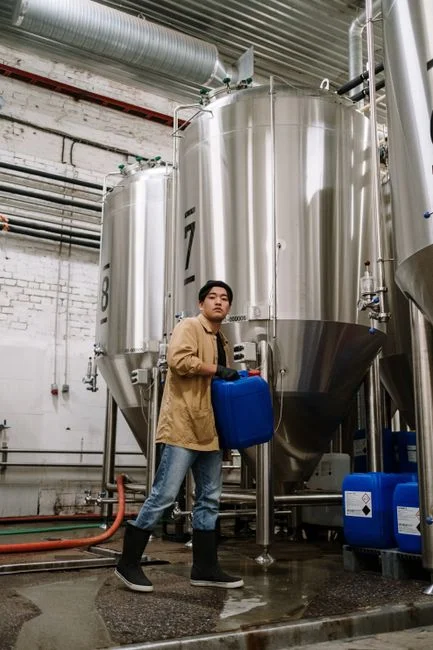
Equipment sizing should begin with complete site data, not COD concentration alone. The buyer must provide average and peak flow, production shifts, operating days, wastewater temperature, pH and a full influent analysis. Production and cleaning events should be represented in the hydraulic profile because a nominal daily average can conceal a short slug that overloads equalization, DAF or biological systems.
For DAF, require the supplier to address measured oil and grease, suspended solids, recycle flow, flotation pressure and float-removal duty. Do not accept a generic loading rate without the wastewater basis behind it. Chemical addition should be evaluated against the actual oil, solids and pH characteristics; an automatic chemical dosing system should be assessed as part of the process control scope.
For anaerobic systems, request organic and hydraulic loading calculations, alkalinity balance, pH-control provisions, gas handling and start-up assumptions. For aerobic and MBR systems, request aeration and membrane-area calculations based on the measured load, together with sludge-production and cleaning assumptions. If clarification is included, its performance basis must reflect the expected solids characteristics rather than a generic tank capacity; the high-efficiency sedimentation tank is one equipment option within that broader selection.
Ask each supplier to identify whether its performance evidence comes from snack manufacturing, broader food processing or another sector. Sector-specific data can support process feasibility, but it cannot replace site testing, pilot work or a contractual guarantee tied to the measured wastewater.
Operate the System for Reliable Compliance
Reliable operation depends on linking sampling and maintenance to actual production events. OxMaint (2026) recommends condition- and production-based checks because food-plant FOG loading changes with frying-line output and seasonal production. Fixed calendar intervals can leave the DAF underdosed during a busy period or serviced unnecessarily during an idle period.
- DAF: Inspect float-layer consistency, chemical dosing pumps, dissolved-air pressure, recycle-pump performance, skimmer condition and effluent clarity. The operating sequence is explained in how a DAF unit removes wastewater FOG.
- Anaerobic stage: Track pH, temperature, alkalinity, loading and gas production. An unstable anaerobic stage can overload the downstream aerobic stage and prolong recovery.
- Aerobic stage: Monitor dissolved oxygen and biological activity, and prevent high-strength or CIP shocks from reaching the biomass.
- CIP coordination: OxMaint (2026) warns that caustic or acid releases can cause pH shocks and biomass loss. Schedule and control releases so they do not coincide with peak biological loading.
- Compliance records: Verify online COD-related measurements against laboratory samples. Retain calibration records, operating conditions, analytical results and sludge movements.
Separated sludge is part of the treatment train, not a residual. Route it to an appropriate sludge dewatering filter press or another selected dewatering method, then document the resulting disposal route and operating history.
Use a Supplier Comparison Framework Before Purchasing
A comparable proposal should map every proposed unit to the measured influent, the required intermediate water quality and the final permit conditions. Ask suppliers to complete the same process-flow diagram and identify the design basis for every major unit. The DAF versus clarifier guide for food and beverage wastewater provides a useful starting point for evaluating pretreatment functions, but the final selection must reflect the snack plant’s FOG and solids profile.
- Process fit: Confirm that screening, equalization, DAF, biological treatment, separation and sludge handling form a complete train with no untreated gap.
- Evidence scope: Require source-specific performance data and clear labels for snack, broader food-processing, petroleum, fish-cracker or other non-snack applications.
- Lifecycle obligations: Compare chemical use, aeration, membrane cleaning, electrode consumption where relevant, sludge handling, monitoring and maintenance.
- Commercial responsibility: Identify who owns guarantees, start-up, operator training, spare parts, commissioning and performance testing.
- Peak-event capacity: Confirm that the proposal addresses peak production and cleaning events using the submitted flow and load data, rather than an unsupported generic throughput claim.
The strongest proposal is not necessarily the one with the highest headline removal. It is the one whose equipment sequence, calculations, operating controls and performance evidence match the wastewater that the plant will actually receive.
Frequently Asked Questions
How much should a snack food wastewater COD removal system cost?
No site-specific price can be supported from the supplied research, so request a quotation based on measured average and peak flow, complete influent analyses, production and CIP schedules, required intermediate quality, final permit conditions and sludge-disposal requirements. Compare capital equipment, installation, chemical use, aeration, membrane or electrode maintenance, sludge handling and operator obligations as separate cost elements.
How do I size DAF and biological treatment for a snack plant?
Do not size either unit from COD alone. Give the supplier the FOG, COD, BOD(5), TSS, pH, temperature, hydraulic profile and production/CIP data, then require DAF float-removal, recycle and flotation-pressure calculations plus biological loading, alkalinity, aeration and membrane-area calculations. The reported snack wastewater values—oil and grease up to 6,000 mg/L, COD up to 22,000 mg/L and BOD(5) up to 10,300 mg/L—came from a pilot characterization (Water Science & Technology, 2012), so they are context rather than default design loads.
Which treatment technology should come first for FOG-heavy snack wastewater?
DAF is the appropriate pretreatment barrier when the objective is to remove floatable oil, FOG, colloids and suspended solids before biological treatment. A dissolved air flotation system for FOG pretreatment should be evaluated using measured oil and grease, TSS, hydraulic variation and dosing needs. DAF does not replace anaerobic, aerobic or membrane stages for the remaining biodegradable COD.
What evidence should a supplier provide to reduce compliance risk?
Require source-specific performance evidence, permit-relevant guarantees and a process-flow basis tied to the measured wastewater. Petroleum electrochemical results and fish-cracker adsorption results must be identified by sector and test conditions rather than presented as snack-plant performance. Also confirm responsibility for start-up, operator training, monitoring, calibration, maintenance, spare parts, sludge movements and performance testing.