
What Perth Hotel Wastewater Must Be Treated?
A Perth hotel or resort generally needs a treatment system matched to its wastewater flow and destination: an automated biological treatment package for typical domestic sewage, MBR where a compact, high-quality effluent footprint or reuse potential is valuable, and DAF where grease, oil and suspended solids need pretreatment. The design must account for rooms, kitchens, laundry and pools rather than guest numbers alone. In 2026, the final choice should follow flow characterisation, sewer or reuse requirements, site constraints and supplier guarantees. Perth and Western Australian discharge conditions must be confirmed with the relevant authority and sewer operator before equipment selection.
Swan River Hotel Perth provides a useful operating profile: it has 94 rooms, a 24-hour front desk, on-site dining, laundry services, meeting facilities and a seasonal outdoor pool, according to International on the Water Hotels Perth. The restaurant, The Swan at Ascot, serves à la carte lunch and dinner, all-day dining and high tea. That combination creates overlapping domestic sewage, kitchen wastewater and laundry flows, with the pool adding a separate variable discharge or backwash stream.
The design should not calculate the entire duty from room count or occupancy assumptions. No supplied source establishes a Perth hotel wastewater generation rate, peak factor or pollutant load. The buyer needs measured flow, representative sampling and documented operating periods. The sampling programme should cover morning turnover, meal-service peaks, laundry cycles and pool events rather than relying on a single spot sample.
Characterise each stream before connecting it to the proposed plant:
- Guest-room sewage: establish flow, suspended solids, organic load, nitrogen indicators and the timing of occupancy peaks.
- Restaurant and kitchen wastewater: measure grease and FOG, food solids, cleaning chemicals and flow variation through service periods.
- Laundry effluent: identify detergents, fibres and discharge timing; its compatibility with biological treatment must be confirmed.
- Pool backwash or discharge: establish chlorine demand, pH, flow and whether a separate approval or treatment route applies.
- Cleaning wastewater: identify the chemicals used and prevent incompatible cleaning discharges from entering the biological process.
The defensible process sequence is screening and FOG control, equalisation where required, biological treatment, solids separation, disinfection, storage or reuse, and authorised discharge. A rotary mechanical bar screen may protect downstream equipment from fibrous material, while DAF equipment can provide dedicated solids and FOG removal where the kitchen characterisation supports it.
| Operating stream | Design information required | Potential treatment consideration |
|---|---|---|
| Guest-room sewage | Flow record, occupancy profile, organic and solids sampling | Equalisation where variable; biological treatment; solids separation |
| Kitchen and restaurant | Service-period flow, FOG and food-solids data | FOG control; DAF where justified by the measured duty |
| Laundry | Cycle flow, detergent content and fibres | Compatibility review; pretreatment or segregated treatment if required |
| Pool discharge or backwash | Flow, pH, chlorine demand and destination | Separate assessment before approval to reuse or discharge |
| Cleaning wastewater | Chemical inventory and discharge frequency | Control at source; prevent process shock |
Confirm the Treatment Objective Before Choosing Equipment?
Sewer discharge, land irrigation and internal reuse are different projects because they impose different treatment and documentation duties. The destination should therefore be confirmed before comparing packaged systems.
For an authorised sewer connection, ask the relevant water authority or sewer operator for the current connection criteria, trade-waste requirements, sampling method, monitoring conditions and permitted discharge route. The supplied research contains no current numeric Perth discharge limits, so the engineer must obtain the current written requirements rather than reproduce an obsolete specification.
For irrigation or controlled land discharge, define the receiving area, application rate, runoff controls and end-use water-quality specification. Irrigation is not automatically a reuse classification: the receiving environment, public access, vegetation and authority requirements determine the necessary treatment and disinfection.
For internal reuse, state the intended application. Toilet flushing, laundry, washing, cooling or other non-potable uses each require a defined water-quality basis, and a higher-grade reuse project may need additional treatment, monitoring and cross-connection controls. A supplier’s statement that a package is “suitable for hotel reuse” is not an acceptance criterion.
The Ravda wastewater treatment plant case study supports that broader approach. Research published in Water, using seven consecutive years of data from 2018–2024, examines wastewater treatment for sustainable tourism at Sunny Beach’s largest coastal resort and links effective treatment with resource availability and reuse rather than disposal alone. The study is not a Perth design standard, but it demonstrates why a tourism property should evaluate water recovery and reuse alongside treatment.
The practical sequence is:
- Identify the intended destination.
- Obtain current authority or sewer-operator criteria.
- Define the required effluent and reuse water quality.
- Confirm which hotel streams will enter the plant.
- Use those inputs to select and size the treatment train.
Equipment selection comes after this definition, not before it. The treatment objective is the basis for pretreatment, biological treatment, solids separation, disinfection, storage and monitoring requirements.
Compare Packaged A/O, MBR and DAF Treatment?
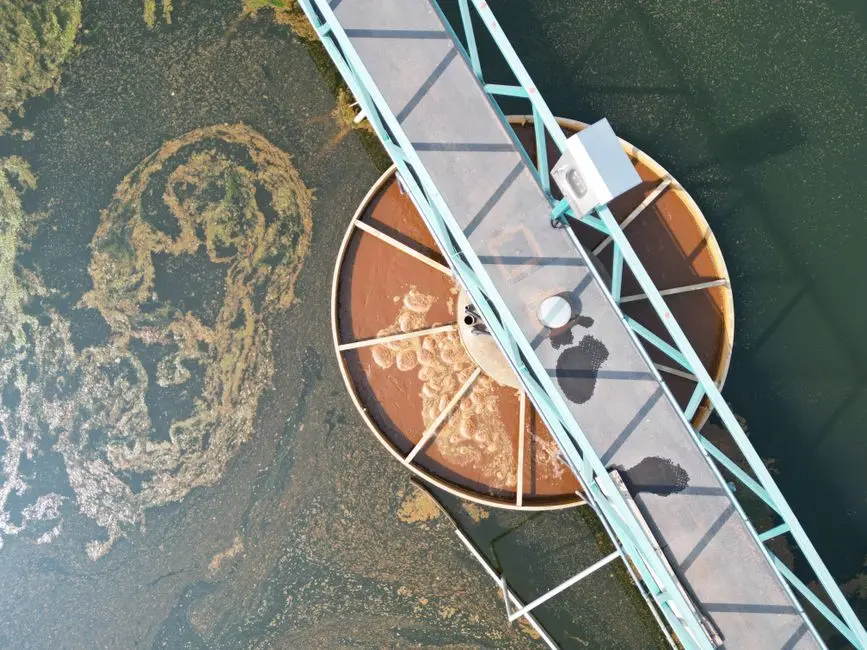
WSZ, MBR and DAF perform different jobs, so their comparison must start with treatment duty rather than footprint alone. One may provide a complete packaged sewage train, one adds membrane-based solids separation, and one primarily removes floatable solids, FOG and oil.
The automated packaged sewage treatment for Perth hotels is offered as an underground integrated plant combining anoxic/aerobic biological contact oxidation, sedimentation and disinfection. The HydropureWater catalogue states a capacity range of 1–80 m³/h, automated operation without an operator, and installation below grade with landscaping above or mounting on a trailer. This configuration suits a site requiring a packaged treatment train and limited visible plant infrastructure, subject to the supplier’s site-specific design calculation.
The MBR system for high-quality hotel effluent and reuse potential combines activated sludge with submerged PVDF membrane filtration. The catalogue states filtration below 1 μm, a footprint 60% smaller than conventional systems, and a capacity range of 10–2,000 m³/day. Those are catalogue claims, not a guarantee for a particular hotel. MBR is most relevant where compactness, membrane solids separation or reuse potential justifies the additional process and operating complexity.
DAF uses micro-bubble technology with automatic skimming to remove suspended solids, FOG, oil and grease and colloidal material. The catalogue lists 13 standard models with capacities from 4–300 m³/h. DAF is therefore a pretreatment option where kitchen wastewater or colloidal solids warrant dedicated removal; it is not automatically a complete sewage treatment plant. Biological treatment and disinfection may still be required in the downstream train.
| Option | Principal role | Published catalogue scope | Best fit question |
|---|---|---|---|
| WSZ integrated package | Anoxic/aerobic contact oxidation, sedimentation and disinfection in an underground package | 1–80 m³/h | Does the site need a largely packaged treatment train with below-grade installation? |
| MBR | Activated sludge with submerged PVDF membrane solids separation | 10–2,000 m³/day; filtration below 1 μm; stated 60% smaller footprint | Do compactness, membrane separation or reuse requirements justify the added process complexity? |
| DAF | Removal of suspended solids, FOG, oil and grease and colloidal matter with automatic skimming | 13 models; 4–300 m³/h | Does measured kitchen or solids loading justify dedicated flotation pretreatment? |
A dissolved air flotation machine is not interchangeable with A/O or MBR biological treatment. Selection should also account for the packaged MBR selection for hotel wastewater: confirm whether the duty is peak hydraulic flow, daily throughput or both, then require evidence against the specified effluent quality.
Where rags, plastics or fibrous debris could overload downstream pumps, valves or biological processes, add a GX rotary mechanical bar screen. It is a headworks protection measure, not the biological stage itself. The final comparison should therefore compare complete treatment trains rather than isolated equipment capacities.
Build a Treatment Train for Variable Hotel Flows?
A hotel treatment train should follow the measured flow and quality sequence, adding components only where the operating data or discharge objective justifies them.
- Characterise the load: sample flow and quality across representative operating periods, including morning turnover, meal service, laundry and pool events. The supplied sources do not provide a universal hotel flow or load factor, so the design must use site data or supplier assumptions explicitly identified and warranted by the designer.
- Protect the plant: use mechanical screening where fibrous material, rags or plastics are present. The HydropureWater catalogue describes the GX Series as continuous-duty equipment for municipal and industrial headworks that protects downstream equipment.
- Remove FOG where required: apply DAF when measured kitchen FOG, oil and grease or colloidal material would interfere with downstream biological treatment. Its inclusion should follow stream separation and sampling, not a generic “hotel” label.
- Equalise variable flows: determine whether meal-service, laundry or occupancy peaks require buffering before biological treatment. The required buffer depends on the selected process and confirmed flow data.
- Provide biological treatment and solids separation: select WSZ where its packaged biological, sedimentation and disinfection train fits the duty and below-grade installation suits the site; select MBR where membrane separation, compactness or reuse potential justifies the added complexity.
- Disinfect and route the effluent: define the required disinfection stage against the confirmed discharge or reuse specification. UV disinfection equipment and chlorine dioxide generation are distinct options whose suitability depends on the water chemistry, target quality and authority requirements.
- Manage solids: include sludge storage, dewatering and lawful disposal in the scope. The HydropureWater catalogue includes plate-and-frame sludge dewatering, but a press model should not be selected until sludge characterisation, solids production and operating hours are known.
Equalisation, pretreatment and advanced disinfection are not automatically required for every property. Each added stage should have a stated design reason. That prevents the quotation from becoming a stack of equipment without a traceable process basis.
The hotel and resort wastewater technology selection guide provides a useful comparative framework for the broader decision, but Perth discharge, reuse and site conditions still need local verification.
Test Site Constraints, Controls and Supplier Proposals?
A credible quotation should allow the buyer to trace every major decision back to the design duty, process route and site constraint. Generic statements that a unit is suitable for hotels are not enough.
Request the following before comparing prices:
- The design-flow basis, peak-factor basis, wastewater characterisation, confirmed treatment objective, process flow diagram, equipment schedule and complete site footprint.
- A statement of which hotel streams enter the plant, how FOG and fibrous solids are removed, where sludge is stored, and how it will be dewatered or disposed of lawfully.
- Automation, alarm functions, remote monitoring, operator training, commissioning tests, spare parts, maintenance tasks and warranty boundaries.
- Confirmation of whether each quoted capacity refers to average flow, peak flow or daily throughput, together with the relevant catalogue scope and stated performance values in writing.
- A design calculation and site-specific acceptance criteria tied to the confirmed discharge or reuse specification.
Also test above-ground access, excavation constraints, odour control, power availability, controls integration, maintenance access, noise, flood exposure and the route for chemicals, sludge and service technicians. For chemical-dependent processes, request the automatic dosing system scope, including its duty, containment and controls interfaces. Define the required treatment and instrumentation components within the valves, media and treatment-parts schedule rather than accepting an incomplete bill of materials.
| Quotation check | Evidence the buyer should require | Commercial risk if omitted |
|---|---|---|
| Design basis | Measured flow and quality data; stated average and peak assumptions | Equipment may be sized for the wrong duty |
| Process scope | Flow diagram identifying every stream, unit and bypass | Missing pretreatment, disinfection or storage scope |
| Performance | Site-specific calculation and acceptance criteria | Catalogue capacity is mistaken for a performance guarantee |
| Operations | Controls, alarms, training, maintenance and commissioning records | Operating burden and handover risk remain undefined |
| Residuals | Sludge, FOG and chemical handling and disposal route | Operating and legal liabilities emerge after installation |
| Commercial boundaries | Installation, commissioning, spares, exclusions, warranty and delivery terms | Installed cost and handover obligations cannot be compared |
Do not treat an equipment catalogue capacity as proof of site performance. Require the supplier to state how its proposed system meets the measured duty and the confirmed effluent or reuse requirement.
Frequently Asked Questions
How should a Perth hotel wastewater treatment system be sized?
Size it from measured flow and quality data, not room count alone. Require representative sampling across occupancy, meal-service, laundry and pool periods, then ask each supplier to state whether its calculation addresses average flow, peak flow or daily throughput. The selected unit must be checked against the full design duty and required effluent quality.
Is an MBR system worth the additional cost for a hotel?
Make that comparison against project needs rather than a generic cost premium. The HydropureWater catalogue states filtration below 1 μm, a 60% smaller footprint than conventional systems and a 10–2,000 m³/day range for its MBR package. Request written site-specific costs and acceptance criteria, especially where compactness or reuse is the principal requirement.
What should a supplier include in a wastewater treatment quotation?
Require the design calculation, wastewater characterisation, process flow diagram, equipment schedule, site footprint, controls and alarms, commissioning tests, operator training, maintenance scope, spare parts, warranty boundaries and residual-management route. Also request written confirmation of installation, commissioning, delivery and lead-time exclusions so proposals can be compared on equivalent scope.
Which Perth authority should confirm discharge and reuse requirements?
Contact the relevant water authority or sewer operator before selecting equipment, and obtain current connection, trade-waste, sampling and monitoring conditions in writing. No current numeric Perth permit limits are supplied in the research, so do not rely on an older specification or a supplier’s summary. Reuse proposals should also be checked against the intended application and current authority requirements.