What LA Hotels Actually Need From a Packaged MBR
For a Los Angeles hotel, the procurement decision is not "which MBR brand" but which packaged MBR, sized to LA permit thresholds, with a membrane geometry matched to hotel flow variability and a reuse path the City will actually approve. Hotel wastewater runs 250–600 mg/L BOD with sharp FOG pulses from kitchens, lint and hair from on-site laundries, and diurnal peaks from morning housekeeping plus evening guest return (per Imemflo hotel MBR design data, 2026). A packaged MBR combining activated sludge with 0.1 μm submerged membranes delivers 90–95% contaminant removal, and the effluent is clear enough for non-potable reuse under California Title 22 water reuse criteria — which matters in an LA hotel where landscaping and cooling-tower make-up can absorb 30–50% of potable demand. The benchmark that anchors this design basis: Imemflo's hollow-fiber MBR at 250 m³/d serving a 200-bed 5-star hotel works out to roughly 1.25 m³/bed/day, which sits squarely inside the 1.2–1.6 m³/occupied-room/day envelope used by LA consulting engineers for full-service properties.
The LA-specific layer is what the spec sheets usually skip. Space is constrained — most packaged units must fit in a basement mechanical room, a surface lot, or a buried vault under the porte-cochère. The unit must be pre-engineered for either LASAN sewer discharge (no Title 22 polishing required) or Title 22 reuse (UV or RO polish downstream), and the submittal must demonstrate compliance before LADBS will issue a permit. Confirm Title 22-approved components, remote monitoring, and a membrane CIP interval of at least 6 months before approving any submittal.
LA Compliance Gates: Title 22, LASAN, and the 2026 Permit Path
Three compliance gates determine which packaged MBR is even legal to install in the City of Los Angeles, and an owner's representative who walks into a permit review without all three documented will lose at least one review cycle. Gate 1 is California Title 22 Water Reuse Criteria, which sets log-removal targets for coliform, turbidity (<2 NTU for most reuse applications), BOD, and TSS. Packaged MBR systems using Title 22-approved components — for example, the S&L TITAN MBR QUBE, fabricated at the manufacturer's 116,000 sq ft Kansas City facility — clear this gate when paired with downstream UV or RO polishing (Smith & Loveless product data, 2026).
Gate 2 is the LASAN Industrial Wastewater Control Ordinance. Discharge to the LA sanitary sewer must meet the Bureau of Sanitation's published pretreatment limits for BOD, TSS, FOG, and pH. Packaged MBR effluent typically runs well below these thresholds, but the applicant must demonstrate compliance through a sampling plan submitted with the permit package. Gate 3 is LA County OWTS policy and City of LA Department of Building and Safety (LADBS) siting: subsurface, above-grade, and containerized packages each trigger a different plan-check path. The Smith & Loveless 40-ft cube addresses tight urban sites, while a buried WSZ underground package plant addresses sites where above-grade footprint is unacceptable.
Between 2024 and 2026 the State Water Board has tightened onsite treatment and water-reuse policy; require every vendor to confirm current Title 22 approval status and any pending revisions before issuing a purchase order. The compliance map below summarizes the three gates and the documentation each one requires.
| Compliance Gate | Authority | Key Threshold | Documentation Required |
|---|---|---|---|
| Title 22 Water Reuse | State Water Board / DDW | Turbidity <2 NTU; coliform log-removal per use | Title 22 approval letter; UV/RO polish spec |
| LASAN Discharge | Bureau of Sanitation | BOD, TSS, FOG, pH per LASAN limits | Sampling plan; pretreatment compliance |
| LADBS Siting / OWTS | LA City / LA County | Setbacks, vault structural calcs | Site plan; structural calcs; Title 22 status |
How to Size a Packaged MBR for an LA Hotel (With Worked Example)
Defensible sizing comes from three numbers: average daily flow per occupied room, peak factor, and FOG allowance. Average daily flow for an LA hotel runs 1.2–1.6 m³ per occupied room per day, with limited-service properties at the low end and full-service properties with laundry, food-and-beverage, and banquet space at the high end. A 150-room LA limited-service hotel therefore sits at roughly 180–240 m³/d on the average day. The Imemflo reference unit at 250 m³/d for a 200-bed property (1.25 m³/bed/day) falls inside the same band and validates the range for permit reviewers who push back on per-room numbers.
Peak factor for hotel flows is 2.0–2.5×, driven by morning housekeeping surge and evening occupancy peak, with a smaller mid-day banquet bump. The packaged MBR's hydraulic capacity must accommodate this peak, not just the daily average. FOG allowance adds 10–20% hydraulic capacity if kitchen flows join the STP without a dedicated grease interceptor, or the design must include an upstream interceptor sized to ASME A112.14.3 or PDI-G101. Skipping this step is the most common reason a packaged MBR underperforms in the first six months.
Worked example: 250-room full-service LA hotel. Average flow = 1.5 m³/room/day × 250 = 375 m³/d. Peak = 2.5× = 940 m³/d. Select a packaged MBR rated for 400 m³/d with 25% hydraulic reserve; verify the peak flow envelope at 940 m³/d either through equalization or a unit sized in parallel. Cross-check against the Imemflo 250 m³/d / 200-bed reference: 1.25 m³/bed/day lands inside the 1.2–1.6 envelope, which gives the owner's representative a third-party benchmark to present to the plan checker.
Hollow-Fiber vs Flat-Sheet MBR: A Hotel-Specific Decision
Membrane geometry — not brand — is the decision that drives long-term O&M cost at an LA hotel. Flat-sheet PVDF modules (0.1 μm pore), including the DF series (80–225 m² modules, 32–135 m³/day per module), tolerate FOG and lint surges because there are no fibers to break or bundle; in-place CIP runs roughly every 6 months without system interruption, and energy use runs 10–20× lower than external cross-flow designs. The S&L TITAN MBR QUBE positions flat-plate as the durable default specifically for hospitality and small-community flows, and PVDF flat-sheet membrane modules of this class pair naturally with a part-time O&M staffing model typical of a 150–400-room property.
Hollow-fiber MBR (suppliers include Suez, Dow, DuPont, Mitsubishi, Toray) offers higher packing density and lower CAPEX, but the fibers are more sensitive to hair and lint fouling and require tighter upstream screening — typically a 2–3 mm automatic fine screen. The trade-off is acceptable when the hotel already has a headworks screen and CAPEX dominates the buyer's decision; the trade-off is unacceptable when influent variability is high and O&M staffing is thin.
Decision rule for LA hotels: choose flat-sheet when the effluent will be reused for irrigation or cooling-tower make-up (fouling margin matters and CIP downtime is expensive), and choose hollow-fiber when CAPEX dominates, a fine screen is already specified upstream, and the plant discharges to the LASAN sewer without reuse polishing. A packaged MBR integrated wastewater treatment system is typically specified as the skid that holds the membrane cassette, aeration blower, and permeate pump in one factory-built frame.
| Parameter | Flat-Sheet PVDF (e.g., DF series) | Hollow-Fiber (e.g., HF MBR) |
|---|---|---|
| FOG / lint tolerance | High; no fiber breakage | Lower; requires fine screening |
| Packing density | Lower (larger footprint) | Higher (compact cassette) |
| CAPEX | Higher per m² | Lower per m² |
| CIP interval | ~6 months in-place | 3–6 months, often offline |
| Best fit for LA hotel | Reuse projects, part-time O&M | Discharge-only, screened flow |
2026 Cost Envelope for Packaged MBR in Los Angeles
For a 2026 LA hotel budget memo, two numbers carry the conversation: CAPEX of USD 25,000–60,000 per m³/day installed, and OPEX of USD 0.35–0.80 per m³ treated. The CAPEX band shifts up by 20–40% when Title 22 reuse polishing (RO or UV) is added downstream, and shifts up another 10–15% when the spec includes PLC + HMI + cellular SCADA remote monitoring. A 400 m³/d packaged MBR with Title 22 polish and full remote monitoring therefore lands somewhere in the USD 14M–28M range as an order-of-magnitude envelope — refine against vendor quotes, not the envelope.
OPEX is dominated by membrane aeration energy, membrane replacement (PVDF flat-sheet runs 8–10 years), and consumables. Reuse upside is where the ROI lives: substituting MBR-treated effluent for irrigation and toilet flush can offset 30–50% of LA hotel potable water use at current commercial rates, which moves the simple payback in by 1–2 years for any property pursuing LEED, CalGreen, or LA's own water-conservation ordinances. The three variables that swing the number most are above-grade versus buried installation (a buried WSZ underground package plant trades excavation cost for footprint savings), Title 22 reuse versus discharge-only permitting, and remote-monitoring scope. If a UV polisher is required for Title 22 reuse, the UV sterilizer stage is sized to deliver the required log-removal at the design peak flow.
| Cost Driver | 2026 USD Envelope | Notes |
|---|---|---|
| CAPEX (packaged MBR only) | USD 25,000–45,000 / m³/day | Skid-mounted, discharge to LASAN |
| CAPEX adders | +20–40% | Title 22 RO/UV polish; SCADA |
| OPEX | USD 0.35–0.80 / m³ | Energy + membrane replacement |
| Reuse offset | 30–50% of potable demand | Irrigation, cooling, toilet flush |
A 7-Step Procurement Checklist for an LA Hotel MBR
Hand the following sequence to the project manager the same day the design flow is locked, and require each step to be evidenced in the submittal log before the next one opens.
- Lock in design flow: average and peak, including FOG contribution from the kitchen line and lint from the laundry; this is the number every later step depends on.
- Confirm discharge versus reuse path with the owner — this single decision drives whether the permit is Title 22 (reuse) or LASAN-only (discharge), and changes the equipment list.
- Issue flow and load basis to vendors and request Title 22 approval documentation, current State Water Board approval letters, and a reference list of at least three operating California installations.
- Shortlist flat-sheet versus hollow-fiber using the decision rule above, tied to site staffing and existing pretreatment screening.
- Require packaged delivery scope: pre-plumbed, pre-wired, containerized or skid-mounted, with on-site assembly under two weeks; reference the Skid-Mounted Treatment Plants Explained: Engineering Specs, Costs & Industrial Selection Guide 2026 for the engineering specs that should appear in the spec section.
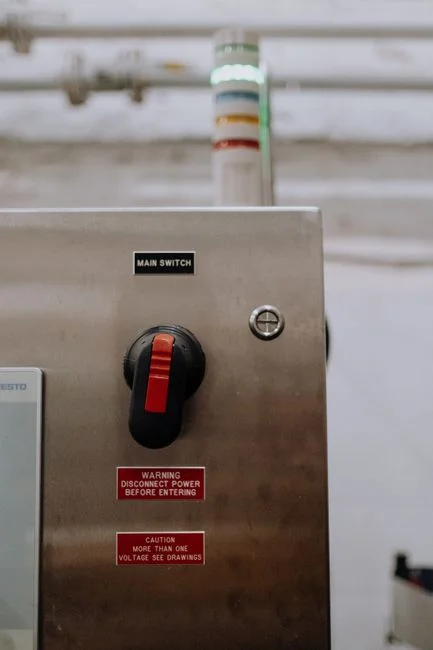
- Specify remote monitoring (PLC + HMI + cellular SCADA) and a 6-month in-place membrane CIP interval as contractual requirements, not options.
- Verify the factory acceptance test (FAT) plan, LA County field start-up support, and 12-month warranty terms before issuing the purchase order.
Frequently Asked Questions
What size packaged MBR does a 200-room Los Angeles hotel need?
A 200-room LA hotel at 1.5 m³/occupied-room/day averages 300 m³/d and peaks at 750 m³/d; select a packaged MBR rated for 300–375 m³/d with 2.0–2.5× peak hydraulic capacity to handle morning housekeeping and evening occupancy surges (HydropureWater sizing data, 2026).
Do I need a Title 22-approved MBR for an LA hotel?
Yes, if the treated effluent will be reused for irrigation, cooling-tower make-up, or toilet flushing; a Title 22-approved unit with downstream UV or RO polishing is required and must carry current State Water Board approval. If the project discharges only to the LASAN sewer, Title 22 polish is not required but LASAN pretreatment limits still apply.
Flat-sheet or hollow-fiber MBR for a hotel with kitchen and laundry?
Choose flat-sheet PVDF when kitchen and laundry flows join the STP without extensive pretreatment, because flat-sheet tolerates FOG and lint surges and cleans in place every ~6 months; choose hollow-fiber only when an upstream 2–3 mm automatic fine screen is already specified and CAPEX dominates the decision.
How much does a packaged MBR cost for a 400 m³/d LA hotel in 2026?
CAPEX runs USD 25,000–60,000 per m³/day installed, putting a 400 m³/d packaged MBR between USD 10M and USD 24M depending on Title 22 reuse polishing and remote monitoring; OPEX runs USD 0.35–0.80 per m³ treated, and reuse for irrigation and toilet flush can offset 30–50% of potable water cost (2026 US market data).