What Wastewater Streams Does a Battery Plant Expansion Create?
A battery plant expansion can create several distinct wastewater streams, and each stream needs a separate collection, characterization, and destination plan before treatment equipment is selected. The project team should separate sanitary sewage, battery and module production process water, cleaning and rinsing wastewater, laboratory drains, cooling or utility blowdown where present, unpolluted stormwater, and potentially contaminated stormwater. Each stream should be traced back to its source and classified as continuous, batch-based, episodic, or upset-collection service. That classification determines equalization, storage, pretreatment, and final-discharge requirements.
The chemistry of battery manufacturing wastewater cannot be inferred from battery-energy-storage rules or from unrelated produced-water projects. Environment America’s July 25, 2025 BESS discussion concerns fire safety at energy-storage facilities, not manufacturing wastewater, so it cannot establish process-water characteristics. Intelligent Living’s 2026 Texas lithium article describes a different case: Permian produced water can exceed 150,000 mg/L total dissolved solids and may contain hydrocarbons, heavy metals, and naturally occurring radioactive material. That is not a battery-factory profile; it demonstrates why laboratory characterization must precede equipment selection.
Record the proposed destination of every stream—sanitary sewer, permitted industrial discharge, reuse, or authorized waste disposal—and identify the party responsible for each receiving decision. For battery-factory planning, this stream matrix is the starting point for any Texas battery-factory wastewater framework or battery gigafactory wastewater treatment guide.
| Candidate stream | Documentation required | Design implication before treatment selection |
|---|---|---|
| Sanitary sewage | Fixture groups, flow pattern, local sewer route | Confirm sanitary capacity and any industrial-pretreatment obligations. |
| Battery and module production process water | Source operations, production stage, batch or continuous discharge, chemicals used | Determine whether segregation, equalization, and source control are required. |
| Cleaning and rinsing wastewater | Cleaning frequency, dump volume, rinse sequence, chemical cleaners | Include intermittent high-strength loads and cleaning outages in the peak-load balance. |
| Laboratory drains | Analytical methods, reagents, sampling points | Assess whether separate treatment or controlled consolidation is appropriate. |
| Cooling or utility blowdown | Blowdown cycle, chemical program, discharge frequency | Evaluate chemistry, heat, conductivity, and blowdown variability. |
| Unpolluted stormwater | Drainage boundaries, protection practices, source controls | Keep separate from contaminated stormwater where practicable. |
| Potentially contaminated stormwater | Potential contact areas, rainfall collection rules, destination | Define collection, treatment, storage, and contingency operation. |
How to Build the Wastewater Mass Balance
The wastewater mass balance must be built from measured expansion data, not from a generic battery-industry assumption. Request measured wastewater flow from each production module and utility, together with production-stage assumptions, cleaning frequencies, batch-dump volumes, the expected ramp-up sequence, and the interval between expansion phases. A representative sampling program should cover ordinary production, start-up, shutdown, cleaning, and upset conditions. Laboratory analysis should replace assumed lithium-ion battery wastewater compositions.
Size equalization and pretreatment around peak hydraulic and pollutant loads, not only daily averages. Intermittent dump, rinse, and wash flows need to be represented in storage and treatment calculations. Parameters that can inhibit biological treatment, membranes, or reuse include pH, suspended solids, oil and grease, conductivity, metals, and cleaning chemicals. No numeric acceptance limit should be assumed unless it comes from the applicable permit or receiving authority.
Reserve modular capacity so later modules can be commissioned without redesigning the entire plant. HydropureWater states that its integrated MBR wastewater treatment system covers 10–2,000 m³/day, while its industrial DAF system for oil and solids removal covers 4–300 m³/h. These ranges illustrate different hydraulic and treatment roles; they do not establish the required capacity for this project.
Use the expansion schedule as a design gate. Reconcile modeled peaks with actual commissioning data before releasing the next equipment package.
| Mass-balance input | Evidence required | Decision affected |
|---|---|---|
| Flow by source | Measured or validated module and utility flows | Equalization, pretreatment, biological, membrane, and reuse capacity |
| Discharge pattern | Continuous, batch, episodic, or upset classification | Storage volume, controls, and peak treatment response |
| Constituent profile | Representative laboratory analysis across operating conditions | Process selection and pretreatment requirements |
| Production sequence | Phase dates, ramp-up assumptions, interval between phases | Modular capacity release and commissioning plan |
| Final destination | Discharge, sewer, reuse, or disposal requirements | Effluent quality, monitoring, disinfection, and residual management |
Which Treatment Train Fits Each Wastewater Stream?
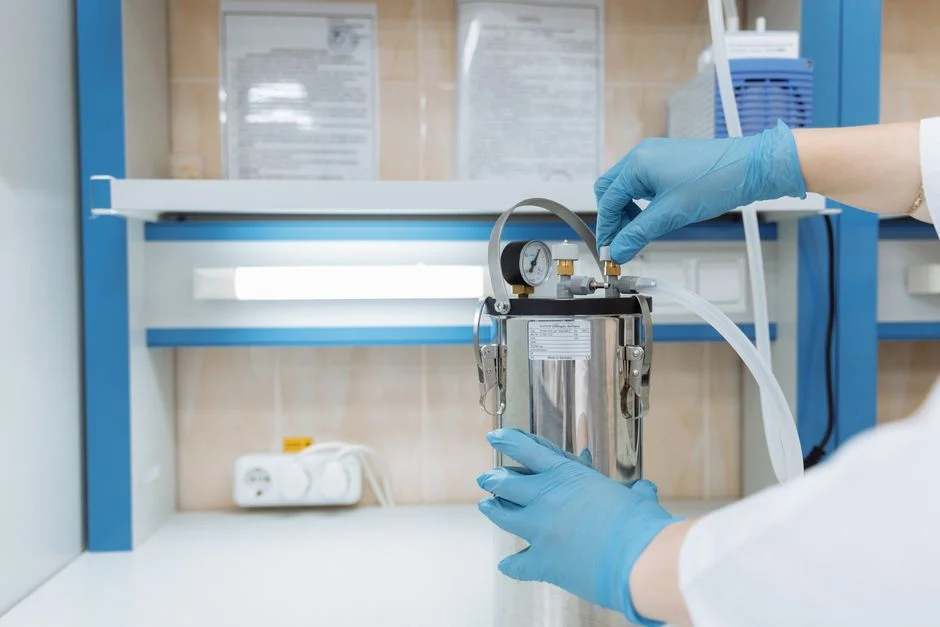
Treatment should be assembled as a sequence of functions matched to the contaminant problem and final destination, not selected as one generic machine. A GX rotary mechanical bar screen is an option at headworks when rags, plastics, fibrous debris, or suspended solids could overload downstream pumps, valves, membranes, or biological processes. HydropureWater describes the GX Series as continuous-duty screening equipment for municipal and industrial applications.
Evaluate DAF when the wastewater contains suspended solids, oil and grease, free oil, or colloidal matter before biological treatment or membrane separation. HydropureWater states that its DAF product line covers 4–300 m³/h across 13 models. This makes DAF a physical-removal and oil/solids-management function; it does not replace biological treatment for biodegradable load or final disinfection where required.
Use biological treatment for biodegradable load, then compare MBR with conventional clarification against required effluent quality, footprint, reuse objectives, and sludge handling. HydropureWater states that its MBR system delivers filtration below 1 μm, handles 10–2,000 m³/day, and occupies 60% less footprint than conventional systems. Those are product specifications, not a site-specific guarantee. Treatment selection still requires the mass balance and the receiving or reuse criteria.
Use a plate and frame sludge filter press after biological or physical separation when sludge dewatering is required. HydropureWater identifies an available plate-and-frame press range of 1–500 m² filtration area with manual, hydraulic, or fully automatic PLC operation. Select the configuration from residual-solids characteristics, cycle time, filtrate quality, and operating labor requirements.
Add disinfection where the receiving authority or reuse specification requires it. The supplied research does not provide applicable bacteria, pathogen, or residual limits, so the design must use permit-specific criteria. Consider reuse only after balancing water demand, water quality, pretreatment, and disposal of resulting concentrates. The U.S. Department of Energy’s OSTI record on harvesting energy from wastewater addresses a broader resource-recovery concept, but it does not establish reuse suitability for this plant.
| Treatment function | Use it when | Required design basis |
|---|---|---|
| Headworks screening | Rags, plastics, fibrous debris, or coarse solids could damage or overload downstream equipment | Peak solids flow and debris characteristics |
| DAF | Suspended solids, oil and grease, free oil, or colloidal matter require physical removal before downstream treatment | Peak hydraulic load, contaminant mass, and recovered-sludge route |
| Biological treatment | The stream contains a biodegradable organic load compatible with the selected biological process | Organic load, nutrients, temperature, pH, toxicity, and residence-time basis |
| MBR or clarification | Final solids separation and the required effluent quality justify membrane filtration or conventional clarification | Peak flow, solids loading, membrane flux basis, and reuse or discharge criteria |
| Sludge dewatering | Biological or physical residuals require a controlled dewatering route | Residual solids generation, cake handling, filtrate destination |
| Disinfection | The receiving authority or reuse specification requires pathogen control | Written permit or reuse criteria |
| Reuse | Water demand, quality, pretreatment, and residual disposal form a complete viable balance | Demand profile, quality specification, pretreatment performance, concentrate route |
How Should the Treatment System Be Permitted and Discharged in Texas?
Wastewater permitting must be resolved separately from battery-storage siting requirements. The project team should confirm whether each stream enters a municipal sewer subject to industrial-pretreatment requirements, receives a Texas industrial or multi-sector general permit, or requires site-specific authorization. The supplied research does not identify the applicable route for the LG Energy Solution expansion, so the project cannot responsibly select a permit path from the available information.
Prepare a wastewater characterization and process narrative covering sources, peak flows, constituents, treatment, sludge or spent-media disposal, monitoring, and contingency operation. Request written confirmation of discharge criteria, monitoring frequency, reuse limitations, and waste-disposal pathways from the receiving authority and applicable Texas agencies.
Texas Policy reports that House Bill 3809 added battery-energy-storage removal and financial-assurance requirements in 2025. The source does not connect those provisions to manufacturing-process wastewater, so BESS rules cannot substitute for wastewater permits. The residual-waste plan should address chemical storage, spent filters, membranes, DAF sludge, biological sludge, and contaminated stormwater. A related framework for facilities dealing with industrial wastewater discharge planning illustrates why discharge criteria and residual handling need explicit confirmation.
What Drives Cost, Supplier Selection, and Delivery Risk?
Comparable wastewater proposals need a common priced scope and performance basis. Request a priced bill of quantities covering equipment, tanks, piping, controls, pretreatment, biological treatment, membranes or clarification, disinfection, sludge handling, installation, commissioning, training, and validation testing. This is the appropriate cost check because the supplied research contains no LG Energy Solution project quotations or site-specific cost estimate.
Ask suppliers to state design flow, peak-load behavior, guaranteed effluent or pretreatment performance, available redundancy, utility demand, control architecture, membrane or media life, and the scope of replacement consumables. Compare proposals on life-cycle cost and compliance risk, not acquisition price alone. Intelligent Living’s February 2026 Texas lithium-recovery example shows that an existing waste stream does not remove pretreatment, reagent, energy, or residual-disposal burdens. That case does not price this expansion, but it supports treating those burdens as explicit proposal items.
Require factory acceptance testing, site acceptance testing, operator training, spare parts, controls documentation, and a ramp-up protocol tied to the first production phase. HydropureWater’s rotary mechanical bar screen, DAF system, MBR membrane bioreactor, and plate and frame filter press can be scoped as separate functions, but each still needs project-specific sizing and performance guarantees.
| Procurement check | Information to request | Risk addressed |
|---|---|---|
| Scope alignment | Priced process and civil bill of quantities with exclusions identified | Hidden scope and change-order exposure |
| Design basis | Peak flow, pollutant load, operating mode, and expansion-phase assumptions | Undersized or oversized equipment |
| Performance | Guaranteed treatment or pretreatment results and test method | Compliance and integration risk |
| Operations | Utility demand, controls architecture, redundancy, consumables, maintenance, and training | Operating-cost and staffing risk |
| Residuals | Sludge, spent media, chemical packaging, and filtrate destinations | Residual-management liability |
| Delivery | FAT, SAT, validation, ramp-up support, spare parts, and documentation | Commissioning delay and performance uncertainty |
What Implementation Sequence Reduces Expansion Risk?
A phased implementation sequence keeps the treatment design aligned with measured expansion conditions.
- Phase 1: Characterize streams, establish the regulatory route, confirm drainage boundaries, and collect site-specific flow and contaminant data.
- Phase 2: Complete source control and equalization design, procure long-lead treatment equipment, and reserve space and utility connections for later modules.
- Phase 3: Install, test, and operate at the first expansion stage while recording actual hydraulic and pollutant loads against the design basis.
- Phase 4: Reconcile measured performance with the next production phase, then release additional capacity only after reviewing reuse, discharge, and residual-management requirements.
Maintain a contingency route for batch dumps, cleaning outages, upset loads, and membrane or biological-treatment interruptions. The MBR-versus-conventional comparison in this wastewater technology framework and the treatment-function discussion in this industrial DAF and ETP guide can support technical workshops, but project decisions still require verified LG Energy Solution site data.
Frequently Asked Questions
What treatment capacity does an LG Energy Solution Texas battery-plant expansion need?
The required capacity must be calculated from site-specific peak flows and loads for each production phase. The supplied research contains no LG Energy Solution flow data, so an equipment capacity cannot responsibly be stated. Request measured source flows, batch-dump volumes, cleaning schedules, production ramp-up assumptions, and pollutant analyses before selecting a flow basis.
Should the Texas expansion use DAF, MBR, or both?
They perform different functions. DAF removes suspended solids, oil and grease, free oil, and colloidal matter; MBR combines biological treatment with sub-1 μm membrane filtration according to HydropureWater’s product information. The appropriate train depends on stream characterization, pollutant loads, final destination, reuse objectives, and residual handling.
How much will wastewater treatment cost for the expansion?
A defensible cost requires the wastewater mass balance, treatment objectives, civil scope, utilities, sludge route, and expansion schedule. None of those project-specific inputs is provided in the research. Request a priced bill of quantities and a life-cycle cost that identifies energy, chemicals, consumables, residuals, testing, training, and future capacity releases.
Which Texas permits apply to battery-manufacturing wastewater?
The applicable authorization depends on the receiving point and final waste stream. Obtain written requirements from the receiving authority and applicable Texas agencies rather than relying on BESS siting rules. The agency request should address discharge limits, monitoring, reuse limitations, pretreatment, and residual disposal.
How can suppliers reduce commissioning and expansion risk?
Require source-specific sizing, performance guarantees, factory and site testing, controls documentation, operator training, ramp-up support, spare parts, and a modular design that allows measured loads to trigger later capacity releases. Also require a documented contingency route for batch dumps, cleaning outages, upset loads, and treatment interruptions.