
What Wastewater Streams Does a Dushanbe Data Center Actually Need to Treat?
A data center in Dushanbe needs a site-specific treatment train for cooling tower blowdown, water-treatment backwash, cleaning wastewater, condensate and sanitary sewage. The main process-wastewater stream is cooling blowdown, which contains concentrated minerals, treatment chemicals and variable temperature, so it should not be routed through stormwater. First confirm the receiving authority, sewer or surface-water route, discharge limits, reuse rules and any pretreatment agreement. Then characterize flow, pH, conductivity, suspended solids, hardness, silica, residual biocides and metals. Treatment may require pH adjustment, solids removal, filtration and disinfection before discharge, or RO-based treatment for cooling makeup reuse. The correct scope and equipment size depend on measured flows, chemistry, reuse destination and local permit conditions—not facility megawatts alone.
Cooling blowdown must be kept separate from domestic sanitary flow because their discharge characteristics and permitting pathways differ. RSP Engineers identifies cooling tower blowdown as the primary process-wastewater source in most large data centers, while sanitary sewage is domestic wastewater from restrooms and kitchens. A data center should also inventory softener or RO backwash, equipment-cleaning wastewater and air-handling condensate before drawing the site water balance. These streams should not be combined automatically because their chemistry, variability and disposal routes may be different.
In an evaporative cooling system, water leaves as vapor and the dissolved minerals, salts and treatment chemicals remain concentrated in the circulating water. Periodic blowdown then removes part of that concentrated inventory. The water balance must therefore include makeup water, evaporation, measured blowdown, emergency dumps, each process stream and every proposed reuse destination. Packaged sewage treatment options for Central Asian projects may help frame general utility coordination, but they do not establish an authorized Dushanbe discharge route.
Do not assume that a municipal sewer, stormwater system or surface-water outfall is available. The receiving route is a design input: an unapproved discharge can invalidate the entire treatment concept.
Why Cooling Blowdown Cannot Be Treated as Ordinary Wastewater
Cooling blowdown contains elevated dissolved solids and cooling chemicals, so its acceptance criteria must be addressed parameter by parameter rather than through a generic sanitary-sewer connection. RSP Engineers reports that common constituents of concern include TDS, chlorides, sulfates and phosphates, together with biocides, corrosion inhibitors and antiscalants. The chemical package is therefore a prerequisite for any permit application or reuse design.
The treatment decision begins with separate questions for pH, temperature, suspended solids, heavy metals and residual biocides. RSP Engineers cites a commonly required pH range of 6.0–9.0 and gives 150°F as an example temperature limit; neither is a Dushanbe requirement without confirmation from the applicable authority. Extreme pH can corrode sewer infrastructure, heat can impair receiving biological treatment, and biocides can disrupt treatment plants or aquatic life.
Evaporation makes blowdown a meaningful recovery target. Genesis Water Technologies reports that 20–40% of intake water may leave as blowdown, while also warning that actual blowdown can exceed theoretical calculations by 15–30% because of unmeasured losses and emergency dumps. These are reported industry figures, not Dushanbe design values. They justify metering and peak-flow review rather than sizing from a formula alone.
| Acceptance question | Why blowdown can fail | Engineering response before selection |
|---|---|---|
| pH | Acidic or alkaline water can damage sewer infrastructure. | Confirm the local limit and determine whether neutralization is required. |
| Temperature | Hot discharge can affect receiving biological processes. | Measure seasonal temperature and define cooling or hold requirements. |
| TDS and silica | Evaporation concentrates salts and sparingly soluble compounds. | Analyze feed chemistry and perform scaling projections. |
| Suspended solids | Filtration, corrosion products and other solids can foul equipment. | Characterize solids before choosing clarification or filtration. |
| Residual biocides | Residuals may disrupt downstream biological treatment or harm aquatic life. | Identify the chemical product, active constituent and residual monitoring method. |
| Copper and zinc | Corrosion can release metals into the stream. | Use site results to determine whether precipitation or specialized filtration is justified. |
Blowdown becomes a recoverable resource only after its chemistry and destination are known. Irrigation, toilet flushing and equipment washing have different quality requirements. Cooling makeup reuse demands tighter control of salts, silica, hardness and residual chemicals, so advanced treatment and a managed concentrate stream are usually necessary. See this data center cooling blowdown treatment framework for the wider decision sequence.
Build a Dushanbe Water Characterization and Permit Brief
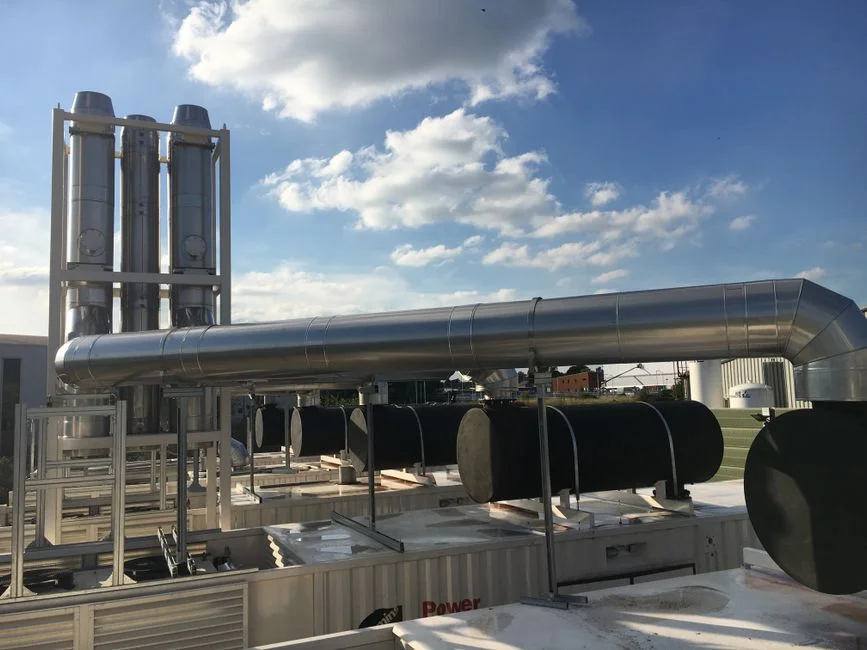
A Dushanbe treatment design requires a verified receiving route and a site-specific chemistry record before equipment selection. The project team should identify the responsible utility or environmental authority, pretreatment requirements, connection fees, permitted discharge points, monitoring duties and the route for residual waste. RSP Engineers recommends early utility coordination because late discovery of restrictive discharge limits can force a major redesign.
Request at least 12 months of source-water and blowdown data where available, including seasonal variation. Add measurements during startup, shutdown and peak cooling demand. The operating record should also capture the cooling-water chemical program, cycles of concentration, control strategy, side-stream filtration, backwash frequency, makeup-water source and proposed reuse demand.
| Brief section | Required evidence from the Dushanbe project |
|---|---|
| Receiving route | Written route, receiving authority, treatment agreement or permit, connection point, fees and authorized residual route. |
| Flow balance | Makeup, evaporation, metered blowdown, emergency dumps, backwash, cleaning, condensate, sanitary sewage and reuse demand. |
| Water chemistry | pH, conductivity or TDS, suspended solids, turbidity, temperature, total hardness, alkalinity, calcium, silica, sulfates, chlorides, residual oxidizing biocides, copper and zinc. |
| Cooling operation | Cycles of concentration, chemical products and dosages, control sequence, filtration, backwash and source-water quality. |
| Future demand | Expected IT load changes, cooling-system configuration, reuse demand and expansion assumptions. |
The supplied research does not establish current Dushanbe discharge limits, tariffs or connection fees. Those values must be obtained from the applicable authority and written into the design basis. U.S. pH and temperature examples, or the U.S. permitting framework described by RSP Engineers, cannot be transferred to Tajikistan. The permit-basis review approach for projects with sewer-limit constraints illustrates why receiving-route evidence belongs in the early brief.
Where monitoring records do not exist, install temporary meters and sampling points before committing to a major recovery skid. The objective is a defensible baseline, not a nominal water-balance calculation.
Match the Treatment Train to the Discharge or Reuse Destination
The same blowdown requires different treatment depending on whether its destination is an authorized sewer, a non-potable process use or cooling makeup. First segregate and equalize the stream; then remove the contaminants required by the receiving rule or reuse specification. Equipment should follow that decision rather than precede it.
| Destination | Conditional treatment train | Decision gate |
|---|---|---|
| Authorized sewer discharge | Equalization, pH adjustment where required, solids removal, filtration and any pollutant-specific treatment identified by the pretreatment agreement. | Written acceptance criteria and receiving treatment capacity. |
| Non-potable reuse | Filtration and treatment matched to turbidity, salinity, temperature, residual disinfectant and the specific application. | Define irrigation, toilet flushing, washing or another use before specifying quality. |
| Cooling makeup reuse | Filtration as pretreatment, RO, optional polishing, storage and controlled distribution to the cooling loop. | Validate feed chemistry, recovery, scaling control and residual treatment. |
| High recovery | Chemical precipitation, membrane distillation, evaporation or crystallization, with an authorized brine or salt route. | Confirm the receiving route for concentrate before selecting equipment. |
For cooling-makeup reuse, filtration protects downstream treatment and RO removes TDS and silica. IDE reports that conventional brackish-water RO generally reaches 75–80% recovery before scaling becomes unmanageable. Higher recovery requires more than a larger membrane skid: Saltworks describes chemical precipitation, membrane distillation, evaporation and crystallization as progressively higher-recovery options, while noting that high-salinity brine or salts still need an authorized management route.
IDE also reports a vendor brine-desalter application operating at around 95% recovery with approximately 1 mg/L permeate silica. That is an application benchmark, not guaranteed performance for a Dushanbe facility. Selection still requires feed analysis, scaling projections, recovery targets, energy demand and operator competence.
Before buying major recovery equipment, reduce demand where practical: repair leaks, optimize controls, improve filtration and review the chemical program. Genesis Water Technologies notes that biological and scaling risks rise above 5–6 cycles of concentration without advanced treatment. Higher cycles can therefore reduce blowdown while making subsequent treatment more difficult.
- Segregate sanitary and process streams; block unauthorized stormwater routing.
- Equalize blowdown, backwash and other process wastewater.
- Remove floatable material and suspended solids using the method justified by analysis.
- Adjust pH and control residual biocides where required.
- Apply filtration and optional RO for the selected reuse destination.
- Provide storage, distribution and an authorized final-discharge or residual route.
Equipment options include an industrial RO system for cooling blowdown recovery and multi-media filtration for pretreatment. These are components of a design, not substitutes for the receiving-route and chemistry decisions.
Choose Equipment That Fits Flow, Chemistry and Local Operating Capacity
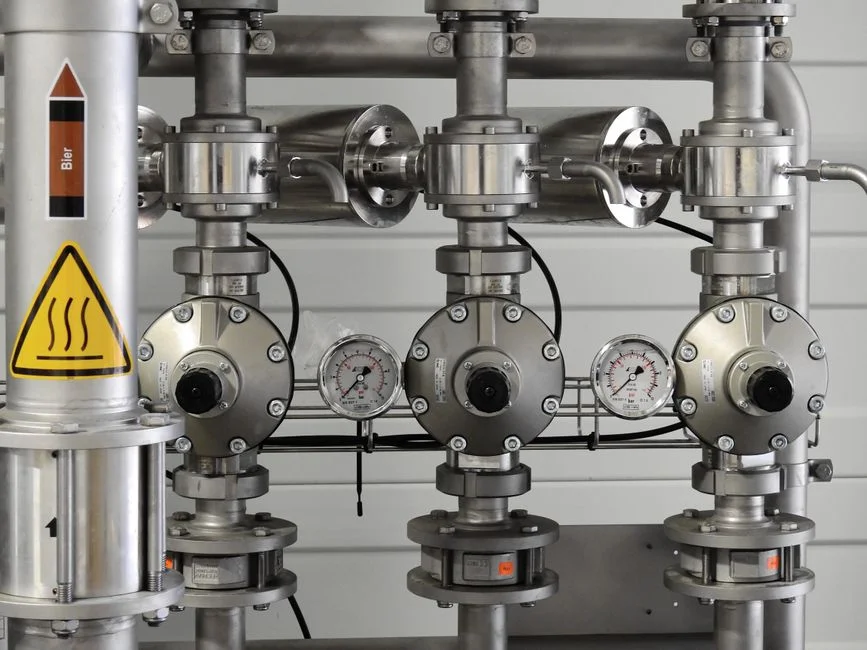
Equipment selection should follow the approved treatment objective and be tested against measured water rather than catalogue capacity alone. Evaluate each proposal against the common design basis, then verify recovery, residual production, chemical use, energy demand, maintenance and operator requirements.
| Equipment | Selection basis | Stated supplier range or capability |
|---|---|---|
| DAF | Use when analysis confirms suspended solids, colloids, oil and grease or floatable material. | Industrial DAF system for blowdown pretreatment: 4–300 m³/h across 13 standard models, with automatic skimming. |
| UF | Use for bacteria, colloids and suspended solids removal before RO or reuse. | UF pretreatment for data center water reuse: 2,000–40,000 L/h, 0.03 micron PVDF membranes, automatic backwash and air scour. |
| Chemical dosing | Use for pH neutralization or coagulation; define storage, containment, access and fail-safe operation. | Automatic pH and coagulation dosing system: PLC-controlled injection. |
| RO | Validate feed chemistry, scaling, membrane choice, recovery, energy and operator competence. | Industrial RO system for cooling blowdown recovery: stated recovery capability up to 95%. |
| Plate-and-frame filtration | Use where pretreatment or residual handling creates a dewatering requirement. | Plate-and-frame press for treatment residuals: 1–500 m². |
These supplier ranges identify catalog positions; they do not establish the required Dushanbe capacity. Size from measured and peak flow, hydraulic losses, storage turnover and treatment objectives. For example, do not select UF because the blowdown contains suspended solids if the downstream decision is temporary authorized discharge and no reuse specification justifies the added pretreatment burden.
Ask vendors to demonstrate performance with the same representative water analysis and acceptance criteria. Reference installations, recovery under the actual feed chemistry, chemical and energy consumption, footprint, maintainability, spare-parts support and total cost should carry more weight than purchase price alone. Include operator training and chemical availability in the evaluation because Genesis Water Technologies reports that complex treatment can exceed the operating capability of smaller facilities.
Design for Compliance Monitoring and Future Expansion
Monitoring, residual handling and expansion space must be included in the treatment budget rather than added after commissioning. The permit and reuse specification determine the instruments, but the design should provide flow and pH monitoring, representative sampling points, conductivity, turbidity or suspended-solids measurement, temperature measurement and residual-chemical monitoring. Automatic pH and flow measurement is consistent with the ongoing reporting approach described by RSP Engineers, although the applicable Tajikistan requirements must be confirmed.
Provide initial hold-and-test capacity, an emergency discharge plan and defined operating responses for failed pH control, high membrane differential pressure and loss of treatment capacity. Emergency plans must respect the same receiving constraints as normal operation; they do not create an unrestricted discharge route.
Reserve space for tanks, pumps, chemical storage, ventilation, drainage, spill containment, maintenance access and residual handling. RSP Engineers reports that treatment footprints can range from a few hundred square feet for a simple pH-neutralization system to several thousand square feet for filtration and chemical precipitation. The final footprint depends on flow and treatment complexity.
Storage and distribution must match the selected reuse destination and protect cooling equipment and downstream users from residual chemicals. The treatment components for valves and filter media should be specified around serviceability and compatibility with the selected process.
Saltworks reports that an effective treatment and recycling program can reduce cooling-system water consumption by up to 40% in its 200 MW case study, published in 2025-08. Treat this as a scenario benchmark, not a guaranteed Dushanbe saving. Commissioning should establish a baseline and then verify the water balance, treatment performance, energy, chemicals, labour, recovered-water yield and residual disposal.
For monitoring and planning methods, see the cooling blowdown monitoring and treatment planning review.
Frequently Asked Questions
How much should a Dushanbe data center budget for cooling blowdown treatment?
There is no defensible project price from facility size alone. Request vendor bids against one design basis covering measured blowdown flow, complete water chemistry, receiving limits, reuse destination, storage, monitoring, residual management and energy demand. Require each bid to separate physical pretreatment from RO or high-recovery equipment and to show chemical, energy, maintenance and residual-disposal costs over the operating period.
Can cooling tower blowdown be reused as cooling makeup in Tajikistan?
Yes, where the measured chemistry, treatment controls and cooling program support reuse. The design needs filtration, membrane or other advanced treatment as necessary, plus polishing and control of residual chemicals. It also needs a documented concentrate or brine route. Confirm that the recovered water will not cause scaling, corrosion or biological problems in the cooling loop before committing the reuse train.
Which treatment equipment should a data center buy first?
Start with equalization, solids removal, filtration and pH control when the near-term objective is authorized discharge. Defer advanced reuse equipment until baseline monitoring has established the chemistry and the permit or reuse specification is aligned. This sequence avoids installing RO before the project knows which contaminants, recovery level and residual route it must handle.
What is the risk of installing RO before completing the water analysis?
IDE reports that conventional brackish-water RO generally reaches 75–80% recovery before scaling becomes difficult to manage. Without hardness, silica, sulfate, chloride, temperature and chemical data, the designer cannot establish pretreatment, recovery or concentrate disposal reliably. Require a feed analysis and scaling projection before selecting membranes or guaranteeing recovery.
How can an operator avoid undersizing the treatment plant?
Do not size from theoretical blowdown alone. Genesis Water Technologies reports that actual blowdown can exceed theoretical calculations by 15–30% because of unmeasured losses and emergency dumps. Install meters, review peak cooling demand, include emergency operating modes and reserve space for future expansion. Then select equipment against verified peak flow and required standby capability.
Related Equipment
- industrial DAF system for blowdown pretreatment — specifications, capacity range, and technical data