
Choose from flow, site conditions and discharge requirements
The best fit is usually determined by design flow, soil conditions, discharge route and required effluent quality. For a Tashkent housing development, the buried WSZ A/O sewage treatment plant is a candidate for smaller residential communities: its supplied catalog range is 1–80 m³/h, with biological treatment, sedimentation and disinfection in one below-grade package. An integrated MBR wastewater treatment system is an alternative where tighter solids separation, effluent reuse or a smaller footprint matters; its supplied range is 10–2,000 m³/day and filtration below 1 μm. Final selection still requires a project-specific flow survey, groundwater review, permit check and comparison of sewer availability with packaged-plant lifecycle costs.
A packaged sewage treatment plant is a prefabricated or factory-integrated system installed close to the wastewater source rather than relying on a distant centralized facility. For a housing development, the first decision is not which product has the highest capacity. It is whether a legally usable sewer connection, a standalone treatment route, or both should form the project basis.
- Confirm the approved master plan, unit mix, occupancy assumptions and intended effluent destination.
- Develop separate average, peak-hour and peak-day flow bases, then convert them to the same units.
- Screen the WSZ range of 1–80 m³/h and MBR range of 10–2,000 m³/day against the approved design flow.
- Check groundwater, soil, access, easements and discharge approval before selecting a buried installation.
| Screening route | First decision | Evidence needed before equipment selection |
|---|---|---|
| Municipal sewer connection | Is a legal connection point available and scheduled? | Network location, easement, utility conflicts, extension schedule, connection conditions and applicable approval route |
| Buried WSZ A/O | Does the project fall within the supplied 1–80 m³/h catalog range? | Peak-hour and peak-day flow, burial conditions, available footprint, wastewater quality and discharge route |
| MBR | Does the project justify the process within the supplied 10–2,000 m³/day range? | Hydraulic duty, solids and organic loading, reuse requirement, membrane configuration, footprint and effluent criteria |
The supplied research does not establish Tashkent-specific per-capita sewage flow, infiltration and inflow, peak-hour factor, receiving-water limits, discharge permit conditions or site groundwater data. Those items must come from the project design team and relevant local authorities rather than from an assumed general range.
Understand Tashkent's wastewater development context
A 2025 LinkedIn report described a proposed TAQA wastewater treatment plant in Tashkent with a capacity of 1 million m³ per day and a stated value of $1 billion. The same report described wastewater initiatives in Tashkent, Kashkadarya, Fergana, Jizzakh and Namangan, showing substantial attention to national infrastructure, but none of these projects demonstrates that a particular housing development has access to a municipal sewer.
The reported Namangan reconstruction was assigned a capacity of 100,000 m³ per day and was described as using Nereda technology for enhanced biological treatment. The source also reported centralized sewage coverage increasing from 20.5% to 22.3% by 2025. Those figures describe national and regional context; they do not establish service availability, connection timing or discharge capacity at the proposed development site.
Packaged treatment and municipal investment can therefore be complementary. A decentralized sewage treatment system may serve a development before network extension, provide treatment capacity during construction phasing, or remain the practical solution where a sewer extension is impracticable. That conclusion remains conditional on site investigation, an authorized discharge route and approval by the responsible authorities.
The local market should also be treated as a lead-generation reference, not a technical qualification. GoldenPages.uz maintains a directory of sewage-treatment equipment suppliers, but a listing does not verify process capability, project references, local service coverage or compliance with a development’s design basis.
Build the design-flow basis before selecting a model
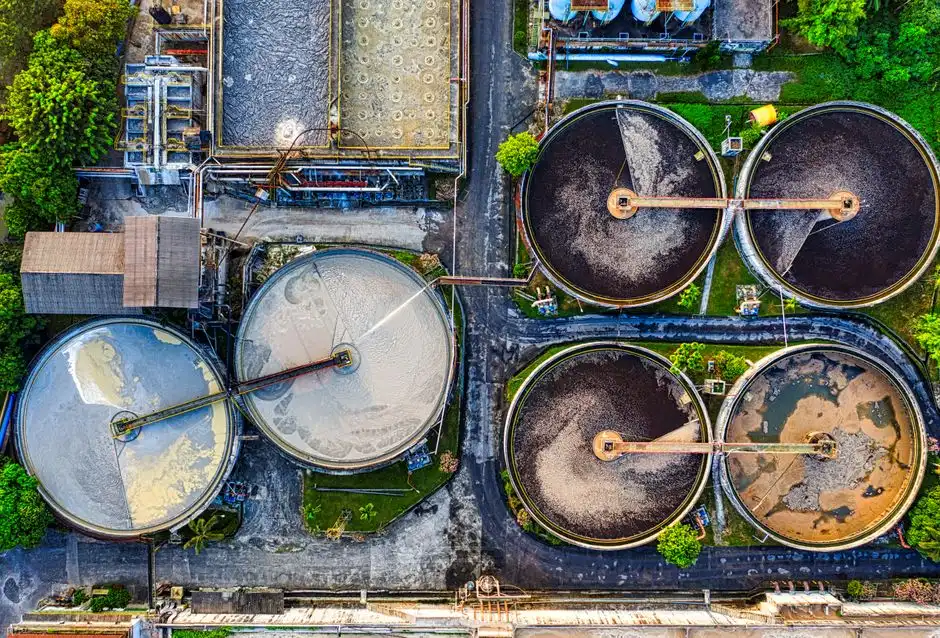
The hydraulic basis must reconcile the development’s wastewater-generating population with the treatment supplier’s stated duty. Average daily flow alone is insufficient because it can conceal the short-duration loading that determines biological tank and membrane capacity, equalization requirements and unit arrangement.
- Compile dwelling units, occupancy assumptions, commercial uses, daily wastewater estimates, seasonal variation, groundwater infiltration and inflow, and peak-hour factors from the project design package.
- State average daily, peak-hour and peak-day flows separately where required by the selected equipment and the local approval process.
- Convert the approved hydraulic basis into the units used by each candidate: m³/h for WSZ screening and m³/day for MBR screening.
- Compare the design duty with the supplier’s stated range, then define hydraulic reserve, redundancy and expansion provisions through the project brief and manufacturer’s process calculations.
- Arrange parallel modules where the approved duty and operating strategy justify modularity, rather than relying on one oversized unit without reviewing maintenance and peak-load consequences.
| Design input | How it is used | Control before tender |
|---|---|---|
| Average daily wastewater flow | Establishes the nominal daily treatment basis | Agree occupancy and demand assumptions with the client and approving authority |
| Peak-hour and peak-day flow | Tests hydraulic capacity and unit arrangement | Require the supplier to show how the proposed configuration handles the approved peaks |
| Infiltration and inflow | Identifies wastewater dilution or added hydraulic loading | Use site-specific evidence where available; do not substitute a generic factor |
| Organic and solids loading | Determines biological and membrane process adequacy | Obtain COD, BOD, suspended solids, fats and oils, pH and relevant commercial or industrial contributions |
| Reserve and redundancy | Addresses uncertainty and maintainability | Define the required reserve, standby strategy and expansion sequence in the basis of design |
No per-capita consumption factor should be inserted from general practice. The applicable value must be obtained from the client, project engineer and approving authority and recorded in the design basis. The supplied WSZ catalog range is 1–80 m³/h, while the supplied MBR catalog range is 10–2,000 m³/day; these are screening limits, not evidence that either system can accept the project’s untreated wastewater.
Before final process selection, request wastewater characterization covering flow, COD, BOD, suspended solids, fats and oils, pH, and any industrial or commercial contributions. This prevents the hydraulic selection from being made independently of the treatment process.
Compare buried A/O and MBR treatment packages
The WSZ and MBR packages solve different design priorities: WSZ combines a below-grade biological package with limited surface occupation, while MBR adds membrane solids separation where compactness or reuse-driven effluent quality is more important. The correct comparison must use the same wastewater duty and the same required discharge outcome.
According to the supplied catalog information, the WSZ series combines anoxic/aerobic biological contact oxidation, sedimentation and disinfection in one buried package. It is fully automated, requires no operator according to the catalog, and permits landscaping above the installation. Its supplied capacity range is 1–80 m³/h; a trailer-mounted version is also available for mobile deployment.
The integrated MBR package combines activated-sludge treatment with submerged PVDF membrane filtration. The supplied catalog states filtration below 1 μm and describes the effluent as near-reuse quality. It also states that MBR systems occupy 60% less footprint than conventional systems and cover 10–2,000 m³/day. For a defined module arrangement, the DF flat-sheet MBR uses a 0.1 μm pore size and is offered in 80–225 m² configurations producing 32–135 m³/day.
| Selection criterion | Buried WSZ A/O | Integrated MBR |
|---|---|---|
| Supplied catalog capacity | 1–80 m³/h | 10–2,000 m³/day |
| Treatment architecture | Anoxic/aerobic biological contact oxidation, sedimentation and disinfection | Activated sludge with submerged PVDF membrane filtration |
| Installation | Buried package; catalog states landscaping may be installed above it | Requires a defined site arrangement and module configuration |
| Key project driver | Below-grade treatment with limited surface occupation | Compact solids separation, reuse-oriented treatment or tighter effluent specification |
| Filtration information | No membrane filtration value stated in the supplied catalog | Filtration below 1 μm; DF module uses 0.1 μm pore size |
| Critical tender information | Burial depth, loading, odor control, access and landscape loading | Membrane area, flux and cleaning requirements, pretreatment and replacement provisions |
Neither process should be represented as automatically compliant with a Tashkent discharge permit. The supplied research contains no Tashkent-specific numerical effluent limits. The receiving route, reuse application, sampling requirements and applicable discharge conditions must be confirmed with the responsible authority. The DF flat-sheet membrane bioreactor module offers a more defined engineering option when the buyer needs a specific membrane configuration, but its stated production range must still be tested against the approved project duty.
Prepare the site, network and discharge route
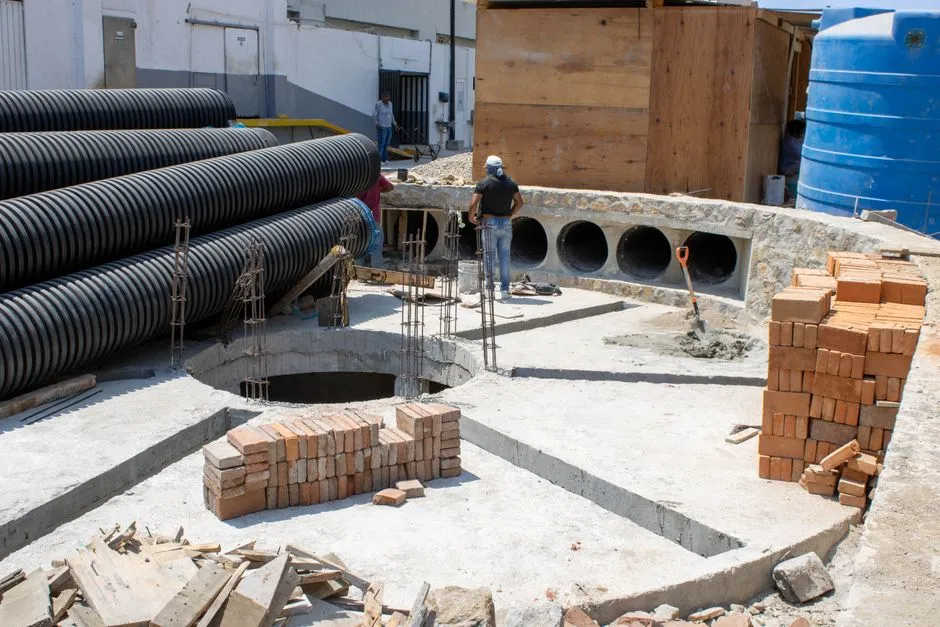
A technically suitable package can still fail at the site if excavation, groundwater, utilities, discharge authorization or maintenance access is unresolved. Civil and permitting work should therefore proceed in parallel with the equipment selection.
- Below-grade installation: confirm excavation access, groundwater, soil bearing conditions, flood level, burial depth and landscaping loads before specifying the WSZ installation.
- Development-scale controls: evaluate inlet pumping, odor control, emergency storage, bypass management and overflow provisions. The supplied research gives no site-specific design values for these elements.
- Sewer availability: trace the nearest legally authorized connection point, easements, utility conflicts and the local network-extension schedule. A nearby sewer in a plan does not establish connection feasibility.
- Pretreatment: use a rotary mechanical bar screen where incoming flows contain rags, plastics, fibers or other debris that could affect downstream pumps, valves and biological processes. The relevant equipment is a rotary mechanical bar screen.
- Discharge route: define an authorized sanitary sewer, an approved receiving system or a planned reuse application. Do not rely on an informal drain or irrigation route.
- Operational handover: include biological startup, performance testing, operator training, critical spares, monitoring and maintenance responsibilities in the procurement scope.
For a buried WSZ package, the civil design should coordinate access covers, vent and odor-control provisions, lifting points, electrical routing, drainage and future inspection requirements. For an MBR system, pretreatment, membrane cleaning, membrane replacement, equalization and the consequences of interrupted power should receive more attention.
Effluent reuse should be treated as a project use case, not an assumed benefit. If irrigation, washing or another reuse is proposed, identify the application and obtain the corresponding quality and operational requirements before selecting the process.
Compare lifecycle value instead of equipment price alone
The comparable cost is the installed, permitted and operated treatment solution, not the factory price of the membrane or biological package. No supported Uzbek price range or supplier quotation is available in the supplied research, so a budget cannot responsibly be populated with an assumed capital cost.
| Cost or commitment category | Information to request |
|---|---|
| Equipment and works | Process package, pumps, controls, pretreatment, civil works, installation, electrical supply and freight |
| Import and localization | Import assumptions, customs treatment, local taxes, installation requirements and currency exposure stated by the bidder |
| Commissioning | Startup, testing protocol, performance period, training, handover documentation and acceptance criteria |
| Operations | Energy, chemicals, membrane cleaning, maintenance, laboratory or sampling, sludge handling and monitoring |
| Long-term commitments | Warranty, critical spares, local service capability, replacement assumptions and agreed response arrangements |
| Sewer alternative | Connection charges, easements, network-extension works, capacity confirmation and connection schedule |
The supplied Zaporizhzhia project provides a useful procurement lesson without providing a transferable Uzbek price. The project document identified odor reduction, stabilized sludge and stable effluent quality as strategic objectives and emphasized improving facility operation and maintenance through technical skills development. For a housing development, this supports evaluation of verified performance, sludge management and operator capability rather than purchase price alone. The same lifecycle discipline is relevant when reviewing an MBR versus conventional activated sludge comparison.
Require each supplier to state the design flow and wastewater basis, process guarantee, effluent test protocol, warranty scope, local-service capability, critical spares and delivery assumptions. Any energy or maintenance comparison must state the boundary and assumptions used.
Make the procurement decision with a staged review
The procurement should move from a project-defined basis to a normalized technical shortlist, with no final award before site and compliance conditions are closed. This avoids selecting a package from capacity and price before the treatment duty and installation conditions are defined.
- Issue the basis of design. Include wastewater flow and quality, site constraints, discharge route, utilization requirements, performance guarantees and required submissions.
- Screen suppliers. Apply non-negotiable requirements for process design, civil compatibility, automation, documentation, commissioning and local support.
- Normalize the bids. Require every offer to use the same design flow and wastewater duty; exclude comparisons based on different treatment bases or incomplete civil, freight, installation and utility scopes.
- Review the technical package. Examine hydraulic and process calculations, general arrangement drawings, P&IDs, equipment schedules, guarantees, O&M manuals and relevant references.
- Resolve conditions. Make final selection conditional on site verification, discharge authorization, manufacturer acceptance of the offered duty and confirmation of the applicable local approval path.
A supplier should be able to explain why the proposed unit configuration handles the approved peak loads, what pretreatment is required and how maintenance access is provided. It should also identify which performance elements it guarantees, which remain dependent on civil works or operator action, and how local spare-parts and service support will be provided.
The domestic sewage treatment buyer guide provides additional structure for organizing this review. The project-specific requirement remains more important: no supplier should proceed from a catalogue capacity to a fixed selection until the Tashkent site, sewer connection assessment and discharge route are understood.
Frequently Asked Questions
How much wastewater should a packaged sewage treatment plant handle for a Tashkent housing development?
Size the plant against the approved peak-hour and peak-day wastewater design basis, not against average daily flow alone. Obtain occupancy, unit mix, commercial demand, infiltration and inflow, and peak factors from the project team and approving authority. Convert the duty to m³/h for WSZ screening and m³/day for MBR screening, then compare it with the supplied 1–80 m³/h WSZ and 10–2,000 m³/day MBR ranges. The supplied research does not provide a defensible per-capita factor for a Tashkent housing development, so no numerical plant size should be inferred without local project inputs.
When is a buried WSZ A/O plant better than an MBR system for a residential development?
A buried WSZ A/O package is generally the more relevant candidate when the project needs a below-grade treatment installation, has a duty within the supplied 1–80 m³/h range and does not require membrane-level solids separation. An MBR system deserves priority where the approved effluent specification, reuse application or footprint constraint justifies membrane treatment. This is a screening rule, not a performance guarantee; both options still need wastewater characterization, site design and confirmation of discharge requirements.
What should a buyer include in a packaged sewage treatment plant budget in Uzbekistan?
Request a total-cost comparison covering equipment, freight, import, taxes, civil works, pumps, controls, installation, commissioning, training, energy, chemicals, maintenance, sludge handling, monitoring, critical spares and eventual replacement. Separately identify municipal connection charges and network-extension works. Because the supplied research contains no Uzbek supplier quotation, the buyer should request a site-specific budget built from current quotations rather than use an invented price range.
How can a developer screen a sewage treatment plant supplier for technical and commercial reliability?
Require hydraulic and process calculations for the stated duty, P&IDs, drawings, equipment schedules, an effluent test protocol, enforceable guarantees, O&M documentation, commissioning records and references. Check whether the supplier can provide local service, critical spares and a defined warranty. Normalize quotations to the same treatment duty and scope before comparing price.
What compliance risks should be resolved before installing a decentralized treatment plant in Tashkent?
Resolve the discharge route, permitting authority, effluent criteria, reuse requirements and sewer-connection rights before ordering the plant. The supplied research contains no Tashkent-specific numerical effluent limits, so the developer must obtain the applicable conditions from the responsible authority. Also confirm whether the project requires environmental or construction approvals, and do not rely on an informal drain for discharge. A further comparison of packaged sewage treatment systems for housing developments can support process screening, but it cannot substitute for local approval.