Which discharge rules apply to a Delhi mining or metals plant?
Mining and metals plants near Delhi, United States, meet sewer pretreatment limits by controlling wastewater before it enters the POTW collection system. Sewer discharges are governed under Clean Water Act §307(b) and 40 CFR Part 403, with categorical standards under 40 CFR Part 437 for ore mining and dressing or Part 433 for metal finishing where applicable. The receiving POTW’s approved local limits may be stricter and must be confirmed in writing for each pollutant. A defensible design also evaluates each outfall, characterizes variable flows, sizes equalization, selects precipitation and clarification, and provides for monitoring and sludge handling.
The first gate is the discharge route, not the equipment. The US EPA states that point-source discharges from mining operations, including discharges from associated impoundments, require NPDES authorization (US EPA, Industrial Wastewater). A sewer discharge follows a different pathway: Clean Water Act §307(b), 40 CFR Part 403, the receiving POTW’s sewer-use ordinance and any applicable state requirements. A plant may hold both authorizations when it has separate surface-water or stormwater outfalls.
Identify the POTW receiving each sewer connection and request its current sewer-use ordinance, approved local limits, industrial-user permit conditions, monitoring instructions and enforcement procedures. EPA defines local limits as site-specific numeric or narrative requirements, including best management practices, imposed at the industrial user’s end-of-pipe discharge point—that is, the point of connection to the POTW collection system (US EPA, Pretreatment Standards and Requirements—Local Limits). Do not transfer limits from another city or assume Delhi’s requirements match those elsewhere.
| Decision item | Required confirmation | Engineering consequence |
|---|---|---|
| Discharge route | Separate sewer, surface-water and stormwater outfalls | Assign the correct permit path to each outfall |
| Receiving authority | POTW name, collection-system connection and control authority | Obtain the controlling local ordinance and permit |
| Facility classification | Ore mining and dressing under Part 437, or metal finishing under Part 433, where applicable | Identify applicable categorical limits and monitoring |
| Compliance point | Industrial-user end-of-pipe location | Place the compliance sample point and final treatment controls accordingly |
| Overlapping requirements | Federal, state, permit and local limits | Use the most restrictive confirmed requirement for design |
This source hierarchy also prevents an equipment-first mistake. The mining plant sewer-limit compliance guide provides a parallel compliance blueprint, while the mining and metals pretreatment workflow explains why sewer regulation differs from direct-discharge permitting.
Build the compliance limit matrix before designing the plant
A pretreatment design should use the most restrictive confirmed requirement for each pollutant, discharge point and averaging period—not the lowest federal categorical floor by default. Build a matrix before preparing an equipment specification so that the selected process can be traced to a permit requirement.
For each outfall, record the applicable 40 CFR Part 437 or Part 433 limit, the POTW local limit, instantaneous and daily maximum values, monthly averages, sampling frequency, monitoring point, analytical method and reporting method. Include pH, metals, TSS, sulfate, TDS, ammonia where applicable, and narrative prohibitions applicable to the collection system. EPA notes that local limits are specific to the POTW, its sludge and its receiving waters and may be numeric or narrative (US EPA, Pretreatment Standards and Requirements—Local Limits).
| Limit layer | Evidence available in the supplied research | Use in design |
|---|---|---|
| Part 437, ore mining and dressing | Zinc: 1.0 mg/L daily maximum; 0.5 mg/L monthly average | Compare with the POTW’s confirmed local zinc limit |
| Part 433.15, metal finishing | Copper: 3.38 mg/L daily maximum; 2.07 mg/L monthly average. Total chromium: 2.77 mg/L daily maximum; 1.71 mg/L monthly average | Apply to plating, pickling or anodizing operations where the category is correct |
| Frequently cited 2026 POTW limits | Zinc: 0.3–1.0 mg/L monthly average. Copper: 0.3–0.5 mg/L monthly average | Planning context only; do not represent these as Delhi’s limits |
| State, permit and local requirements | No Delhi-specific values were supplied | Obtain current written terms before sizing |
The Part 437 zinc and Part 433.15 copper and chromium values are reported in HydroPureWater’s pretreatment article, How Mining & Metals Plants Meet Pretreatment Limits Before Sewer Discharge. Its cited commonly used POTW limits are not evidence of Delhi’s requirements. Request the Delhi-area POTW’s approved schedule and industrial-user permit, then enter each confirmed value in the matrix.
Apply the same logic to sampling. An averaging period can conceal a short hydraulic or chemical excursion that a local limit expressly controls. The permit-to-equipment matrix approach illustrates why regulatory structure must be converted into procurement requirements before treatment bids are invited.
Characterize each waste stream before selecting process equipment
Source characterization determines whether equalization, segregation, chemical dosing or clarification will control the treatment design. A single blended sample can conceal incompatible acidic, high-solids or oily streams that produce separate chemical and hydraulic loads.
Prepare a source-by-source sampling plan covering pH, TSS, dissolved and total metals, sulfate, TDS, oil and grease, and any PFAS constituents required by the POTW or permit. HydroPureWater’s pretreatment article describes raw acid mine drainage and spent process solutions at pH 2–4, while Genesis Water Technologies identifies suspended solids, heavy metals, metalloids, organics and high salinity as recurring mining-wastewater concerns.
Map the operating events that generate hydraulic peaks: dump-leach batches, mill clean-outs, shift changes and runoff. The How Mining & Metals Plants Meet Pretreatment Limits Before Sewer Discharge article identifies these events as equalization drivers. Record their duration, volume, pH, solids and metal concentrations; averages alone cannot support basin sizing.
Use jar testing to establish parameter-specific precipitation windows. HydroPureWater reports that lime and sodium hydroxide are common pH-adjustment reagents, but the optimum pH depends on the metal being removed. A generic neutral-pH target will not establish whether copper, zinc, lead or another constituent will precipitate at the required residual.
Segregate streams where practical. Keep oil and grease out of otherwise metal-dominated precipitation if it materially increases chemical demand. Separate extreme pH batches from high-solids wash water where collection piping and process controls allow. This prevents the most concentrated stream from determining reagent consumption, sludge production and clarifier loading for the entire plant.
The analytical program should also distinguish total metals from dissolved metals because the treatment objective and monitoring basis depend on the permit definition. Include sampling locations, holding times and analytical methods in the investigation plan, and cross-check the mining wastewater process comparison for the separation work needed before biological or polishing decisions.
Size equalization and chemical dosing for variable discharges
Equalization must absorb documented batch discharges before they reach pH control and clarification. HydroPureWater’s pretreatment article recommends 8–24 hours of average daily flow and warns that a 4-hour basin can pass upstream batch spikes into the clarifier.
Size the hydraulic train for peak 2-hour flow with 20–30% turndown capacity, according to the same source. Those criteria are design inputs from that article, not Delhi permit limits. Obtain the 2-hour peak, sustained batch duration and minimum operating flow from source records before calculating working volume, pumping capacity and clarifier peak loading.
Place staged pH adjustment downstream of equalization. HydroPureWater reports a target pH of 6.5–9.0 for broad POTW compatibility and recommends two reactors when influent pH swings exceed 2 pH units. That range is a process-screening value; the confirmed local pH requirement and each metal’s jar-test precipitation window remain controlling.
| Design input | Research-supported basis | Buyer or designer action |
|---|---|---|
| Equalization residence time | 8–24 hours of average daily flow recommended by HydroPureWater | Confirm using measured batch volume and duration |
| Hydraulic design condition | Peak 2-hour flow with 20–30% turndown capacity specified by HydroPureWater | Provide verified flow records and minimum-flow assumptions |
| pH staging | Two-stage reactor recommendation when swings exceed 2 pH units | Establish the operating envelope through jar tests |
| Dosing control | PLC control identified by HydroPureWater for maintaining pH within a ±0.2 band | Define interlocks, alarms, reagent limits and fail-safe responses |
HydroPureWater states that automatic PLC-controlled dosing can maintain pH within a ±0.2 band. Use pH, flow and metal-concentration data to coordinate pH adjuster, coagulant and flocculant feed; do not operate the sequence from an uncontrolled manual trim. An automatic pH and chemical dosing skid should be specified around the confirmed reagent strategy, tank capacities, duty cycle and controls—not a generic flow rate.
For instrumentation and control architecture, the industrial water-treatment controls guide provides the broader monitoring context, while the pH sensor buyer guide helps identify instrumentation costs that should appear in the bid package.
Choose DAF or lamella clarification based on the solids
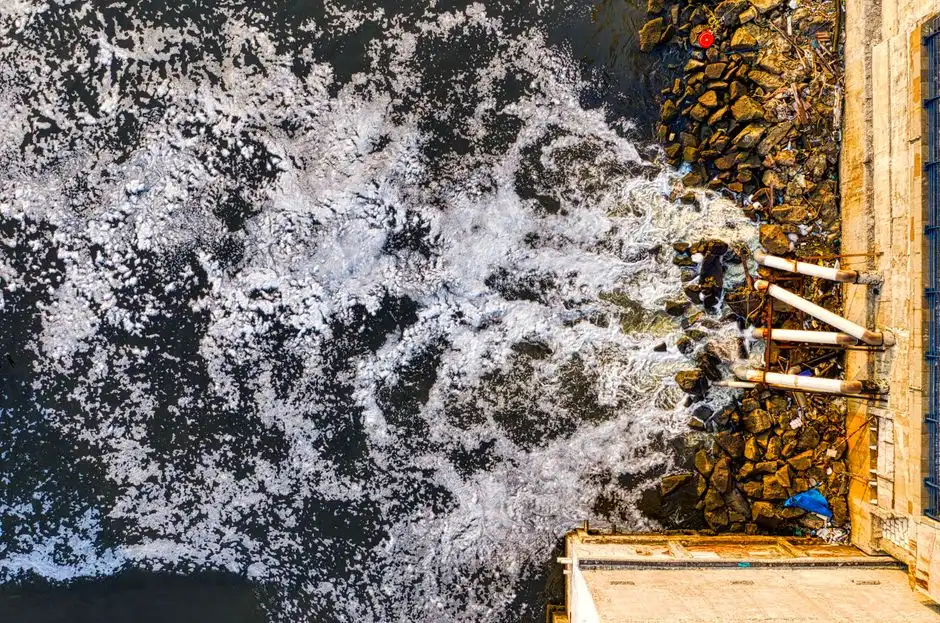
DAF and lamella clarification solve different solids-removal problems. HydroPureWater reports DAF loading of 5–25 m/h, TSS removal of 90–98% and oil-and-grease removal of 85–95%; it reports lamella surface loading of 20–40 m/h and identifies metal-bearing sludge as the stronger lamella application.
Use DAF where the stream contains oil, grease, fine colloids or metal-bearing particles that benefit from microbubble flotation. Use lamella clarification where the primary solids are metal-hydroxide flocs, flow is higher or the available footprint is constrained. An industrial DAF system should be evaluated against verified peak flow, loading, recycle requirements, surface-oil removal and sludge characteristics rather than nominal treatment capacity alone.
| Decision factor | Favors DAF | Favors lamella clarification |
|---|---|---|
| Primary contamination | Oil, grease, fine colloids and recoverable floating material | Metal-bearing hydroxide flocs and settleable solids |
| Hydraulic loading reported by HydroPureWater | 5–25 m/h | 20–40 m/h surface loading |
| Reported removal | 90–98% TSS and 85–95% oil and grease | Strong treatment of dense metal-hydroxide sludge |
| Layout consideration | Requires saturation, recycle and flotation equipment | Lower footprint than a conventional clarifier |
| Final selection requirement | Verify average flow, peak 2-hour flow, turndown, solids loading and final effluent limit | |
HydroPureWater also reports polymer coagulant aid at 0.5–3 mg/L for strengthening flocs and reducing colloidal carryover. Use that range only as a jar-test starting point, then set the operating dose through site-specific testing and operating trials.
The same source describes a DAF product range of 4–300 m³/h across 13 models. It identifies packaged skids as common below 10 m³/h and states that above 100 m³/h, multiple DAF trains or a lamella clarifier typically become more economical. Those breakpoints are purchasing heuristics, not Delhi discharge requirements; final selection still requires verified flow and solids data.
Clarifier carryover should also be checked against the local metals and TSS limits. The suspended-solids removal guide provides the mechanical separation context, but the bid should require a stated residual under the actual design flow envelope.
Polish metals, TSS and disinfection before the sewer
Polishing should answer a confirmed residual requirement rather than add equipment indiscriminately. Start with hydroxide precipitation for most mining flows: HydroPureWater reports 85–95% total metals removal from properly controlled systems in operating mining and metals installations.
Add sulfide polishing only when the confirmed local limit requires residual metals below 0.1 mg/L. HydroPureWater compares sulfide residuals of 0.01–0.05 mg/L with hydroxide residuals of 0.5–2.0 mg/L and reports 2–4× higher reagent cost. It also identifies sealed reactors and H₂S scrubbing as necessary controls. A slipstream arrangement should be evaluated when it provides the required residual without polishing the entire flow.
| Potential polishing step | Research-supported basis | Selection condition |
|---|---|---|
| Hydroxide precipitation | 85–95% total metals removal reported by HydroPureWater | Use as the primary precipitation process where jar-test residuals meet confirmed limits |
| Sulfide polishing | Residuals of 0.01–0.05 mg/L versus 0.5–2.0 mg/L for hydroxide; 2–4× higher reagent cost | Required when the confirmed limit is below 0.1 mg/L |
| Multimedia safety filter | 1–2 m/h filtration and residual TSS below 10 mg/L reported by HydroPureWater | Include where residual solids must be controlled after clarification |
| Disinfection | Chlorine dioxide at 1–5 mg/L reported by HydroPureWater | Use only where the POTW ordinance or discharge assessment requires it |
Install a multimedia safety filter where residual solids must be controlled after clarification. HydroPureWater gives 1–2 m/h filtration and residual TSS below 10 mg/L, with backwash triggered by differential pressure. Include backwash-waste storage and disposal; a filter cannot be evaluated only by forward filtration rate.
Use UV or chlorine dioxide only when the POTW ordinance or discharge assessment requires disinfection. HydroPureWater reports chlorine dioxide dosing at 1–5 mg/L, but the required residual, contact condition and analytical method must come from the POTW or permit. The metals wastewater polishing guide can support the broader polishing review.
Verify the complete sequence against every pollutant in the matrix. One heavy metal does not establish compliance for pH, TSS, TDS, sulfate or narrative prohibitions, and a filter does not remove dissolved metals unless a specific polishing process is provided.
Treat, monitor and document the sludge as part of compliance
Clarifier and DAF sludge must be characterized before a dewatering or disposal method is selected. Metals content can affect waste classification, handling requirements and acceptance by the proposed destination. Obtain a representative solids analysis rather than assuming the sludge is a conventional nonhazardous filter cake.
HydroPureWater reports that a plate-and-frame filter press can dewater sludge to 25–35% dry solids, producing a stackable cake. Compare that result with the confirmed disposal route, available filter area, cycle duration, cake handling and filtrate volume. A vendor’s dewatering claim does not establish that the cake is acceptable for the selected facility.
Evaluate landfill, authorized reuse or metals recovery against the actual waste classification. Do not assume one route is acceptable for every mining or metals sludge. Plan filtrate return to the appropriate plant inlet only after reviewing hydraulic loading and treatment compatibility; unresolved dissolved metals, pH or salinity can otherwise return to the front of the system.
The operating file should include sampling equipment and calibration records, flow logs, chemical-use records, chain-of-custody procedures and excursion-response procedures at the POTW-approved monitoring point. These records demonstrate that the selected train was operated at the conditions used for compliance, not merely that the equipment was installed.
The Delhi and Yamuna sludge-management context is not a substitute for U.S. waste classification or POTW approval; it can only provide broader context for why residual and disposal documentation must be explicit.
Use this procurement and compliance checklist
A vendor-ready scope should contain verified regulatory and operating inputs, not generic claims about mining-water capability. Before issuing the request for quotation, assemble the following package:
- The current POTW sewer-use ordinance, approved local limits, industrial-user permit, applicable state requirements and applicable federal categorical standards.
- Verified average flow, peak 2-hour flow, batch-discharge profile, complete water analysis, waste-generation estimates and required turndown.
- The compliance point, sample frequency, averaging periods, alarms, recordkeeping duty and required performance guarantees.
- Supplier responses identifying the treatment unit for each pollutant, expected residual, sludge production, chemical consumption, utility demand and control sequence.
- A wastewater and solids-handling concept that addresses filtrate, backwash waste, chemical storage and the authorized disposal route.
Do not approve a performance guarantee based only on 85–95% total metals removal. HydroPureWater presents that value as a typical precipitation result, while actual compliance depends on the confirmed limit and applicable influent. The metals plant pretreatment limits example reinforces the need to translate permit language into testable equipment guarantees.
Require bidders to identify assumptions, exclusions and data still required. A defensible bid identifies the governing limit and demonstrates that the proposed treatment step addresses it.
Frequently Asked Questions
What is the cheapest compliant treatment route for a small mining wastewater discharge near Delhi?
There is no defensible universal low-cost configuration because the POTW’s local limits, flow, pollutant concentrations and sludge route control the answer. A small flow may justify a packaged system, but the buyer should request confirmed local limits, verified peak and average flow, a complete analysis and disposal criteria before comparing bids. Do not accept a route based only on a low equipment price if it cannot meet the permit point or manage the resulting solids.
Should a mine use DAF or a lamella clarifier?
Use DAF when oil, grease or fine colloids are central to the solids-removal problem; use lamella clarification for predominantly metal-bearing hydroxide flocs, particularly where higher flow or footprint constraints matter. HydroPureWater reports DAF loading of 5–25 m/h and lamella surface loading of 20–40 m/h. The final choice still requires verified peak 2-hour flow, turndown and solids loading.
What information should be included in an equipment vendor quotation?
Provide the confirmed POTW local limits, applicable categorical standards, full water analysis, average and peak flows, batch profile, required turndown, compliance point, sampling obligations, utilities and expected sludge route. Require each bidder to map a treatment step to each controlled pollutant and state residual, sludge generation, chemical demand and control sequence. A performance guarantee should be tied to the confirmed limit under the stated design influent.
Does an NPDES permit cover discharge to a sewer?
No. NPDES covers qualifying direct point-source discharges to waters of the United States; sewer discharge to a POTW is evaluated under Clean Water Act §307(b), 40 CFR Part 403, the industrial-user permit and POTW requirements. A mining operation may separately need NPDES authorization for surface-water discharges, including discharges from associated impoundments.
When is sulfide polishing justified?
Sulfide polishing is justified when the confirmed local metals limit requires a residual that hydroxide precipitation cannot achieve. HydroPureWater reports sulfide residuals of 0.01–0.05 mg/L, compared with 0.5–2.0 mg/L for hydroxide, but also reports 2–4× higher reagent cost. The quotation must therefore include sealed reactors, H₂S scrubbing and a justified comparison with a hydroxide-plus-slipstream arrangement.