Which Rules Apply to a Beasley Fabricated Metals Plant?
Fabricated metals plants near Beasley meet pretreatment limits by classifying their actual manufacturing operations, then designing treatment against the stricter of applicable federal categorical standards and local POTW limits. 40 CFR Part 433 governs specified metal-finishing operations, while 40 CFR Part 467 covers aluminum forming and certain integral operations. The governing sequence is manufacturing inventory, written regulatory classification, permit comparison, representative wastewater testing, and then equipment sizing. Average flow alone is not a sufficient design basis.
EPA applies the Metal Finishing regulation according to manufacturing activity, not industrial sector alone. For a Beasley plant, the classification record should identify fabrication, machining, cleaning, etching, plating, finishing, rinse, paint stripping, contact cooling, scrubber, and stormwater operations; describe alloys, chemicals, bath systems, and production changes; and map every source to its sewer discharge point. A stamping operation that sends parts to an off-site finisher may differ from a plant operating plating or finishing tanks on site.
Under the framework summarized in the fabricated metals wastewater compliance framework, 40 CFR Part 433 distinguishes PSES for existing sources from PSNS for new sources and regulates cadmium, chromium, copper, lead, nickel, silver, zinc, and total toxic organics. For aluminum operations, evaluate rolling, extrusion, forging, drawing, and integral ancillary activities against 40 CFR Part 467. The Beasley POTW permit can establish stricter local limits under 40 CFR 403.5, including parameters not fully resolved by the federal category.
| Decision item | Evidence required | Effect on design |
|---|---|---|
| Categorical applicability | Manufacturing-process inventory, discharge-point map, equipment and bath descriptions | Determines whether Part 433, Part 467, another category, or no categorical standard applies |
| Existing or new source | Source-construction history and permit record | Helps identify PSES versus PSNS requirements |
| Local discharge limits | Current Beasley POTW permit, incorporated standards, monitoring method, and resampling rules | Sets the enforceable final design target for each parameter |
| Regulatory determination | Written response from the receiving pretreatment authority | Reduces the risk of procuring against an incorrect category or permit interpretation |
Before equipment selection, obtain the current permit and request written confirmation of the applicable category and standards. Maintain that classification record with the process inventory, discharge routing, supporting calculations, and future-change protocol. It becomes part of the procurement file and the compliance argument rather than an informal interpretation based on SIC codes.
Map Each Waste Stream Before Choosing Equipment
Wastewater characterization must occur before treatment selection because batch chemistry, oil content, constituent concentration, and discharge timing can change the performance required from every downstream unit. HydropureWater’s 2026 field data describes mixed-floor-drain observations of oils at 50–500 mg/L, total dissolved metals at 5–200 mg/L, TSS at 100–1,000 mg/L, and pH swings from 2 to 12 across batch dumps. These are characterization warnings, not permit limits; the enforceable targets remain the Beasley permit and any incorporated standard.
The same 2026 field data reports a hard-chrome rinse dump with Cr(VI) above 50 mg/L and pH below 2. A different shop could have lower concentrations, so this observation cannot substitute for plant testing. It does show why clean rinse water, concentrated process baths, oily waste, cleaning chemicals, metal-bearing solutions, contact cooling water, scrubber liquor, and stormwater must be inventoried separately wherever they exist. Combining them before sampling can conceal peak concentration and batch volume.
| Stream | Field investigation | Design implication |
|---|---|---|
| Clean rinse water | Source, flow, discharge timing, reuse potential, constituent concentrations | Determine whether segregation can reduce treatment load |
| Concentrated process baths | Batch volume, chemistry, metals, pH, disposal frequency | Provide dedicated reaction and equalization capacity rather than dilution |
| Oily waste and machining fluids | Free or emulsified oil, surfactants, settleable solids, temperature | Evaluate oil removal and the required separation mechanism |
| Metal-bearing solutions | Cr(VI), cyanide, dissolved metals, pH, and constituent generation | Determine whether chrome reduction, cyanide oxidation, or precipitation is required |
| Scrubber liquor and stormwater | Routing, permit status, first-flush behavior, pH, metals, oil and TSS | Determine whether treatment, segregation, or alternate disposal is required |
Build a representative sampling program covering metals, oil and grease, TSS, pH, and every parameter named in the Beasley permit. Include normal production, batch dumps, first rinses, cleaning events, and the combinations of alloy, chemical, bath condition, and production rate that generate the highest loads. HydropureWater’s 2026 guidance states that a short composite that misses a major batch can undersize equalization, so operators should document why the sampling periods are representative.
Size equalization from production schedules, batch volumes, operating hours, peak generation, required retention, and anticipated production changes. Do not dilute a concentrated bath merely to lower its measured concentration or use clean water to mask an unresolved batch discharge. The site-specific dataset should feed both hydraulic sizing and chemical-demand estimates. For mechanism comparisons, the DAF versus clarifier for fabricated metals wastewater comparison provides a useful technical framework.
Build the Pretreatment Treatment Train
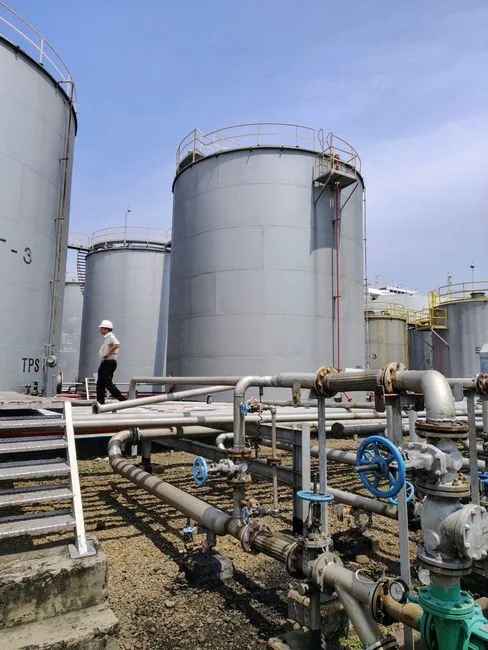
The treatment train should connect each contaminant family to one mechanism and one verification point. A practical sequence is source segregation and screening, equalization, oil and grease removal, hexavalent-chrome reduction where applicable, cyanide oxidation where applicable, pH-controlled metals precipitation, solids separation, pH trim, and final compliance sampling. Unit selection follows from the Beasley permit, written federal classification, and representative wastewater results.
Recoverable oil, grease, colloids, and suitable floatable solids are targets for a dissolved air flotation system for metalworking wastewater. Chemical precipitation addresses selected dissolved metals under a defined chemistry program; clarification then separates the resulting floc. Filtration or membrane treatment should be added only when the final discharge result, reuse requirement, or an applicable future rule justifies the additional operation and monitoring.
For hexavalent chrome, the supplied HydropureWater research specifies reduction at pH 2–3 with ORP controlled at roughly 250–300 mV, followed by Cr(III) precipitation at pH 8.5–9.5. Cyanide must be destroyed before metals precipitation where it is present. These mechanisms require their own reaction, mixing, residence-time, chemical-demand, and effluent-verification assumptions; a single undifferentiated reaction stage cannot demonstrate performance for every pollutant.
| Process step | Primary mechanism | Required evidence |
|---|---|---|
| Screening and equalization | Removes trash and stabilizes batch flow and load | Peak-flow and batch-volume records, operating-hours basis, representative influent dataset |
| Oil and grease removal | Physical separation of recoverable oil and suitable floatable solids | Characterized oil load, recovery duty, residual oil monitoring |
| Chrome reduction | Converts Cr(VI) to Cr(III) before precipitation | pH and ORP records, reaction-time basis, chromium sampling |
| Cyanide oxidation | Destroys cyanide before downstream metal treatment | Permitted chemistry, oxidation control, residual cyanide results |
| Metals precipitation | pH-driven formation of metal-hydroxide solids | Metal profile, chemical-demand calculation, pH/alkalinity basis and residual-metal results |
| Clarification or DAF | Separates precipitated or floatable solids | Hydraulic loading, solids loading, floc behavior and TSS removal |
| Final pH trim and compliance sampling | Establishes the required final discharge condition | Permit-defined monitoring point, method, frequency, calibration and records |
HydropureWater’s 2026 field data gives DAF design variables of 4–20 m/h hydraulic surface loading, an air-to-solids ratio of 0.005–0.060 with 0.02 as a typical design point, and a 10–30% recycle rate. Those values must be checked against the actual oil and solids loads; they are not automatic guarantees of permit compliance. An automatic chemical dosing system for pretreatment controls can support flow-paced feedforward and pH/ORP feedback control. Specify calibration columns, stroke totals, alarms, and interlocks that divert upset flow back to equalization for pH excursion, ORP outside range, or high TSS.
Add polishing when the POTW limit is tighter than the categorical standard, reuse requires it, or a future rule requires it. HydropureWater’s 2026 research identifies no current numerical PFAS limit for chrome finishers; that observation is not a guarantee that no future obligation will apply.
Select Equipment That Fits the Permit and the Factory?
Equipment selection should compare removal mechanism, verified duty, controls, materials, maintenance, and acceptance responsibilities. HydropureWater lists 4–300 m³/h across 13 standard models for its DAF system, but the selected unit must be checked against peak flow, batch loading, operating hours, retention needs, and characterized removal duty. Nominal throughput is not a sufficient procurement basis.
Where wastewater characteristics support it, evaluate lamella clarification as an alternative. HydropureWater states surface-loading rates of 20–40 m/h and chemical consumption up to 30% lower than its stated conventional-system basis. Both are catalog claims requiring confirmation against the proposed design and actual wastewater. The engineering comparison is mechanism-based: DAF is suited to recoverable oil and suitable floatable solids, while clarification addresses settleable material.
| Procurement package | Required evidence | Acceptance question |
|---|---|---|
| DAF or clarification | Characterized load, peak flow, batch records, hydraulic calculation, duty cycle | Does the selected unit meet the verified treatment duty? |
| Controls and dosing | Control narrative, feedforward/feedback logic, alarms, interlocks, calibration procedure | Can upset flow be isolated before it becomes a permit exceedance? |
| Materials and installation | Materials of construction, utility requirements, footprint, installation and chemical-storage scope | Is the equipment compatible with the wastewater and factory constraints? |
| Solids handling | Expected solids quantity, cake handling, disposal route and operating cycle | Is the residue route complete and accepted by the disposal provider? |
| Authority acceptance | Submittal list, responsibility matrix, startup plan, calibration and monitoring support | Is each permit deliverable assigned to a named party? |
Plan sludge handling from the reported 2–5% dry solids leaving the DAF and 25–35% after a plate-and-frame filter press. HydropureWater lists a filter-press filtration-area range of 1–500 m². These figures support preliminary comparison, but the buyer must obtain the expected solids quantity, filtration-cycle basis, cake-handling method, and disposal acceptance before selecting a press. A high-efficiency sedimentation tank should be evaluated as one part of the treatment system rather than as stand-alone evidence of compliance.
The bid package should require sizing calculations, materials, duty cycle, control narrative, alarms, calibration, startup testing, monitoring support, authority-submittal duties, maintenance, training, and solids-disposal assumptions. Require change control for new alloys, chemicals, production rates, machining methods, surface treatments, and wastewater characteristics. For dewatering, compare the plate-and-frame filter press options against verified solids generation rather than filtration-area catalog limits alone.
Verify Compliance Before Sewer Discharge?
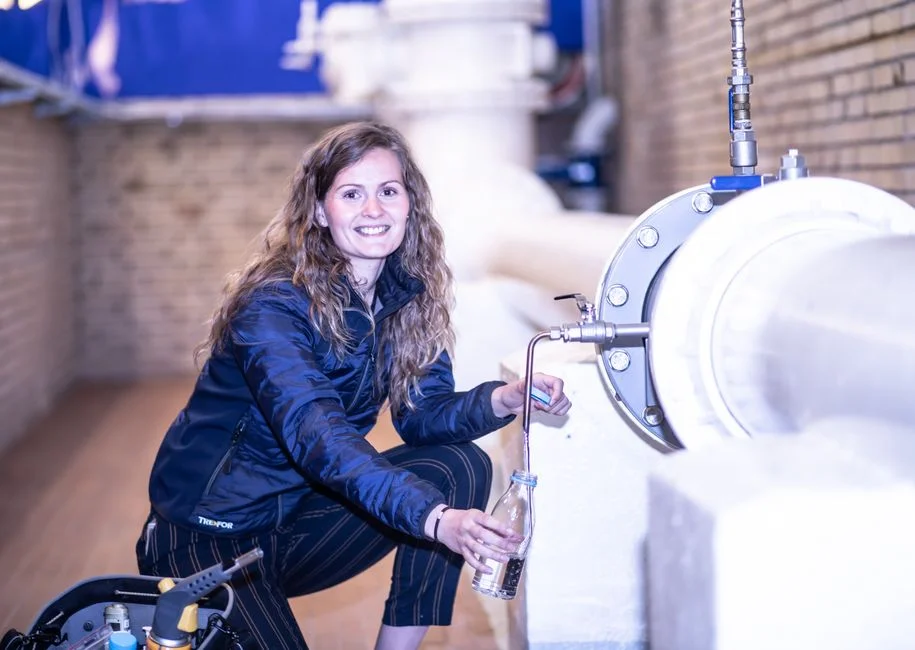
Compliance is demonstrated by operating and monitoring evidence, not by equipment selection alone. Monitor flow, pH, oil and grease, TSS, and applicable metals at locations defined by the Beasley permit and treatment strategy. Where cyanide, hexavalent chrome, or another locally regulated constituent applies, include it in the monitoring program and establish the appropriate control and sampling response.
Maintain records that connect influent results, treatment settings, effluent results, instrument calibrations, chemical use, bypass events, and corrective actions. Testing must represent the plant’s alloys, chemicals, bath conditions, and production rates; one favorable result does not prove constant performance. Operators should know when to isolate discharge, investigate an upset, resample, and report under the permit.
Automation supports this management system but does not replace required sampling or reporting. A rotary mechanical bar screen upstream of pretreatment can protect downstream equipment from rags, wipes, and tramp metal, but it still requires defined maintenance and inspection responsibilities. The permit, approved submittals, calibration records, operating logs, and corrective-action records together form the auditable compliance case.
Frequently Asked Questions
How much will a fabricated metals pretreatment system near Beasley cost?
There is no defensible price without a process inventory, wastewater characterization, batch-flow records, final permit limits, and a defined treatment train. Request itemized quotations covering hydraulic equipment, chemical storage and dosing, controls, solids handling, installation, monitoring, maintenance, training, startup testing, and authority-submittal responsibilities. Compare those inputs across bids; a low equipment price can be offset by incomplete controls or permit gaps.
How should equalization and treatment capacity be sized for batch discharges?
Size from production schedules, batch volumes, operating hours, peak generation, constituent loads, retention objectives, and anticipated production changes—not average flow alone. Ask each supplier for the calculation connecting its proposed capacity to those inputs, including the treatment duty and operating cycle. The stated DAF catalog range of 4–300 m³/h across 13 models is a selection reference, not a design answer.
Which treatment unit should be selected for oils, metals, and suspended solids?
Select by removal mechanism: DAF for recoverable oil and suitable floatable or dispersed solids, chemical precipitation for selected dissolved metals, and clarification for settleable floc. Compare the DAF versus clarifier for fabricated metals wastewater using characterized loads and the required discharge result. A filter or membrane should be added only when the permit, reuse need, or another applicable requirement justifies it.
How can a buyer reduce the risk of equipment that fails POTW acceptance?
Make the current Beasley permit and written regulatory classification the controlling design inputs. Require a responsibility matrix that assigns process design, sizing calculations, materials, controls, calibration, startup testing, monitoring support, authority submissions, training, and maintenance. Also require a change-control procedure so production or chemistry changes are reviewed before they invalidate the original treatment basis.