
When MBR Is the Better Fit for a Greenbrier Mine-Water Project
MBR is usually the stronger choice for mining and metals wastewater when flow is below 2,000 m³/day, available footprint is below 500 m², and reuse or zero-liquid-discharge is required; conventional activated sludge may cost less when flows are large and dilute, electricity is inexpensive, and usable aeration and clarifier assets already exist. Neither process independently removes dissolved metals, so Greenbrier projects still need equalization, pH control, precipitation, and manufacturer-specified fine screening. Final selection should follow a seven-day composite influent characterization, permit review, and a 60–90 day pilot using actual mine water.
Those three screening thresholds are procurement filters, not regulatory limits. They organize an early technology comparison; they do not establish permit compliance, final equipment size, or guaranteed performance. The HydropureWater 2026 commercial comparison uses the thresholds for mining projects, including a Honaker case, and the same decision framework can be applied to Greenbrier once its site data are established.
| Decision input | Procurement interpretation | Information required for Greenbrier |
|---|---|---|
| Flow and duration | The commercial screening rule favors MBR below 2,000 m³/day. | Average and peak flow, flow-duration profile, and equalization volume in hours |
| Available area | The 500 m² screening value favors MBR where a conventional train may not fit. | Plot dimensions, elevations, access routes, pretreatment area, and expansion allowance |
| Water destination | Reuse and zero-liquid-discharge requirements can justify MBR’s higher solids-retention capability. | End use, required quality, polishing needs, and disposal route |
| Influent quality | Metals, toxicity, salinity, and flow shocks must be allocated to pretreatment or biological treatment. | Seven-day composite pH, metals, BOD, COD, hardness, sulfate, TDS, and flow |
| Existing assets | Usable aeration and clarification can make CAS more economical. | Condition, hydraulic capacity, structural condition, and remaining useful life |
Use the process allocation principle before choosing a biological train: equalization controls flow shocks, pH control enables stable treatment, and precipitation addresses dissolved metals before either biological process. Neither MBR nor conventional activated sludge, or CAS, can substitute for those steps when the metal inventory requires them. The MBR cost per m³ guide provides commercial planning context, but it cannot replace the current NPDES permit, utility rates, and site characterization.
How MBR and Conventional Activated Sludge Separate Solids
Conventional activated sludge separates biological solids by gravity, while MBR retains biomass through submerged membrane separation. That difference changes the consequences of a settling failure: CAS depends on healthy biomass and reliable secondary clarifier performance, whereas MBR does not depend on floc settling to retain the solids inventory.
CAS uses aeration, secondary settling, return sludge, and waste sludge. Flow surges, bulking, or filament growth can impair settling and cause solids loss. MBR combines activated sludge with membrane separation, eliminating the conventional secondary clarifier and filtration stage from the biological train. Membrane separation retains solids; it does not remove dissolved arsenic, lead, zinc, copper, nickel, cadmium, or other dissolved constituents on its own.
| Parameter | Conventional activated sludge | MBR | Procurement significance |
|---|---|---|---|
| Solids separation | Secondary clarifier | Submerged membrane | Clarifier settling is removed from MBR solids retention |
| Mixed liquor suspended solids | 2,000–4,000 mg/L | 8,000–12,000 mg/L | Commercial 2026 planning values, not Greenbrier guarantees |
| Sludge retention time | 1–5 days for nitrifying service; 5–15 days for non-nitrifying service | 30–60 days | Commercial operating context; not automatic design criteria |
| Response after a metal pulse | 30–60% loss in removal efficiency during the following 24–72 hours | Biomass retained regardless of floc condition | HydropureWater 2026 commercial claim, not independent Greenbrier test data |
The mixed-liquor and sludge-retention-time figures above come from the HydropureWater 2026 commercial comparison. They describe one commercial planning basis, not an independently validated Greenbrier design. The proposed integrated submerged-PVDF MBR system should therefore be sized against measured biodegradability, toxicity, salinity, flow variation, and the selected solids-retention time rather than copied from the comparison.
Metal analysis must distinguish dissolved, filtered, and total-metal fractions before and after precipitation and biological treatment. Membrane retention prevents solids loss; it is not evidence that dissolved metal has been removed. This distinction is central to selecting and accepting an MBR train for mining wastewater in Greenbrier.
Pretreatment That Prevents Membrane and Clarifier Failure
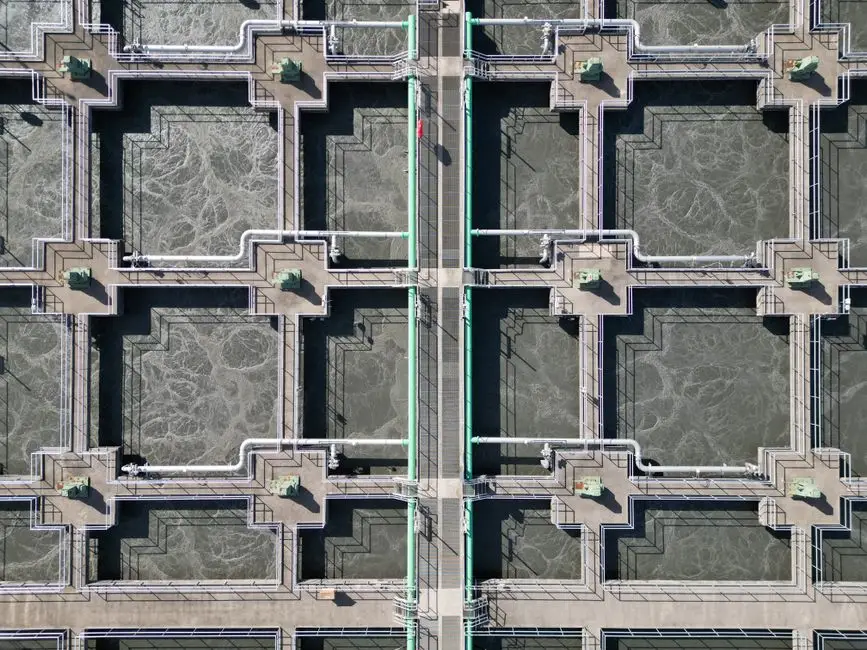
A seven-day composite influent characterization is the minimum technical basis for allocating pretreatment between precipitation, pH control, equalization, screening, flotation, and biological treatment. The commercial HydropureWater 2026 comparison identifies BOD/COD below 0.3, hardness in the thousands of mg/L as CaCO₃, sulfate often above 1,000 mg/L, and TDS above 5,000 mg/L in arid districts as planning conditions. These are issues to test, not assumed values for Greenbrier.
The characterization should cover pH, metals, BOD, COD, hardness, sulfate, TDS, and flow. A low BOD/COD ratio may limit biological treatment, while hardness, sulfate, and dissolved salts can affect chemical dosing, scaling, membrane flux, and biological response. The buyer also needs metal speciation and enough flow-duration data to establish equalization and treatment capacity.
Fine screening belongs in the mandatory equipment boundary. The HydropureWater 2026 comparison specifies manufacturer-dependent 1–3 mm screening for its MBR system, but the final cutoff is module-specific. Require the membrane supplier to identify the cutoff rather than allowing a generic “screened influent” assumption.
For abrasive fines, evaluate the GX Series rotary mechanical bar screen before pumps, membranes, and controls. It protects equipment; it does not remove dissolved metals. Add DAF pretreatment for suspended solids only where characterization supports the need, such as high turbidity, oil, floatables, or colloidal material. An automatic chemical dosing system may implement pH control and precipitation, but its reagent selection must follow the measured metal inventory.
Scale-forming minerals may require anti-scalant or softening measures. Abrusive fines and aggressive chemical cleaning can shorten membrane life. HydropureWater’s 2026 commercial comparison gives an MBR service-life range of 5–8 years as planning guidance, not a Greenbrier service-life guarantee.
Footprint, Equipment Scope, and Operating Complexity
The verified HydropureWater catalog specifies an integrated submerged-PVDF MBR capacity of 10–2,000 m³/day, filtration below 1 μm, and a claimed 60% smaller footprint than conventional systems. These are catalog specifications; they do not establish the final civil footprint for a Greenbrier site.
The broader HydropureWater 2026 commercial comparison estimates roughly 50–70% less MBR footprint at equivalent capacity. That range and the catalog’s 60% claim support early screening, but neither includes a Greenbrier plot plan. Equalization, foundations, chemical rooms, access, odor control, electrical service, pretreatment, and future expansion can materially change the installed area.
| Installed item | Conventional activated sludge | MBR | Buyer check |
|---|---|---|---|
| Core equipment | Aeration basins, secondary clarifier, return-sludge and waste-sludge systems | Membrane modules, fine screen, permeate pumps, and scour aeration | Require an equipment list and process-flow diagram |
| Civil work | Multiple basins and clarifiers; settling and sludge access | Reactor and membrane modules, but site utilities and pretreatment remain | Compare total plot area, not tank area alone |
| Controls | Clarifier sludge blanket, wasting, aeration, and flow control | Flux, transmembrane pressure, scour, cleaning, and permeate control | List PLC, instrumentation, alarms, and manual fallback |
| Expansion | Additional basins and clarification capacity | Additional modules and hydraulic capacity | Reserve space for the owner’s planned flow increase |
A lamella clarifier may be evaluated as pretreatment or within a hybrid where existing hydraulic capacity, structural condition, sludge handling, and solids-removal performance justify it. The high-efficiency lamella sedimentation tank is therefore an option to test against site conditions, not a mandatory component of every MBR bid.
Bid documents should preserve the analytical distinction between dissolved, filtered, and total metals. A membrane’s submicrometre filtration claim addresses physical separation, while the permit may regulate particular dissolved or total-metal fractions. Installed-footprint acceptance should also be tied to the complete treatment train.
Comparing Capital Cost, Operating Cost, and Lifecycle Exposure
HydropureWater’s 2026 commercial comparison estimates MBR capital cost at roughly 20–40% above equivalent-flow CAS and operating cost at 15–30% higher per m³. These are planning ranges, not Greenbrier quotations, and the difference can change with site hydraulics, pretreatment, existing assets, and the selected reuse objective.
The principal MBR cost differences described in the commercial comparison are membrane cassettes, fine screens, permeate pumps, PLC upgrades, scour aeration, chemical cleaning, and replacement membranes. Each bidder should state whether chemical cleaning, sludge handling, equalization, polishing, controls, and replacement membranes are included. A nominal equipment price with those exclusions is not a comparable capital estimate.
| Cost or lifecycle input | Commercial planning basis | Greenbrier action |
|---|---|---|
| MBR CAPEX | Approximately 20–40% above equivalent-flow CAS | Request comparable quotations for the same site flow, pretreatment, and equipment boundary |
| MBR OPEX | Approximately 15–30% higher per m³ | Replace generic assumptions with the site electricity tariff, chemical prices, labor, and disposal charges |
| Commercial 1,000 m³/day example | Electricity thresholds of $0.07/kWh and $0.09/kWh; roughly $2/m³ purchased-water or brine-disposal value | Use only as an illustrative sensitivity check, then replace with actual avoided purchases, disposal charges, and reuse value |
| Water value | A source-water value is not an avoided cost without a defined use | Identify the reuse destination and quantify its actual substitution value |
| Sludge disposal | Commercial plate-and-frame press outcome of 25–35% dry solids | Check the selected disposal route and include cake transport, storage, and final disposal |
The illustrative thresholds do not determine whether MBR is economical in Greenbrier. Build the lifecycle model from actual electricity prices, chemical use, sludge disposal, membrane cleaning and replacement, and documented avoided water purchases or disposal costs. Treated water has no avoided cost unless the mine has a defined use for it.
MBR waste sludge must remain in the mass balance. HydropureWater’s 2026 comparison reports a 25–35% dry-solids outcome for a plate-and-frame press; that is not a universal dewatering result. Require a plate-and-frame sludge dewatering press bid with cake transport and disposal assumptions, then compare it with the selected disposal route.
A Site-Verification and Procurement Sequence for Greenbrier
A defensible Greenbrier selection links flow, chemistry, permit requirements, bids, pilot results, and final acceptance criteria in sequence. Start with the flow-duration profile, average and peak flow, equalization volume in hours, seven-day composite chemistry, current NPDES permit, reuse objective, available footprint, electricity tariff, and other utility costs.
- Establish the permit and site boundary. Use 40 CFR Part 440 as the federal Ore Mining and Dressing framework. The current NPDES permit and applicable Virginia or local conditions establish site-specific enforceable requirements; no Greenbrier limit should be inferred from the article or vendor literature.
- Characterize the feed. Analyze a seven-day composite covering pH, metals, BOD, COD, hardness, sulfate, TDS, and flow. Add pulse-response sampling if the mine’s discharge history indicates short, high-concentration events.
- Issue equivalent bids. Require working volume in hours of average flow, membrane area and material, flux basis, controls, connected and average electrical loads, warranty conditions, and a 10-year membrane replacement cost.
- Pilot with actual mine water. Run a 60–90 day trial evaluating dissolved-metal removal, membrane behavior, cleaning frequency, recovery, and responses to flow and chemistry variability.
- Define the reuse train. Determine whether UF, RO, or another polishing stage is required. Review the UF water treatment system or industrial reverse-osmosis treatment against the intended reuse quality and pretreatment requirements.
- Set acceptance criteria. Tie final acceptance to the current permit and measured feed response. Generic catalog values cannot establish a defensible Greenbrier removal efficiency.
The mining-wastewater MBR versus activated-sludge comparison supports the selection method, not a final technology choice. Final acceptance should follow pilot evidence tied to the permit.
Frequently Asked Questions
Does MBR cost more than conventional activated sludge for a Greenbrier mine-water project?
MBR may cost more. HydropureWater’s 2026 commercial comparison estimates MBR capital cost at roughly 20–40% above equivalent-flow CAS and operating cost at 15–30% higher per m³, but these are not Greenbrier quotations. Ask bidders to price the same pretreatment, sludge handling, controls, membrane replacement, and polishing scope, then compare the result using the site’s electricity tariff, actual disposal charges, and documented avoided water purchases.
How should a buyer compare MBR and CAS supplier bids?
Require equivalent design bases: flow-duration profile, working volume in hours of average flow, membrane material and area, flux basis, connected and average electrical loads, screen cutoff, controls, warranty, and 10-year replacement cost. Also require each bidder to state included pretreatment, cleaning, sludge handling, equalization, and polishing. A lower equipment price is not comparable if those scopes differ.
Can an MBR remove dissolved metals without additional treatment?
No defensible dissolved-metal removal performance can be assigned from membrane filtration alone. MBR separates and retains solids, but arsenic, lead, zinc, copper, nickel, cadmium, and other dissolved constituents require an appropriate treatment allocation. The pilot should measure dissolved, filtered, and total-metal fractions and assess performance against the current NPDES permit.
What should be tested before selecting MBR or CAS in Greenbrier?
Complete a seven-day composite characterization, flow-duration study, permit review, and 60–90 day pilot with actual mine water. Measure membrane behavior, recovery, cleaning frequency, solids handling, and dissolved-metal response under representative variability. The pilot should use the same feed and operating sequence contemplated for the full-scale train.