What Changes When BYD Acquires an EV Plant in Hungary?
An EV-plant acquisition should be treated as a permit-and-liability diligence exercise before it becomes an equipment-selection project. The buyer must obtain the environmental permit, monitoring history and regulator correspondence; determine whether the permit, operator status or reporting duties must be transferred or amended; and assign one technical owner to coordinate environmental engineering, operations, procurement, legal, finance and the local water directorate. Hungary’s 2026 scrutiny of BYD-related subsidies, permits, environmental exemptions and publicly funded investments raises the importance of that review, but it does not establish that the Szeged plant has violated its wastewater permit (Courthouse News, 2026-07-20). The appropriate conclusion is procedural: the acquirer must verify the permit record rather than assume either a violation or an automatic transfer.
The minimum permit file should include the environmental and wastewater permit, current discharge conditions, sampling and monitoring results, non-compliance notices, utility contracts and unresolved correspondence with the competent authority. These records establish what is actually permitted, which obligations have transferred with the business and whether production changes could trigger amendment. The exact notification or approval requirement must be confirmed with the relevant Hungarian authority; it should not be inferred from general IPPC practice.
A acquisition-specific risk register should also distinguish three facts: requirements confirmed in the permit, engineering assumptions used for preliminary sizing, and matters still requiring Hungarian-authority or site verification. That distinction prevents an unverified treatment target or equipment assumption from becoming a transaction liability. The Hungarian Gigafactory wastewater acquisition guide provides a useful governance framework, but the Szeged permit file and current operating data remain the controlling evidence.
Confirm the Wastewater and Permit Baseline
The BYD Szeged environmental permit dated 2025-02-10 establishes a permitted daily water-demand envelope of 6,995.79 m³/day, but these figures are planning values rather than proof of present flow.
| Permit baseline | Confirmed value | Acquisition interpretation |
|---|---|---|
| Technological demand | 5,301.29 m³/day | Permitted planning envelope; test against current and peak operating data. |
| Social demand | 1,694.5 m³/day | Collection and treatment must remain distinguishable from industrial streams. |
| Total daily demand | 6,995.79 m³/day | Not a design flow until batch discharges, tank dumps and fire-water interfaces are identified. |
| Annual demand | 1,811,381.0 m³/year | Based on 250 plant operating days and 365 days for worker accommodation and canteen services. |
| Annual industrial use | 1,325,322.5 m³/year | Reconcile with production ramp and water-meter records. |
| Annual social use | 486,058.5 m³/year | Confirm occupancy and seasonal demand. |
| Planned production | 300,000 vehicles/year: 280,000 BEVs and 20,000 PHEVs | Production basis against which permitted and actual loads should be tested. |
| Utility connections | V-1 social, V-2 industrial and V-3 fire-fighting | Reconcile each connection with metering, ownership and discharge arrangements. |
The daily and annual figures above are reported from the Csongrád-Csanád County environmental permit dated 2025-02-10 by Xpatloop, which also records the three separate Szegedi Vízmű Zrt. connections and the planned production capacity. During diligence, the buyer should reconcile metered consumption with these permitted envelopes, obtain batch-flow records and identify abnormal discharges caused by cleaning, production changes or tank emptying.
No hydraulic equipment should be ordered from the annual or daily envelope alone. A buyer also needs current operating data, peak-hour and batch-discharge records, stormwater segregation, fire-water interfaces and the operating sequence of production lines. These are design inputs, not administrative details: a permitted average can conceal the peak that determines screening, pumping and equalization requirements.
Segregate Wastewater by Contaminant and Treatment Need
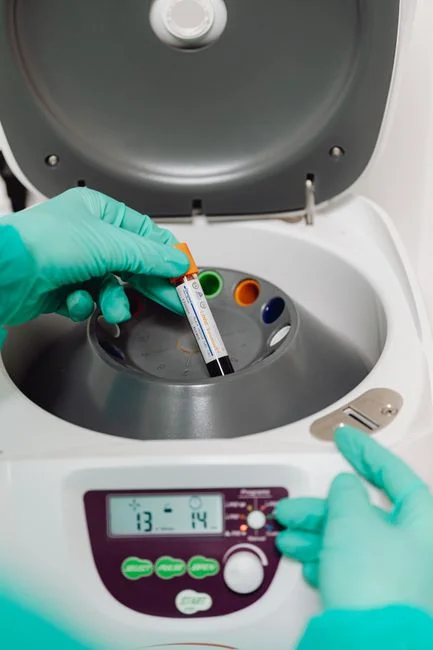
Segregating the six reported stream classes by contaminant profile is more defensible than blending all wastewater at the inlet, because the treatment objectives and permit controls differ by source.
| Stream class | Principal risk or characteristic | Treatment decision |
|---|---|---|
| Automotive TSS- and FOG-bearing streams | HydropureWater, 2026, cites TSS of 200–800 mg/L and FOG of 50–500 mg/L in relevant streams. | Physical screening followed by physico-chemical pretreatment; assess a DAF system for automotive wastewater pretreatment against the segregated hydraulic and contaminant load. |
| Other automotive process streams | The cited profiles also include FOG, phosphates, pigments and VOCs. | Characterize before blending; route high-strength or recoverable streams to dedicated treatment. |
| Battery cathode-process wastewater | Dissolved metals requiring removal and potential recovery. | Evaluate industrial RO system for battery-process wastewater, nickel and cobalt precipitation, and optional lithium recovery by selective ion exchange. |
| Defective-battery testing | Salt-water immersion creates a wastewater and hazardous-waste interface. | Confirm containment, collection, acceptance criteria and authorized third-party routing; the permit reports 7,153 tonnes/year of hazardous waste. |
| Social wastewater | 1,694.5 m³/day permitted social-demand envelope. | Keep collection and monitoring distinct, even where a combined biological process is technically feasible. |
| Battery-storage cooling | The 50,000 m² battery-storage building is heat-pump air-cooled. | Exclude process-water demand from this source unless site data show otherwise. |
The stream profiles, defective-battery route and cooling arrangement come from HydropureWater’s 2026 analysis of the BYD Hungary permit and from Xpatloop’s 2025 reporting on that permit. These sources establish the planning framework, not present contaminant performance. The acquirer should obtain plant-specific analytical data before fixing technology.
The battery stream deserves separate liability and engineering treatment. Salt water used for defective packs is not equivalent to routine wash water: acceptance by the authorized third party, collection losses, storage capacity and downstream treatment must be documented. For cathode wastewater, RO removes dissolved contaminants, precipitation supports nickel and cobalt recovery, and ion exchange is optional rather than automatic. The RO treatment design for automotive casting wastewater provides relevant pretreatment context, but battery chemistry and current permit limits control the final design.
Build a Five-Stage Treatment Train
A five-stage train is a credible concept for the segregated Szeged flows, provided each stage is matched to measured loads and permit conditions rather than installed as a generic line.
| Stage | Function | Design and procurement check |
|---|---|---|
| 1. Headworks | Remove rags, solids and fibrous debris before pumps, membranes and biological equipment. | Specify continuous-duty rotary mechanical screening; verify aperture, capacity, extraction and bypass provisions. |
| 2. Physico-chemical pretreatment | Remove oil, grease, floatable solids and colloidal contaminants from relevant automotive streams. | HydropureWater, 2026, cites DAF capacity of 4–300 m³/h. Select against segregated flow, not total site demand. |
| 3. Biological treatment | Treat combined industrial and sanitary wastewater where justified. | HydropureWater, 2026, cites TSS below 5 mg/L, turbidity typically below 1 NTU and preference for MBR when reuse above 80% is targeted. Assess an integrated MBR wastewater treatment system. |
| 4. Tertiary polishing | Reduce suspended solids and SDI; remove dissolved metals or produce high-quality reuse where required. | Use multi-media filtration before RO. Apply RO selectively to streams requiring dissolved-metal removal or high-quality reuse. |
| 5. Disinfection and residuals | Control pathogens and manage treatment residues. | HydropureWater, 2026, specifies on-site chlorine dioxide at 0.5–1.5 mg/L residual and plate-and-frame dewatering targeting more than 22% dry solids. |
The equipment values above are design-envelope figures cited by HydropureWater in 2026, not guaranteed performance at the Szeged plant. The initial procurement package should require guaranteed flow and contaminant envelopes, reference installations, hydraulic calculations, process guarantees, redundancy and bypass arrangements. A buyer can evaluate an rotary mechanical bar screen, multi-media filtration system, chlorine dioxide generation system and plate-and-frame filter press only after the process design basis is fixed.
A mass balance must cover solids, chemicals, membrane concentrate, DAF sludge, biological sludge and filter-press filtrate. Filtrate may return to the headworks, but only if the hydraulic and contaminant balance allows it. Membrane replacement, chemical consumption, sludge transport and disposal are operating obligations, not incidental line items.
Verify Discharge Limits, Reuse and Environmental Risk
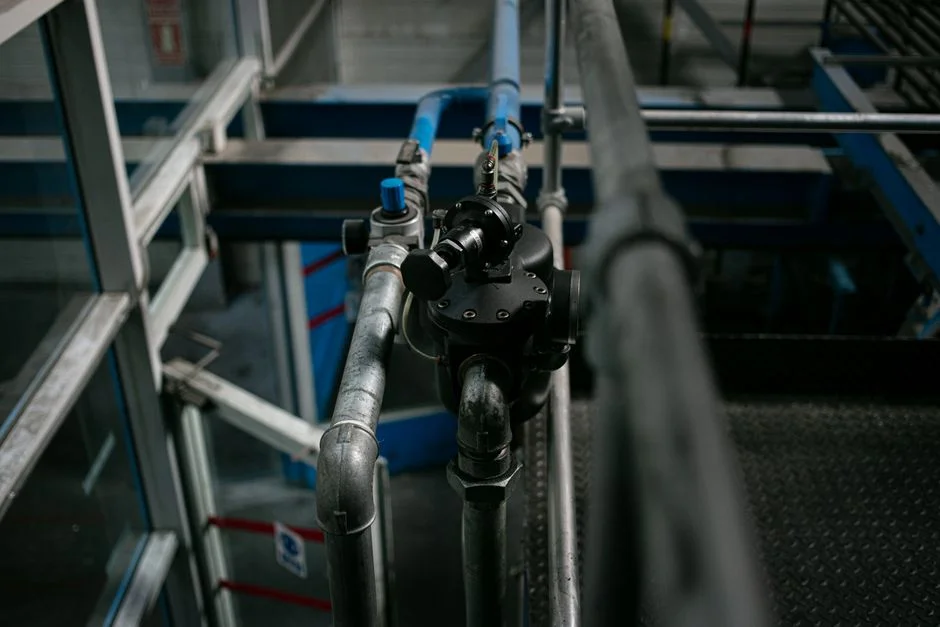
Final discharge design must use the Szeged permit conditions and confirmed receiving-water assessment, because generic BAT values alone cannot establish lawful discharge.
| Parameter or issue | Value cited in the research | Required verification |
|---|---|---|
| COD | At or below 75 mg/L — HydropureWater, 2026. | Confirm the binding limit, averaging basis, monitoring point and any flow-conditioned condition in the final permit. |
| Nickel | At or below 0.2 mg/L — HydropureWater, 2026. | Confirm applicability to each stream and the relationship to discharge and mixing-zone assumptions. |
| Lithium | 0.5–2 mg/L — HydropureWater, 2026. | This is identified as a permit-by-analogy value, not a confirmed Szeged limit; obtain the authority’s written basis. |
| Mixing-zone allowance | Approximately 40% lower for certain heavily modified reaches in the Tisza and Danube sub-basins — HydropureWater, 2026. | Confirm the designated receiving water, reach classification and site-specific dilution calculation. |
| Freshwater offset | 0.5–1.5 million m³/year for a one-million-vehicle analogue — HydropureWater, 2026. | Treat as comparative planning information, not a confirmed BYD obligation; obtain any site-specific proposal. |
The buyer should establish the legal discharge point, whether the route is a sewer or surface water, the competent water authority, monitoring frequencies, flow meters, sampling locations and responsible operator from the final permit. The 2026 industrial effluent discharge compliance guide is useful for structuring that review, but it cannot replace the permit or Hungarian-authority confirmation.
Reuse analysis should use current flows, production scenarios and measured water quality. A plant-wide reuse target above 80%, cited by HydropureWater in 2026, is a design objective rather than evidence that such reuse is feasible at Szeged. Climate resilience should also be tested against current abstractions, storage, dilution and alternative discharge routes. The research’s freshwater-offset values are analogues; they should not be inserted into the transaction model without an authority proposal or contractual basis.
Budget, Schedule and Procurement Due Diligence
The research supports a screening capital range, but the acquirer should carry separate uncertainty bands for permitted requirements, measured loads, upgrade scope and authority conditions.
| Commercial item | Screening basis | Buyer action |
|---|---|---|
| Treatment-system CapEx | €8.2–12.5 million for 5,301 m³/day — HydropureWater, 2026. | Reprice against measured flows, current equipment condition and Hungarian installation scope. |
| Cathode-production train | RO, precipitation and ion exchange account for approximately 60% of total CapEx — HydropureWater, 2026. | Obtain alternative mass balances, recovery assumptions and metal-revenue sensitivities. |
| Operating cost | €0.80–1.20/m³ treated, split into energy 40%, chemicals 30% and membrane replacement 20% — HydropureWater, 2026. | Obtain supplier-specific consumption and life-cycle pricing; the split is not a guaranteed site budget. |
| Metal-recovery payback | 3.5–5 years at 90% metal recovery — HydropureWater, 2026. | Test sensitivity to metal prices, utilization, product quality and disposal costs before assigning value. |
| Permitting runway | 18–36 months — HydropureWater, 2026. | Verify the actual permit status and authority programme; do not assume a new application is required after acquisition. |
The cited 18–36-month sequence comprises environmental impact assessment, IPPC application, public consultation, BAT-conclusion verification and final issuance, with durations stated in HydropureWater, 2026. For an operating acquired plant, the first question is whether the existing authorization remains valid and what amendment or transfer is required; the full greenfield sequence is relevant only if a material change triggers a new procedure.
Supplier packages should include guaranteed flows and contaminant envelopes, BAT references, hydraulic and process guarantees, membrane warranties, chemical and energy consumption, sludge fate, redundancy, commissioning evidence and local service capability. Procurement scope should also require factory and site acceptance testing, operator training, spares, remote monitoring, bypass provisions and performance guarantees. Membrane and replacement strategy can be addressed through RO and UF membrane elements and treatment-system valves and media, but commercial comparison should use lifecycle guarantees rather than equipment labels.
Acquire a Wastewater Compliance Checklist
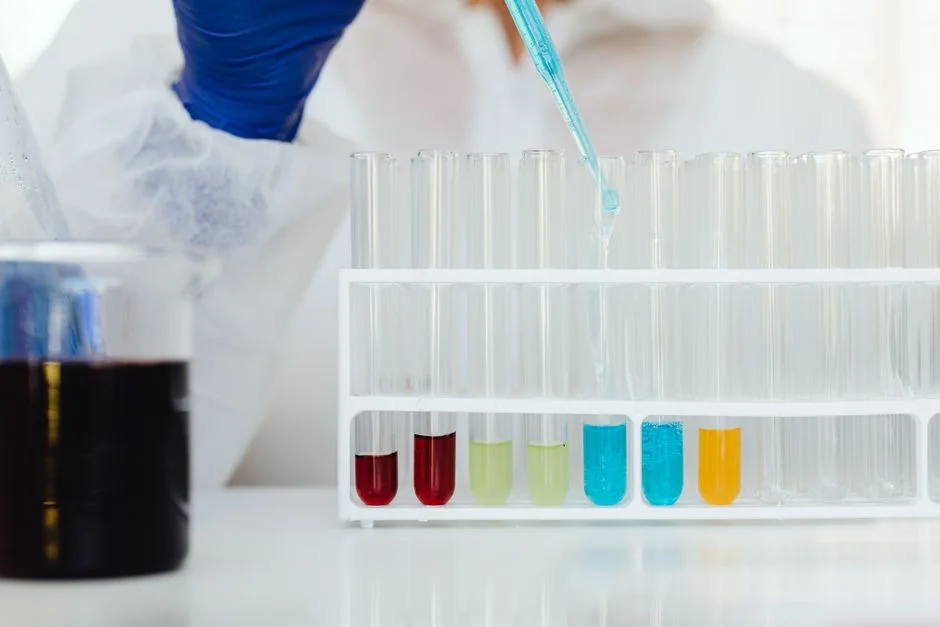
A disciplined acquisition review should proceed in five steps, with each output traceable to a permit, utility document or site record.
- Reconcile authorizations. Obtain the environmental permit, EIA, IPPC permit, wastewater conditions, utility agreements, monitoring data, non-compliance notices and regulator correspondence. Identify every obligation affected by a change in operator or corporate control.
- Characterize the six stream classes. Measure current flows, peaks, batch discharges and contaminants under normal production, cleaning, commissioning and abnormal conditions. Test the permitted envelope against the 300,000-vehicle production basis.
- Assign the final route. Confirm whether each stream is discharged, sewered, reused, collected as hazardous waste or transferred to a third party. Verify the defective-battery pathway and authorized-party documentation.
- Map obligations to equipment. Trace sampling points, flow meters, bypasses, chemical storage, sludge disposal, filtrate return and reuse destinations to the permit and operating procedures.
- Build a risk-adjusted investment plan. Separate immediate compliance gaps, deferred optimization and future-ramp capacity. Name a Hungarian environmental lead, maintain a regulator-engagement schedule and condition final investment approval on closure of the permit-transfer review.
This sequence should be completed before closing wherever possible. The permit status, installed-equipment condition, third-party waste arrangements and any unresolved regulator correspondence can affect both environmental liability and the value assigned to the acquired operation.
Frequently Asked Questions
Does an acquisition automatically change the wastewater permit?
No automatic change should be assumed. The existing permit remains a central diligence item, and any transfer, amendment or new operator notification must be confirmed with the competent Hungarian authority. The buyer should obtain the permit file and written confirmation of the applicable procedure before assuming that the existing authorization covers post-closing operation.
How much treatment capacity should the acquirer procure?
The confirmed planning envelope is 5,301.29 m³/day of technological demand and 1,694.5 m³/day of social demand, according to the BYD Szeged environmental permit dated 2025-02-10 as reported by Xpatloop in 2025. These are not sufficient sizing inputs alone. Request current metering, batch-flow, cleaning, tank-drain and peak-hour records, then size equipment against verified peaks and the production ramp.
Are DAF, MBR and RO mandatory for every stream?
No. DAF is appropriate for relevant FOG- and floatable-solids streams; MBR is a biological option where combined treatment and reuse objectives justify it; and RO is a targeted option for streams requiring dissolved-metal removal or high-quality reuse. Each decision should follow contaminant characterization, mass balance and binding permit conditions.
How should an acquirer select treatment suppliers?
Require guaranteed process performance, reference design data, membrane and chemical compatibility, warranty terms, commissioning evidence, sludge routing and local service support. A useful first check is whether the supplier will guarantee the complete chain rather than only equipment output. Commercial selection should then compare lifecycle energy, chemicals, membrane replacement, operator requirements and residual disposal.
When should the environmental review begin?
Begin during transaction due diligence, not after closing. HydropureWater, 2026, cites an 18–36-month permitting runway for major Hungarian projects; although an operating-site transfer may follow a different route, unresolved permit status can affect schedule, capital requirements and transaction value. Start with document retrieval, regulator confirmation and site characterization so management can distinguish a transfer issue from a substantive amendment or enforcement risk.