BYD Szeged Plant: Wastewater Streams and Contaminant Profile
BYD's Szeged facility will generate approximately 5,301 m³/day of industrial wastewater and 1,694 m³/day of sanitary wastewater at full ramp, totaling 1,811,381 m³/year across 250 operating days (per the Csongrád-Csanád County environmental permit, 2025-02-10). The plant is sized for 300,000 vehicles/year (280,000 BEV + 20,000 PHEV), and the wastewater envelope is not a single stream — it is six distinct streams, each mapping to a different treatment stage and a different permit condition. The county permit document specifies three separate utility connections (V-1, V-2, V-3) to Szegedi Vízmű Zrt. for social, industrial, and fire-fighting supply.
The six streams and their contaminant profiles:
- Sanitary (1,694 m³/day): offices, canteens, worker accommodation; conventional BOD/COD/TSS load per UWWTD 91/271/EEC.
- Body-in-white wash (800–1,200 m³/day): TSS 200–800 mg/L, emulsified oils 50–500 mg/L, trace Zn/Ni/Cu from metalworking fluids.
- Paint-shop (600–900 m³/day): FOG 50–500 mg/L, phosphates 20–150 mg/L from zinc-phosphate conversion coating, pigments, VOC traces.
- Cathode-production (400–700 m³/day): lithium 5–50 mg/L, nickel 2–20 mg/L, cobalt traces, NMP solvent residues, PFAS-bearing binder material (source: CWW BREF 2016).
- Cooling-tower blowdown (300–500 m³/day): TDS 500–2,000 mg/L, low organic load; candidate for RO-reject reuse.
- Stormwater (variable): segregated paved-area runoff; TSS ≤35 mg/L and oil sheen <10 mg/L under the automotive BAT-AEL envelope.
Defective lithium-ion battery packs will be immersed in salt water at the unloading platform, producing 7,153 tonnes/year of hazardous waste routed to a duly authorized third-party recycler (per BYD environmental permit, 2025). The 50,000 m² battery storage building is air-cooled by heat pump and does not require process water.
| Stream | Flow (m³/day) | Key Contaminants | Typical Concentration |
|---|---|---|---|
| Sanitary | 1,694 | BOD₅, COD, TSS, E. coli | BOD₅ 200–400 mg/L |
| Body-in-white wash | 800–1,200 | TSS, FOG, Zn/Ni/Cu | TSS 200–800 mg/L; FOG 50–500 mg/L |
| Paint-shop | 600–900 | FOG, phosphates, pigments, VOCs | FOG 50–500 mg/L; PO₄ 20–150 mg/L |
| Cathode-production | 400–700 | Li, Ni, Co, NMP, PFAS | Li 5–50 mg/L; Ni 2–20 mg/L |
| Cooling-tower blowdown | 300–500 | TDS, hardness | TDS 500–2,000 mg/L |
| Stormwater | Variable | TSS, oil sheen | TSS ≤35 mg/L; sheen <10 mg/L |
Hungary's Wastewater Discharge Limits for Automotive and Battery Plants (2026)
Permit writers in Hungary typically set emission limit values at the lower end of the CWW BREF 2016 BAT-AEL band when the receiving water is a WFD-listed sensitive area — and the Szeged site sits inside the Tisza sub-basin, which is listed under Article 5 of the Water Framework Directive and currently runs under an Article 4(4) extension for several heavily modified water body (HMWB) reaches (per EU IED national implementations, 2026). For those HMWB reaches, mixing-zone allowances are reduced by approximately 40% compared to non-sensitive areas, which compresses the dilution engineers can count on at the discharge point.
The binding numeric envelope is anchored in Government Decree 220/2004 Korm. rendelet for emission limit values, Government Decree 219/2004 for water-pollution charges (HUF/kg pollutant), and Act LVII of 2016 as the umbrella water-management statute. Sanitary wastewater must additionally meet UWWTD 91/271/EEC Annex I thresholds — BOD₅ ≤25 mg/L, COD ≤125 mg/L, TSS ≤60 mg/L after secondary treatment — because the workforce on site will exceed the 2,000 p.e. agglomeration threshold.
Lithium is not listed explicitly in Decree 220/2004 tables, but permitting authorities are increasingly imposing 0.5–2 mg/L lithium limits by analogy to BAT conclusions for battery manufacturing and to WFD priority-substance watch lists (source: Hydropure Water, 2026). Nickel is capped at ≤0.2 mg/L — a value inherited from automotive stamping lines but applied uniformly across all wastewater streams at the discretion of the permitting authority. For cathode-production polishing, an RO system for lithium and nickel removal from cathode-production wastewater sized to >90% recovery is the standard approach to defend these limits.
| Parameter | BAT-AEL Range (CWW BREF 2016) | Typical Hungarian Permit Value (220/2004) | Basis |
|---|---|---|---|
| COD | 30–130 mg/L | ≤75 mg/L (daily avg) | Sensitive receiving water |
| TSS | 10–45 mg/L | ≤35 mg/L | Standard emission limit |
| Total nitrogen | 5–25 mg/L | ≤15 mg/L | WFD good status driver |
| Total phosphorus | 0.5–5 mg/L | ≤2 mg/L | Lake/wetland protection |
| Zinc | 0.1–1.0 mg/L | ≤0.5 mg/L | Stamping/legacy auto |
| Nickel | 0.05–0.5 mg/L | ≤0.2 mg/L | Auto + battery by analogy |
| Lithium | Not listed in BREF | 0.5–2 mg/L | Permit-by-analogy (battery sector) |
| BOD₅ (sanitary) | — | ≤25 mg/L | UWWTD Annex I |
Process Train Design for BYD's 5,301 m³/day Industrial Wastewater
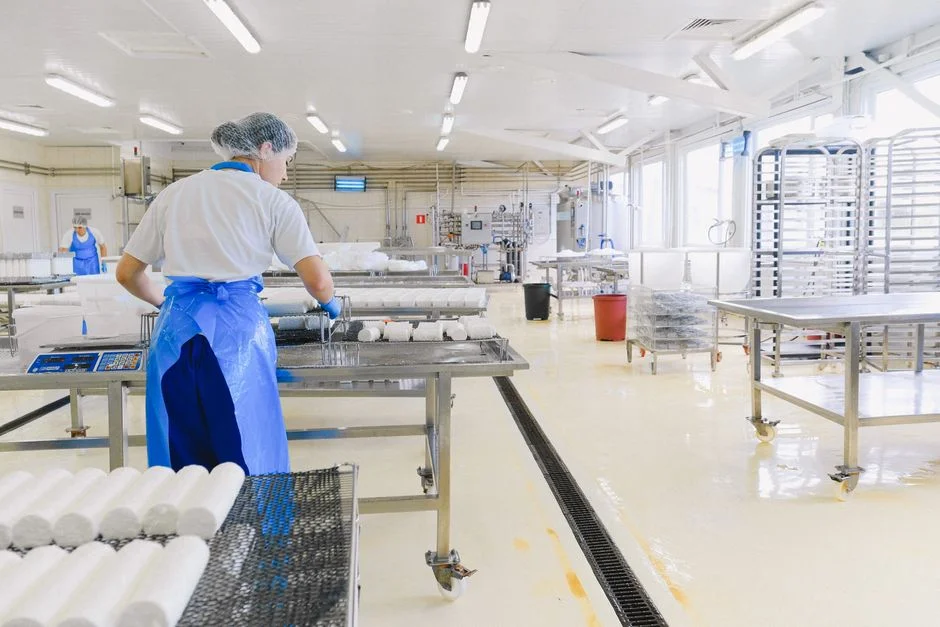
A five-stage process train sized to 5,301 m³/day and reviewed against CWW BREF 2016 BAT conclusions is the configuration a Hungarian permit reviewer will recognize as standard. The cathode-production stream drives the most expensive step, but the combined industrial/sanitary flow drives the largest single equipment line. The headworks starts with a rotary mechanical bar screen (GX Series, 2–6 mm aperture, 120 m³/h capacity) to remove solids and protect downstream membranes from ragging — a recurring failure mode when upstream segregation of wipes and binders is incomplete.
Physico-chemical treatment is the second stage. A DAF system for automotive paint-shop and stamping wastewater (4–300 m³/h capacity) handles FOG and floatable solids, with polyaluminum chloride dosing to control pH at 6.5–7.5 and an air-to-solids ratio of 0.02–0.05 Nm³/m². The combination delivers 95% FOG removal — well within the BAT-AEL ceiling for discharge to surface water. Compared with a clarifier, the DAF footprint is 60–70% smaller for the same loading, which matters on a 314-hectare site where the wastewater block competes with body shop, paint shop, and battery assembly for plot space.
Biological treatment is the third stage. An integrated MBR system for combined industrial and sanitary wastewater (DF Series flat-sheet PVDF, 0.1 μm pore size) delivers MLSS of 8,000–12,000 mg/L, sludge age 20–40 days, and reliable effluent TSS <5 mg/L — inside the CWW BREF lower bound. The MBR is preferred over MBBR when the project targets >80% reuse, because the MBR effluent quality (TSS <5 mg/L, turbidity typically <1 NTU) feeds directly into RO without intermediate clarification. Footprint is approximately 60% smaller than a conventional activated-sludge system at the same loading.
Tertiary polishing is the fourth stage. Multi-media filtration (sand + anthracite + garnet) brings SDI below 3, after which RO is applied to the cathode-production stream with a >90% recovery target. RO concentrate goes to a precipitation stage for nickel and cobalt recovery, and lithium is recovered by selective ion exchange when the project economics support it. A plate-and-frame filter press for Gigafactory sludge dewatering to >22% dry solids handles both biological and DAF sludge; filtrate returns to the headworks, and the dewatered cake goes off-site for cement-kiln co-incineration. Disinfection uses on-site generated chlorine dioxide at 0.5–1.5 mg/L residual to meet UWWTD microbiological criteria — typically E. coli <100 CFU/100 mL for discharge to sensitive areas.
Permitting Timeline and Freshwater Offset Requirements (2026)
An 18–36 month permit runway is the realistic planning horizon for a Gigafactory-scale project in Hungary. The sequence runs: environmental impact assessment under Government Decree 314/2005 (6–12 months), integrated IPPC permit application under Government Decree 28/2004 (6–12 months), public consultation with the affected municipality and Szegedi Vízmű Zrt. (3–6 months), BAT-conclusion verification against the CWW BREF and STS BREF (3–6 months), and final permit issuance. The National Water Authority (Országos Vízügyi Főigazgatóság) provides technical review, and the county Government Office (Kormányhivatal) acts as the competent authority — a two-step approval that adds calendar time but consolidates wastewater, air, and waste obligations into a single permit envelope.
Freshwater offset negotiation is now a standard Hungarian expectation. Authorities may require BYD to fund watershed restoration or to release treated water back to the receiving system, mirroring the 377,000 m³/year offset that the Strausberg-Erkner Water Association negotiated with Tesla at Giga Berlin (source: ilovetesla.com, 2025). A 300,000-vehicle plant at full ramp would face a proportionally larger obligation, on the order of 0.5–1.5 million m³/year. Offset costs run €0.80–1.20/m³ through watershed restoration partnerships with local water utilities (2026 pricing, inclusive of monitoring and reporting).
Easement and conveyance rights are the second pitfall. At Robstown, Texas, the TPDES permit did not grant pipeline right-of-way across the drainage district's easement — the operator's discharge pipe was discovered by maintenance crews rather than declared, triggering a separate enforcement action (source: kristv.com, 2026-01). In Hungary, separate property easements are required for any discharge pipeline crossing public drainage assets, and the local vízügyi igazgatóság (water directorate) is a formal commenting party under public-administration rules. Treat the easement question as a parallel workstream, not a downstream detail.
| Permit Step | Governing Instrument | Duration | Responsible Authority |
|---|---|---|---|
| Environmental Impact Assessment | Decree 314/2005 | 6–12 months | County Government Office |
| IPPC Permit Application | Decree 28/2004 | 6–12 months | County Government Office |
| Public Consultation | Act LVII of 2016 | 3–6 months | Municipality + water utility |
| BAT Verification | CWW BREF 2016 | 3–6 months | National Water Authority |
| Freshwater Offset Negotiation | Decree 219/2004 | 3–6 months | OVF + Kormányhivatal |
| Easement/Pipeline ROW | Local water directorate | 2–4 months | Vízügyi igazgatóság |
Hungary vs. Germany vs. Poland: Regulatory Stringency Comparison for Automotive Wastewater
Hungary sits in the middle of the European regulatory band for automotive wastewater — stricter than Poland on numeric limits and mixing-zone rules, comparable to Germany on core parameters but shorter on permit timeline. The COD ceiling of ≤75 mg/L is 25% tighter than Poland's ≤100 mg/L and matches Germany's ≤75 mg/L (source: CWW BREF 2016 national implementations). For battery-specific parameters, Hungary imposes 0.5–2 mg/L lithium by analogy, while Germany has no lithium-specific limit but enforces 0.1 mg/L for PFAS in battery production wastewater under the 2026 EU PFAS restriction proposal — a tighter line for PFAS but no defined line for lithium.
Mixing-zone rules are where Hungary diverges most sharply from Poland. Hungary reduces mixing-zone allowances by 40% for WFD-listed HMWB reaches in the Tisza and Danube sub-basins; Poland allows mixing zones roughly 100% larger in non-sensitive areas, which gives Polish sites more dilution headroom at the discharge point. The permit timeline runs 18–36 months in Hungary — 30% longer than Poland's 12–24 months but 20% shorter than Germany's 24–48 months, where federal-state coordination adds a layer of administrative review. Freshwater offsets are required in Hungary (0.5–1.5M m³/year for 1M-vehicle plants) and Germany (1.2–2.0M m³/year) but not in Poland, which makes Poland the lowest-cost permitting environment in the comparison.
| Parameter | Hungary | Germany | Poland |
|---|---|---|---|
| COD limit | ≤75 mg/L | ≤75 mg/L | ≤100 mg/L |
| Lithium limit | 0.5–2 mg/L (by analogy) | No specific limit | No specific limit |
| PFAS limit | Follows EU proposal | ≤0.1 mg/L | Follows EU proposal |
| Mixing-zone reduction (HMWB) | 40% | 30–50% (state-dependent) | None in non-sensitive areas |
| Permit timeline | 18–36 months | 24–48 months | 12–24 months |
| Freshwater offset (1M vehicles) | 0.5–1.5M m³/year | 1.2–2.0M m³/year | Not required |
CapEx and OpEx Benchmarks for BYD-Scale Wastewater Treatment (2026)
A 5,301 m³/day treatment system sized for BYD's Szeged plant carries a total CapEx of €8.2–12.5M, with the cathode-production treatment train (RO + precipitation + ion exchange) accounting for roughly 60% of that total. Equipment-level pricing (2026, includes installation and commissioning): DAF €180–250 per m³/h of capacity, MBR €350–500 per m³/day, RO €220–380 per m³/day. The cathode-production RO unit alone, sized for 400–700 m³/day with a >90% recovery target, typically runs €1.0–1.8M of the total — which is why a single-stream cost optimization (e.g., switching to selective ion exchange for lithium recovery) can move the project CapEx by 10–15%.
OpEx runs €0.80–1.20 per m³ treated, with energy at 40%, chemicals at 30%, and membrane replacement at 20% of the operating budget. Freshwater offset partnerships deliver a 12–18% reduction in total permit costs — €0.80–1.20/m³ for offset versus €1.50–2.00/m³ for the on-site treatment upgrades that would otherwise be required to defend the same receiving-water quality. The lithium/nickel recovery system in cathode-production wastewater carries a CapEx of €2.1–3.4M and pays back in 3.5–5 years at 90% metal recovery, based on current lithium carbonate and nickel sulfate pricing (2026).
| Cost Item | Unit / Basis | 2026 Range | Notes |
|---|---|---|---|
| Total system CapEx (5,301 m³/day) | Turnkey | €8.2–12.5M | Cathode-production train = ~60% |
| DAF equipment | €/m³/h | €180–250 | DAF line, 95% FOG removal |
| MBR equipment | €/m³/day | €350–500 | DF Series, TSS <5 mg/L |
| RO equipment | €/m³/day | €220–380 | JY Series, SDI <3 |
| OpEx (all-in) | €/m³ treated | €0.80–1.20 | Energy 40% / chemicals 30% / membranes 20% |
| Freshwater offset cost | €/m³ | €0.80–1.20 | Watershed partnership pricing |
| Li/Ni recovery system CapEx | Turnkey | €2.1–3.4M | 3.5–5 year payback at 90% recovery |
Frequently Asked Questions
What are the lithium discharge limits for battery production wastewater in Hungary?
Hungary imposes 0.5–2 mg/L lithium limits by analogy to CWW BREF 2016, even though lithium is not explicitly listed in Government Decree 220/2004. Permitting authorities are increasingly adopting these limits for battery manufacturing, and the range tightens for discharges into WFD-listed sensitive reaches (source: Hydropure Water, 2026).
How long does it take to get an IPPC permit for an automotive plant in Hungary?
The process typically takes 18–36 months, including environmental impact assessment (6–12 months), IPPC permit application (6–12 months), public consultation (3–6 months), and BAT-conclusion verification (3–6 months). The National Water Authority's technical review is the rate-limiting step (source: Act LVII of 2016).
Does Hungary require freshwater offsets for industrial wastewater permits?
Yes, authorities may require 0.5–1.5 million m³/year of treated water to be released back to the receiving system for a 1 million-vehicle plant. This is scaled from Giga Berlin's 377,000 m³/year offset and can reduce permit costs by 12–18% (source: ilovetesla.com, 2025). For comparison, see how pretreatment limits for EV plants in the US differ in approach.
What treatment process removes lithium from battery production wastewater?
Lithium is removed through a combination of reverse osmosis (RO) and selective ion exchange. RO achieves >90% recovery, while ion exchange can recover lithium for reuse. Precipitation stages are added for nickel and cobalt recovery (source: CWW BREF 2016). Engineers designing the upstream biological stage should also review the phosphating wastewater treatment for automotive conversion coating process guide, since paint-shop phosphate loads interact with the cathode-production stream at the blending step.
Are Hungary's wastewater discharge limits stricter than Poland's for automotive plants?
Yes, Hungary's COD limit (≤75 mg/L) is 25% stricter than Poland's (≤100 mg/L), and mixing-zone rules are 40% tighter for WFD-listed heavily modified water bodies. However, Poland's permit timeline is 30% shorter (12–24 months vs. 18–36 months) (source: EU IED national implementations, 2026).