
What Madisonville mining plants must prove before sewer discharge
Mining and metals plants near Madisonville meet sewer pretreatment limits by characterizing each wastewater stream, confirming applicable federal, state, and local requirements, and installing treatment matched to the discharge limit. A defensible train commonly starts with industrial wastewater equalization and pH correction, then uses coagulation, DAF or lamella clarification, multimedia filtration, and UF or RO polishing when dissolved salts or trace metals remain. Mining effluent requirements may arise through 40 CFR Part 436 and NPDES permitting, while the receiving sewer authority may impose its own metals, pH, and TSS limits. Operators must size against peak discharge and obtain a site-specific proposal based on representative influent data.
Industrial pretreatment means a regulated industrial discharge to a POTW or another sewer authority. The first local action is therefore not selecting a clarifier; it is identifying the receiver and obtaining its current pretreatment rules, discharge authorization, local limits, monitoring requirements, and fee schedule. The supplied research does not establish a Madisonville-specific permit, local limit, fee, or flow threshold, so none should be assumed.
A direct regulated discharge and an indirect industrial discharge to a sewer follow different authorization paths. Both may be relevant at a mining or metals site because the same receiving sewer can impose local limits for metals, pH, and TSS. The applicable review has three layers: federal or NPDES requirements where applicable, state authorization where applicable, and the receiving POTW’s pretreatment rules. A federal mining guideline is not a substitute for local pretreatment approval.
The buyer’s evidence package should connect permit applicability, representative sampling, the basis of design, the proposed treatment train, controls, a monitoring plan, and commissioning results. This package can also be compared with the broader regional mining pretreatment compliance guide, while Madisonville-specific requirements must be obtained from the actual receiving authority.
Map federal mining requirements to the local sewer permit
EPA administers industrial wastewater through the National Pollutant Discharge Elimination System, and mining and processing requirements in 40 CFR Part 436 are incorporated into NPDES permits (EPA, 2026-02). For an indirect sewer discharge, that federal layer must be distinguished from the POTW’s independent pretreatment approval rather than collapsed into one permit.
The supplied research identifies the following Part 436 categories as reserved, meaning they have no current numeric effluent limits: Dimension Stone—Subpart A; Lightweight Aggregates—Subpart H; Lithium—Subpart U; Ball Clay—Subpart AH; Feldspar—Subpart AI; Talc/Steatite/Soapstone/Pyrophyllite—Subpart AJ; and Garnet—Subpart AK (EPA, 2026-02). A reserved subpart does not remove state authorization or local pretreatment requirements.
| Verification item | Evidence to obtain | Decision supported |
|---|---|---|
| Facility identity | Mineral, process, drainage area, and regulated streams | Whether an active or reserved Part 436 category applies |
| Regulatory status | Current categorical standard, NPDES conditions, exclusions or exemptions, and state requirements | Which federal and state requirements apply |
| Local authority | Receiving POTW or sewer authority identity and current pretreatment ordinance | Who issues or administers indirect-discharge authorization |
| Discharge conditions | Metals, pH, TSS, monitoring, reporting, and fee provisions | Treatment objectives and proof of compliance |
Confirm every item against current agency records. The cited Part 436 materials include historical promulgation and amendment dates, while the receiving sewer authority’s current approval remains decisive for sewer discharge. The EPA’s industrial wastewater NPDES overview supports the permitting framework but does not supply Madisonville limits.
Characterize each wastewater stream before choosing equipment
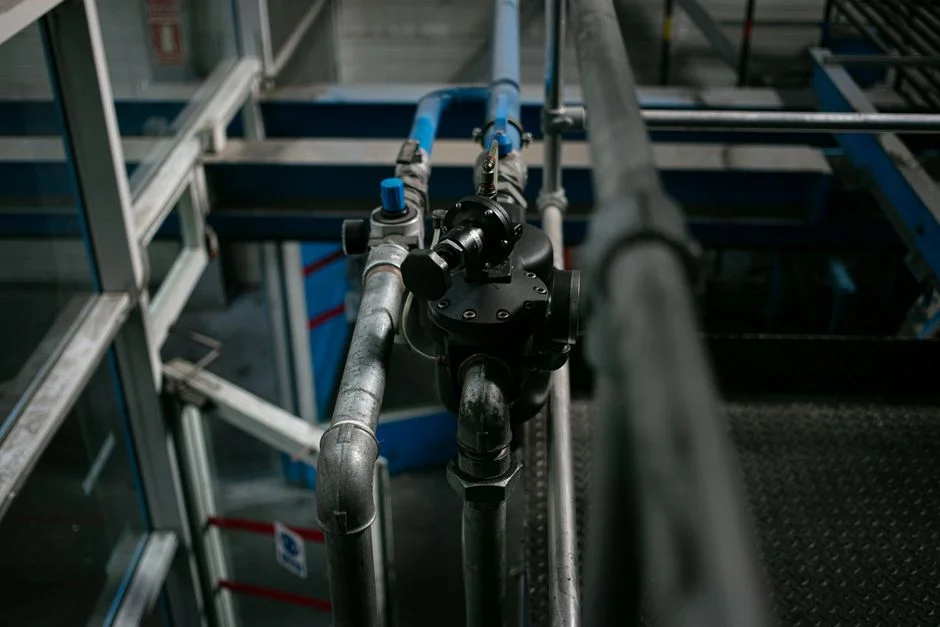
Equipment selection must follow the chemistry and flow path of each stream, because a copper mine, coal operation, and dimension-stone quarry do not share a default treatment train (AMPAC USA, 2025-09). Acid mine drainage, process water, tailings-pond effluent, dewatering discharge, stormwater, and reusable process water should each be inventoried where present.
AMD can be acidic and carry dissolved iron, manganese, copper, zinc, arsenic, and cadmium. Process water may contain reagents, dissolved ore constituents, high TDS, and potentially cyanide, ammonia, or chloramines depending on the process. Tailings-pond effluent can contain fine solids, process chemicals, and leached metals (AMPAC USA, 2025-09). Mining wastewater can also have high suspended solids, metals, metalloids, and occasionally brackish characteristics (Genesis Water Technologies, 2025).
| Stream | Parameters to characterize | Primary design question |
|---|---|---|
| Acid mine drainage | pH, flow, metals, TSS, alkalinity, conductivity or TDS | Which metals require precipitation, and what chemical demand and sludge loading result? |
| Mineral-processing water | pH, flow, TSS, metals, TDS or conductivity, and process-specific constituents | Which constituents require chemical treatment, membrane polish, or separate disposal? |
| Tailings-pond effluent | Flow, TSS, metals, process chemicals | How will fine solids and contaminated sludge be separated and dewatered? |
| Dewatering and stormwater | Representative chemistry, rainfall or pumping profile, contaminants | Can the stream be segregated for treatment or reuse? |
Require laboratory analytical methods and detection limits with the results. Equalization should absorb variable flows and peaks, while equipment sizing should use the highest anticipated daily discharge rather than an average (HydropureWater, 2026). Flow and chemistry should therefore be documented together rather than reduced to a single average flow.
Build a treatment train that follows the contaminant pathway
The supplied treatment sequence is equalization, pH correction, coagulation, DAF or lamella clarification, multimedia filtration, membrane polish where needed, and monitoring and reporting (HydropureWater, 2026). Each stage has a specific decision: whether to equalize, precipitate, aggregate, separate solids, protect membranes, or remove residual dissolved material.
- Equalization: moderate flow and concentration variation before treatment.
- pH correction: raise pH so dissolved metals precipitate as hydroxides. One supplied technical reference recommends lime to pH greater than 10 before thickening (PMC review via HydropureWater, 2024-02).
- Coagulation and flocculation: aggregate suspended solids and fine metal particles into settleable or floatable flocs (Genesis Water Technologies via HydropureWater, 2025-11).
- DAF or lamella clarification: remove the bulk of precipitated solids. DAF suits buoyant floc, oil, and fines; lamella is favored when sludge volume and footprint drive selection (Genesis Water Technologies via HydropureWater, 2025-11).
- Multimedia filtration: reduce turbidity and colloids before membranes. Specify target SDI after filtration, not inlet turbidity alone.
- UF and RO polishing: UF removes colloids and suspended solids before RO; RO addresses residual dissolved metals and salts when needed.
| Stage | Removal mechanism | Selection criterion |
|---|---|---|
| pH correction and precipitation | Converts dissolved metals to hydroxide solids | Permit limit, metal loading, alkalinity, and sludge-generation rate |
| Coagulation and flocculation | Aggregates suspended solids and fine metal particles | Floc properties and compatibility with the selected clarifier |
| DAF | Separates floatable floc, oil, and fines | Floc buoyancy, oil/fines loading, and air-to-solids ratio |
| Lamella clarification | Settles dense floc in an inclined-plate clarifier | Sludge volume, footprint, and downstream membrane protection |
| Multimedia filtration | Captures remaining suspended material and colloids | Target post-filter SDI |
| UF | Physical barrier to colloids and suspended solids | RO feed quality and membrane-feed criteria |
| RO | Rejects residual dissolved metals and salts | Permit limit, scaling risk, recovery, and concentrate route |
A PLC-controlled chemical dosing system should tie lime, coagulant, flocculant, and pH adjustment to the plant controls. Clarifier selection depends on floc behavior and operating constraints: a DAF system for mining wastewater solids separation addresses buoyant floc or oily fines, while a lamella clarifier for metal hydroxide sludge addresses footprint and sludge-volume constraints. Downstream protection can use a multi-media filter for RO pretreatment, followed by ultrafiltration pretreatment for industrial RO and an industrial RO system for dissolved-metal polishing.
The supplied mining reference reports 50–70% recovery for AMD feed and 70–85% for the RO stage of a ZLD train; it also reports more than 99% rejection of dissolved metals and salts for RO/SWRO systems (AMPAC USA via HydropureWater, 2025-09). Those are literature values, not Madisonville performance guarantees. Equipment selection must therefore be tested against site water and the required discharge quality.
Select clarifiers, membranes, and sludge equipment by operating constraint
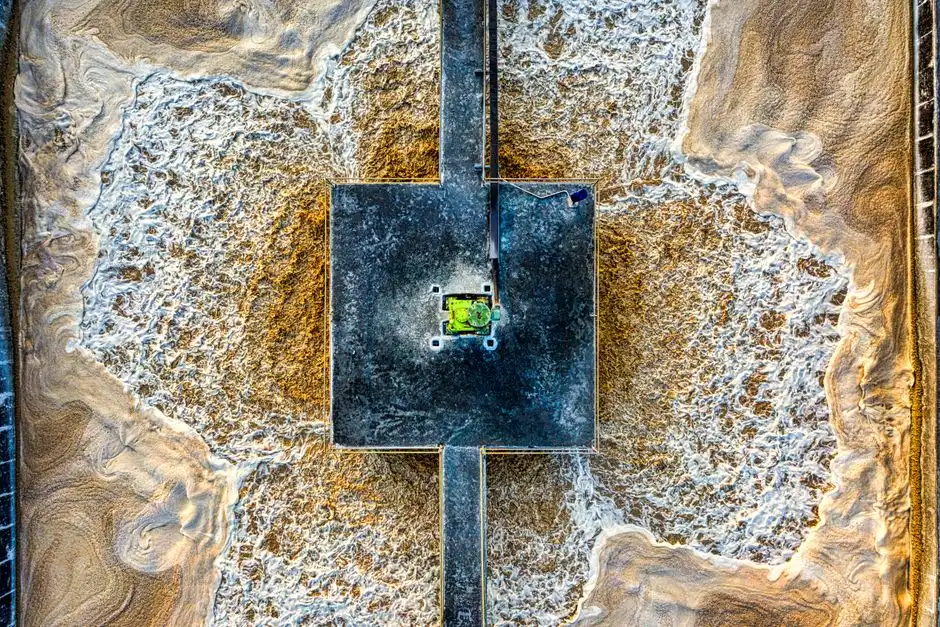
DAF and lamella clarifiers should be compared by operating behavior, not price alone. DAF is the better fit for buoyant floc or oil and fines; lamella is favored for dense floc, footprint constraints, and sludge-volume management. Neither should be credited with protecting a membrane unless the combined process demonstrates the required post-filtration SDI.
| Equipment | Catalog context | Buyer’s verification |
|---|---|---|
| DAF systems | HydropureWater lists 4–300 m³/h across 13 standard models | Actual peak flow, floc behavior, oil/fines loading, and air-to-solids ratio |
| Lamella clarifier | Listed at 20–40 m/h surface loading and up to 30% lower chemical consumption | Project sludge volume, footprint, underflow solids, and feed chemistry |
| Multimedia filtration | Catalog context targets SDI suitable for downstream RO protection | Required post-filter SDI and actual solids loading |
| UF systems | Catalog range of 2,000–40,000 L/h | Feed flow, flux, backwash cycle, and RO feed criteria |
| Plate-and-frame filter press | Catalog filtration areas from 1 m² to 500 m² | Project cake volume, target dryness, cycle time, and chemical conditioning |
These are catalog specifications, not project guarantees. UF protects RO but does not remove dissolved salts. RO is appropriate where residual dissolved metals or salts prevent sewer compliance, subject to concentrate management. Chemical precipitation also creates sludge that requires a disposal route and dewatering method; a plate-and-frame filter press for mining sludge is one relevant option.
Require an integrated control architecture rather than disconnected quotations. Chemical dosing, PLC/HMI controls, flow, pH, conductivity, stage interlocks, alarms, and data records should operate as one system. A supplier should explain how an upset in pH, flow, or conductivity propagates through dosing, clarification, filtration, and membrane operation.
Prepare the basis of design and vendor quotation
The RFQ should begin with a site-specific basis of design, not a catalog flow rate. HydropureWater’s 2026 research identifies peak and average flow in m³/h, representative influent pH and metal results, the receiving sewer authority’s limits for metals, pH, and TSS, and desired recovery percentage if reuse is in scope as required inputs.
| RFQ package | Required information | Bidder response |
|---|---|---|
| Flow and streams | Peak and average flow, stream-by-stream mass and flow data, operating schedule, drainage area, expansion assumptions | Design flow, equalization volume, unit capacities, and staging rationale |
| Quality and chemistry | Representative pH, metals, TSS, TDS or conductivity, and process-specific constituents with analytical methods and detection limits | Removal mechanism, expected effluent, chemical demand, and residual risks |
| Site constraints | Utilities, chemical availability, installation constraints, sludge-disposal route | Equipment layout, utility demand, controls, and complete solids-handling scope |
| Membranes and reuse | Feed assumptions, recovery objective, concentrate route | Project-specific recovery curve, cleaning strategy, and concentrate-management constraints |
| Verification | Performance-test requirements and acceptance limits | Commissioning plan, site-water testing, training, data logging, and guarantees |
Ask bidders to state the treatment objective for every unit operation, control setpoints, monitoring points, fail-safe behavior, and whether performance testing is included. Membrane suppliers should provide feed-water assumptions, recovery calculations, concentrate-management constraints, cleaning strategy, and a project-specific recovery curve rather than only a nameplate recovery rate (HydropureWater, 2026).
No complete-treatment price range or Madisonville-area price point is published in the supplied research. Comparable bids must include sludge handling, controls, commissioning, training, chemicals or chemical storage, installation inputs, and performance testing. For broader technology context, the MBR versus conventional activated sludge for mining wastewater can be reviewed, but it does not replace the owner’s basis of design.
Verify compliance through monitoring, commissioning, and reuse planning
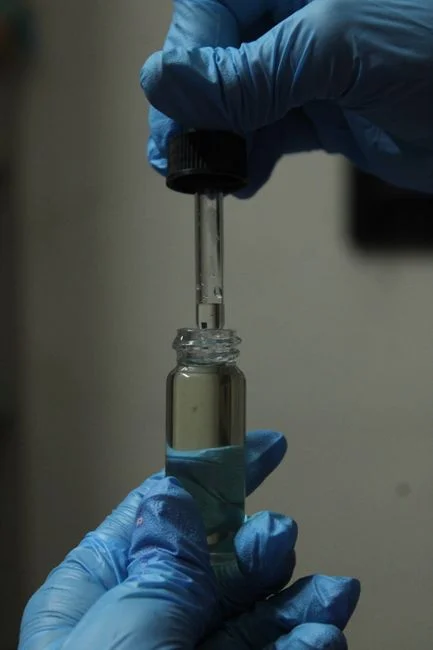
Compliance evidence should begin with staged verification rather than a single acceptance sample. The supplied research recommends continuous pH, flow, and conductivity monitoring with PLC/HMI records and POTW self-monitoring records (LiqTech via HydropureWater, 2025-08). The records should identify the responsible operator and the applicable sampling points.
Use this sequence:
- Verify chemical-dosing equipment, calibration, and interlocks.
- Start each major equipment train and confirm stable hydraulics.
- Sample individual treatment stages to locate residual removal requirements.
- Run integrated performance testing under representative loading.
- Complete permit-required sampling and acceptance documentation.
Membrane rejection and recovery claims must be confirmed with site water because mining chemistry, scaling, fouling, and operating conditions vary. Use the integrated water purification system only as an equipment option; its suitability still depends on the feed analysis, discharge objective, and recovery calculation.
Reuse can improve the business case without weakening the discharge requirement. The supplied mining reference reports 40–60% lower freshwater consumption when RO enables internal reuse compared with once-through operation (AMPAC USA via HydropureWater, 2025-09). Maintain a compliant route for water that is not reused: reuse does not replace applicable metals, pH, TSS, or other sewer limits.
Review chemical costs, sludge volume, membrane flux and recovery, alarm trends, and sampling results on a scheduled basis. This operating review can reveal loss of performance before it becomes a permit exceedance and provides the operating record needed for the next capital decision.
Frequently Asked Questions
How much does a mining wastewater pretreatment system cost near Madisonville?
The supplied research contains no complete-treatment price for the Madisonville area. Request itemized quotations that include equalization, chemical dosing, coagulation, clarification, filtration, any membranes, sludge dewatering and disposal, electrical and controls work, commissioning, training, and performance testing. A low equipment price that omits these items is not comparable.
How should pretreatment equipment be sized for a mining or metals facility?
Provide peak and average flow, stream-by-stream chemistry, operating hours, and future expansion assumptions to each bidder. Equalization should be checked against variable flows and peaks, while treatment capacity should reflect the highest anticipated daily discharge rather than an average (HydropureWater, 2026). No universal Madisonville flow range can be substituted for site data.
What should buyers check when selecting a mining wastewater supplier?
Ask for comparable mining or metals installations, evidence that chemical dosing, PLC/HMI controls, clarification, filtration, membranes, and sludge handling are integrated, and a commissioning plan tied to site-water testing. Require the supplier to define its performance guarantee and exclusions rather than relying on generic equipment claims.
Does an NPDES permit establish the sewer pretreatment limits for a mining plant?
No. NPDES requirements address regulated discharges, while an indirect industrial discharge to a sewer is evaluated under the receiving POTW’s pretreatment program and applicable state and federal requirements. Obtain the current local limits, discharge authorization, monitoring conditions, and fee schedule directly from the receiving sewer authority before selecting equipment.