How Distillery Wastewater Anaerobic Digestion Works
An anaerobic digester for distillery wastewater uses oxygen-free microorganisms to convert biodegradable organics into biogas and stabilized solids. Distillery wastewater is attractive because it contains readily degradable organic matter, but high strength, acidity, color, solids and process upsets make equalization, pH control and pretreatment essential. A viable project is therefore a treatment train, not a single reactor: it must connect feed control, methanogenesis, biogas handling and effluent polishing.
Anaerobic digestion proceeds through four linked biological stages. Hydrolysis breaks insoluble polymers into soluble compounds. Acidogenesis converts those compounds into organic acids, hydrogen, carbon dioxide and ammonia. Acetogenesis converts the organic acids and hydrogen into acetate, carbon dioxide and hydrogen. Methanogenesis is the methane-producing phase: methanogenic organisms convert the products of acetogenesis into methane and carbon dioxide.
Raw biogas is a methane-and-carbon-dioxide mixture. It can be combusted for heat or electricity, upgraded to renewable natural gas, or converted into transportation fuels. The commercial pathway changes the required gas-treatment scope; capturing methane is not equivalent to producing pipeline-quality gas.
Research on distillery-sourced wastewater describes a high-strength, acidic, colored stream containing organic nutrients that can support microbial growth and serve as substrates for renewable-energy production (Elsevier BV, Optimization of distillery-sourced wastewater anaerobic digestion for biogas production). Those favorable characteristics do not remove the need for process control.
The practical flow is:
- Characterize and equalize the wastewater.
- Correct pH and remove or manage solids, grit and FOG where necessary.
- Feed the methanogenic reactor and handle the resulting biogas safely.
- Separate and polish the liquid effluent.
- Manage separated digested solids through an approved reuse or disposal route.
Separated digested solids may have agricultural or compost applications, while the liquid stream may support nutrient recovery, but project-specific reuse requires applicable quality and regulatory review. Reactor screening for a similar high-organic industrial stream is covered in the UASB Reactor for Yeast Wastewater: 2026 Engineering Guide.
Feed Characterization Before Reactor Selection
Reactor sizing must begin with a representative sampling plan, not a single laboratory composite. The campaign should cover normal production, cleaning cycles, batch dumps and other documented variability. Distillery wastewater can change materially with the product schedule, still blowdown, wash-water contribution and handling of process residues.
The buyer should obtain measurements for COD, BOD, total and soluble solids, suspended solids, pH, alkalinity, nutrients, color and FOG, plus process constituents relevant to the site. The supplied research does not provide universal acceptance limits for distillery wastewater, so each supplier should evaluate the same measured feed and proposed operating envelope.
Temperature, pH and retention-related conditions were examined as operating variables in the distillery-sourced wastewater optimization study (Elsevier BV, Optimization of distillery-sourced wastewater anaerobic digestion for biogas production). They should remain explicit in pilot design and operating comparisons rather than being hidden inside a generic loading-rate guarantee.
| Data package | Why it affects the decision | Procurement requirement |
|---|---|---|
| COD and BOD | Define organic loading and the digester’s treatment objective. | Representative flow-weighted results, with analytical methods stated. |
| Flow and production schedule | Determine hydraulic variation, equalization need and batch-dump behavior. | Normal, peak, cleaning and upset periods documented separately. |
| pH and alkalinity | Identify acidification risk and chemical-demand uncertainty. | Diurnal or batch data, not one grab sample. |
| Solids, grit, fibers and FOG | Screen for fouling, mixing, channeling and excess solids loading. | Total and soluble fractions, plus a solids-management review. |
| Color and nutrients | Establish downstream polishing and reuse constraints. | Discharge route and applicable permit basis identified. |
| Recycle and side-stream flows | Prevent dilute or concentrated side streams from being counted incorrectly. | Cooling water, wash water, spent-grain handling and clean-in-place losses listed separately. |
Hydraulic and organic loading must be constructed from site data or validated pilot work. Generic loading rates cannot be presented as guaranteed performance for an unspecified distillery feed. Mechanical screening can be screened as an upstream protection measure; the rotary mechanical bar screen is one equipment option to evaluate if the waste stream contains material that should be removed before equalization or pumping.
Pretreatment and Equalization for a Stable Digester
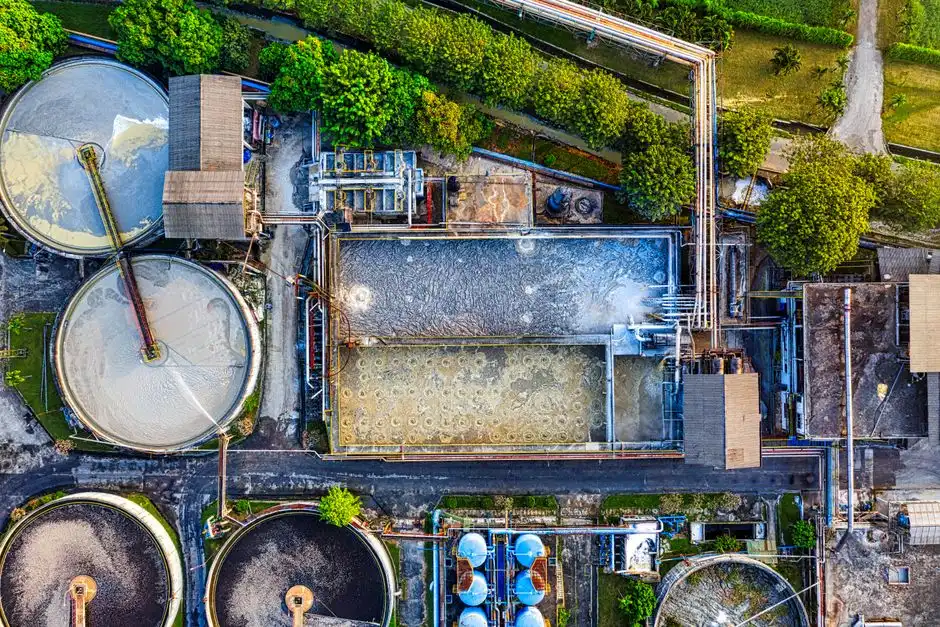
Equalization is the primary interface between variable distillery production and a stable anaerobic process. It moderates flow and organic-load peaks, dampens batch dumps and gives the operator time to respond to pH, solids or FOG excursions. Its required volume must follow the measured production regime rather than a generic rule.
The distillery optimization study describes the wastewater as acidic and identifies pH as an operating variable (Elsevier BV, Optimization of distillery-sourced wastewater anaerobic digestion for biogas production). pH correction therefore belongs in the operating strategy, but chemical demand must be calculated from measured alkalinity and pH behavior. PLC-controlled chemical dosing for digester pH control can be evaluated where automatic, monitored dosing is justified.
Suspended solids, colloids, fibers, sand and grit require separate review. Their presence can increase solids loading, interfere with mixing, promote channeling or create downstream separation problems. A rotary mechanical bar screen may be appropriate for discrete material that needs capture before it reaches pumps or the reactor.
| Pretreatment function | Screening basis | Decision consequence |
|---|---|---|
| Flow and organic equalization | Production schedule, batch dumps, measured flow and COD variation. | Include when measured variability can destabilize the biological process. |
| pH and alkalinity control | pH, alkalinity, acid-generation behavior and chemical compatibility. | Define reagent, dosing equipment, control logic and storage scope. |
| Solids and grit removal | Suspended-solids concentration, particle size, fibers and grit observations. | Specify the required separation duty before reactor selection. |
| FOG or oil removal | Measured oil, grease and floatable material; upstream process review. | Assess DAF only where removable floatables or emulsified oils justify it. |
| Chemical dosing | Measured chemistry, target range and required response time. | Automatic dosing is a controlled utility, not a substitute for feed data. |
DAF should be treated as a targeted pretreatment option, not a default. A DAF system for distillery wastewater pretreatment should be evaluated where removable oil, FOG, suspended solids or colloidal material could impair the digester or downstream equipment. Hydrodynamic screening, sampling and pilot results should determine whether it is justified.
Choosing an Anaerobic Reactor and Gas System
Reactor selection should follow the characterized feed, hydraulic and organic loading, mixing requirements, footprint, operator capability, biogas end use and installation constraints. Options should be compared using the same site data. A generic reactor guarantee based on a synthetic or laboratory feedstock is not an adequate basis for a distillery project.
The methanogenic stage converts the products of acetogenesis into methane and carbon dioxide, so reactor design must provide conditions that preserve that biological sequence. Temperature, pH and retention-related variables from the distillery-sourced study provide a starting framework for pilot trials and operating comparisons (Elsevier BV, Optimization of distillery-sourced wastewater anaerobic digestion for biogas production).
| Decision | Questions the buyer should answer | Evidence required |
|---|---|---|
| Reactor architecture | Which configuration fits the feed solids, mixing and retention requirements? | Site-specific design basis, process calculations and reference installations. |
| Operating envelope | How will the reactor respond to low flow, high-strength batches and pH excursions? | Control philosophy, upset criteria and commissioning protocol. |
| Mixing and solids | How are solids maintained in suspension, settled or removed? | Mixing strategy, solids inventory and separation scope. |
| Gas destination | Is the objective heat, electricity, renewable natural gas, avoided flaring or another use? | Energy balance and downstream gas-treatment requirements. |
| Gas safety | How will moisture, hydrogen sulfide, pressure and flame propagation be managed? | Hazard review, detection, isolation and safety-system drawings. |
| Vendor guarantee | Which feed and operating conditions define the guarantee? | Agreed feed envelope, test methods and remedy for non-compliance. |
The gas scope must distinguish raw biogas capture from energy conversion and upgrading. Moisture removal may be needed before equipment that is sensitive to condensation. Hydrogen sulfide control protects gas-handling and combustion equipment where sulfur is present. Pressure regulation, flame arrestors or flame-safe handling, gas storage, utilization and flaring decisions belong in preliminary engineering.
Market data support the commercial relevance of electricity use but do not determine a distillery reactor’s economics. The American Biogas Council reported in September 2026 that 89% of surveyed facilities generating electricity from biogas use it on site, 13% primarily flare captured biogas and 4% produce renewable natural gas. These percentages describe surveyed U.S. water resource recovery facilities, not distillery projects.
Polishing the Digested Effluent for Compliance

Anaerobic digestion reduces biodegradable organics and can generate biogas, but it should not automatically be treated as the complete compliance solution. The digested liquid may still contain residual COD, color, solids or nutrients, and the required polishing depends on the discharge route and applicable permit.
Post-treatment research on anaerobically digested distillery wastewater shows why color must be evaluated separately. At an initial COD of 3,000 mg/L and an ozone flowrate of 22.5 mg O3/L/min, ozone utilization was 99%, yet color reduction was only 20% after 60 minutes. Under a higher color-reduction condition above 80%, ozone utilization remained above 95% (Ozone Science and Engineering, 2019, Ozonolysis Post-Treatment of Anaerobically Digested Distillery Wastewater Effluent). Oxidant efficiency and color removal therefore cannot be optimized in isolation.
| Residual issue to verify | Investigation required | Possible treatment scope |
|---|---|---|
| Residual COD | Permit limit and soluble versus particulate COD. | Aeration, biological polishing or another process selected from residual quality. |
| Color | Color units, source and response to candidate oxidation. | Advanced oxidation evaluated with oxidant demand and sludge effects. |
| Suspended solids | Solids profile after digestion. | Clarification or solids separation. |
| Nutrients | Nitrogen and phosphorus against the discharge route. | Treatment or nutrient recovery after site-specific review. |
| Toxicity | Permit requirements and receiving-water considerations. | Laboratory assessment before final process selection. |
Ask the laboratory which discharge standards apply and which parameters they cover. The supplied research does not establish universal limits for a distillery digester, so a buyer should not infer compliance from reactor performance alone.
Options to investigate include solids separation, aeration, polishing, MBR-integrated wastewater treatment, filtration and advanced oxidation. For digested solids, a plate-frame filter press can be evaluated where mechanical dewatering is required. Final selection must follow measured residual quality and permit requirements.
From Process Concept to Equipment Procurement
A procurement-ready brief should contain one integrated data package: wastewater characterization, flow regime, production schedule, pH, alkalinity, COD, solids, FOG, nutrient values, discharge route and proposed biogas end use. Suppliers should quote against that same package so differences in scope are visible rather than hidden behind incompatible assumptions.
Require each supplier to map its equipment to every interface. An isolated reactor quotation is not sufficient because equalization, heating, mixing, gas treatment and polishing can determine whether the biological stage functions as proposed. Exclusions should be listed explicitly for reactor vessels, heating, mixing, gas storage, treatment, blowers, utilities, controls, electrical works, civil works, odor control, commissioning and operator training.
| Supplier deliverable | Acceptable question | Buyer check |
|---|---|---|
| Design basis | Which measured feed and operating envelope was used? | Does it match the site campaign and production variability? |
| Process flow diagram | Are upstream and downstream interfaces shown? | Identify every unit and utility crossing the supplier boundary. |
| Excluded-work list | What is not included in the price? | Compare civil, electrical, controls, gas and commissioning exclusions. |
| Acceptance test | How will performance be demonstrated? | Define samples, duration, operating conditions and remedies. |
| Operating response | What happens during low flow, high-strength batches, pH excursions, FOG, excess solids or gas-demand mismatch? | Review alarms, interlocks, operator actions and warranty exclusions. |
| Economic objective | Is the project justified by stabilization, heat, electricity, renewable natural gas, avoided flaring or a combination? | Review each value pathway separately rather than combining unlike benefits. |
Define acceptance testing around the site’s production variability, not a narrow laboratory feed. Controls strategy can be developed using the principles in Wireless Sensor Networks for Wastewater Treatment: 2026 Engineering Guide. Operating-cost discussions should also remain tied to the selected equipment and treatment train, as outlined in the 2026 MBR operating-cost and OPEX breakdown guide.
Market Evidence and Project Risks in 2026
U.S. adoption demonstrates that anaerobic digestion is established technology, but adoption counts are not a distillery design basis. The American Biogas Council reported in September 2026 that 1,213 U.S. water resource recovery facilities operate anaerobic digesters and capture more than 100 Bcf of biogas each year.
The same survey identified 108 facilities that had decommissioned their digesters. That history supports examining operating capability, feedstock compatibility and lifecycle decisions rather than treating installation count as proof of suitability.
Beverage and distillery waste also appears in the surveyed feedstock mix. Among 92 respondents identifying feedstock, beverage and distillery waste represented 2%, while unspecified food waste was the largest named category at 63% (American Biogas Council, September 2026). The result confirms existing use of this waste category, but it does not establish a distillery reactor’s loading rate, footprint or performance.
Approximately three-quarters of the roughly 5,000 U.S. water resource recovery facilities larger than 1 MGD do not operate a digester. Facilities with digesters process 63% of the wastewater treated by U.S. water resource recovery facilities (American Biogas Council, September 2026). These figures indicate substantial integration potential, not automatic applicability to a high-strength industrial stream.
Project-specific feasibility still depends on feed variability, alkalinity, temperature, solids, FOG, mixing, heating demand, gas safety, operators and the selected discharge route. The full-scale survey provides market context; it does not supply a distillery reactor-sizing formula or guaranteed performance.
Frequently Asked Questions
What is the capital cost of an anaerobic digester for distillery wastewater?
The supplied research does not provide a universal capital price for this application. Request a feed-specific quotation that separately identifies the reactor, pretreatment, heating, mixing, gas treatment, controls, civil works and commissioning. Ask the supplier to state which utilities and works are excluded; otherwise, the quotations are not comparable. The same structure should be used for sludge dewatering equipment procurement in Morocco and any other downstream equipment package.
How should a distillery size an anaerobic digester?
Size the reactor from representative COD, flow, pH, alkalinity, solids, temperature and operating-variability data. Use a validated design method or pilot testing where the feed is high-strength, batch-driven or poorly characterized. Require the supplier to show how reactor volume, retention, mixing and recycle assumptions follow from that data, and define the feed envelope attached to any guarantee.
What pretreatment is normally required before anaerobic digestion?
Equalization, pH control and removal of harmful suspended solids or FOG are common functions, but the actual wastewater characterization determines which are necessary. Screening, DAF and automatic chemical dosing should each have a defined process duty and basis in sampling, process review or pilot evidence. None should be included merely because another project uses it.
Does an anaerobic digester alone make distillery wastewater compliant?
No automatic compliance conclusion is justified. Treat anaerobic digestion as the biological and energy-recovery stage, then verify residual COD, color, solids, nutrients and toxicity against the applicable discharge requirements. Add solids separation, biological polishing, MBR treatment or advanced oxidation where the measured effluent and permit require it.
How should a supplier be selected?
Compare proposals against the same feed data, operating envelope, gas-use scenario, excluded works, controls scope, commissioning tests, operator training, warranties and local service capability. Give weight to demonstrated behavior during pH excursions, high-strength batches, solids or FOG loading, low-flow conditions and gas-demand mismatch. A reactor performance claim is useful only when the test conditions match the distillery’s operating envelope.