Why Yeast Wastewater Is a Strong UASB Candidate but Not a Complete Treatment Plant
A UASB reactor can treat yeast manufacturing wastewater at high organic loading rates, but it is normally part of a treatment train rather than a complete compliance system. In a study of yeast-manufacturing wastewater, the maximum load was 10 kgCOD/m³·d at a 36-hour hydraulic retention time, and about 35% of COD was soluble and non-biodegradable under the study conditions. A recycle configuration processed slightly higher loads and produced smaller, more uniform granules. Because UASB treatment does not reliably remove nitrogen, phosphorus or pathogens, plants should establish pretreatment, alkalinity and nutrient balance, granulation, biogas handling and post-treatment requirements through site-specific testing.
The upflow anaerobic sludge blanket reactor passes influent upward through a bed of anaerobic granular sludge, retaining biomass in the reactor while converting biodegradable organics to biogas. The gas and treated liquid are separated near the top. For yeast plants, the principal reactor-stage objectives are COD reduction, energy recovery through biogas capture and avoidance of the aeration demand associated with aerobic treatment.
The direct evidence is encouraging but bounded. Environmental Technology’s study of yeast-manufacturing wastewater reported a maximum load of 10 kgCOD/m³·d at a 36-hour hydraulic retention time in straight, recycle and series configurations. It also found about 35% soluble, non-biodegradable COD under the conditions tested. That fraction limits what the UASB can remove and must be included in any mass balance or performance guarantee.
A 2024 critical review described UASB as one of the oldest and most proven high-rate anaerobic technologies, while identifying long start-up, low nitrogen and phosphorus removal, and low pathogen reduction as disadvantages. Those limitations are decisive: COD removal and biogas recovery do not establish discharge compliance or reuse suitability. A DAF pretreatment for yeast wastewater may be relevant where suspended, oily or colloidal material could interfere with granulation, but the treatment train still needs a defined final-effluent objective.
Build the Yeast Wastewater Design Basis Before Sizing the Reactor
Reactor sizing should begin with a time-composite characterization of the actual plant streams, not with a generic yeast-wastewater loading rate. The required design basis includes flow, total and soluble COD, BOD₅, suspended solids, pH, alkalinity, temperature, nutrients and sulfate. The supplied research does not establish universal limits for yeast manufacturing wastewater, so site data must govern.
Adjacent food-industry data can reveal what needs to be measured, but it cannot be transferred directly to a yeast plant. The 2024 critical review reported brewery COD of 2–32.5 g/L, BOD₅ of 0.25–0.8 g/L, pH of 3.3–12 and alkalinity of 0.27–2.45 g CaCO₃/L. It reported dairy COD of 0.5–10.4 g/L, BOD₅ of 0.24–5.9 g/L and alkalinity of 0.213–1.55 g CaCO₃/L. The contrast with cheese whey—reported COD up to 102.1 g/L and BOD₅ up to 60 g/L—shows why concentrated streams may require segregation or dilution rather than direct design transfer.
COD fractionation is the key missing test. The yeast study’s finding of about 35% soluble non-biodegradable COD means that total COD alone cannot establish the treatable load. Separate soluble biodegradable, slowly biodegradable and particulate fractions, because they affect loading rate, hydrolysis needs and attainable effluent COD.
- Sample production, wash-down and cleaning streams across normal and peak operating periods.
- Identify batch dumps, dilution practices and cleaning-chemical contributions rather than averaging them away.
- Require each proposal to state whether loading is based on total COD or soluble biodegradable COD, together with its HRT and temperature assumptions.
- Verify the resulting treatment train in pilot work under representative feed variability.
Mechanical protection should precede biological treatment. A rotary mechanical bar screen can address rags and fibrous material, while an automatic pH and nutrient dosing system may be needed once the required dose and control logic are established.
| Design input | Why it matters | Evidence or decision required |
|---|---|---|
| Flow and production profile | Defines hydraulic loading and shock exposure | Time-composite flow record, including batch dumps and wash-down |
| Total and soluble COD | Separates applied load from potentially refractory soluble COD | COD fractionation; yeast study found about 35% soluble non-biodegradable COD under its study conditions |
| Alkalinity, pH and temperature | Controls buffering and biological reaction conditions | Site measurements and supplier operating assumptions |
| Nutrients and sulfate | Determines whether supplementation or inhibition controls are needed | Nutrient mass balance and dosing design |
| Suspended solids and cleaning chemicals | Identifies pretreatment and chemical-compatibility risks | Source-separated sampling and pilot feed assessment |
Choose Between Straight, Recycle and Series UASB Configurations

Configuration choice should be tested against the plant’s feed variability and required granule performance, not selected from the number of reactors shown in a proposal. The Environmental Technology study compared a straight UASB, a UASB with recycle and a series combination. Its maximum documented load was 10 kgCOD/m³·d at a 36-hour HRT, but that result belongs to the tested wastewater and conditions.
The recycle reactor processed slightly higher loads and developed smaller, more evenly sized granules. That is a useful pilot criterion: compare sludge size distribution, settleability, mixing and retention across configurations. A recycle system primarily retains biomass and improves contact between influent and active granules; it should not be used to justify indiscriminate high-rate loading, particularly during startup or shock events.
A series arrangement can divide treatment across reactors and provide additional process-control opportunities, but it should be justified by stability, footprint and maintenance access. It may improve operation under variable loads, yet the added equipment and control complexity must be weighed against any demonstrated benefit.
| Configuration | Evidence-based advantage | Question to resolve in pilot work |
|---|---|---|
| Straight UASB | Directly tested in the yeast study | Can it retain adequate granule inventory during startup and variable loading? |
| UASB with recycle | Processed slightly higher loads and produced smaller, more even granules in the study | Are the gains maintained with the plant’s actual feed, temperature and recycle arrangement? |
| Series combination | Allows treatment to be distributed across reactors | Does the added configuration improve stability enough to justify its footprint and maintenance burden? |
| Alternative high-rate anaerobic reactor | The 2024 review identifies EGSB, GRABBR, AFB and ASBR as alternatives | Would hydraulic mixing, loading resilience or operating mode be better served by another configuration? |
The pilot comparison should use the same feed, temperature, sampling method and performance definitions. If a supplier proposes EGSB, GRABBR, AFB or ASBR instead, require the same design-basis and performance disclosures rather than accepting a technology label as proof of suitability.
Protect Granulation with Pretreatment, Alkalinity and Nutrient Control
Granulation fails when the feed chemistry, buffering or hydraulic conditions are not controlled. The 2024 critical review reported brewery alkalinity of 0.27–2.45 g CaCO₃/L and dairy alkalinity of 0.213–1.55 g CaCO₃/L. These adjacent-industry ranges demonstrate why alkalinity must be measured: COD concentration does not establish the reactor’s buffering capacity.
Nutrient balance is equally industrial-specific. The same 2024 review reported a dairy C/N/P ratio of approximately 200/3.5/1, indicating nitrogen limitation despite the wastewater’s high COD. For yeast wastewater, request a phosphorus, nitrogen and micronutrient mass balance based on measured feed and expected sludge production. The supplier should state the proposed dosing rate, chemical form and control logic; “nutrient addition as required” is not an executable design.
Equalization should absorb production variation and prevent batch shocks from reaching the reactor. Solids removal protects the granular bed and reduces sludge loading. Temperature management addresses the reaction conditions assumed in the loading calculation. pH control must maintain a chemically stable feed without exposing active anaerobic biomass to incompatible chemical dosing.
Select pretreatment by composition, not by convention. Screening addresses rags and fibrous material. DAF pretreatment for yeast wastewater should be assessed where suspended solids, oil and grease or colloidal material are present and could impair granule settling or hydraulic separation. Where chemical correction is required, an automatic pH and nutrient dosing system should be assessed for compatibility, mixing and fail-safe control.
Chemical selection and dosing require a design review. The supplier must explain how each reagent affects pH, alkalinity, sulfide generation, trace nutrients and granular sludge. Direct chemical contact with active biomass is not acceptable without that compatibility assessment.
Design the Startup, Monitoring and Biogas-Safety Plan
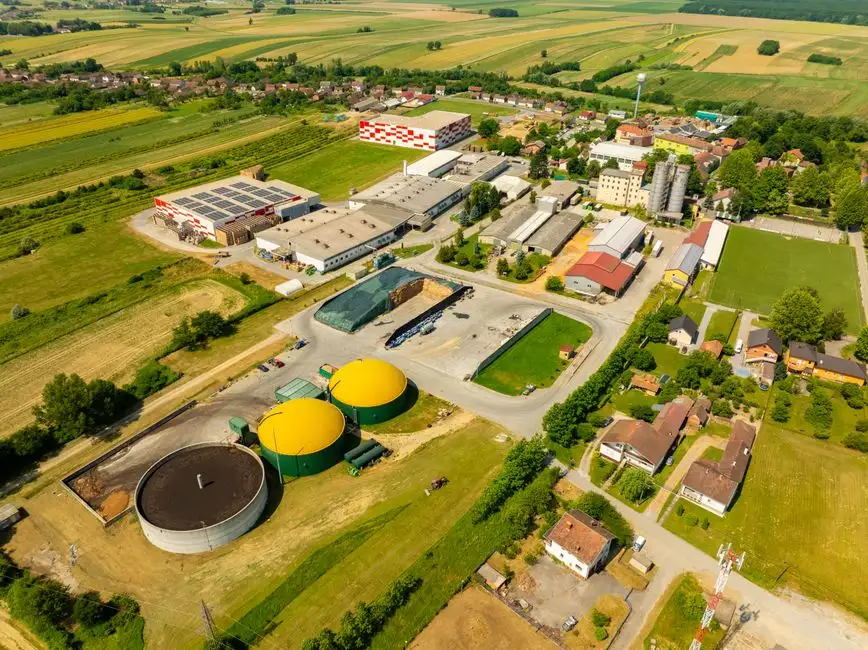
Startup must be treated as a biological acclimation program, not automatic commissioning. The 2024 critical review identifies long start-up as a UASB disadvantage, so the contract should include a written loading ramp, hold points, acceptance criteria and a defined response to failed criteria. Do not begin a pilot or commercial trial at design load.
The operating plan should monitor COD removal, methane production or gas quality, alkalinity, pH, volatile fatty acids, sludge-bed condition, granule size and settleability. These measurements distinguish early signs of biological instability from hydraulic or gas-system problems. The yeast study’s finding of smaller, more even granules in the recycle reactor provides a measurable comparison criterion for pilot testing.
- Establish baseline feed composition and reactor performance at a conservative loading step.
- Increase loading only when specified monitoring criteria are met.
- Hold and investigate if pH, alkalinity, volatile fatty acids, gas production or sludge condition deteriorate.
- Confirm repeatable operation with representative production and wash-down variation before accepting the commercial loading basis.
Alarm and response rules should cover pH or alkalinity excursions, organic overload, excessive foaming, gas fluctuations and loss of granular sludge. Each alarm needs a defined operator action, diagnostic method and escalation path.
Include gas handling, condensation and safety controls in the supplier’s engineering scope. The supplied research does not establish universal methane concentrations, safety limits or equipment clearances, so those must be established through applicable site standards and engineered design. Biogas utilization or flaring arrangements should be defined contractually rather than assumed from the presence of gas production.
Acceptance should also reflect operator competence. Training, procedures, instrumentation calibration and commissioning support should be completed before the plant assumes the commercial load or any effluent guarantee.
Select Post-Treatment Against the Actual Effluent Objective
Post-treatment is required because anaerobic treatment removes neither nutrients nor pathogens reliably enough for every compliance or reuse objective. The 2024 critical review states that anaerobic treatment often requires post-effluent treatment to complete the treatment cycle and identifies low nitrogen and phosphorus removal and low pathogen reduction as UASB limitations.
Start by defining the required result: COD reduction and biogas recovery, nutrient removal, pathogen control, suspended-solids polishing, water reuse or a combination. Each objective changes the downstream scope. A sewer-discharge target may not require the same polishing as reuse, while reuse specifications can add solids, nutrient and microbial-quality requirements that the UASB was never designed to meet.
| Effluent objective | Evaluation focus | Relevant treatment decision |
|---|---|---|
| COD and biogas recovery | Residual soluble COD and usable gas production | Confirm the UASB mass balance and downstream solids separation |
| Nitrogen and phosphorus reduction | Permit or reuse nutrient limits | Select a biological or chemical nutrient-removal stage |
| Pathogen control | Required microbial reduction | Provide a validated disinfection or polishing step |
| Suspended-solids polishing | Residual granular and biomass solids | Match clarification and filtration to the required solids quality |
| Water reuse | Combined chemical, solids and microbial requirements | Evaluate ultrafiltration for UASB effluent polishing or other suitable barriers against reuse criteria |
Downstream selection should follow the residual solids and target water quality, not a fixed process sequence. Where more stringent solids separation is needed, a membrane-based option such as an integrated MBR treatment system should be evaluated on site-specific effluent and reuse criteria.
Resource recovery can extend the process but is not automatic. A 2026 Frontiers in Microbiology review identified integrated UASB-PPB systems for PHA recovery while identifying light management, biomass harvesting, nutrient control and process integration as commercialization barriers. This supports a project-specific comparison, not a standard requirement for every yeast-wastewater installation.
Evaluate Suppliers and Pilot Tests Before Making the Purchase
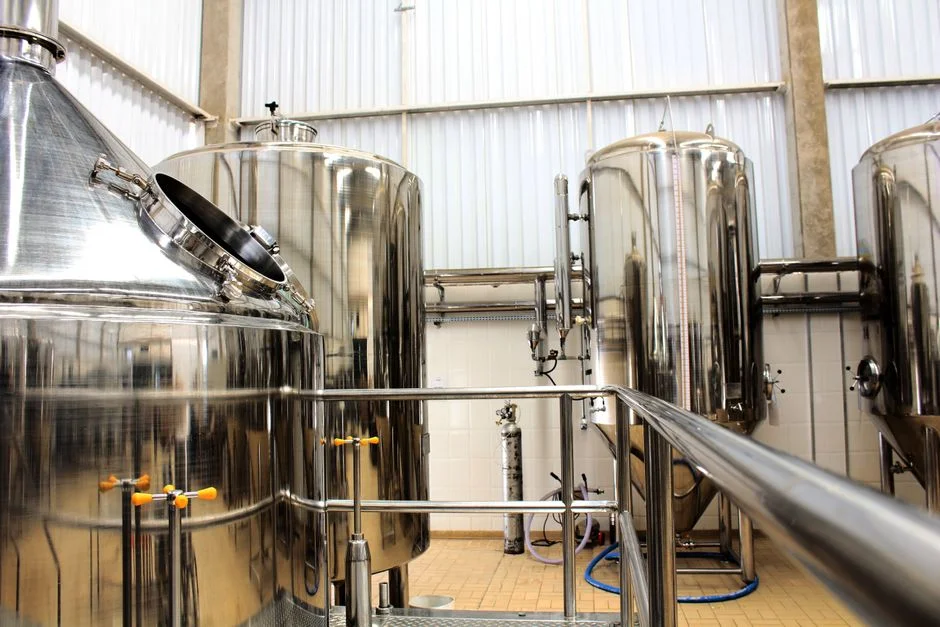
A comparable proposal should disclose the complete design basis, not just reactor volume and nominal loading rate. Require each supplier to state the wastewater evidence, reactor configuration, applicable loading rate, HRT basis, temperature assumption, hydraulic capacity, expected performance envelope and the limits of that guarantee.
Performance evidence must be traceable. Ask whether it came from yeast manufacturing wastewater, brewery wastewater, dairy wastewater or another industrial stream. The 2024 review’s brewery and dairy ranges provide screening context but are not interchangeable, and the older yeast study should be treated as a reference point rather than a guaranteed commercial outcome.
Require a written startup schedule, granulation strategy, recycle arrangement, sludge-sampling method, instrumentation schedule, operator training and support plan. Also require a scope boundary that identifies whether equalization, screening, gas cleaning, pumping, flow control, post-treatment, sludge handling, controls and commissioning are included.
| Procurement check | Evidence required from the supplier | Acceptance decision |
|---|---|---|
| Design basis | Measured flow, COD, biodegradability, temperature, alkalinity, nutrients and flow profile | Reject a proposal based only on total COD or generic food-industry data |
| Reactor selection | Configuration rationale, loading basis, HRT and recycle assumptions | Compare the same feed and acceptance criteria across alternatives |
| Pilot validation | Representative-feed results, startup log, granule measurements and monitoring data | Use the study benchmark of 10 kgCOD/m³·d at a 36-hour HRT only where conditions match |
| Scope boundary | Complete equipment, controls, gas safety, commissioning, training and downstream sludge handling | Identify exclusions before commercial comparison |
| Lifecycle commitments | Operator attention, energy use, chemical consumption, biogas use, maintenance and downstream sludge handling | Request site-specific proposals; the supplied research supports no generic cost figure |
Pilot testing is warranted where the feed is materially different from the yeast study or where seasonal production, cleaning chemicals and batch dumps dominate. The pilot should test the proposed configuration, startup ramp, control logic and monitoring response. After performance is demonstrated, transfer the result into a commercial guarantee that identifies the feed conditions, operating envelope and exclusions.
Frequently Asked Questions
How should I size a UASB reactor for yeast wastewater?
Reactor volume cannot be selected responsibly without site-specific flow, total and soluble COD, biodegradability, temperature and hydraulic criteria. Apply the measured soluble biodegradable load—not total COD alone—against the selected HRT and configuration, then confirm the basis through pilot testing.
What evidence should I request when choosing a UASB supplier?
Request comparable wastewater evidence, a transparent design basis, startup and monitoring plans, instrumentation details, operator training and a complete scope boundary. A generic loading rate without feed conditions or a reference case is not sufficient evidence.
Will UASB treatment alone satisfy discharge or reuse requirements?
No blanket compliance conclusion can be drawn from UASB COD removal or biogas recovery. The 2024 critical review identifies low nitrogen and phosphorus removal and low pathogen reduction, so final compliance must be checked against the actual permit, sewer-discharge or reuse criteria.
What information is needed for pricing and lead time?
Request a site-specific quotation after characterizing the wastewater and fixing the reactor, pretreatment and post-treatment scope. The supplied research supports no generic price or lead-time range; ask the supplier to state design assumptions, exclusions, delivery schedule and the commercial effect of each scope change.