What IFAS Adds to Rubber Wastewater Treatment
The integrated fixed-film activated sludge (IFAS) process combines suspended activated sludge and attached biofilm within a single reactor to expand biomass volume without expanding tank footprint. In high-strength industrial applications, incorporating free-moving biomass carriers into an existing or new aeration basin creates a dual-biological phase. The attached biomass remains retained on carrier surfaces inside the basin, while the mixed-liquor suspended solids (MLSS) continue contributing to biological degradation.
According to a 2025 review published in the Journal of Water Process Engineering, IFAS systems establish longer effective sludge ages, improve resistance to organic shock loads, and foster microenvironments that support multi-pathway biological nutrient removal. Process engineers evaluating an IFAS technology-selection framework for industrial wastewater must distinguish IFAS from moving bed biofilm reactors (MBBR), which rely solely on attached growth without an active suspended sludge return, and from membrane bioreactors (MBR), which rely on physical membrane filtration for solids separation rather than gravity clarification. Biological treatment selection should be guided by site-specific wastewater characterization, hydraulic profiles, discharge permit limits, and footprint constraints rather than general process designations.
Rubber Glove Study: Tested Conditions and Treatment Performance
Polyvinyl alcohol (PVA) gel bead bio-carriers achieved up to 87% chemical oxygen demand (COD) removal when evaluating rubber glove wastewater in a 2022 study published in Desalination and Water Treatment and indexed on ScienceDirect. The researchers evaluated two biological configurations: an IFAS/biofilm system utilizing PVA gel beads alone, and an IFAS/hybrid system combining PVA gel beads with suspended activated sludge. The evaluation tested hydraulic retention times (HRT) of 2, 4, 6, and 8 hours across biomass carrier filling ratios of 5%, 10%, and 20%. Prior to biological treatment, initial parameters including COD, ammonium nitrogen, nitrate, orthophosphate, pH, and dissolved oxygen were measured to establish baseline loading.
Organic removal efficiency varied significantly based on both HRT and the presence of suspended sludge. At shorter HRT values of 2 and 4 hours, the IFAS/biofilm configuration achieved higher COD removal efficiencies of 58% to 61%, compared to 38% to 46% for the IFAS/hybrid system. Soluble organic compounds present in rubber glove wastewater may rapidly absorb into the porous PVA gel beads before biological degradation occurs, giving the pure biofilm configuration an early removal advantage at high hydraulic throughput. However, at longer HRT values of 6 and 8 hours, the IFAS/hybrid configuration outperformed the biofilm-only system, reaching a peak COD removal efficiency of 87% at a 6-hour HRT. While these findings validate attached-growth biological treatment for rubber manufacturing effluent, the reported percentages reflect specific bench-scale operating conditions and cannot be applied as universal design guarantees across all rubber processing streams.
| System Configuration | Carrier Filling Range (%) | Hydraulic Retention Time (h) | COD Removal Performance (%) | Primary Performance Driver |
|---|---|---|---|---|
| IFAS/Biofilm (PVA Beads Only) | 5% – 20% | 2 – 4 | 58% – 61% | Rapid absorption of soluble compounds into porous PVA gel structure |
| IFAS/Hybrid (PVA Beads + MLSS) | 5% – 20% | 2 – 4 | 38% – 46% | Lower mass transfer rates into suspended flocs under short retention times |
| IFAS/Hybrid (PVA Beads + MLSS) | 5% – 20% | 6 | 87% (Peak) | Synergistic degradation between attached biofilm and suspended biomass |
| IFAS/Hybrid (PVA Beads + MLSS) | 5% – 20% | 8 | 82% – 86% | Complete substrate utilization with stabilized endogenous respiration |
Where IFAS Fits in the Rubber Treatment Train
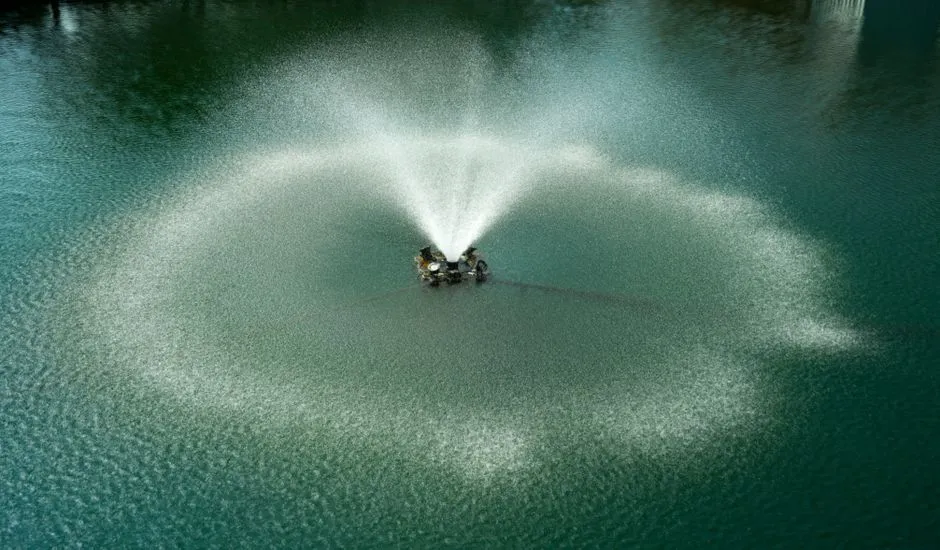
Industrial wastewater pretreatment prior to an IFAS biological stage requires physical and chemical removal of non-biodegradable solids, rubber polymers, and emulsified oils to protect bio-carrier surfaces from fouling. A complete treatment train for rubber processing or rubber glove manufacturing begins with source segregation and mechanical screening, followed by flow equalization to dampen hydraulic surges and batch chemical cleaning discharges. Where raw wastewater contains elevated suspended latex, coagulants, or zinc residues, an industrial DAF pretreatment system should be evaluated downstream of equalization. Commercial DAF equipment specifications span nominal capacities from 4 to 300 m³/h, illustrating available mechanical treatment scales.
Following primary pretreatment, clarified wastewater enters the IFAS reactor where suspended flocs and carrier-attached biofilm degrade dissolved organic matter. Downstream of the biological basin, secondary solids separation—typically secondary clarification—separates suspended biomass for return sludge (RAS) pumping or wasting (WAS), while internal carrier retention screens keep the bio-carriers inside the aeration zone. The required final effluent standard determines whether tertiary polishing, such as sand filtration, advanced oxidation, or disinfection, is necessary prior to environmental discharge or facility reuse.
Carrier Selection and Reactor Design
Traditional bio-carrier selection for IFAS reactors requires optimizing specific surface area, mechanical strength, pore structure, surface roughness, and long-term durability. While the 2022 rubber glove study demonstrated effective organic uptake using PVA gel beads, full-scale industrial design requires selecting carrier media that withstand continuous hydro-dynamic shear and hydraulic abrasion over multi-year operating periods.
Conventional millimeter-scale plastic bio-carriers can suffer from suboptimal mass transfer efficiency, high mixing energy demands, and restricted internal diffusion. To address these mass transfer limitations, derivative processes such as high-concentration powder carrier bio-fluidized beds (HPB) employ micron-sized powder carriers to build dual sludge age systems with improved fluidization and enhanced simultaneous nitrogen and phosphorus removal. Procurement teams must require suppliers to provide verified material properties, biomass retention characteristics, and mixing design requirements for any selected carrier media.
| Carrier Parameter | Design Focus & Requirements | Engineering Impact on IFAS Operation |
|---|---|---|
| Specific Surface Area (m²/m³) | Active area available for biofilm attachment | Determines volumetric organic loading capacity and tank sizing |
| Material Density & Geometry | Specific gravity relative to water; pore openness | Controls fluidization energy, hydraulic distribution, and mixing shear |
| Mechanical & Abrasion Resistance | Polymer tensile strength and wear rate | Prevents carrier breakdown, media loss, and screen blinding |
| Carrier Filling Fraction (%) | Percentage of bulk reactor volume occupied by media | Directly impacts oxygen transfer efficiency and biomass capacity |
| Carrier Retention Mechanism | Wedge-wire or perforated retention screens | Prevents carrier migration into downstream clarification equipment |
Build a Site-Specific Design Basis
Preparing an accurate procurement specification for attached-growth biological treatment requires establishing representative influent load profiles and defining operating boundaries prior to soliciting equipment bids. Environmental engineers must compile complete analytical data for baseline parameters, including COD, biological oxygen demand (BOD₅), total suspended solids (TSS), fats, oils, and grease (FOG), pH, operating temperature, total Kjeldahl nitrogen (TKN), and total phosphorus. Relying solely on annual daily averages introduces severe sizing risks because production schedules, rubber glove dipping line dump washing, and equipment sanitization create extreme peak-to-average hydraulic and organic ratios. Process developers should consult an IFAS design guide for industrial food-processing wastewater to review similar peak-handling strategies.
The engineering team must explicitly state whether raw production streams are combined or segregated, identifying where latex bath dumps, sulfur additives, or surfactant cleaning formulations enter the sewer train. Sizing specifications should clearly separate average daily flows from maximum hour peak flows, specifying the exact sampling frequency and compositing protocol used to establish the design envelope. Bidders must evaluate IFAS, MBBR, and conventional activated sludge options against identical wastewater characterization profiles, identical battery limits, and unified scope definitions to prevent artificial pricing discrepancies.
Compare IFAS with MBBR, MBR, and Conventional Activated Sludge
Biological process evaluation for high-strength industrial streams involves trading off footprint, operational complexity, capital expense, and solids-separation performance across competing configurations. IFAS delivers high biomass concentrations and shock-load resilience within existing tank footprints while retaining standard gravity secondary clarifiers. MBBR eliminates return activated sludge infrastructure entirely by operating purely on attached biofilm, though it lacks the biological flexibility of a hybrid suspended-growth inventory. MBR systems achieve complete solids separation via submerged membrane filtration, providing superior effluent quality at the expense of higher energy consumption, chemical cleaning routines, and periodic membrane replacement. Sizing tools for MBR configurations often reference standard commercial catalog ranges, such as 10 to 2,000 m³/day, to illustrate mechanical equipment scaling, though actual biological tank volume depends strictly on mass loading calculations.
Selecting the optimal biological architecture requires detailed lifecycle cost analysis. In a 2021 modeling study published in the Journal of Environmental Management evaluating meat processing effluent, process modeling demonstrated that overall total cost ranked MBR highest, followed by conventional A2O, IFAS, and MBBR. Technology rankings are highly sensitive to scope boundaries and civil construction assumptions, as detailed in an engineering comparison of IFAS and activated sludge for industrial wastewater. Engineers must demand site-specific civil, electrical, chemical, and sludge handling cost quotes rather than assuming one biological process is universally cheaper.
| Process Option | Growth Mechanism | Solids Separation Method | Footprint Requirement | Relative Capital & Operating Trade-off |
|---|---|---|---|---|
| IFAS | Hybrid (Biofilm + Suspended MLSS) | Secondary Gravity Clarifier | Moderate / Retrofit Friendly | Balanced CAPEX; medium energy; requires RAS management and media screens |
| MBBR | 100% Attached Biofilm | Secondary Clarifier or DAF | Compact | Lower operational complexity; no RAS line; higher carrier media volume |
| MBR | Suspended MLSS (High Conc.) | Submerged Membrane Modules | Minimal Footprint | Higher CAPEX/OPEX; superior effluent clarity; requires membrane cleaning |
| CAS | 100% Suspended MLSS | Secondary Gravity Clarifier | Large Footprint | Lower initial equipment technology cost; vulnerable to organic shock loads |
Commissioning and Performance Verification

Validating biological performance during plant commissioning requires step-by-step verification of carrier fluidization, biofilm growth rate, and effluent quality under actual operating loads. System suppliers must detail startup protocols, including seed sludge sourcing, carrier acclimatization schedules, nutrient balancing, and dissolved oxygen calibration across aeration grid zones. Monitoring protocols during initial operation should track COD removal alongside ammonium nitrogen, nitrate, orthophosphate, pH, and dissolved oxygen to verify that targeted microbial communities have established on carrier surfaces.
Performance guarantees must explicitly define sample collection methods—distinguishing 24-hour composite samples from instantaneous grab samples—and specify analytical test methods. Operating controls must establish clear protocols for managing hydraulic retention times, carrier filling ratios, aeration rate control, return activated sludge rates, and waste activated sludge pumping. Site acceptance criteria must reflect the plant's actual permit standards under real production dynamics, as bench-scale academic results like the 87% COD removal observed in PVA gel studies cannot serve as performance guarantees without site validation.
Frequently Asked Questions
What budget parameters determine the total installed cost of an IFAS system for rubber processing wastewater?
Total installed cost depends on civil construction scope, bio-carrier volume, aeration grid retrofits, carrier retention screen metallurgy, secondary clarifier sizing, and associated control automation. Procurement teams must request site-specific capital and operating expense models covering power, chemical dosing, carrier replacement rates, and sludge disposal costs under a unified battery-limit definition.
What key technical specifications must buyers request when evaluating IFAS equipment suppliers?
Buyers must require suppliers to submit certified bio
Frequently Asked Questions
Is IFAS cost-effective for rubber processing wastewater treatment?
IFAS is highly cost-effective for rubber processing facilities, particularly when upgrading existing activated sludge plants to handle increased hydraulic or organic loads. By integrating fixed-film media into existing tanks, facilities can increase biomass concentration by 50% to 100% without expanding the tank footprint, significantly reducing capital expenditure compared to building new reactors.
Operational costs are optimized through enhanced nitrification rates and improved sludge settleability. In rubber wastewater applications, IFAS systems typically reduce chemical oxygen demand (COD) and total nitrogen (TN) more efficiently than conventional systems, leading to lower costs associated with sludge handling, aeration energy, and regulatory discharge compliance.
How do I choose an IFAS supplier for a rubber wastewater plant?
When selecting an IFAS supplier, prioritize vendors who provide empirical pilot-scale data specific to rubber latex or coagulated rubber wastewater. Ensure the supplier offers media with a high protected surface area, typically ranging from 400 to 800 square meters per cubic meter, and documented durability to withstand the potentially abrasive nature of rubber processing effluent.
Review the supplier's experience with media retention systems, as rubber wastewater can contain high levels of debris that may clog standard stainless steel screens. A qualified supplier should provide a comprehensive performance guarantee, detailed CFD modeling of the aeration patterns, and evidence of successful long-term operation in high-strength industrial wastewater environments.
What wastewater and operating data are needed to size an IFAS system?
Accurate sizing requires a detailed characterization of influent flow rates, including peak and average diurnal variations. Essential chemical parameters include COD, BOD5, total suspended solids (TSS), total nitrogen (TKN/NH4-N), total phosphorus, and the specific presence of rubber-related surfactants, zinc, and vulcanizing agents that may inhibit microbial growth.
Operational data requirements include the existing tank dimensions, current aeration capacity (in Nm3/h), existing mixed liquor suspended solids (MLSS) concentrations, and the target effluent standards. Engineers must also account for temperature fluctuations, as rubber processing wastewater can arrive at elevated temperatures, which directly impacts dissolved oxygen transfer efficiency and biological kinetic rates.
Can the 87% COD removal from the rubber glove study be used as a performance guarantee?
The 87% COD removal rate reported in isolated rubber glove industry studies should not be used as a universal performance guarantee. Because rubber processing wastewater composition varies significantly based on raw material additives, latex stabilization methods, and water recycling practices, performance must be verified through site-specific treatability studies.
A performance guarantee should be based on the specific influent loading profile of the individual facility rather than generic industry benchmarks. Factors such as the biodegradability of the specific COD fraction, the ratio of soluble to particulate matter, and the site-specific hydraulic retention time (HRT) are critical variables that dictate the achievable removal efficiency in a commercial-scale IFAS deployment.
What pretreatment is required before IFAS treats rubber-processing wastewater?
Pretreatment is essential to prevent system failure and ensure long-term media integrity. Standard requirements include effective primary clarification or dissolved air flotation (DAF) to remove free rubber particles, coagulants, and grease, as excessive oil and grease can coat the IFAS media and inhibit biofilm development.
Additionally, grit removal and fine screening (typically 1–3 mm) are mandatory to prevent the accumulation of non-biodegradable rubber crumbs that can clog retention screens or fill the void spaces of the media. pH neutralization and flow equalization are also critical to ensure that the influent entering the IFAS reactor remains within the optimal biological range of pH 6.5 to 8.5, preventing shock loads that could destabilize the fixed-film biomass.