Enzyme Manufacturing Wastewater Fingerprint: Why Generic IFAS Data Fails
Integrated fixed-film activated sludge (IFAS) combines suspended activated sludge with biofilm attached to moving carriers in a single reactor, offering a hybrid biological configuration for high-strength industrial wastewater streams. For enzyme manufacturing facilities where fermentation blowdown generates chemical oxygen demand (COD) concentrations from 5,000 to 20,000 mg/L alongside severe batch hydraulic peaks, generic municipal design parameters cannot be directly applied. A 2021 study in the Journal of Environmental Management evaluating high-strength meat processing wastewater ranked IFAS second in modeled removal efficiency and third in overall total cost. Applying ifas for enzyme manufacturing wastewater requires preliminary dissolved air flotation pretreatment, batch equalization, and site-specific wastewater characterization.
Enzyme manufacturing wastewater presents an operational fingerprint distinct from municipal sewage or standard food processing effluents. Industrial enzyme production relies on batch fermentation using diverse agricultural and synthetic growth substrates, including corn steep liquor, soy meal, molasses, and inorganic salts. This batch fermentation cycle creates extreme variability in carbon-to-nitrogen (C/N) and carbon-to-phosphorus (C/P) ratios, preventing the biological reactor from operating under steady-state nutrient conditions. Between fermentation runs, high-temperature Clean-in-Place (CIP) regimes dump concentrated caustic solutions, acid rinses, and formulated sanitizers into the drain, introducing thermal and hydraulic shocks that destabilize unbuffered biological systems.
The statistical findings of the 2021 Journal of Environmental Management study on high-strength industrial wastewater demonstrate that wastewater flow rate, influent COD, and biochemical oxygen demand (BOD) exert a statistically significant effect on total system lifecycle cost. Designing an integrated fixed-film activated sludge enzyme plant using annual average flows or catalog throughput averages guarantees performance failure. When CIP washdowns or fermentation vat dumps coincide, localized volumetric loading rates far exceed daily means, threatening biomass wash-out and temporary carrier fluidization collapse.
enzyme ETP streams carry specific biological inhibitor risks absent from standard industrial analogs such as dairy or livestock processing wastewater (documented in a 2020 Portuguese National Funding Agency study on dairy wastewater). Residual extracellular enzymes, active protein-degrading proteases, secondary fermentation metabolites, trace residual antibiotics, and heavy metal catalyst ions can directly suppress nitrifying bacteria (nitrosomonas and nitrobacter). While the attached biofilm on IFAS carriers provides a protected inner zone for slow-growing nitrifiers, process engineers must validate carrier biofilm survival against specific facility inhibitor profiles during pilot testing.
Finally, the selection of biological treatment design parameters depends heavily on the final discharge route. Facilities discharging directly to surface waters under NPDES permits must meet stringent total nitrogen (TN), ammonium, and phosphorus limits. Facilities discharging to publicly owned treatment works (POTW) must manage local pretreatment surcharges for COD and total suspended solids (TSS), whereas plants seeking zero liquid discharge (ZLD) or internal process water recycling require downstream membrane polishing. Each compliance pathway dictates a fundamentally different IFAS biomass retention, carrier fill ratio, and hydraulic retention time (HRT).
IFAS Process Mechanics for High-Strength Industrial Streams
Industrial IFAS installations exhibit a broad effluent concentration spread, with reported values ranging from 35.8 to 892.9 mg/L for COD and 1.5 to 37.6 mg/L for ammonium nitrogen, according to a 2025 comprehensive biological treatment review published in Science of The Total Environment. This wide performance range highlights that biological process execution and site-specific load dynamics dominate final effluent quality, rather than technology nomenclature alone.
The core mechanic of IFAS is its dual-microbial architecture. Suspended activated sludge flocs handle the bulk carbonaceous BOD reduction in the bulk liquid, while fixed biofilm attached to plastic or synthetic carriers provides extended mean cell residence time (MCRT) for slow-growing autotrophic nitrifiers. This structural segregation allows the system to achieve simultaneous nitrification denitrification (SND) within dense biofilm layers. Deep within the biofilm matrix, anoxic conditions develop naturally as oxygen penetration is consumed in the outer layers, enabling nitrate reduction without dedicated, separate anoxic tanks when suitable dissolved carbon is present. Recent research documented in Bioresource Technology (2026) indicates that IFAS configurations can also support specialized anaerobic ammonium oxidation (ANAMMOX) pathways at reduced C/N ratios.
However, conventional plastic IFAS carriers exhibit distinct physical limitations when applied to high-strength industrial wastewater IFAS design. Standard macro-carriers feature relatively large geometries (10–30 mm), lower specific surface area (SSA), limited mass transfer efficiency across thick boundary layers, and fluidization resistance at elevated mixed liquor suspended solids (MLSS) levels. To address these IFAS carrier mass transfer limitations, advanced process configurations utilize the HPB micron-scale carrier derivative. The high concentration powder carrier bio-fluidized bed (HPB) process uses micro-sized carriers that dramatically increase specific surface area, fluidize easily at high biomass concentrations, and enhance oxygen and substrate transfer rates. Because full-scale reference data for HPB in active enzyme manufacturing remains emerging, equipment buyers should require pilot-scale validation data for any micron-carrier proposal.
| Carrier Parameter | Standard Plastic IFAS Carrier | Micron-Scale Carrier (HPB Derivative) | Impact on Enzyme Wastewater Reactor Sizing |
|---|---|---|---|
| Specific Surface Area (SSA) | 300 – 800 m²/m³ nominal | Significantly higher relative SSA | Determines total active biofilm mass per cubic meter of basin volume. |
| Mass Transfer Efficiency | Diffusion limited across thick biofilm boundary layers | Enhanced substrate & oxygen diffusion rates | Higher mass transfer reduces required bulk dissolved oxygen (DO) setpoints. |
| Fluidization & Mixing | Requires medium/coarse bubble aeration or dedicated mixers | Easily fully fluidized throughout reactor bulk liquid | Prevents dead zones and carrier compaction during high MLSS operations. |
| Design Fill Fraction | Typically 25% to 40% of tank volume | Dosed by mass concentration (e.g., g/L basis) | Dictates sieve media retention screen sizing and reactor volume envelope. |
Carrier fill fraction (typically specified between 25% and 40% of reactor basin volume for structured media), coarse-bubble aeration scour intensity, and stainless-steel sieve retention screen design directly control biofilm thickness and shear sloughing. If aeration intensity is insufficient, excess biofilm buildup causes mass transfer resistance and localized anaerobic septic conditions; if scour is excessive, shear forces strip the nitrifying biofilm. Equipment specifiers must mandate clear supplier design values for air-scour geometry and screen head-loss thresholds in the technical bid specifications.
Pretreatment Train: DAF, Equalization, and Source Segregation Before IFAS
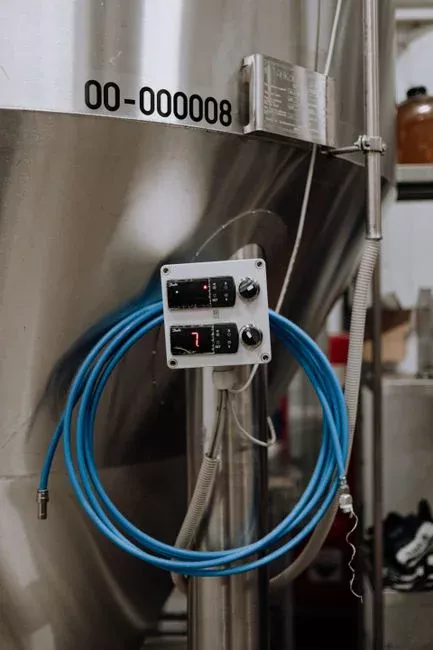
Dissolved air flotation systems operating across catalog ranges of 4 to 300 m³/h are designed to remove suspended solids, fats, oils, grease, and colloidal matter prior to biological treatment reactors. In enzyme manufacturing facilities, robust upstream pretreatment provides essential DAF pretreatment biological reactor protection against pass-through insoluble organics and active residual enzymes that foul carrier surfaces.
A rigorous industrial wastewater treatment architecture begins with aggressive in-plant source segregation. High-COD fermentation spent beer and centrifuge blowdown must be isolated from low-strength cooling water and sanitary drains. Concentrated CIP wash streams containing high surfactant or extreme pH levels should be directed to dedicated neutralizing hold tanks. Following segregation, fine mechanical screening—such as a self-cleaning rotary bar screen—removes coarse spent grain, cell debris, and fibrous biomass to protect downstream pumps and prevent clogging of IFAS carrier retention screens.
Equalization tank sizing is critical. Because fermentation batch dumps generate severe organic and hydraulic surges, equalization basins must be sized based on peak batch discharge volumes and production cleaning schedules rather than 24-hour average daily flows. The 2021 Journal of Environmental Management study emphasized that system present worth and capital expenditure are statistically sensitive to flow rate and COD fluctuations. An undersized equalization basin forces the downstream IFAS reactor to handle extreme loading spikes, requiring larger basin volumes and aeration capacity to prevent dissolved oxygen collapse.
Following equalization, dissolved air flotation (DAF) removes emulsified lipids, residual fermentation insolubles, and colloidal solids. Installing a high-efficiency DAF system—such as standard industrial unit configurations ranging from 4 to 300 m³/h capacity—ensures that incoming total suspended solids and hydrophobic proteins do not coat the IFAS media. For optimal separation, pair the flotation unit with a dedicated PLC-controlled dosing for DAF and pH control to precisely administer coagulants and flocculants based on real-time pH and turbidity feedback, rather than relying on static, static jar-test chemical dosing estimates.
| Pretreatment Stage | Primary Unit Operation | Key Performance Objective | Design Basis Parameter |
|---|---|---|---|
| Source Segregation | Isolation Tanks / Diverter Valves | Separate fermentation blowdown from CIP and utility flows | Batch schedule & stream COD concentration |
| Mechanical Screening | Rotary Mechanical Bar Screen (1.5–6 mm openings) | Remove spent grains, large debris, and media-clogging solids | Peak hydraulic flow rate & screen capture efficiency |
| Flow Equalization | Agitated Equalization Tank | Dampen hydraulic and organic loading peaks before biology | Batch dump volume & peak-to-average COD ratio |
| Primary DAF Clarification | DAF pretreatment for FOG and solids removal | Flotate suspended solids, insoluble proteins, and FOG | Surface loading rate (m³/m²·h) & air-to-solid ratio |
IFAS vs. MBR vs. MBBR vs. A2O: Comparison Matrix for Enzyme Plants
In a 2021 study published in the Journal of Environmental Management evaluating high-strength industrial wastewater, biological process removal efficiency ranked MBR first, IFAS second, MBBR third, and A2O fourth, while total present cost ranked MBR highest, followed by A2O, IFAS, and MBBR. While these modeled rankings provide a solid starting benchmark, applying them directly to an enzyme manufacturing plant requires accounting for key industrial process differences.
First, consider membrane bioreactors (MBR). Although MBR achieved the top removal efficiency in the study, high-protein enzyme wastewater carries a risk of rapid membrane surface fouling due to soluble extracellular polymeric substances (EPS) and residual enzyme compounds. If an MBR alternative for direct-discharge or reuse is evaluated, buyers must account for increased chemical clean-in-place frequency and membrane replacement reserves. Second, while moving-bed biofilm reactors (MBBR) had the lowest total modeled cost, their lower removal efficiency per unit volume may require larger biological basins to achieve high COD and nitrogen discharge standards on variable fermentation streams. Third, conventional Anaerobic-Anoxic-Oxic (A2O) systems ranked second in total cost but fourth in removal efficiency, largely because suspended-growth sludge blanket control is difficult under fluctuating industrial flows.
IFAS provides a middle ground: it delivers the enhanced nitrification and volumetric efficiency of fixed-film systems while avoiding the complete reliance on ultra-fine membrane filtration. However, technology evaluation must be based on a site-specific bid evaluation rather than generalized process names, as detailed in the meat processing IFAS study with cost rankings. Similar comparative frameworks apply when specifying biological configurations for other high-strength streams, such as those evaluated in fish processing IFAS design with DAF integration and poultry processing IFAS with carrier selection guidance.
| Technology | Modeled Removal Efficiency (2021 Study) | Modeled Total Cost Ranking (2021 Study) | Enzyme Wastewater Engineering Trade-offs |
|---|---|---|---|
| MBR (Membrane Bioreactor) | Ranked 1st (Highest) | Ranked 1st (Highest Total Cost) | Highest effluent clarity; vulnerable to protein/EPS membrane fouling; higher energy consumption. |
| IFAS (Integrated Fixed-Film) | Ranked 2nd | Ranked 3rd | Flexible hybrid system; handles load surges; carrier retention and aeration design critical. |
| MBBR (Moving-Bed Biofilm) | Ranked 3rd | Ranked 4th (Lowest Total Cost) | Lowest total cost baseline; lower kinetic removal rate per volume; requires larger basin footprint for low effluent limits. |
| A2O (Anaerobic-Anoxic-Oxic) | Ranked 4th | Ranked 2nd | Traditional suspended growth; sensitive to biological toxicity and bulking; larger footprint requirement. |
Procurement Framework: Characterization Package, Scope Rules, and Bid Evaluation
Sensitivity analysis in biological treatment cost modeling shows that total present worth is most sensitive to variations in civil construction costs, making comprehensive scope boundary definition essential during bid evaluation. Bidders presenting incomplete site installation boundaries can create an artificial price advantage while exposing the plant owner to substantial budget overruns during execution.
To obtain reliable, apples-to-apples vendor proposals, project engineers must issue a standardized wastewater characterization bid package. This package must provide composite sampling data covering average, peak hour, and batch washdown conditions for flow rate, COD, BOD, TSS, FOG, pH, total Kjeldahl nitrogen (TKN), free ammonia, total phosphorus, and operating temperature. In addition, include a detailed schedule of plant production operations, noting vat dumping frequencies, CIP chemical formulations, sanitizer types, and whether high-strength streams are segregated or blended.
Purchasing specifications must also enforce strict cost boundary rules. Every supplier bid must explicitly state whether the quoted price includes or excludes civil concrete works, preliminary screening, equalization tank mixing, primary DAF units, biological basin diffusers, blowers, carrier media, retention sieves, secondary clarification, secondary sludge dewatering, system automation PLCs, electrical motor control centers (MCC), field installation, commissioning, and environmental discharge permit support.
Equipment buyers must require bidders to submit explicit carrier performance data, including material composition, media geometry, specific surface area (m²/m³), recommended fill fraction (%), aeration scour intensity (Nm³/m²·h), retention screen open area, and media lifecycle loss guarantees. Finally, biological proposals should integrate a complete waste sludge treatment loop, including a heavy-duty sludge dewatering for complete treatment train press operating across standard filtration areas (1 to 500 m²), ensuring that sloughed biomass disposal costs are fully captured in the system OPEX evaluation.
Permit Compliance Pathway: From 40 CFR Part 432 Logic to Enzyme Facility Discharge
On August 28, 2025, the U.S. EPA executed a final action withdrawing the 2024 proposed revisions to 40 CFR Part 432 effluent guidelines, maintaining the existing framework for direct dischargers. While 40 CFR Part 432 explicitly targets Meat and Poultry Products (MPP) point sources, its underlying regulatory logic—derived from federal categorical standards enforced through National Pollutant Discharge Elimination System (NPDES) permits—applies directly to industrial enzyme manufacturing plants.
Enzyme manufacturing sites are typically categorized under alternative federal Effluent Limitations Guidelines (ELGs), such as 40 CFR Part 439 (Pharmaceutical Manufacturing) or 40 CFR Part 414 (Organic Chemicals, Plastics, and Synthetic Fibers), depending on their product classification and substrate base. Regardless of the specific category, regulatory authorities establish legally binding numerical discharge limits based on Best Available Technology Economically Achievable (BAT). A vendor claim that an IFAS system inherently guarantees permit compliance is legally invalid; compliance depends entirely on the complete, integrated treatment train matched to the facility's specific NPDES permit or local POTW industrial pretreatment permit limits.
Engineers must ensure that their IFAS process proposal accounts for all seasonal and operational compliance scenarios. The 2021 study modeled IFAS within a complete system context, demonstrating that downstream solids separation (such as secondary clarification or tertiary filtration) is mandatory to prevent sloughed carrier biofilm from escaping into final discharge samples and triggering TSS or BOD permit violations. Facility managers should review current local authority pretreatment regulations and obtain written confirmation from their governing regulatory authority before finalizing system design baselines.
Frequently Asked Questions
What wastewater characterization data must I provide bidders to get comparable IFAS proposals?
Procurement teams must provide bidders with a representative characterization package covering average, peak, batch, and washdown flow rates, alongside composite concentrations for COD, BOD, TSS, FOG, TKN, ammonium, pH, and temperature. The package must document sampling frequencies, statistical averaging periods, and the exact production schedule, explicitly highlighting batch vat dumps, CIP chemical schedules, and whether high-strength streams are segregated or combined.
How much does an IFAS system cost for a 500 m³/day enzyme plant compared to MBR or MBBR?
In the 2021 Journal of Environmental Management industrial benchmark study, modeled total system cost ranked MBR highest, A2O second, IFAS third, and MBBR lowest (MBR > A2O > IFAS > MBBR). However, because construction cost was identified as the single most sensitive financial variable in present-worth modeling, buyers cannot rely on generic turnkey estimates. Sizing a 500 m³/day enzyme plant requires requesting site-specific capital and operating estimates based on a single standardized engineering scope boundary.
Which IFAS carrier type handles high enzyme COD and potential biological inhibitors?
Standard plastic macro-carriers (10–30 mm) offer established biofilm growth but face mass-transfer diffusion limits and fluidization constraints under high industrial MLSS loading. The HPB micron-scale powder carrier derivative provides a significantly higher specific surface area and superior fluidization dynamics, which aids mass transfer under heavy organic loads. However, because full-scale industrial enzyme plant references for micron-carriers remain limited, buyers should require vendors to provide pilot testing verification showing nitrifying biofilm stability against the plant's specific CIP chemical and enzyme inhibitor profiles.
Can an IFAS reactor meet direct-discharge nitrogen limits without external carbon dosing?
IFAS reactors promote simultaneous nitrification denitrification (SND) within thick biofilm layers, enabling nitrogen removal within a single aeration basin. However, enzyme manufacturing wastewater C/N ratios vary dramatically across fermentation cycles. If spent fermentation broth is low in readily biodegradable COD when TKN peaks, supplemental carbon dosing (e.g., methanol or sodium acetate) may still be required to maintain total nitrogen compliance, as confirmed in 2026 industrial nitrogen removal reviews published in Process Safety and Environmental Protection.