What the Volkswagen Acquisition Does — and Does Not — Trigger
Volkswagen’s acquisition of a plant in Vietnam does not itself trigger a universal wastewater-approval process. The controlling requirements are the plant’s existing environmental impact assessment, wastewater permit, discharge authorization, sewer or pretreatment agreements, monitoring records and site-specific receiving routes. Before closing, Volkswagen should obtain written instructions from the relevant Vietnamese authorities on whether each approval must be transferred, modified, reissued or allowed to continue. Treatment requirements should then be tested against actual wastewater flows, contaminants, operating conditions and residual-management obligations. National wastewater-investment figures indicate market development, but they do not establish the target plant’s permits, discharge limits, equipment needs or upgrade budget.
The legal review must begin with the proposed post-closing operating entity, not the acquisition announcement. The named permittee may be the plant owner, operating company, property owner or another entity, and it may not match Volkswagen’s intended structure after closing. The deal team should reconcile the environmental impact assessment record, Vietnam industrial wastewater permit, wastewater discharge authorization, industrial sewer or pretreatment agreement, stormwater authorization and any reuse approval. The structure and sequence for this review are set out in Vietnam plant-acquisition wastewater due diligence.
For every authorization, request written instructions from the issuing authority stating whether it must be transferred, modified, reissued or allowed to continue. Confirm that the entity covered by the authorization will match the entity responsible for operation after closing. A permit application, renewal submission or seller representation does not establish that approval has been issued or accepted.
The supplied research establishes no universal Vietnamese change-of-control rule. Accordingly, the acquisition agreement should not assume that ownership transfer automatically resolves permit status. Equally, market investment figures cannot determine the target site’s discharge limits, treatment gap or residual cost. Those conclusions depend on plant-specific documents, operating evidence and written regulator instructions.
Vietnam’s Wastewater Context: Market Growth Is Not Site Compliance
Vietnam’s wastewater-investment activity demonstrates a market in development, not a substitute for site-level compliance analysis. The U.S. Commercial Service identifies rapid industrial-park development, inadequate attention to wastewater treatment and a need for appropriate equipment and technology as priority concerns in its “Vietnam Water and Wastewater Management” market intelligence. It also reports chemical pollution from industrial and other activities as a top concern. These national observations indicate why the buyer should investigate treatment adequacy, but they do not establish a permit condition at the acquired plant.
| National or municipal project | Reported capacity or investment | Transaction significance |
|---|---|---|
| Nhiêu Lộc–Thị Nghè wastewater treatment plant | 480,000 m³/day; expected completion by 2025; intended to meet approximately 71% of Ho Chi Minh City’s current treatment needs | Municipal treatment infrastructure does not establish the acquired plant’s authorization or pretreatment conditions |
| Proposed Ho Chi Minh City expansion programme | Six new plants and one upgrade; approximately $1.3 billion projected investment | Indicates investment context, not the target plant’s treatment cost or capital scope |
| Thu Duc project | $524 million; up to 1.1 million m³/day; approximately 1.8 million residents across eight districts; Moving Bed Biofilm Reactor technology | Technology adoption at municipal scale does not establish MBR suitability for Volkswagen’s stream |
All project figures in the table come from the U.S. Commercial Service’s “Vietnam Water and Wastewater Management” market intelligence. They describe planned or announced municipal infrastructure. They do not answer whether the industrial sewer serving Volkswagen’s plant has available capacity, what discharge composition it accepts or whether industrial reuse is lawful at the site.
Neff’s 2026 dissertation, “Analysis of Vietnam as production and logistics hub for Audi AG,” treats water reliability, industrial-zone conditions and ESG considerations as manufacturing-location factors and identifies wastewater treatment as a notable weakness. That supports treating wastewater as part of plant-selection and transaction diligence. It does not supply a plant-specific Vietnamese permit, discharge limit or treatment design. The 2026 industrial ETP design guide for Hanoi is useful for framing engineering questions, but the controlling evidence must still come from the target site.
Build an Outlet-by-Outlet Wastewater Evidence Map
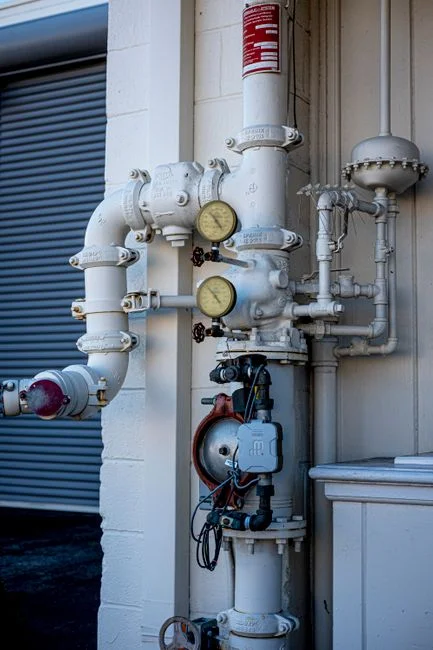
Every actual discharge or reuse route requires its own legal and technical evidence file because a facility-wide permit does not establish authority for every outlet. Start with the physical process and piping drawings. Separate industrial process wastewater, cooling or blowdown, rinse and cleaning streams, stormwater, sanitary sewage and any reuse stream. For each route, identify the final receiving body, connection point, sampling location and operating entity.
| Outlet or route | Core legal evidence | Core operating evidence | Closing question |
|---|---|---|---|
| Direct environmental discharge | Wastewater permit, discharge authorization, environmental impact assessment records and regulator correspondence | Laboratory results, monitoring plan and discharge records | Will the authority transfer, modify, reissue or continue the authorization? |
| Industrial sewer or central treatment system | Industrial sewer pretreatment agreement, pretreatment conditions and discharge monitoring plan | Invoices, discharge records and correspondence | Does the agreement cover the acquired operating entity and actual discharge composition? |
| Stormwater | Separate authorization, exemption basis, outfalls and inspection history | Storm-event monitoring and inspection records | Is any regulated outfall omitted from the legal description? |
| Sanitary sewage | Relevant connection or authorization documents | Flow records and service correspondence | Is the receiving route and responsible entity documented? |
| Industrial reuse | Permitted reuse objective or other approved route | Source stream, treatment train, quality results and residual records | Is reuse a permitted site objective rather than an unverified design assumption? |
The environmental impact assessment Vietnam record must be matched to the actual site and operating conditions. For a direct discharge, collect the approval itself, discharge authorization, assessment records, laboratory results with chain of custody, monitoring plan and all authority correspondence. For an industrial sewer or central treatment system, obtain the sewer agreement, pretreatment conditions, monitoring plan, invoices or discharge records and proof that the acquired operating entity is covered.
Stormwater requires separate treatment in the evidence map. A process-wastewater permit does not establish stormwater authorization, and an industrial pretreatment agreement cannot support a separate direct-discharge claim. Likewise, reuse must be tied to an approved objective rather than inferred from the existence of a treatment stage.
Reconcile every document to the physical sampling point, flow route and receiving body. Check the permittee, issuing authority, discharge point, limits, monitoring requirements, renewal status and correspondence. An application is not an issued approval. The pretreatment-limit compliance workflow can structure this review, but the actual receiving authority’s requirements remain controlling.
Verify Compliance from Operating Evidence, Not Seller Statements
A close-ready compliance file must connect each authorization to physical performance and historical liability. Request operating logs, laboratory data, flow and water-use records, bypass and upset reports, maintenance history, inspection records, residual records and regulator correspondence. Make the file accessible without dependence on the seller’s email or unarchived systems.
Test historical performance against actual average and peak flows, stream chemistry, production changes, storm conditions and start-up after maintenance or an upset. A single acceptable laboratory result does not prove that the installed effluent treatment plant has adequate hydraulic or treatment capacity. The wastewater treatment capacity assessment must represent the plant’s real operating envelope.
Investigate historical contamination, undocumented discharge routes, open enforcement matters, unresolved corrective actions and regulator inquiries. Review whether a bypass was permitted, whether discharge points match the approved drawings and whether residuals were handled through authorized routes. These are potential plant acquisition environmental liability issues even where no final enforcement decision has been issued.
Assign every material finding four fields: transaction disposition, accountable owner, deadline and verification method. Depending on the evidence, the disposition may be a pre-closing condition, escrow, indemnity, corrective action or funded post-closing obligation. The choice should reflect whether exposure can be bounded, eliminated before closing, or priced and controlled after closing.
Before closing, identify who will retain monitoring and reporting responsibility immediately after closing. Record the responsible personnel, submission calendar, laboratory contract and location of historical and pending records. The plant-acquisition wastewater guide illustrates the same transaction discipline: permit status and environmental liability must be resolved before integration, not discovered afterward.
Translate the Wastewater Gap into an Equipment Brief

Equipment selection must follow a verified treatment gap, not a generic description of the facility or a catalogue range. Prepare a mass balance for every stream, including average and peak flows, production-linked variability, storm-flow conditions, pH, temperature, conductivity and process-relevant contaminants. Then evaluate the installed train stage by stage: source control, equalization, pretreatment, biological treatment, membrane or reuse stages, final discharge, bypasses and redundancy.
| Verified treatment objective | Candidate technology | Supplied reference specification | Site-specific acceptance checks |
|---|---|---|---|
| Remove suspended solids, oil and grease, FOG or colloids before biological, membrane or reuse treatment | Industrial DAF wastewater pretreatment system | 4–300 m³/h across 13 models in the supplied 2026 equipment reference | Mass balance, hydraulic loading, chemical demand, solids handling, bypass design and residual route |
| Remove bacteria, colloids and suspended solids before RO | UF | 2,000–40,000 L/h; 0.03 μm PVDF membranes | Feed chemistry, recovery, fouling control and residual route |
| Biological treatment with membrane solids separation | Integrated MBR wastewater treatment system | 10–2,000 m³/day in the supplied reference | Organic loading, solids production, cleaning, redundancy and reuse criteria |
| Advanced purification or industrial reuse | RO | Recovery rates up to 95% in the supplied reference | Feed chemistry, recovery objective, concentrate disposal and conditional performance guarantee |
DAF is a candidate rather than a default answer. The catalogue range does not demonstrate suitability; the buyer must establish whether the identified contaminants, hydraulic variation and downstream biological or membrane objectives justify it. The comparison in DAF versus clarifier selection for industrial wastewater should be applied to verified stream conditions.
UF requires a defined feed and purpose. MBR requires an organic-loading and solids-management assessment. RO requires a specific recovery objective and an authorized concentrate route. For MBR, an MBR versus conventional activated-sludge comparison can support the technical review, but municipal project figures do not prescribe the acquired plant’s process.
Do not import unrelated PFAS benchmarks into the legal or equipment specification. The supplied Virginia dataset covering 20 compounds, average total PFAS of 1,419 ng/L, reported granular activated-carbon removal of 40%–70% for shorter-chain PFAS and a greater-than-95% PFOS example are risk indicators from another context. They are not Vietnamese discharge limits, treatment guarantees or evidence about Volkswagen’s wastewater.
For every treatment option, document sludge, concentrate and chemical-waste volumes, authorized destinations, handling responsibility and cost basis. Industrial wastewater reuse cannot be treated as an objective until its source, quality criterion, monitoring requirement and residual route are established.
Convert Environmental Exposure into Closing Conditions
A wastewater issue should block or qualify closing when the transaction team cannot establish legal continuity, allocate historical liability or demonstrate that the installed treatment system can meet the confirmed objective. The selected remedy must correspond to the evidence and cannot substitute a generic promise to “resolve compliance.”
| Transaction finding | Potential disposition | Required verification |
|---|---|---|
| Permit transfer, modification or reissuance remains unresolved | Closing condition, escrow or indemnity | Written authority instruction and evidence that any required filing has been accepted |
| Historical contamination or an undocumented discharge remains unallocated | Pre-closing condition, escrow or indemnity | Site assessment, remedial scope, cost basis and contractual allocation |
| The treatment train cannot demonstrate required performance | Pre-closing repair or funded capital project | Commissioning and performance test against confirmed permit, sewer or reuse objectives |
| Residual disposal lacks an authorized route or reliable cost basis | Pre-closing implementation or accepted post-closing obligation | Authorized destination, volume basis, handling responsibility and cost |
| Monitoring responsibility is not assigned | Closing condition or funded post-closing action | Named personnel, submission calendar, record location and acceptance test |
Use escrow or indemnity where exposure can be reasonably bounded but cannot be eliminated before closing. Use a pre-closing condition where the site, approval or records must be corrected first. Use a funded capital project where evidence demonstrates a treatment gap; specify scope, amount, owner, deadline, commissioning test and acceptance criteria.
Require independent quotations for equipment, installation, utilities, chemicals, energy, monitoring, sludge or concentrate disposal, maintenance, bypasses, residual transfer and compliance work. The treatment-capital plan should also identify assumptions so omissions can be challenged.
No defensible upgrade estimate or acquisition-price adjustment can be calculated from the supplied research because the target site’s flows, composition, permit limits, residual routes and treatment objectives are absent. The related transaction wastewater requirements analysis illustrates why evidence and contractual disposition must be connected before the budget is approved.
Frequently Asked Questions
Must Volkswagen obtain new Vietnamese wastewater permits after acquiring the plant?
No universal rule is established by the supplied research. The named permittee, the terms of each authorization and the issuing authority’s written instruction determine whether the approval must be transferred, modified, reissued or allowed to continue. Volkswagen should obtain that instruction before closing and reconcile it with the post-closing operating entity.
How can the deal team estimate the wastewater upgrade cost?
No defensible estimate is possible from the supplied research. Buyers should request verified average and peak flows, stream-by-stream composition, permit or sewer conditions, residual routes and treatment objectives, then obtain separate quotations for the major cost buckets. Include equipment, installation, utilities, chemicals, energy, monitoring, residual disposal, maintenance, bypasses and compliance work so assumptions remain visible.
Should Volkswagen replace the existing effluent treatment plant?
Replacement is justified only when the installed train cannot meet confirmed permit, sewer or reuse objectives under actual stream characteristics, flow variation, equipment condition and residual-management requirements. Test the existing system against the mass balance, operating logs, laboratory data, bypass history and current authorization before classifying the deficiency as a repair, committed capital project or accepted residual risk.
Which equipment should be evaluated for the acquired plant?
Evaluate equipment against the verified treatment gap. DAF may fit solids, FOG, oil and grease or colloid pretreatment; UF, MBR and RO should be considered only when feed chemistry, hydraulic loading, reuse objectives and residual requirements support them. Require each supplier to submit a site-specific mass balance, operating assumptions, residual strategy, redundancy plan, commissioning method and acceptance criteria. Catalogue capacity alone is not evidence of suitability.
Who is responsible for monitoring and reporting after closing?
The buyer must identify the responsible personnel, accessible historical and pending records, laboratory arrangements and submission calendar before closing. Volkswagen should not rely on the seller’s email or unarchived systems. The transaction file should demonstrate who retains custody of records and who signs or submits each required report immediately after closing.