Which Equipment Fits Conroe Food and Beverage Wastewater?
For most Conroe food and beverage wastewater streams dominated by FOG, oil and grease, suspended solids or emulsified material, DAF is usually the stronger starting point over a conventional clarifier. DAF uses microbubbles to lift conditioned solids for surface skimming, while clarifiers primarily use gravity or inclined-plate settling. The final choice should follow wastewater characterization, chemical conditioning, downstream biological treatment, sludge handling and pretreatment requirements—not a generic rule that one equipment type always performs better.
Ecologix identifies FOG, TSS and BOD from processing, cleaning and production as characteristic food and beverage wastewater challenges. It also reports that DAF is better suited than conventional sedimentation to lighter and emulsified pollutants that float rather than settle (Ecologix, “DAF for Food & Beverage Wastewater Treatment | FOG & TSS,” 2026). A gravity sedimentation clarifier remains credible when settleable solids are the controlling fraction and flotation adds little separation value.
For a Conroe factory, the comparison must include more than equipment type. Define the sewer or receiving-water objectives, the required pretreatment performance and whether biological treatment will follow. If the wastewater is emulsified or floatable, review a HydropureWater dissolved air flotation system as one candidate. If most solids settle readily, compare that candidate with a properly configured gravity or lamella clarifier.
The supplied research supports application-specific selection, but it does not provide a universal removal percentage, equipment cost or Conroe discharge-limit table. Those conclusions require representative wastewater samples, the applicable permit and sewer requirements, and site-specific treatability or pilot evidence.
How DAF and Clarifiers Separate Food-Process Solids
Dissolved air flotation is a clarification process in which dissolved air forms microbubbles, attaches to conditioned solids or carries them upward; a skimmer removes the floating material. A gravity sedimentation clarifier instead separates solids through gravity settling, while an inclined-plate clarifier increases available separation area within a compact vessel and collects settled sludge at the bottom. These mechanisms respond to different physical properties, so the dominant wastewater fraction should determine the starting point.
Clearwater states that its DAF systems use microbubbles measuring 30–50 microns to lift solids to the surface for skimming. It also states that proper chemical coagulation and flocculation are necessary for optimal performance because conditioning increases particle size and improves contact with the microbubbles (Clearwater Industries, “Dissolved Air Flotation Systems for Wastewater Treatment,” 2026-04-27). Chemical conditioning can be integrated through serpentine flocculator mix tubes or chemical mix tanks.
That dependency is central to the comparison. DAF is not simply a tank with air introduced into wastewater. The chemical program, mixing intensity, bubble-to-solids contact and skimming arrangement determine whether emulsified oil and fine solids are captured consistently. For food-processing effluent, this makes automatic chemical dosing for wastewater conditioning part of the separation design rather than an accessory to add later.
A clarifier depends on a different set of conditions: particle density, settling velocity, sludge behavior and the selected separator configuration. Its attraction for food and beverage wastewater is often straightforward gravity separation, but emulsified oil, very light FOG or solids with poor settling characteristics can undermine that approach. Clearwater notes that DAF removes suspended solids, oils, fats and associated pollutants by flotation, while heavier solids settle into a bottom collection zone.
Neither mechanism supports a numerical removal claim from the supplied evidence alone. The defensible question is whether the wastewater’s floatable and emulsified fraction is material enough for DAF to have an advantage after conditioning.
DAF vs Clarifier: Performance, Footprint and Operating Trade-Offs
DAF and clarifier selection should be compared against the same wastewater and project constraints, because equipment specifications alone do not establish the better plant investment. Ecologix’s qualitative finding is that DAF excels at removing lighter and emulsified pollutants compared with conventional sedimentation; Clearwater likewise identifies flotation as the mechanism for suspended solids, oils and fats, with heavier solids collected at the bottom (Ecologix, 2026; Clearwater Industries, 2026-04-27).
| Evaluation criterion | DAF | Gravity or lamella clarifier | Evidence-led procurement question |
|---|---|---|---|
| Target pollutants | Well matched to floatable, oily and emulsified material | Best suited to solids that separate effectively by settling | Which fraction determines treatment performance? |
| Separation mechanism | Microbubbles carry conditioned solids to the surface | Gravity settling or inclined-plate separation | Does the wastewater have the physical property the mechanism needs? |
| Chemical conditioning | Coagulation and flocculation are needed for effective particle conditioning and bubble contact | Conditioning may assist aggregation, but is not established as the same operating dependency by the supplied research | What chemicals, doses and mixing are proposed and demonstrated? |
| Solids collection | Surface skimming plus bottom removal of heavier solids | Bottom collection of settled solids | How are skummings and underflow routed and handled? |
| Footprint | Depends on the selected separator and conditioning arrangement | Lamella configurations may use inclined plates to increase separation area | Which arrangement fits the available plant footprint? |
| Sludge characteristics | Floated skummings and settled solids require separate handling decisions | Concentrated settled solids are withdrawn from the bottom | What solids concentration, volume and destination does the proposal cover? |
| Maintenance and automation | Includes condition monitoring, skimmer function, controls and chemical-system upkeep | Includes settler, sludge collection, controls and associated mechanical maintenance | Which routine tasks are included in supplier scope? |
| Downstream fit | Physical pretreatment before biological treatment when required | Physical pretreatment before biological treatment when required | Does the clarified-water quality and flow stability meet the downstream design basis? |
Material selection also affects food-plant suitability. Clearwater states that its standard DAF clarifiers use 304SS, with 316SS, polypropylene and other materials available on request (Clearwater Industries, 2026-04-27). The proposed material should therefore be checked against cleaning chemicals, process contact and the plant’s corrosion environment.
Do not rank energy use, installed cost, sludge volume or lifecycle cost without site data and comparable guarantees. Request each bidder to state its design flow, hydraulic and load assumptions, utility requirements, chemical scope, controls, installation boundary and measured performance basis.
Use a Wastewater Characterization Decision Tree
A defensible choice begins with representative wastewater characterization rather than a product name. Ecologix identifies processing, cleaning and production as operating contexts that can generate FOG, TSS and BOD (Ecologix, 2026), so sampling must cover more than one stable production period.
- Map the streams. Separate production discharge, cleaning wastewater and upset or off-spec flows. Document production and cleaning schedules because they determine flow variation, chemical demand and equalization needs.
- Identify the controlling pollutant mechanism. Determine whether free oil, emulsified oil, FOG or settleable solids dominate. Favor DAF when floatable or emulsified pollutants are central; evaluate a clarifier when settling is demonstrably the controlling mechanism.
- Test conditioning needs. Clearwater states that proper coagulation and flocculation increase solids’ size and ability to contact microbubbles (Clearwater Industries, 2026-04-27). Use representative samples to compare chemical programs and resulting separability.
- Match the complete system. Evaluate flow, available space, automation, utilities, downstream biological treatment and residual-solids handling before comparing commercial offers.
- Require site-specific evidence. Ask for treatability testing, pilot results where justified, or another proposed verification method. Define measured outcomes, sampling locations, operating conditions and acceptance criteria.
For a food-processing stream requiring biological treatment after physical separation, the pretreatment concept should be coordinated with IFAS design for fish processing wastewater after DAF or IFAS design for meat processing wastewater. Those downstream examples do not set the Conroe equipment selection, but they show why DAF should be evaluated as an upstream unit with a defined effluent and load basis.
If the proposed arrangement relies on a clarifier, ask the supplier to demonstrate why the selected solids settle reliably and how emulsified oil will be handled. If it relies on DAF, require evidence that chemical conditioning consistently creates floatable flocs rather than relying on the bubble-generation system alone.
Size the System With Factory Data, Not a Product Name
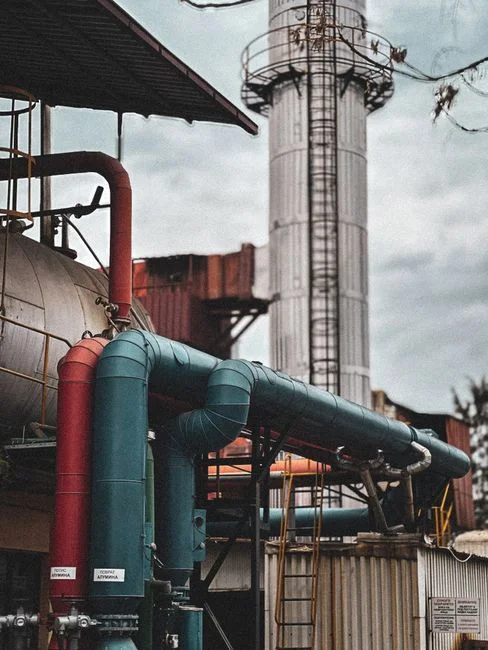
Accurate sizing requires the plant’s hydraulic and contaminant load basis. The supplied research supports application-specific selection but does not provide a universal DAF-to-clarifier sizing rule for Conroe food and beverage facilities.
| Required input | Why the buyer needs it |
|---|---|
| Peak, average and minimum hourly flow for each candidate stream | Establishes hydraulic loading and whether flow equalization or multiple units are required |
| Production, cleaning and upset schedules | Defines when contaminant loading and chemical demand change |
| Wastewater-temperature and pH ranges | Provides operating conditions for equipment and chemical evaluation |
| TSS, FOG or oil-and-grease, BOD and relevant soluble-organic data | Establishes the pollutant load basis and downstream treatment implications |
| Settleability and emulsification observations | Shows whether gravity separation or flotation is technically credible |
| Chemical-conditioning trials | Identifies the proposed chemical program and demonstrates resulting separability |
| Expected separated-solids volume and destination | Connects pretreatment selection to sludge handling and disposal |
HydropureWater’s dissolved air flotation catalog covers 4–300 m³/h across 13 standard DAF models. Compare that range with actual peak and average hydraulic demand, but do not treat catalog capacity as proof that a model can handle the site’s solids and FOG load.
For reference, Clearwater states that its COMPACT DAF handles 66 GPM or less on a single skid and larger flows with a modular two-skid arrangement (Clearwater Industries, 2026-04-27). That is a vendor-specific configuration, not a universal sizing rule. Apply it only to the stated configuration after confirming the proposed hydraulic and load basis.
Request a mass-balance calculation showing how design flow and pollutant load translate into tank area, solids capture, chemical demand and residuals. A DAF system proposal and any clarifier proposal should also identify how separated solids leave the unit and how they are prepared for a plate-and-frame filter press or another approved route.
Plan the Full Pretreatment and Sludge Route
The selected separator must connect to a complete treatment route: wastewater sampling, equalization where appropriate, chemical conditioning, DAF or clarification, downstream biological treatment when required, and sludge dewatering or disposal. Evaluating a tank without those boundaries leaves the most consequential performance and operating risks unresolved.
DAF should be treated as physical pretreatment unless the proposed process demonstrates otherwise. The supplied DAF evidence concerns pollutant separation by flotation; it does not establish complete removal of dissolved and biodegradable organics. Where biological treatment is needed, define the clarified-water flow, organic load, nutrients and operating stability expected from the pretreatment unit.
DAF operation produces two distinct residual streams: surface skimmings containing floatable material and bottom solids containing heavier material. A clarifier primarily generates a bottom sludge stream. The plant must have a receiving route for each: storage, dewatering, collection, off-site disposal or another approved method. Specify the expected solids concentration, removal frequency, pump or auger requirements and operational labor.
A membrane bioreactor treatment system may be relevant for biological treatment in an integrated design, but it does not replace the need to size pretreatment around the incoming wastewater. Likewise, filter-press dewatering addresses the separated solids; it does not establish the adequacy of the upstream separator.
Permit and sewer-compliance review remains site-specific. The supplied research does not provide Conroe discharge limits or permit conditions, so the equipment basis must be checked against the applicable authority’s requirements, the proposed biological treatment and any pretreatment performance provisions.
How to Compare Suppliers and Pilot Results
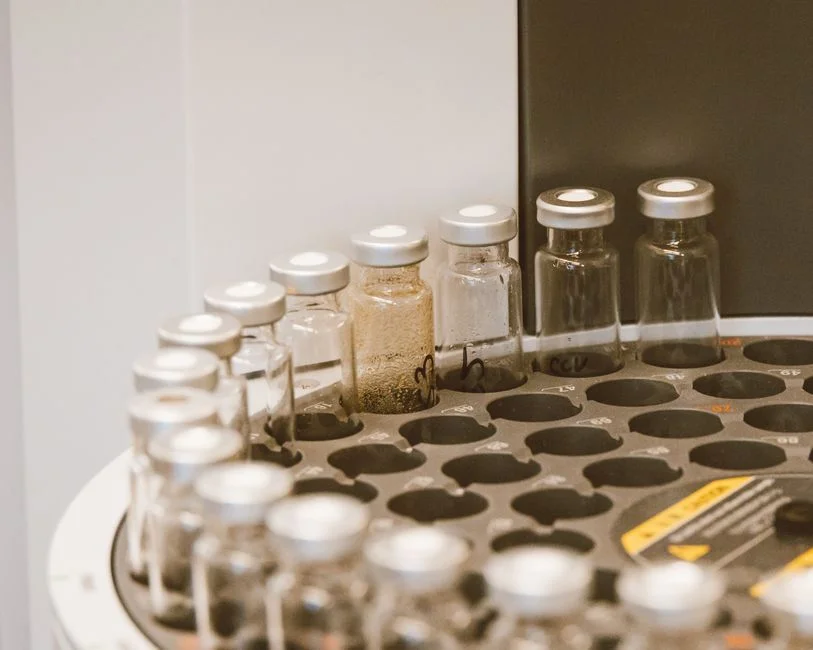
Comparable proposals must use the same wastewater, flow basis and acceptance criteria. Generic food and beverage removal claims do not establish that either equipment type will handle a Conroe plant’s actual product changeovers, cleaning cycles and upset flows.
- Performance basis: Require wastewater-specific evidence based on representative samples. State the inlet characteristics, flow, chemical dose, operating conditions, sampling method and measured outcomes.
- Equipment and controls: Request the design flow, load basis, vessel configuration, materials, instrumentation, PLC controls, skimmer or sludge-collection design, utilities and applicable standards.
- Scope boundary: Identify whether the offer includes equalization, chemical tanks, dosing pumps, mixers, aeration, controls, installation, commissioning, training and sludge discharge equipment.
- Acceptance plan: Define startup, sampling, test duration, production and cleaning fluctuations, remedy for failed tests and responsibilities for each party.
Track record can help screen bidders, but project counts alone do not prove application fit. Clearwater states that its Brown Deer, Wisconsin operation has manufactured equipment and provided wastewater-treatment solutions since 1996. The same source reports that Sigmadaf Clarifiers, established in 1994, has completed more than 800 projects in more than 25 countries (Clearwater Industries, 2026-04-27). Ask each bidder for comparable installations and current contactable references.
For acquisitions or rapid equipment replacement, the same evidence discipline applies. A food and beverage plant wastewater due-diligence guide illustrates why wastewater characterization, treatment continuity and residual handling belong in the technical review rather than appearing only after the commercial price is opened.
Reject proposals that omit the wastewater basis, guarantee performance without test conditions, exclude chemical conditioning from the scope or leave installation and sludge handling undefined. Those omissions make the apparent comparison between DAF and clarifier unreliable.
Frequently Asked Questions
Should a Conroe food or beverage factory choose DAF or a clarifier?
Choose DAF as the starting candidate when free oil, emulsified oil, FOG or floatable fines are central to the treatment problem. Consider a clarifier when the required separation is dominated by solids with reliable settling characteristics. The final decision must also satisfy chemical-conditioning needs, downstream biological-treatment requirements, space, automation and sludge handling. Ecologix’s 2026 food and beverage assessment specifically identifies lighter and emulsified pollutants as a DAF advantage over conventional sedimentation.
What wastewater data does a supplier need to size DAF or a clarifier?
Request peak, average and minimum hourly flow; production, cleaning and upset schedules; wastewater-temperature and pH ranges; TSS, FOG or oil-and-grease, BOD and relevant soluble-organic data; and settleability and emulsification observations. Also provide chemical-conditioning trial results, expected separated-solids volume and the proposed destination for residuals. Without these inputs, a flow-capacity comparison is not a defensible process design.
How should two DAF or clarifier quotations be compared?
Require both suppliers to use the same wastewater characteristics, flow and load basis. Compare the proposed test method, acceptance criteria, vessel and materials schedule, controls, chemical-system scope, installation boundary, utilities, commissioning obligations and sludge route. Do not compare quoted prices unless the scopes are equivalent. Ask each bidder to identify exclusions and explain how a failed acceptance test would be resolved.
Is DAF alone sufficient for permit or sewer compliance?
No assumption of compliance should be made from DAF equipment selection alone. The supplied research establishes physical separation by flotation, not complete biological treatment or a Conroe-specific permit basis. Obtain the applicable permit or sewer requirements and confirm that the complete process—including pretreatment and any downstream biological treatment—meets them.
Is chemical dosing optional for a DAF system?
No. Clearwater states that DAF technology should be paired with proper chemical coagulation and flocculation for optimal performance because conditioning increases particle size and improves microbubble contact (Clearwater Industries, 2026-04-27). A proposal for a dissolved air flotation system should therefore define the chemicals, dose range, mixing arrangement, controls and operating verification. Automatic chemical dosing for wastewater conditioning should be evaluated as part of that complete operating scope.
Related Equipment
- HydropureWater dissolved air flotation system — specifications, capacity range, and technical data