How Turkmenistan’s Textile Industry Shapes Wastewater Projects
Turkmenistan’s textile sector comprises 59 enterprises and employs about 24,000 people, according to Trend.az and Kohan Textile Journal. State-owned factories operate in Dashoguz, Mary, Lebap, Balkan and Ahal, while the value chain extends from ginning and spinning to weaving, dyeing and garment production. This dispersed, production-stage-dependent structure means equipment selection must begin with the mill’s location and actual wet-processing duties, not a country-wide flow assumption.
The distinction matters because spinning and weaving may produce relatively dilute streams dominated by fibers and wash water, while dyeing can introduce color, salts, sizing chemicals and variable batch chemistry. Dry mechanical operations and wet processing cannot share the same design basis without flow and contaminant segregation.
| Project decision | Verified sector fact | Implication for wastewater design |
|---|---|---|
| Sector footprint | 59 enterprises and about 24,000 employees, reported by Trend.az and Kohan Textile Journal | Plan local commissioning, spares and operator support around dispersed production sites. |
| Geographic distribution | State-owned textile enterprises operate in Dashoguz, Mary, Lebap, Balkan and Ahal, according to Trend.az and Kohan Textile Journal | Confirm site remoteness, transport access and service coverage before selecting a supplier. |
| Production chain | Ginning, spinning, weaving, dyeing and garment manufacturing, reported by Trend.az and Kohan Textile Journal | Identify which stages generate flow and whether streams can be segregated. |
| Solid-waste project | The Dashoguz recycling facility processes cotton waste, wool, reeds and cotton stalks at 7,200 tonnes per year, according to Trend.az | Treat this as evidence of circular-economy investment in solid materials, not an ETP or wastewater authorization. |
That 7,200-tonne-per-year facility does not establish wastewater capacity, treatment performance or discharge authorization. Buyers should use the broader sector information to frame logistics and stakeholder requirements, then obtain factory-specific data. The industrial wastewater treatment in Turkmenistan guide provides additional local screening benchmarks, but those figures require site-specific verification.
Characterize the Wastewater Before Choosing Equipment
Textile wastewater cannot be designed reliably from factory name, annual textile output or a single laboratory sample. The buyer needs a production-linked mass balance that captures flow variation, contaminant concentrations and the chemicals actually used.
- Request hourly flow data by production shift, dyeing campaign and cleaning cycle, including peak flow, minimum flow, wastewater retained in tanks and the plant’s recovery capacity.
- Collect representative samples across operating states and test COD, BOD, suspended solids, color, pH, temperature, salinity or TDS, oil and grease, and conductivity.
- Obtain inventories of dyes, sizing agents, bleaching chemicals, salts, surfactants and finishing products, including batch recipes and chemical safety data.
- Review the current industrial effluent permit, sewer or receiving-water conditions, discharge point, intended reuse application and historical compliance records.
The HydropureWater 2026 guide identifies complex synthetic dyes and high COD as concerns for textile wastewater in Ashgabat and Ahal. It does not establish concentrations for an individual mill, so those parameters must come from site sampling rather than regional assumptions.
| Required input | Why it affects equipment selection | Evidence needed before tender |
|---|---|---|
| Production-linked flow | Determines equalization, pumping and biological hydraulic loading | Shift, campaign and cleaning-cycle records plus peak-flow calculations |
| COD and BOD | Indicates biodegradable and refractory organic load | Representative influent and effluent sampling protocol |
| Suspended solids and color | Tests the need for solids removal, DAF and possible polishing | Laboratory results tied to production batches |
| pH and temperature | Affects chemical dosing, biological activity and equipment protection | Continuous trend plus minimum and maximum wastewater values |
| TDS and conductivity | Identifies salinity constraints on biological treatment and reuse | Site-specific results; regional oil-and-gas values are not transferable |
| Dyes and process chemicals | Defines coagulation, oxidation and membrane compatibility requirements | Complete chemical inventory and supplier compatibility review |
| Permit and reuse target | Defines the required endpoint rather than a generic “treated water” specification | Current permit, receiving authority requirements and end-use specification |
If source streams vary substantially, separate equalization or segregated sampling may be preferable to one blended design value. Sampling should also include wastewater retained in dyeing tanks and wash systems because it can create a concentrated discharge after the production campaign ends.
Build a Treatment Train from Influent to Reuse
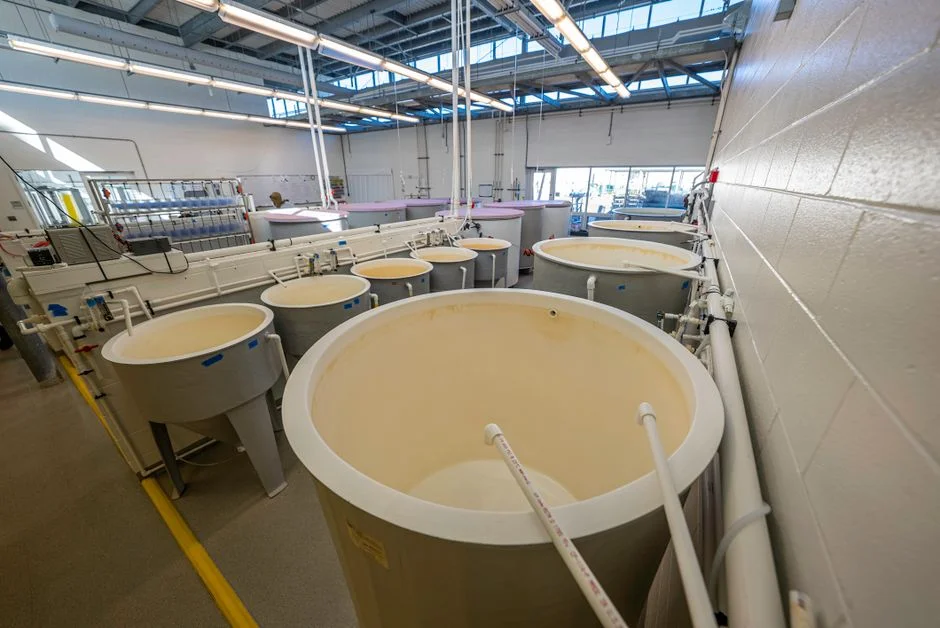
A defensible textile treatment train removes material and contaminants in the order dictated by wastewater chemistry: screen and equalize first, remove floatable and settleable material next, biologically degrade soluble organics, then polish only to the reuse or discharge specification.
- Screen and equalize. Protect downstream pumps from rags, fibers, plastics and fibrous debris. A rotary mechanical bar screen can provide mechanical solids exclusion where such debris is present. Equalization should damp flow, pH and temperature variations, while pH correction and chemical dosing should be controlled rather than left to the biological stage.
- Apply physical-chemical pretreatment. A textile wastewater DAF pretreatment system is applicable for suspended solids, oil and grease, and colloidal material. The HydropureWater 2026 guide identifies DAF as suitable for textile pretreatment and reports it ahead of MBR in the Ashgabat reference case.
- Provide biological treatment and membrane separation where required. An MBR textile wastewater treatment plant combines biological degradation with membrane filtration. HydropureWater’s 2026 catalog describes filtration below 1 μm and a 60% smaller footprint than conventional systems; these are company-reported product claims, not guarantees for every textile duty.
- Add polishing only against a defined specification. Ultrafiltration, reverse osmosis or another barrier may be required for process rinsing, cooling or another reuse application. The chosen process must address the actual feed chemistry and recovery target; membrane filtration alone should not be treated as a universal remedy for excessive dissolved salt.
- Manage separated solids. Route DAF and biological sludge to dewatering. A plate-and-frame filter press must be selected using expected solids volume, cake characteristics, operating cycle and filtrate-return arrangements.
| Stage | Primary function | Design evidence required |
|---|---|---|
| Screening and equalization | Remove fibrous debris and stabilize hydraulic, pH and temperature loads | Peak flow, retained wastewater, debris type and discharge batch sequence |
| DAF pretreatment | Remove suspended, floatable and colloidal material before biological treatment | Solids, oil and grease, coagulation trials and sludge yield |
| MBR | Combine biological COD removal with membrane solids separation | COD, BOD, TDS, temperature, membrane flux and cleaning strategy |
| Advanced polishing | Meet a defined reuse or discharge barrier | End-use quality, feed chemistry, recovery and concentrate disposal |
| Sludge dewatering | Reduce sludge volume before disposal or permitted reuse | Solids production, settleability, cake target and filtrate quality |
The reported 20,000 m³/day Ashgabat textile facility reduced COD from 1,200 mg/L to under 120 mg/L using DAF followed by MBR, according to the HydropureWater 2026 guide. Use this as a reference case, not a design guarantee: influent similarity, operating control, temperature and sampling protocol still determine applicability.
Select Equipment for Turkmenistan’s Climate and Supply Conditions
The HydropureWater 2026 guide reports an ambient range of -20°C to +50°C in Turkmenistan and recommends keeping biological liquor above 15°C during cold conditions. Winterization and summer heat management therefore belong in the base equipment specification, not in a list of optional accessories.
Buyers should require suppliers to document protected or insulated installations, temperature-rated motors, coatings suited to the environment and biological heating or cooling arrangements. Wastewater temperature must be measured at the coldest operating point; ambient ratings alone do not establish biological performance.
| Risk | Procurement requirement | Evidence to request |
|---|---|---|
| Winter temperatures | Insulated tankage, heat tracing or heating, protected controls and suitable biological temperature control | Design temperatures, heat balance and cold-weather operating procedure |
| Summer temperatures | Assess heat load, ventilation, materials and biological-process impacts | Maximum-temperature duty check |
| Remote supply chain | Secure critical spares and define replacement routes | Spares list, lead times, pricing and stocking plan |
| Custom engineering | Link manufacture, shipment and commissioning dates | Project schedule and milestone acceptance criteria |
| Service access | Specify response obligations and local support | Written response times, named technicians and escalation process |
The same guide reports custom-engineered procurement lead times of 6–12 months. Factory acceptance testing, shipment planning, commissioning dates, operator training and local spare-parts availability should therefore be contractual milestones. Specify PLC controls, operator training and support arrangements in the operating language used at the plant. A claimed response time should not be accepted until the remedy, coverage period and exclusions are written into the supply contract.
Plan Compliance, Permitting and Reuse Without Overclaiming
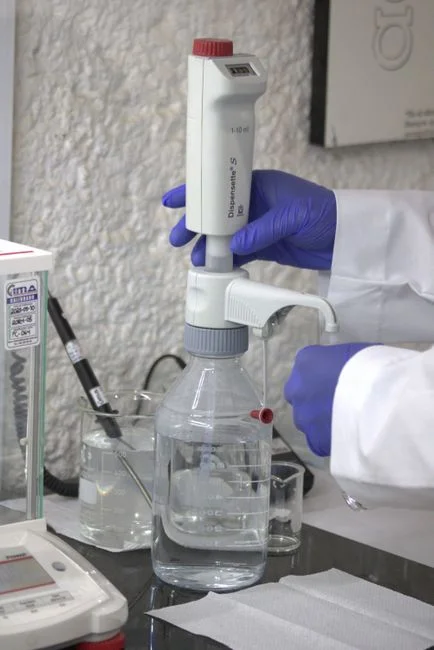
The HydropureWater 2026 guide cites COD ≤120 mg/L and BOD ≤30 mg/L while also stating that requirements vary by receiving body. These are guide benchmarks, not confirmed limits for a specific mill; the current permit and receiving authority must establish the enforceable values.
The guide reports a permitting period of 6–12 months involving an Environmental Impact Assessment, technical specifications and potentially a pilot test for non-standard effluent. Early engagement is important because treatment design, sampling and pilot work can affect the submission sequence.
A performance guarantee should identify the duty flow, influent range, test parameters, sampling protocol, guarantee limit and remedy. COD removal percentage alone is inadequate because a high percentage may still leave concentrations above the discharge or reuse limit.
For reuse, define the receiving process precisely: process rinsing, cooling, washing, irrigation or another application. Each use imposes different quality and operational requirements, including relevant color, dissolved salts, residual chemicals and infrastructure compatibility. Do not assume that the reuse target of one process stage is valid for another.
The guide states permit fees of $5,000 for small plants and $20,000 for large industrial complexes. These are HydropureWater guidance benchmarks dated 2026, not quotations or universal current tariffs. Request the current fee basis, assessment scope and payment schedule from the relevant authority or local environmental consultant before including them in the budget.
Budget for CAPEX, OPEX and Remote Delivery
The HydropureWater 2026 guide provides screening benchmarks, not project prices. It reports CAPEX of $300–$600 per m³ of daily capacity for systems between 10,000 and 50,000 m³/day. For a 10,000 m³/day plant, it separately reports approximately $3.5 million–$5.0 million including DAF and secondary biological treatment; the scope behind each figure must be reconciled before comparison.
| Cost item | Reported benchmark | Buyer check before accepting it |
|---|---|---|
| CAPEX | $300–$600 per m³ of daily capacity for 10,000–50,000 m³/day systems, according to HydropureWater’s 2026 guide | Confirm flow basis, civil works, equipment scope, chemicals, reuse treatment, sludge handling and commissioning. |
| 10,000 m³/day plant | Approximately $3.5 million–$5.0 million including DAF and secondary biological treatment, according to HydropureWater’s 2026 guide | Obtain a line-item quotation and align it with the verified process train. |
| OPEX | $0.80–$1.50/m³ for a 10,000 m³/day plant and $0.80–$2.50/m³ for 10,000–50,000 m³/day plants, according to HydropureWater’s 2026 guide | Request assumptions for power, chemicals, sludge disposal, membrane replacement, labor and service travel. |
| OPEX drivers | Energy at 30–40% and coagulants/flocculants at another 25%, according to HydropureWater’s 2026 guide | Require consumption calculations and unit-price sensitivities rather than accepting a lump sum. |
| Remote logistics | A 10–15% contingency, according to HydropureWater’s 2026 guide | Use as a procurement screening assumption; validate freight, customs, installation and support costs. |
Compare suppliers over the same scope: equipment, foundations and buildings, utilities, chemical storage, commissioning, training, performance testing, warranty response, consumables, membrane or media replacement, sludge disposal and remote service. An apparently lower equipment price can be offset by higher chemical consumption, longer membrane life or expensive replacement-parts logistics.
Use a Supplier and Equipment Decision Framework
A credible supplier should demonstrate an applicable process design, not merely offer a DAF or MBR catalogue. The tender package should contain a wastewater mass balance, process flow diagram, equipment list, duty basis, materials schedule, electrical requirements and site-specific performance guarantee.
Ask for pilot or full-scale evidence using comparable textile wastewater. The reported Ashgabat case used DAF followed by MBR at 20,000 m³/day, but influent similarity, scale-up basis and operating conditions must be demonstrated rather than inferred from the headline COD reduction.
| Evaluation area | Required check | Acceptance action |
|---|---|---|
| Process suitability | Mass balance, flow diagram, equipment list and duty basis | Resolve gaps through design review before commercial comparison. |
| Performance evidence | Pilot or full-scale results for comparable textile wastewater | Verify feed chemistry, operating conditions and sampling method. |
| Climate readiness | Insulation, heat tracing, biological temperature control, protected controls and temperature-rated equipment | Make cold- and hot-weather checks contractual deliverables. |
| Commissioning | FAT and site acceptance testing requirements | Define protocols, acceptance limits, witnesses and remedies. |
| Operations | PLC access, operator training, documentation language and support | Approve a site-specific training and support plan. |
| Commercial risk | Delivery, customs, installation, commissioning, warranty response and local service | Price all lifecycle items in one comparison matrix. |
| Consumables | Membrane or media guarantees, spare-parts pricing and replacement lead time | Tie warranty remedies to documented operating obligations. |
Equipment selection should follow the verified wastewater and reuse requirements. DAF suitability can be compared against a clarifier using site solids, oil, footprint and operating objectives, while membrane options should be checked against feed chemistry and recovery targets. Chemical dosing must be coordinated with the DAF and biological controls; the automatic chemical dosing system should be evaluated as part of the complete process rather than as an isolated accessory.
Frequently Asked Questions
What treatment train is usually suitable for textile wastewater in Turkmenistan?
A screened and equalized flow commonly progresses through DAF pretreatment, biological treatment and polishing where the permit or reuse specification requires it. The final sequence must follow measured COD, BOD, solids, color, pH, TDS, temperature and process-chemical data; spinning, weaving and dyeing streams should not be assumed interchangeable.
How much does a textile wastewater treatment plant cost in Turkmenistan in 2026?
HydropureWater’s 2026 guide reports CAPEX of $300–$600 per m³ of daily capacity for 10,000–50,000 m³/day systems, plus approximately $3.5 million–$5.0 million for a 10,000 m³/day plant including DAF and secondary biological treatment. These are screening benchmarks, not quotations. Request a site-specific price with flow, influent, reuse target, civil scope, utilities and sludge handling stated.
Is DAF plus MBR the right choice for a Turkmenistan textile mill?
DAF plus MBR is a credible option when DAF can remove the relevant solids and floatable contaminants and the wastewater remains biologically treatable. The guide reports an Ashgabat reference case at 20,000 m³/day reducing COD from 1,200 mg/L to under 120 mg/L, but buyers should request comparable pilot or operating evidence and confirm temperature and salinity effects.
How long does equipment procurement and permitting take in Turkmenistan?
HydropureWater’s 2026 guide reports custom-equipment lead times of 6–12 months and a permitting period of 6–12 months. For budgeting, request a milestone schedule that separately identifies engineering, EIA and technical review, pilot work, manufacture, FAT, shipment, installation and commissioning.
What should a buyer request before accepting a discharge performance guarantee?
Require the guarantee to name design flow, influent range, COD and BOD limits, other regulated parameters, sampling points, test methods, operating conditions and remedies for non-compliance. Also confirm the current permit, reuse specification, climate controls and data validation method; a COD removal percentage alone does not establish compliant discharge.
Further Reading
- DAF versus clarifier design comparison
- wastewater disinfection technology comparison