Start with the Seoul site's design basis
For a housing development in Seoul, the best packaged sewage treatment plant is the system that satisfies the confirmed sewer-discharge criteria and site constraints while providing enough hydraulic and biological capacity for the development. The WSZ underground integrated sewage treatment plant combines anoxic/aerobic contact oxidation, sedimentation, and disinfection in one buried unit, with published capacity from 1–80 m³/h. The alternative MBR membrane bioreactor wastewater treatment system uses submerged PVDF membranes and has published capacity from 10–2,000 m³/day. Final selection requires project flow and loading data, land availability, groundwater conditions, pretreatment needs, and written acceptance from the relevant Seoul authority.
A packaged unit is not approvable merely because its published performance range covers the development. The engineer must define the design basis, confirm the approval pathway, and document whether the proposed installation can be constructed and maintained at the site.
- Establish wastewater demand and development phasing. Record average and peak domestic sewage flow, wastewater contributions from communal facilities, organic and hydraulic loading, and the occupancy sequence. Identify the initial and ultimate development phases rather than sizing only for full occupancy.
- Obtain authority requirements in writing. Ask the relevant authority for sewer-entry, discharge, reuse, monitoring, and sampling criteria. The supplied research does not establish a universal Seoul effluent limit for packaged plants, so none should be assumed.
- Map physical constraints. Record underground utilities, soil and groundwater conditions, vehicle access, installation depth, power supply, landscaping, odor setbacks, noise limits, and sampling access.
- Set acceptance criteria. Define how the authority will inspect startup, sample effluent, evaluate treatment performance, and handle non-compliance before equipment selection is finalized.
The UNDP Seoul Policy Centre’s April 9, 2019 case study describes Korea’s sewage framework as a combination of technology, policy, and financing. Equipment selection therefore extends beyond the treatment vessel: financing, approval, service arrangements, and stakeholder requirements must be reflected in the development case.
Odor, hygiene, and neighborhood-property concerns also belong in the early design basis. A 2020 peer-reviewed study, Upgrading Sewage Treatment Plants, identifies these concerns as sources of social conflict between local government and residents in South Korea.
| Design input | Information required before shortlisting | Decision affected |
|---|---|---|
| Wastewater flow and loading | Average flow, peak-hour flow, organic loading, communal-facility contribution, and development phasing | Process capacity and unit arrangement |
| Authority criteria | Written sewer-entry, discharge, reuse, monitoring, and sampling requirements | Approveability and guaranteed performance |
| Site and installation | Utilities, soil, groundwater, access, excavation depth, power, landscaping, noise, and odor constraints | WSZ or MBR suitability, civil scope, and footprint |
| Operations and acceptance | Maintenance access, solids removal, controls, alarms, commissioning evidence, and operating plan | Long-term reliability and contract scope |
Match wastewater flow and loading to plant capacity
A capacity comparison is meaningful only when average, peak, and daily flows are expressed on the same basis. The supplied product literature publishes WSZ capacity in m³/h and MBR capacity in m³/day, so the preliminary comparison must reconcile those units before selecting either architecture.
Begin with the design horizon and phased occupancy. Determine the wastewater flow and loading for the initial development, intermediate stages, and ultimate condition. Calculate the required daily flow, peak-hour flow, and organic loading from confirmed project data. Confirm whether the authority expects capacity to be demonstrated against average flow, peak flow, or another specified basis.
For screening purposes, the published WSZ range is 1–80 m³/h, while the published MBR range is 10–2,000 m³/day, according to the supplied HydropureWater product literature. These figures establish catalog ranges, not the required size for a Seoul housing project. Do not select a unit solely because the estimated development demand falls somewhere within either range.
The source material does not establish per-capita sewage generation for the proposed development or a universal Seoul unit-sizing rule. Those inputs must come from the project’s wastewater calculations and authority requirements. If occupancy assumptions remain uncertain, present the equipment screen against agreed demand scenarios rather than hiding the uncertainty inside a single capacity figure.
Hydraulic capacity is only one part of the screen. Confirm that the proposed process can accommodate the expected organic loading and wastewater characteristics. For a residential development, the engineer should examine whether the incoming stream may contain fats, oils, grease, hair, plastics, fibrous debris, or other solids that could overload pumps, restrict aeration equipment, foul biological media, or damage membranes.
Use the packaged sewage treatment options for housing developments and the domestic sewage treatment equipment guide as secondary comparison references. They do not replace a Seoul-specific design basis.
- Daily demand: establish the sewage contribution from housing and communal facilities over the selected design horizon.
- Peak demand: identify coincident peaks and determine whether the authority requires a peak-hour capacity check.
- Organic loading: document the basis and load to be treated by the selected process.
- Solids protection: identify upstream solids and the required inlet protection.
- Phasing: confirm that initial and ultimate demand can be served without excessive oversizing.
Compare WSZ and MBR for housing developments
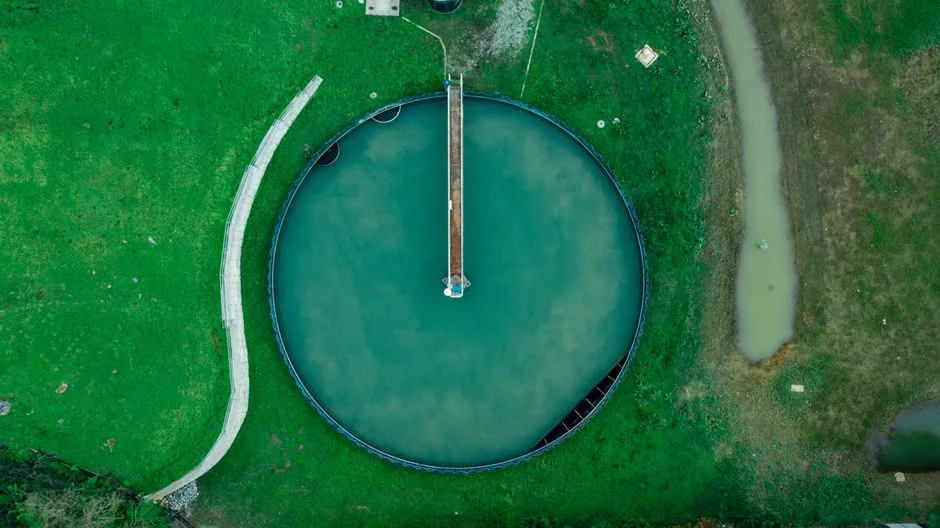
WSZ and MBR are not interchangeable products, and the better choice depends on the confirmed treatment objective, available footprint, installation method, and operating commitment. WSZ combines anoxic/aerobic biological contact oxidation, sedimentation, and disinfection in one buried package; the supplied catalog states that no operator is required. MBR combines activated sludge treatment with submerged PVDF membrane filtration and is stated to provide filtration below 1 μm.
WSZ is relevant where surface treatment-plant space is limited. It can be installed below grade with landscaping above or mounted on a trailer for mobile deployment. Its integrated biological train may simplify the civil arrangement, but buried installation still requires access for inspection, sludge removal, electrical work, and maintenance.
MBR is relevant where the treatment objective includes higher-quality separation or reuse potential and the available surface footprint is constrained. The supplied HydropureWater literature states that the MBR system has a 60% smaller footprint than conventional systems and is suitable for municipal sewage, industrial process water, and water-reuse projects. Treat that as a manufacturer specification to be checked against the selected model, not as a site-specific guarantee.
The footprint comparison must include auxiliary equipment, membrane handling, aeration and pumping arrangements, controls, maintenance access, and residual solids management. A membrane system may require more service provision than its compact treatment footprint suggests.
| Selection issue | WSZ underground integrated package | MBR membrane bioreactor system |
|---|---|---|
| Published capacity | 1–80 m³/h | 10–2,000 m³/day |
| Process configuration | Anoxic/aerobic contact oxidation, sedimentation, and disinfection | Activated sludge with submerged PVDF membrane filtration |
| Stated filtration characteristic | No membrane-filtration figure supplied in the source material | Filtration below 1 μm |
| Installation relevance | Buried installation with landscaping above or trailer-mounted deployment | Surface equipment arrangement requiring model-specific footprint verification |
| Manufacturer-stated space position | Buried configuration reduces dependence on visible treatment-plant space | 60% smaller footprint than conventional systems |
| Primary buyer check | Confirm excavation, groundwater, access, odor, and maintenance requirements | Confirm membrane separation requirement, auxiliary equipment, maintenance access, and site footprint |
Apply an explicit decision rule. If the priority is a compact, buried integrated treatment train and the written treatment objective supports that process, investigate WSZ. If the confirmed discharge or reuse objective justifies membrane separation and the operating organization can support membrane maintenance, investigate MBR. If neither architecture satisfies the authority requirements, revise the treatment concept rather than treating the package as a substitute for consent.
The published ranges also differ from the catalog statements about area. Capacity, footprint, and process performance are separate checks: a unit may fit geometrically but lack hydraulic capacity, or meet the hydraulic requirement while failing the confirmed separation objective.
Plan pretreatment, utilities, and controls
A treatment package will be unreliable if its upstream and utility interfaces remain undefined. The procurement scope should identify how wastewater reaches the unit, how it is protected, how power and controls are supplied, and how residuals leave the site.
- Protect the process. Provide appropriate inlet screening for rags, plastics, fibrous debris, and other solids before they reach pumps, valves, aeration equipment, membranes, or biological media. A GX rotary mechanical bar screen can be evaluated where its documented duty matches the project stream and installation conditions.
- Assess equalization need. Determine whether variable residential flow, wet-weather inflow, laundry-day peaks, or phased development requires equalization before the biological stage.
- Define utilities and controls. Confirm power supply, standby-power strategy, control-panel location, telemetry, alarms, and remote-monitoring requirements with the design authority and operating team.
- Set monitoring and residual-management provisions. Identify treated-effluent sampling points and specify how solids will be separated, stored, and removed from the site.
The catalog statement that WSZ requires no operator does not mean no maintenance. Routine inspections, biological-process control, media or membrane maintenance, sludge handling, and consumable replacement still require a written operating plan. For MBR, establish access for membrane inspection, cleaning, replacement, and associated testing before the equipment footprint is accepted.
Controls should also define abnormal conditions: high level, loss of power, pump or blower failure, high turbidity, process alarm, and communications loss. The supplier should explain the response sequence and identify which events require attendance or manual intervention.
Keep civil and mechanical boundaries explicit. Confirm whether the package includes inlet and outlet works, internal process equipment, local controls, electrical supply, odor-control provisions, sludge handling, sampling, commissioning, and operator training. Otherwise, a technically suitable vessel can still arrive with unresolved interfaces.
Address installation and neighborhood acceptance
A Seoul housing project must treat constructability and neighborhood acceptance as engineering constraints, not as matters to settle after installation. A buried package still depends on excavation access, lifting or modular installation requirements, groundwater management, and coordination with underground utilities and the development schedule.
Evaluate odor control, noise, access, fencing, landscaping, and screening at concept stage. Confirm the required installation depth and whether the selected arrangement leaves adequate space for lifting, inspection, sludge removal, and repairs. If the plant must be buried beneath landscaping, verify that these functions remain possible after completion.
The 2020 peer-reviewed study, Upgrading Sewage Treatment Plants, provides direct evidence that social acceptability can affect implementation in South Korea. Residents raised concerns about odor, hygiene, and neighboring house prices, and the study reported conflicts between local government and residents.
The same study reported that Korean households were, on average, willing to pay 36,340 KRW (33.25 USD) per year for sewage-treatment-plant upgrades and that about 47.73% of project costs can be covered by the resulting social benefits. These are study findings about upgrades and stated preferences, not a valuation or funding commitment for a specific Seoul development. They nevertheless show that perceived effects can enter the project case and should not be dismissed as purely communications work.
Use stakeholder engagement and transparent performance monitoring as part of the approval and acceptance strategy. Provide residents and the relevant authority with an understandable explanation of odor control, noise management, sampling locations, operating responsibilities, and corrective-action procedures. This creates a traceable basis for handling complaints and verifying performance once the plant enters service.
Build the procurement and acceptance checklist
Send suppliers one structured inquiry that requires comparable technical responses. Catalog literature can support screening, but the purchase should remain conditional on project-specific design, written authority acceptance, and confirmation of site conditions.
- Design basis: State the design horizon, average and peak flow, organic loading, wastewater characteristics, development phasing, and required treatment objectives.
- Equipment proposal: Identify the proposed model, process train, published or guaranteed capacity, dimensions, treatment-performance guarantee, applicable test method, and deviations from catalog data.
- Civil and installation interfaces: Request excavation and installation requirements, utility conflicts, groundwater assumptions, power demand, control-panel location, commissioning sequence, and the required construction schedule.
- Operations: Ask for maintenance access, routine tasks, media or membrane replacement, sludge removal, spare parts, training, remote alarms, fail-safe behavior, and warranty support.
- Acceptance evidence: Request startup procedures, effluent-sampling provisions, odor- and noise-control measures, solids-removal arrangements, and a clear route for resolving non-compliance.
Use the WSZ underground integrated sewage treatment plant literature and the MBR membrane bioreactor wastewater treatment system literature as the starting technical basis. Add the approved design calculations, authority correspondence, site survey, civil drawings, control narrative, commissioning plan, and signed performance specification before issuing an order.
A technically defensible shortlist should distinguish confirmed project facts from manufacturer statements. For example, “authority-approved discharge criterion” is a project fact; “filtration below 1 μm” is a catalog claim requiring model-specific verification. Requiring every bidder to answer the same checklist prevents an attractive published specification from outranking a compliant, installable solution.
Frequently Asked Questions
How should WSZ capacity be sized for a Seoul housing development?
Size WSZ from confirmed average and peak sewage flows, organic loading, and development phasing. Its published range is 1–80 m³/h; compare that with the MBR’s published 10–2,000 m³/day range only after converting both to the same flow and duty basis. No unit size can be assigned from the supplied research alone because project-specific flow and loading data are missing.
When is MBR preferable to WSZ for a housing site?
Investigate MBR when the written treatment objective, reuse requirement, or verified footprint constraint justifies membrane separation. Investigate WSZ when a buried integrated treatment train and limited surface area are the priorities. The decision must also cover the confirmed discharge criteria, installation method, maintenance capability, and site utilities.
What cost should a buyer budget for a packaged sewage treatment plant in Seoul?
The supplied research contains no Seoul packaged-plant pricing, so it does not support a defensible capital-cost range. Request a site-specific quotation separating equipment, civil work, installation, commissioning, controls, utilities, pretreatment, solids handling, and O&M. A supplier should state exclusions and assumptions so alternatives can be compared consistently.
How should a supplier be selected without creating compliance or delivery risk?
Select against confirmed design flow, guaranteed treatment performance, process suitability, written authority acceptance, installation evidence for comparable duties, and a documented service package. Before ordering, obtain the discharge requirements and approval pathway in writing, then confirm site conditions, utility interfaces, delivery sequence, commissioning responsibilities, and warranty support.