Determine Which Wastewater Obligations Transfer with the Plant
Heineken’s acquisition does not determine the wastewater obligations by itself; the acquired site’s permits, outlets, treatment assets, receiving route and post-closing production plan do. The transaction team must determine whether each authorization continues after the change of control or requires notification, amendment, transfer or re-issuance. The supplied research contains no Heineken-specific Vietnam permit, sewer agreement or regulator correspondence, so a site-specific legal and technical audit is required before closing. The approach follows the Vietnam beverage-plant acquisition wastewater guide rather than assuming a universal approval process.
Create a permit-identity record for every authorization. It should identify the issuing authority, permit number, legal holder, effective dates, approved process and capacity, discharge point, receiving medium, monitoring conditions, reporting deadlines, renewal status and complete amendment history. Then obtain the authority’s written direction on the post-closing route: continuation, notification, amendment, transfer or re-issuance. A seller’s assurance is not confirmation, and an unchanged treatment system does not create or preserve a discharge right.
Identify the competent provincial authority and confirm the current legal procedure. HydropureWater’s Equinix acquisition research reports that the Ministry of Natural Resources and Environment merged with the Ministry of Agriculture and Rural Development on 2025-03-01 to form the Ministry of Agriculture and Environment. That institutional change does not determine the permit outcome for this brewery; the acquiring team must confirm the applicable provincial process.
| Permit record | Evidence to obtain | Closing consequence if unresolved |
|---|---|---|
| Legal holder and authorized activity | Signed permit, amendments and competent authority’s written confirmation | No established lawful basis for post-closing discharge |
| Approved process, capacity and outlet | Original approval, design basis and discharge-point description | Installed treatment may be mistaken for approved treatment |
| Monitoring and reporting | Conditions, methods, deadlines and compliance records | Operating obligations and historical liabilities remain unclear |
| Environmental assessment | Project documentation and authority correspondence | Unresolved assessment or amendment requirement |
Map Every Brewery Wastewater Outlet to Its Legal Route
Each brewery outlet must be mapped to its own legal and technical evidence because one permit or sewer connection does not necessarily authorize every discharge path. The six stream categories identified in HydropureWater’s 2026 UMC acquisition research are industrial process wastewater, cooling or blowdown, rinse and cleaning streams, stormwater, sanitary sewage and reuse streams. For each, record the source, flow, contaminant profile, final receiving body, physical connection, legal authorization and operational owner.
Reconcile every document to the outlet it actually governs: environmental-impact-assessment status, the industrial wastewater discharge permit, wastewater discharge authorization and any industrial-sewer pretreatment agreement. An industrial-sewer pretreatment agreement cannot support a separate direct-discharge claim. A stormwater authorization cannot be inferred from a process-wastewater permit, and a process permit does not necessarily cover sanitary sewage.
Classify each route as direct environmental discharge, connection to an industrial sewer or central wastewater-treatment system, another authorized treatment route or internal reuse. Physical continuity does not align the permit holder, land rights, tenancy, sewer agreement and wastewater service contract automatically. The Hanoi industrial effluent treatment guide provides broader site context, but the acquired plant’s own instruments must control.
| Outlet | Required mapping | Do not assume |
|---|---|---|
| Brewery process wastewater | Source, measured flow, contaminants, treatment step, outlet and authorization | A sewer agreement authorizes direct discharge |
| Cooling and blowdown | Separate source, discharge route, reuse potential and receiving-system conditions | It follows the brewing process route |
| Rinse and cleaning wastewater | Chemical inputs, segregated treatment, sampled profile and destination | It can enter the process system unchanged |
| Stormwater | Source, drainage connection, quality controls and separate authorization | The process-wastewater permit covers it |
| Sanitary sewage | Separate sewer connection, contract and treatment route | Industrial treatment handles it |
| Reuse stream | Treatment objective, end use, quality controls and authorization | Internal reuse needs no environmental condition |
Verify Sewer Acceptance and Reserved Capacity
Receiving-system acceptance is a separate approval from the plant’s own treatment capacity. Request a written industrial-park or sewer agreement covering connection rights, reserved or contracted capacity, accepted wastes, prohibited discharges, pretreatment interfaces, sampling access and the consequences of increased industrial flow. HydropureWater’s 2026 Equinix acquisition research treats this written acceptance as necessary because an assumed industrial-zone connection leaves both legal continuity and operational capacity unresolved.
Build one reconciliation across four sets of evidence: the installed treatment system, the capacity approved in the permit, current average and peak flows with the Heineken post-closing production forecast, and the receiving operator’s contractual allocation. Installed capacity does not prove approved capacity, and either can differ from reserved sewer capacity. The relevant pretreatment-limit guide for industrial plants illustrates why pretreatment interfaces must be tested at the receiving-system boundary.
Require evidence of reserved capacity for every applicable route. Identify who bears the cost of added capacity, pretreatment upgrades or network reinforcement, and whether the receiving operator must approve a capacity increase before production changes. If either party cannot provide written confirmation, record the issue as a closing condition or obtain a technically supportable alternative that has its own lawful authorization.
Characterize Brewery Wastewater Stream by Stream
Treatment selection must begin with measured brewery wastewater, not a facility-wide average or a supplier’s rated flow. Collect representative current and peak-flow data and characterize each relevant stream. The supplied research provides no Heineken plant data and no applicable site-specific numerical discharge limits, so the buyer must obtain representative samples, the permit, current Vietnamese legal text and receiving-system rules before defining performance objectives.
Reconcile the results with production volumes, chemical use, bypass and upset history, sludge production and the condition of standby equipment. A concentrated rinse or cleaning flow may control treatment even when it is small relative to total discharge. For sanitary sewage, verify whether a separate sewer route applies rather than assuming coverage by the industrial process-wastewater treatment plant.
Set each treatment objective from verified evidence: the plant permit, relevant sector requirements, current law and the receiving system’s rules. Generic limits do not establish the site requirement. Historical monitoring should also be defensible: obtain the approved sampling plan, laboratory scope, calibration records, chain-of-custody documents, results, notices of non-compliance and corrective actions. Results without a traceable quality-assurance record are not sufficient closure evidence.
Match the Treatment Train to the Permit and Production Plan
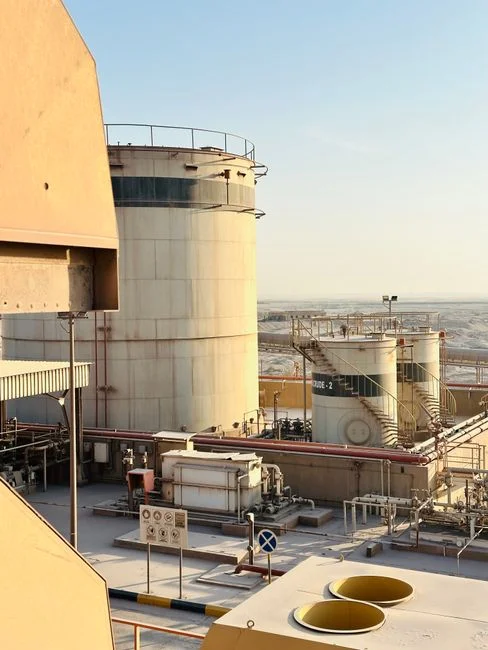
Equipment selection follows measured treatment duty, verified compliance objectives and the post-closing production plan. A DAF system for industrial wastewater pretreatment merits review when representative wastewater and the verified duty require removal of suspended solids, oil and grease, FOG or colloidal matter before another treatment or discharge step. HydropureWater’s DAF catalog states a range of 4–300 m³/h across 13 standard models; that is a product boundary, not evidence of site suitability.
An integrated MBR wastewater treatment system merits review when the verified objective requires biological treatment combined with membrane separation, higher-quality effluent or reuse. HydropureWater’s integrated MBR catalog states a range of 10–2,000 m³/day. Representativeness, permit fit and receiving-system acceptance remain prerequisites; catalog capacity does not establish compliance.
Evaluate sludge dewatering when the treatment objective and residual route require it. HydropureWater’s plate-and-frame filter-press catalog states filtration areas from 1–500 m², but selection must be checked against actual sludge characteristics, installation constraints and local service capability. Confirm the disposal route as well as the dewatering equipment.
| Selection input | Required evidence | Decision consequence |
|---|---|---|
| Treatment duty | Representative stream-by-stream wastewater data | Defines whether DAF, MBR, dewatering or another step is relevant |
| Verified target | Permit, current law and receiving-system rules | Prevents generic limits becoming false compliance criteria |
| Capacity basis | Current and peak flows reconciled with the post-closing forecast | Prevents sizing on installed or catalog flow alone |
| Residuals and site | Sludge route, footprint, utilities and installation constraints | Determines whether the proposed train is operable |
| Delivery risk | Local commissioning, training, spares, service and guarantee-test plan | Converts equipment selection into an executable acceptance plan |
Convert Wastewater Findings into Closing Conditions
Every material wastewater finding should have one named owner, required closure evidence, transaction status and closure date. The Equinix transaction analysis in HydropureWater’s 2026 research identifies permit status and environmental liability as closing issues, not post-closing integration items. Use regulator or receiving-operator written confirmation wherever legal continuity or discharge acceptance is affected.
Define objective tests for unresolved matters. These may include a corrected permit holder, reissued authorization, written sewer acceptance, contracted capacity, representative wastewater testing, a signed performance test, an acceptable laboratory quality-control chain or a verified sludge-disposal route. The same finding can require several forms of evidence: for example, a signed permit plus confirmation that its approved capacity matches both treatment performance and reserved sewer capacity.
Do not close if the lawful post-closing basis remains unresolved, historical contamination or remediation costs are unallocated, the receiving route is undocumented or the treatment train cannot demonstrate required performance. The Vietnam plant-acquisition compliance guide provides a comparable transaction structure, while the Equinix Vietnam wastewater acquisition analysis explains why site evidence must control.
| Finding | Closure evidence | Owner | Transaction status |
|---|---|---|---|
| Permit continuity | Authority confirmation and corrected or reissued instrument | Legal/EHS | Condition precedent or allocated remediation |
| Receiving capacity | Signed agreement and reserved-capacity confirmation | Operations/procurement | Price, covenant or closing condition |
| Treatment performance | Representative test and signed performance report | Engineering | Capital scope and acceptance plan |
| Monitoring defensibility | Sampling, calibration and laboratory quality records | EHS/laboratory | Remediation and liability allocation |
| Sludge and residuals | Verified disposal route and contracted arrangements | Operations | Condition or cost allocation |
Do not infer an acquisition price or compliance cost from national infrastructure statistics or equipment catalogs. Request a plant-specific audit separating advisory and permitting work, immediate remediation, equipment capital expenditure, commissioning, recurring operation, laboratory and service costs.
Integrate Wastewater Operations After Closing
Diligence does not guarantee regulator approval, so closing should create a controlled operating baseline. Within 30 days, confirm operating procedures, sampling responsibilities, calibration status, chemical suppliers, emergency contacts and the reconciled post-closing baseline record. Reconcile that record with the permit, approved process, receiving agreement and pre-closing history.
Within 60 days, conduct a documented wastewater-train performance and compliance test. Verify hydraulic and contaminant mass balances, review bypass and upset events, and close equipment or laboratory gaps. Within 90 days, finalize preventive maintenance, sludge-disposal, chemical-safety, training, spare-parts and contractor-support plans. Assign named owners and retain approval evidence for each plan.
| Period after closing | Required action | Evidence retained |
|---|---|---|
| Within 30 days | Confirm procedures, monitoring, chemicals, contacts and reconciled baseline | Approved records and baseline operating file |
| Within 60 days | Test wastewater-train performance and compliance | Signed report, mass balances and corrective-action log |
| Within 90 days | Finalize maintenance, sludge, safety, training and service plans | Approved plans with owners and support evidence |
Escalate ownership changes, permit-condition changes, capacity changes, discharge-route changes or treatment-process changes for separate confirmation even when the physical system has not changed.
Frequently Asked Questions
Does Heineken’s acquisition automatically create a new wastewater permit?
No universal answer is supported. The outcome depends on the permit’s terms, the transaction structure and the competent authority’s written direction. Obtain confirmation whether continuation, notification, amendment, transfer or re-issuance is required.
What evidence should be obtained before closing?
Obtain the signed permit and amendment history, regulator confirmation, sewer or industrial-park agreement, receiving-capacity confirmation, monitoring records and a documented reconciliation of installed, approved and post-closing treatment capacity.
How should treatment equipment be sized for the acquired brewery?
Use representative stream-by-stream wastewater data, current and forecast flows, verified permit and receiving-system objectives, treatment duty, available footprint and residual-management needs. Catalog capacity alone is not a sizing result.
How much should the buyer budget for wastewater compliance?
The supplied research provides no Heineken-specific cost. Request a plant-specific estimate separating permitting, remediation, equipment, commissioning, laboratory, recurring operation and service costs.
Which supplier capabilities reduce implementation risk?
Require comparable industrial references, local commissioning and service, operator training, spares availability, transparent guarantee tests and a complete list of permit, receiving-system and site assumptions. This check should be completed alongside the brewery acquisition wastewater requirements, not after commercial selection.
Related Equipment
- DAF system for industrial wastewater pretreatment — specifications, capacity range, and technical data