What IFAS Means for Fruit Juice Wastewater
IFAS can treat fruit juice processing wastewater in the biological stage because the tested stream had a BOD5/COD ratio of 0.66, indicating good biodegradability, and aerobic reactors achieved COD removal above 90% in most cases (Treatment of concentrated fruit juice wastewater by the combined aerobic biological and chemical coagulation/flocculation process, 2012). IFAS adds fixed or free-floating media to activated sludge, encouraging attached biomass growth and increasing treatment capacity within the same basin volume. It does not replace screening, solids separation, equalization, or pH control.
For a new plant, IFAS should sit after characterization, suitable screening, upstream solids removal, equalization, and any required pH or alkalinity adjustment. The integrated fixed-film activated sludge and MBR equipment options should therefore be assessed as part of a treatment train rather than as stand-alone biological plants.
The evidence has defined boundaries. The 2012 academic study examined aerobic biological treatment combined with chemical coagulation/flocculation for concentrated fruit juice wastewater; it did not test an IFAS basin. Hazen and Sawyer’s full-scale IFAS demonstration examined process mechanics and nitrification at a municipal wastewater facility, not fruit juice wastewater. Its results therefore support design principles for mixing, aeration, media retention, and solids screening, but they cannot establish a universal removal rate for every juice-processing operation.
Why Fruit Juice Wastewater Can Challenge Biological Treatment
High soluble COD can make fruit juice wastewater biologically favorable while still producing unstable biological loading. Washing, fruit processing, pulp carryover, sugar-rich production streams, and cleaning operations can alter flow, suspended solids, and organic composition between production campaigns. The relevant question is not simply whether COD is biodegradable; it is whether the selected reactor can absorb the plant’s batch peaks, solids excursions, pH changes, and cleaning-water dilution.
The 2012 academic study provides a useful quantitative baseline. Its concentrated fruit juice wastewater had a BOD5/COD ratio of 0.66, and aerobic biological treatment achieved COD removal above 90% in most tested reactors. The best results occurred in reactors initially containing 2 g VSS/L of biomass and 20 g COD/L of organic matter. More importantly, the Haldane-inhibition model fitted COD biodegradation better than the Monod or Contois models. That result warns engineers not to extrapolate removal performance from dilute or low-strength conditions to concentrated wastewater without testing concentration effects.
Anaerobic recovery should not be selected from carbohydrate content alone. A 2026 Springer research article on co-digesting fruit juice processing wastewater with primary sludge states that the stream’s high C:N ratio, low buffering capacity, nutrient imbalance, and lack of trace elements can accelerate acidification and VFA accumulation. It reports a full-scale Italian example receiving 500–3,500 m³/day of fruit juice processing wastewater, with that industrial contribution representing roughly 50% of the municipal plant’s daily flow. The pretreatment included filtration, homogenization, and acidification before anaerobic reactors. For process selection, monitor pH, alkalinity, VFA, and nutrient availability rather than assuming that readily biodegradable COD guarantees stable anaerobic digestion.
Request the following project dataset before sizing:
- Average and peak flow, including production and cleaning cycles.
- COD and BOD5, with sampling tied to operating batches.
- pH, alkalinity, suspended solids, and the fruit or pulp fraction.
- Nitrogen, phosphorus, trace nutrients, temperature, and the batch-to-batch profile.
Use the supplied MABR design for vegetable processing wastewater to compare biological configurations, while treating it as an adjacent food-processing application rather than direct proof for juice wastewater. The Fenton oxidation guide can help identify when advanced oxidation is being proposed, but it does not replace biological characterization.
Build the Treatment Train Before Selecting IFAS
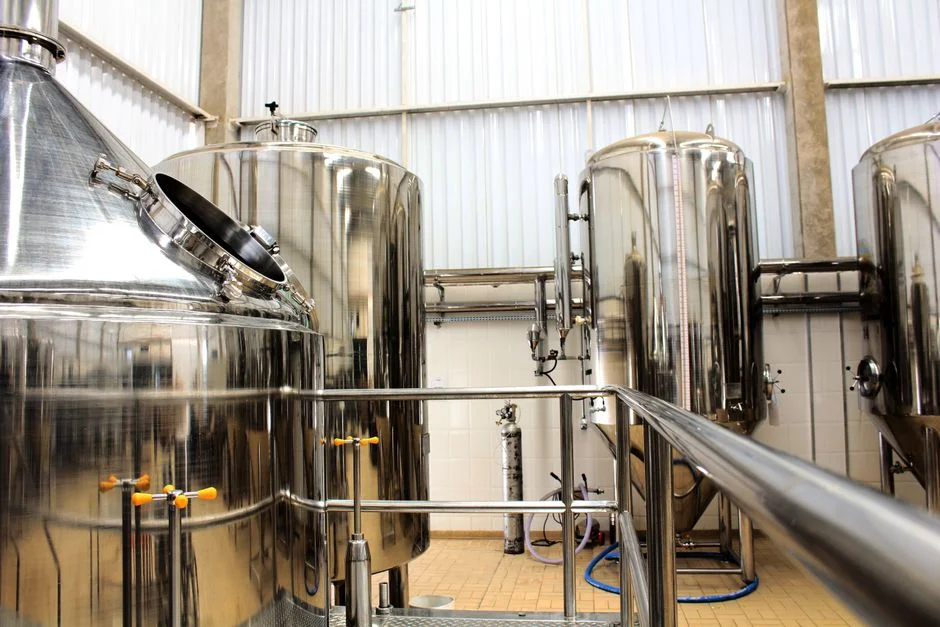
The practical process sequence is screening and equalization, pH or alkalinity control where required, solids separation, IFAS biological treatment, secondary clarification, and polishing or disinfection where the reuse or discharge specification requires it. This sequence addresses two distinct problems: protecting the biological reactor from gross solids and providing a reliable solids-separation step after biological treatment.
- Screening and equalization: remove fruit pieces, pulp, packaging debris, and other material before it reaches media, aerators, pumps, or clarifiers.
- pH or alkalinity control: stabilize the wastewater entering biological treatment where the batch data show unsuitable pH or limited buffering.
- DAF pretreatment: remove suspended solids, oil and grease, and colloidal material where those fractions impair biological treatment or clarification.
- IFAS treatment: provide aerobic attached-growth capacity within the activated-sludge basin.
- Secondary clarification: separate biological solids and retained media.
- Polishing: apply filtration or disinfection if required by the reuse or discharge specification.
A DAF system for fruit juice wastewater pretreatment is therefore an upstream component, not part of the IFAS basin itself. Chemical clarification can also be justified by site-specific testing. In the 2012 study, ferric chloride at 0.44 g/L and pH 5.5 achieved 94.4% turbidity removal and 99.6% COD removal in the tested coagulation/flocculation stage. Those results apply to that wastewater and research condition; they are not a universal plant prescription.
An automatic coagulant and pH dosing system should be evaluated for proportional feed, mixing, standby capability, and control response to batch changes. Downstream, a high-efficiency sedimentation tank can support solids separation and sludge recirculation, subject to site-specific hydraulic and solids-loading checks.
| Train stage | Primary design question | Evidence to obtain |
|---|---|---|
| Screening and equalization | Can the front end remove debris and smooth batch peaks? | Screen performance, bypass risk, flow profile, pulp fraction |
| pH or alkalinity control | Is biological loading stable across production and cleaning? | pH, alkalinity, dose-response, batch data |
| DAF pretreatment | Will suspended, colloidal, oil, and grease fractions overload the reactor? | COD, TSS, turbidity, FOG, solids-loading tests |
| IFAS biological stage | Can attached and suspended biomass meet the treatment objective? | Biodegradability, kinetics, SRT, temperature, DO, pilot response |
| Secondary clarification and polishing | Can solids be separated reliably to the required specification? | Hydraulics, solids inventory, sludge rheology, effluent or reuse tests |
IFAS Design Parameters That Must Be Verified
IFAS sizing must combine a site-specific mass balance with verified media, aeration, and mixing performance. Hazen and Sawyer’s one-year municipal demonstration used K3 media at a 35% fill fraction and generally maintained attached biomass of 5–15 g TSS/m². It achieved nitrification in less than 50% of the aerobic volume required by a conventional system, with fixed-film biomass representing up to 50% of total biomass. Nitrification occurred near 15 °C at a total aerobic SRT of approximately 5.5 days, while suspended-phase DO was typically 3–4 mg/L in nitrification systems.
Those values are reference points for a municipal demonstration, not defaults for a juice plant. The 2012 fruit juice study fitted aerobic kinetics of K(s) 6–20 g COD/L, v(max) 2.0–5.1 g COD/g VSS/day, K(i) 0.10–0.50 g COD/L, maximum removal rates of 0.11–0.26 g COD/g VSS/day, and S* of 0.77–3.16 g COD/L. These parameters provide a basis for pilot planning, but concentration, temperature, inhibition, and the intended treatment objective must still be verified against the actual wastewater.
Aeration must satisfy oxygen transfer, aerobic biofilm activity, and biofilm sloughing. Mixing must also keep free-floating media uniformly distributed. The fine bubble diffuser versus surface aerator comparison is useful for understanding the oxygen-transfer comparison, but the final choice must include media motion, foam response, and basin geometry.
| Parameter | Supplied evidence | Engineering treatment |
|---|---|---|
| Media fill and attached biomass | 35% K3 fill fraction; generally 5–15 g TSS/m² in the municipal demonstration (Hazen and Sawyer, IFAS demonstration article) | Use as pilot and vendor-review reference points, not universal defaults |
| Aerobic volume and biomass split | Nitrification in less than 50% of the conventional aerobic volume; fixed-film biomass up to 50% of total biomass (Hazen and Sawyer) | Do not transfer the municipal result directly to fruit juice COD loading |
| Temperature, SRT, and DO | Nitrification near 15 °C at approximately 5.5-day total aerobic SRT; suspended-phase DO typically 3–4 mg/L (Hazen and Sawyer) | Confirm nitrogen-removal need and pilot DO response |
| Aerobic kinetics | K(s), v(max), K(i), v*, and S* ranges from the 2012 fruit juice study | Fit to plant wastewater and batch concentration ranges |
If the permit requires nitrogen removal, verify that requirement separately. Hazen and Sawyer’s DO and SRT observations were specifically associated with nitrification; they are not universal fruit juice COD-removal requirements.
Prevent Media Loss, Foam, and Screening Failures
Media loss and foam are linked failures: retained foam and debris increase screen headloss, and high headloss reduces the air available to the basin. Hazen and Sawyer reported that recycled scum and influent-screen bypass accumulated floatables and debris in an IFAS cell. The demonstration therefore recommended influent-screen openings smaller than 6 mm, with smaller openings preferred.
Free-floating media generally requires submerged wedge-wire or cylindrical retention screens. Manufacturers’ headloss limits must be incorporated into the hydraulic and aeration design. Fixed media avoids the free-floating media-retention screen, but it still requires appropriate packing, hydraulic distribution, and biofilm management. A rotary mechanical bar screen can form part of upstream debris control, provided its selected opening and capacity address the actual fruit and pulp characteristics.
Foam is a recurring IFAS operating issue because media must remain in the reactor. Hazen and Sawyer describes defoamant spraying and temporary wasting of surface foam as common controls. Its demonstration used a surface bar screen with quarter-inch openings, modified for slanting in the flow direction, to retain media while allowing foam to pass.
Mixing energy influences sloughing and thin-biofilm formation, but excessive turbulence can increase shear and foam. The same demonstration observed higher air flows than conventional processes. Design should therefore integrate diffuser or aerator selection, basin geometry, mixing, foam response, and screen hydraulics rather than optimize oxygen transfer in isolation.
| Failure mode | Observed mechanism | Design or operating response |
|---|---|---|
| Media loss | Free-floating media escapes through inadequate retention | Submerged wedge-wire or cylindrical screens with verified headloss criteria |
| Foam accumulation | Media retention creates natural foam traps | Defoamant provision, surface foam wasting, and controlled aeration and mixing |
| Debris accumulation | Recycled scum and influent-screen bypass carry floatables into the basin | Reliable upstream screening with openings smaller than 6 mm, based on the municipal demonstration |
| Aeration restriction | Foam and excessive screen headloss reduce available air | Include screen fouling and foam cases in aeration and hydraulic checks |
| Fixed-media limitations | Packing and distribution problems can impair biofilm performance | Validate packing layout, distribution, and biofilm controls |
Compare IFAS With Conventional Activated Sludge and MBR
Hazen and Sawyer’s municipal demonstration achieved nitrification in less than 50% of the aerobic volume required by a conventional system, but it did not compare complete fruit juice treatment trains. IFAS may offer added attached-growth capacity within an activated-sludge basin, while MBR combines biological treatment with membrane solids separation. Neither result eliminates the need for wastewater characterization, permit design, or operator capability.
The supplied HydropureWater catalog describes MBR as combined activated sludge and submerged PVDF membrane filtration, with filtration below 1 μm and a claimed 60% smaller footprint than conventional systems for suitable industrial wastewater applications. These are catalog specifications, not independent performance evidence for fruit juice wastewater.
| Selection issue | IFAS | Conventional activated sludge | MBR |
|---|---|---|---|
| Core biological mechanism | Suspended and attached biomass | Suspended biomass | Suspended biomass with membrane solids separation |
| Solids separation | Requires secondary clarification and media containment where applicable | Requires a well-designed final clarifier | Solids retained by membrane modules |
| Principal added controls | Media distribution, media containment, foam control, and integrated aeration | Basin mixing, aeration, sludge inventory, and clarification | Membrane fouling control, cleaning, and eventual replacement |
| Relevant supplied evidence | Municipal nitrification in less than 50% of the conventional aerobic volume, using approximately 50% fixed-film biomass in that demonstration | Conventional aerobic volume served as the comparison in the municipal demonstration | Catalog claims filtration below 1 μm and a 60% smaller footprint for suitable applications |
| Principal decision question | Can the site provide reliable aeration, mixing, foam control, and screen maintenance? | Can land, energy, and operator resources support a complete activated-sludge system? | Does the reuse or discharge specification justify membrane fouling and replacement obligations? |
IFAS is the preferred option when its additional biological capacity and operating approach fit the site better than alternatives. MBR becomes more relevant when membrane solids separation or reuse quality is central to the project. Conventional activated sludge may remain appropriate where footprint flexibility, staffing, and lower equipment complexity outweigh other considerations. Selection should follow wastewater characteristics, effluent and reuse requirements, land, energy, residuals handling, and operator capability.
Pilot, Procure, and Prove Performance
A pilot should test the complete sequence under the plant’s production variability. Characterize normal production, peak production, product changeovers, washdown, and cleaning cycles. Measure flow, COD, BOD5, suspended solids, pH, alkalinity, nutrients, temperature, and batch variability. A short synthetic-water test will not reproduce the interaction of sugar-rich soluble COD, pulp, nutrients, foam, and variable cleaning chemistry.
Operate the proposed IFAS arrangement long enough to observe biofilm establishment, loading response, media distribution, DO, aeration response, foam events, screen headloss, sludge separation, and solids inventory. Hazen and Sawyer reported that attached growth responded quickly when municipal loading changed, but that observation does not establish the response time for a fruit juice wastewater pilot.
Request the following from each supplier:
- Media type, fill fraction, specific surface area, and expected biomass basis.
- Aeration and mixing design, including headloss and foam-response provisions.
- Media-retention screen arrangement and manufacturer headloss criteria.
- Controls, alarms, local instrumentation, and operating philosophy.
- Media warranty, replacement availability, spare parts, and commissioning scope.
- Process-performance obligations separately from equipment guarantees.
Set acceptance tests against the client’s permit or reuse specification. Do not convert the 2012 fruit juice study’s above-90% aerobic COD removal or its 94.4% turbidity and 99.6% COD removal under ferric-chloride conditions into plant guarantees. Those percentages belong to the tested reactors and chemical condition.
| Procurement stage | Required deliverable | Acceptance focus |
|---|---|---|
| Characterization | Production-cycle dataset | Representative COD, solids, pH, alkalinity, nutrients, temperature, and flow |
| Pilot | Integrated biological and solids-separation trial | Removal, foam, media distribution, DO, headloss, separation, and biomass response |
| Supplier review | Design basis and equipment schedules | Media, aeration, mixing, containment, controls, commissioning, and spares |
| Commercial comparison | Installed and operating cost submission | Energy, chemicals, media replacement, sludge handling, maintenance, and operator labor |
| Acceptance | Permit- or reuse-specific test protocol | Agreed sampling, loading conditions, analytical methods, and remedy provisions |
Compare total installed and operating requirements rather than media price alone. Hazen and Sawyer specifically identified IFAS aeration as both a capital-cost and long-term operating-cost consideration.
Frequently Asked Questions
What inputs are required to size an IFAS system for fruit juice wastewater?
No universal basin area can be calculated without wastewater flow, COD, biodegradability, SRT or loading objectives, temperature, upstream solids removal, and permit requirements. Use the pilot and kinetic data as planning references, then require the supplier or process engineer to state its design basis, fill fraction, attached-biomass assumption, aeration capacity, and SRT calculation.
How should an engineer select an IFAS equipment supplier?
Require the supplier to document media, aeration, mixing, containment, controls, commissioning, media warranty, spares, and any offered performance guarantee. Review the MBR versus conventional activated sludge comparison for the type of process-specific evidence a proposal should contain. Do not select on basin volume or media price alone.
Does the 2012 fruit juice study prove that IFAS will meet a discharge permit?
No. That study examined aerobic biological treatment and coagulation/flocculation, not an IFAS system. Its removal percentages apply to the tested reactor and ferric-chloride condition. Permit compliance requires a design based on the client’s wastewater and a pilot or acceptance program matched to the applicable limits.
When should DAF be installed before IFAS?
Use DAF when characterization shows suspended solids, colloidal COD, oil and grease, or floatable material that would overload the biological stage or impair clarification. Confirm the decision with solids-loading, turbidity, oil and grease, and coagulation testing rather than assuming DAF is necessary for every juice plant.
What is the largest compliance risk when using IFAS?
The principal risk is transferring a municipal nitrification result into a fruit juice COD-removal guarantee. A second operational risk is loss of aeration capacity when foam or media-retention screens accumulate debris and headloss. Permit-specific testing, upstream screening, and an aeration design that includes fouling cases address both risks.