What Changes When LG Energy Solution Acquires a Plant in Hungary?
An LG Energy Solution acquisition of a plant in Hungary should be treated as a wastewater permit and liability diligence exercise, not as an automatic regulatory reset. Before closing, verify the plant’s permits, discharge points, sewer pretreatment obligations, monitoring records, sludge destinations, enforcement history, treatment capacity, and legacy contamination. Map each wastewater stream to its receiving route, characterize measured loads, and test the treatment train against current operations and the buyer’s production plan. Permit transfer, notification, reissuance, or a new application must be confirmed with the competent Hungarian authority and the relevant sewer operator.
Start by identifying the acquiring entity, operating company, site address, permit holder, sewer connection holder, and responsible operator for every environmental authorization. Do not assume that a change in corporate ownership automatically transfers the right to discharge. Determine whether each instrument is transferable, conditionally transferable, or requires reissuance, and obtain written confirmation of the required pathway.
Hungary’s climate and energy policy should not be confused with site-specific wastewater duties. Trade.gov reports that a law passed in June 2020 made Hungary’s 2050 net-zero objective a legal requirement and that the country targets a 90% low-carbon electricity mix by 2030. Those national policy points do not establish the acquired plant’s permit conditions or discharge limits. The buyer still needs the actual Hungarian environmental permits and written regulatory confirmation.
The transaction agreement should separately allocate permit compliance, outstanding enforcement, contaminated land, abandoned equipment, sludge liabilities, and capital upgrades. The review framework in permit-transfer due diligence for a battery-plant acquisition and battery-manufacturing wastewater acquisition due diligence can be adapted to Hungary, but Hungarian regulatory requirements must be confirmed directly.
| Transaction item | Fact to establish before signing | Contract or closing treatment |
|---|---|---|
| Environmental authorization | Permit holder, conditions, expiry, transfer or reissuance pathway | Closing condition or specific seller obligation |
| Sewer acceptance | Connection holder, pretreatment approval, receiving sewer capacity | Written confirmation and allocation of upgrade costs |
| Legacy contamination | Responsible party, site history, investigation results, remediation status | Indemnity, escrow, remediation, or price adjustment |
| Treatment assets | Ownership, operating contract, condition, deferred maintenance, capacity | Repair, retention, upgrade, or post-closing capex |
| Sludge | Generation, destination, contracts, handling and disposal obligations | Historical liability and future operating responsibility |
Build the Hungarian Permit and Liability Register
A complete register must connect each legal authorization, receiving route, operating record, and liability to a named party. Request current water-use permits, wastewater permits, environmental operating permits, sewer pretreatment approvals, discharge-point records, monitoring plans, analytical results, inspection reports, and regulator correspondence. Also obtain the environmental permits and operating records for wastewater treatment assets outside the acquired site if they are shared with another facility.
Map every outlet to its actual receiving route: municipal sewer, surface water, groundwater, on-site treatment, or another disposal route. For each route, record permit conditions, sampling points, reporting cycles, monitoring parameters, permitted operating conditions, and the responsible operator. A discharge routed to the municipal sewer is not merely a smaller environmental permit: sewer pretreatment approval, sampling, and acceptance conditions may create a separate compliance chain.
Search the records for permit deviations, exceedances, enforcement notices, appeals, spills, tank or pipe failures, groundwater monitoring, and incomplete corrective actions. Distinguish an unresolved deviation from an operating observation that was closed after verification. Confirm whether any notice, claim, or remediation obligation remains transferable or enforceable against the seller.
Obtain written confirmation from the competent Hungarian authority regarding notification, transfer, reissuance, or a new application. Obtain corresponding confirmation from the sewer operator before relying on continued industrial discharge acceptance. The supplied research does not establish a general Hungary wastewater permit transfer rule, so the permit itself and the competent authority’s written position are essential.
Establish who owns each treatment asset, who holds the operating contract, who performs laboratory testing, and whether shared utilities create obligations beyond the site boundary. For energy diligence, the U.S. Department of Energy’s Energy Data Management Manual for the Wastewater Treatment Sector, December 2017, identifies energy per volume treated and energy per pound of biological oxygen demand removed as common energy-intensity metrics.
| Register category | Required record | Decision supported |
|---|---|---|
| Permits | Water-use, wastewater, environmental operating, and pretreatment instruments | Continuity, transfer, reissuance, or application |
| Discharge routes | Outlet map, sampling points, sewer agreements, receiving routes | Applicable compliance path |
| Performance | Monitoring plans, analytical results, flow and pollutant data | Compliance history and capacity test |
| Enforcement | Notices, deviations, appeals, spills, corrective-action records | Indemnity and closing condition |
| Assets | Ownership, maintenance, alarms, bypasses, laboratory and spare-parts records | Condition, reliability, and capex scope |
| Sludge | Destination, contracts, handling records, disposal obligations | Liability allocation and future cost |
| Energy | Electricity and water data by process stage | Operating-cost and efficiency baseline |
Characterize Every Wastewater Stream Before Selecting Equipment
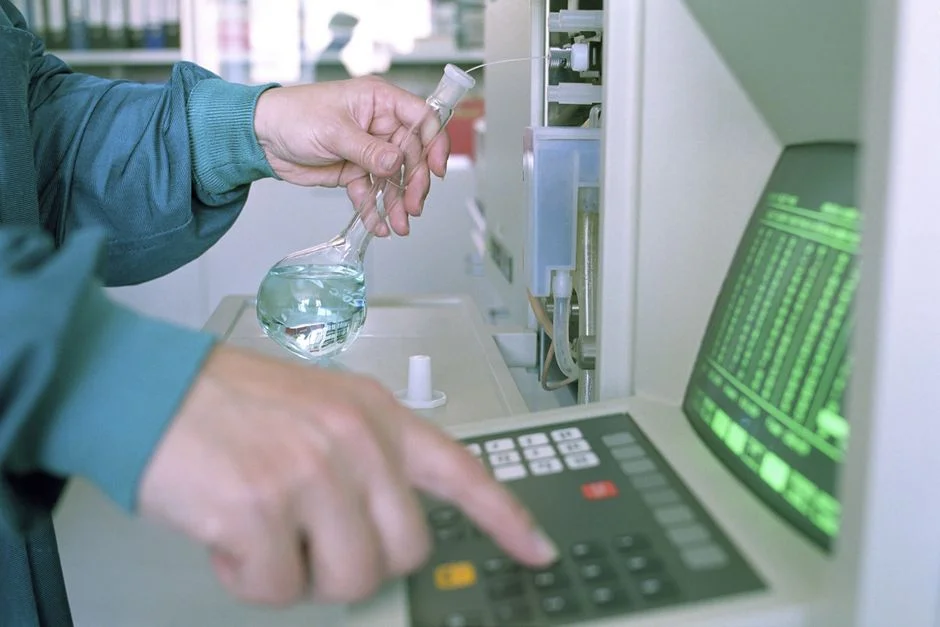
End-of-pipe sampling alone is not a sufficient basis for equipment selection because dilution and batch discharges can conceal the treatment requirements of individual streams. Prepare a wastewater stream characterization plan covering process rinse water, cleaning wastewater, floor and equipment washing, oily or FOG-bearing drainage, laboratory drains, cooling or utility blowdown, domestic sewage, stormwater, and contaminated rain.
Sample each relevant stream under representative production and maintenance conditions. The screening program should cover flow, pH, COD, BOD, suspended solids, oil and grease, metals, and contaminants identified from the plant’s processes and permits. Use process knowledge to determine whether streams contain cleaning chemicals, battery-related residues, suspended solids, emulsified oils, or constituents that cannot be inferred reliably from a composite sample.
Calculate both current and forecast hydraulic and pollutant loads. The forecast should reflect the buyer’s expected production profile, planned line changes, shutdowns, cleaning cycles, and ramp-up conditions. A treatment train sized only from average daily flow can fail during a cleaning release or production change.
Assess reuse separately from discharge compliance. A reuse claim must reflect the receiving process’s water-quality requirements and applicable Hungarian conditions; it should not be inferred from the existence of a reuse loop or from a generic electronics wastewater treatment and zero-discharge evaluation.
Energy belongs in the acquisition model because treatment choice affects both capital and operating cost. The U.S. Department of Energy’s December 2017 wastewater energy guide reports that electricity can account for 25%–40% of a wastewater treatment plant’s annual operating budget. That figure is a general DOE context, not a Hungarian site estimate, so the buyer should request site-specific electricity and water data.
| Stream group | Minimum characterization | Key operating concern |
|---|---|---|
| Process rinse and cleaning | Flow, pH, COD, BOD, solids, metals, process-specific constituents | Batch discharge, chemical variation, toxicity |
| Oily or FOG drainage | Oil and grease, solids, emulsification characteristics, flow | Emulsified contaminants and solids loading |
| Floor and equipment washing | Solids, COD, pH, oil and grease, cleaning residues | High-solids wash events |
| Laboratory drains | Volume, pH, COD, metals, reagent inventory | Small volume, incompatible contaminants |
| Utility blowdown | Flow, pH, solids, heat, treatment chemicals | Hydraulic variability and discharge route |
| Domestic sewage | Flow, COD, BOD, solids | Biodegradability and downstream loading |
| Stormwater and contaminated rain | Runoff source, contaminants, flow pathway | Separate segregation and inspection requirements |
Select Treatment and Pretreatment by Discharge Route
Treatment selection should follow the receiving route and measured contaminant load, not the assumption that every stream needs the same biological system. For sanitary sewage and biodegradable process flows, compare MBR with conventional biological treatment against the applicable effluent objectives, footprint, reuse potential, sludge production, and operating complexity. The MBR wastewater treatment and reuse system is one basis for comparison; it is not a substitute for site design.
For oil, grease, suspended solids, and colloidal matter, assess DAF as pretreatment rather than as the complete biological treatment train. Evaluate industrial DAF pretreatment for battery-plant wastewater against measured contaminant characteristics, hydraulic variability, solids removal, chemical demand, sludge yield, and downstream effects.
Address solids from pretreatment and biological treatment as a separate route. Review thickening, dewatering, storage, transport, destination, and disposal obligations. A treatment unit can meet its hydraulic objective while creating an unresolved sludge obligation if the downstream route is not contracted or permitted.
Where disinfection is required by the permit or a reuse assessment, compare UV, chlorine dioxide, and other validated options against the contaminants, receiving route, and operating conditions. The need for disinfection and the required performance must come from the actual permit and water-reuse assessment, not from a general equipment standard.
Use continuous-duty headworks protection where suspended solids, rags, plastics, and fibrous debris could damage pumps or downstream biological processes. The GX rotary mechanical bar screen is one equipment option to evaluate for that duty.
Catalog capacities can provide an initial screening range, not a final selection. HydropureWater’s DAF range covers 4–300 m³/h across 13 standard models, while its MBR range covers 10–2,000 m³/day and states filtration below 1 μm. The final design basis must include measured peak flow, pollutant loads, operating variability, redundancy, sludge route, reuse criteria, and energy consumption.
| Treatment decision | Trigger | Required evidence |
|---|---|---|
| Headworks protection | Fibrous, plastic, rag, or high-solids material may reach pumps | Screen analysis, flow profile, maintenance access |
| DAF pretreatment | Oil, grease, solids, or colloidal material requires removal before biological treatment | Measured constituents, hydraulic range, sludge yield |
| Conventional biological treatment | Biodegradable flow and objectives compatible with conventional treatment | BOD/COD load, process test, footprint, sludge route |
| MBR | Effluent or reuse objectives require the stated membrane separation performance | Target water quality, flow variability, membrane and sludge operating plan |
| Disinfection | Permit or reuse assessment requires it | Contaminant basis, receiving route, validated performance |
| Solids handling | Pretreatment or biological treatment generates sludge | Solids balance, dewatering test, destination and contract |
Test Capacity, Reliability, and Operating Performance

Nominal plant capacity is not evidence that the acquired system can support the buyer’s production plan. Compare hydraulic and pollutant capacity with current measured load and forecast load, then identify constraints in pretreatment, equalization, biological treatment, clarification, filtration, disinfection, and sludge handling.
Review at least one full production cycle and relevant cleaning or shutdown cycles for hydraulic shock, batch discharges, toxicity events, odor, foaming, and recovery after upset. Ask how the operator responds to an out-of-limit discharge, what happens during bypass conditions, and whether operating staff can maintain compliance without an undeclared temporary treatment arrangement.
Maintenance, alarm, bypass, sampling, laboratory, and spare-parts records are part of the capacity assessment. Deferred maintenance, missed calibrations, inactive alarms, unavailable spares, or reliance on outside laboratories should be converted into specific closing or post-closing actions rather than general condition notes.
Require energy and water metering by process stage where available. DOE’s December 2017 wastewater energy-management guide identifies process-level measurement as a practical route to identifying savings opportunities. The same guide reports a 30% aeration saving at Stoughton after replacing three 75-horsepower blowers with one VFD-equipped 50-horsepower blower, close to 40% savings from digestor mixing changes, and close to 50% lower electrical consumption from fine-bubble aeration at the cited Palmyra facility. These are case examples, not expected savings for the acquired plant.
Model each upgrade using measured loads, electricity, water, chemicals, sludge handling, maintenance, and production assumptions. Generic project-cost figures cannot substitute for a site-specific business case.
Close the Transaction with a Wastewater Action Plan
The environmental findings should become enforceable transaction deliverables. Build a red-flag register that separates permit gaps, exceedances, equipment deficiencies, contamination, sludge obligations, and required upgrades by severity and closing impact. Each red flag needs an owner, evidence, remediation, cost allocation, and a defined deadline.
Where appropriate, make permit transfer or reissuance applications, regulator engagement, baseline sampling, critical equipment repairs, and environmental-insurance review explicit pre-closing conditions. If the permit pathway remains uncertain at signing, preserve a price mechanism or other contractual protection rather than accepting an unsupported assumption that continuity is automatic.
Allocate historical violations and contamination to the seller through indemnities, escrow, remediation obligations, or specific purchase-price adjustments. State who owns each upgrade, who funds it, and when it must be completed. Historical obligations should not be confused with post-closing operating costs.
Prepare a 100-day post-closing plan covering operator training, laboratory verification, preventive maintenance, energy-data baselines, sludge contracts, and permit-reporting continuity. Track energy performance with volume treated and biological oxygen demand removed as complementary metrics, following DOE’s December 2017 wastewater energy-data approach.
The final assumptions require written Hungarian authority and sewer-operator confirmation. The supplied evidence supports the diligence framework and treatment considerations, but it does not provide verified Hungary-specific discharge limits for the acquired plant. The Vietnam acquisition wastewater due-diligence action framework illustrates the same transaction discipline, not the Hungarian regulatory position.
| Stage | Required action | Completion evidence |
|---|---|---|
| Pre-signing | Identify permit holders, routes, liabilities, and data gaps | Completed register and red-flag assessment |
| Confirmatory diligence | Stream sampling, permit review, asset and sludge inspection | Baseline reports, photographs, contracts, written confirmations |
| Pre-closing | Secure permits, address critical repairs, negotiate protections | Approvals, closing conditions, indemnities or escrow |
| Closing | Transfer responsibilities, records, utilities, and operational access | Closing checklist and responsibility handover |
| Post-closing | Verify operations and implement the 100-day plan | Training, maintenance, energy, laboratory, and reporting records |
Frequently Asked Questions
How much should the buyer budget for wastewater treatment after an LG Energy Solution acquisition in Hungary?
Request a site-specific budget based on measured flows and loads, each treatment-stage requirement, pretreatment, biological treatment, solids handling, monitoring, energy, chemicals, maintenance, and identified upgrades. The supplied research does not provide a verified Hungarian plant budget or quoted price, so a generic estimate would be misleading. Require the seller’s energy and water data, current operating costs, laboratory and sludge contracts, asset-condition reports, and vendor quotations before setting the reserve.
How should an equipment supplier size a DAF or MBR system for the acquired Hungarian plant?
Give the supplier measured peak flow, pollutant loads, operating variability, reuse objectives, sludge route, redundancy requirements, and the treatment-stage boundary. HydropureWater’s DAF catalog range of 4–300 m³/h and MBR range of 10–2,000 m³/day are screening benchmarks only. The supplier must reconcile those ranges with the site’s actual hydraulic and contaminant profile rather than select from average flow alone.
What documents should the buyer request from the seller before completing an acquisition in Hungary?
Request water-use and wastewater permits, environmental operating permits, sewer pretreatment approvals, outlet maps, monitoring plans, analytical results, inspection reports, regulator correspondence, enforcement and deviation records, spill and groundwater records, sludge destinations and contracts, treatment-asset ownership and maintenance records, laboratory and bypass records, spare-parts information, and stage-level energy and water data.
Can the buyer rely on the existing environmental permit after takeover?
No assumption of continuity is sufficient. Obtain written confirmation from the competent Hungarian authority and the relevant sewer operator on whether notification, transfer, reissuance, or a new application is required. Also confirm that the buyer or operating company will satisfy permit-holder and sewer-connection responsibilities after closing.
How should the buyer evaluate a zero-liquid-discharge proposal?
Test the proposal against feed variability, contaminant separation, concentrate disposal, reuse demand, energy demand, reliability, and measured site data. Establish whether zero liquid discharge solves a defined permit, reuse, water-supply, or disposal problem and whether the buyer has a credible route for the concentrate. The supplied research does not establish a Hungary-specific zero-liquid-discharge cost or discharge limit, so neither should be assumed.