What decision should a Manila factory make first?
A factory in Manila usually needs DAF when wastewater contains recoverable free oil, FOG, suspended solids, or colloidal material that must be removed before biological treatment; it needs a full ETP when the plant must also reduce dissolved organic load and provide broader treatment stages. A refinery-style arrangement commonly uses gravity separation first, then DAF as a secondary clarifier, followed by biological polishing. ETP treatment can be divided into primary physical and chemical treatment, secondary biological treatment, and tertiary treatment. The correct choice depends on measured wastewater composition, peak flow, discharge route, reuse goals, sludge handling, and applicable permit conditions.
The first decision is therefore not “DAF or ETP?” in the abstract. Define the required treatment result, identify the discharge route, and determine which treatment barrier each pollutant creates. If the objective is free-oil, FOG, or solids interception, DAF may be the relevant physical stage. If dissolved biodegradable organics also have to be removed, biological treatment is required. If the factory intends to reuse treated water, the reuse specification may add filtration, membranes, disinfection, or polishing beyond ordinary discharge treatment.
Direct discharge, sewer discharge, permitted reuse, or a combination of routes changes the information that suppliers need. The supplied research does not establish current Philippine discharge limits or Manila sewer-acceptance conditions, so obtain the applicable permit and written acceptance requirements from the relevant authority. Do not let an equipment quotation substitute for that regulatory basis.
Inventory the existing pretreatment, reactor, clarifier, sludge route, footprint, utilities, access, operators, and discharge points before buying another unit. A workable decision is: DAF for recoverable floatables and solids removal; an ETP when biological or tertiary treatment is required; and a combined train when both duties must be met. The 2026 DAF unit engineering specifications and decision framework can help structure that comparison, but it must be adapted to the factory’s wastewater.
DAF or full ETP: what each system is designed to do
Dissolved air flotation is a physico-chemical process in which very small air bubbles attach to suspended particles and give them a higher ascent rate for surface separation. That definition makes DAF a solids- and floatables-removal barrier; it does not make DAF a substitute for biological treatment of dissolved organic waste.
During recirculation, a portion of clarified effluent is pressurized and saturated with air in a dedicated drum. It is then returned to the flotation tank, where the pressure drop releases micro-bubbles that attach to suspended solids and oil droplets and carry them into a skimmable surface layer. Research reports that these bubbles usually measure 10–100 microns in diameter. The DAF working principle and micro-bubble physics guide explains this separation mechanism in more detail.
In the refinery sequence, an API separator first uses gravity to remove large free-floating oil globules and heavy sediment. DAF then acts as a secondary clarifier after chemical destabilization of emulsions, removing remaining oils and fine solids before the wastewater reaches biological reactors. The broader ETP framework divides treatment into primary physical and chemical treatment, secondary aerobic or anaerobic biological treatment, and tertiary final cleaning.
| System or stage | Primary function | Typical treatment barrier | Does it alone satisfy a complete treatment objective? |
|---|---|---|---|
| Dissolved air flotation | Physico-chemical separation | Suspended solids, colloids, recoverable free oil and FOG | No, not where dissolved biodegradable organics require biological treatment |
| Primary ETP stage | Physical and chemical conditioning | Settleable solids, floc formation and pH control | No; further treatment may be required |
| Biological stage | Aerobic or anaerobic biological treatment | Dissolved biodegradable organic load | Not necessarily where reuse, disinfection or additional polishing is required |
| Tertiary stage | Final cleaning | Remaining contaminants identified by the treatment objective | Its scope depends on the discharge or reuse specification |
A DAF unit can therefore be essential without being a complete industrial effluent treatment plant. The factory ETP and DAF decision guide applies the same functional distinction: select the smallest train that meets the measured duty and required effluent result.
Match the treatment train to the factory wastewater
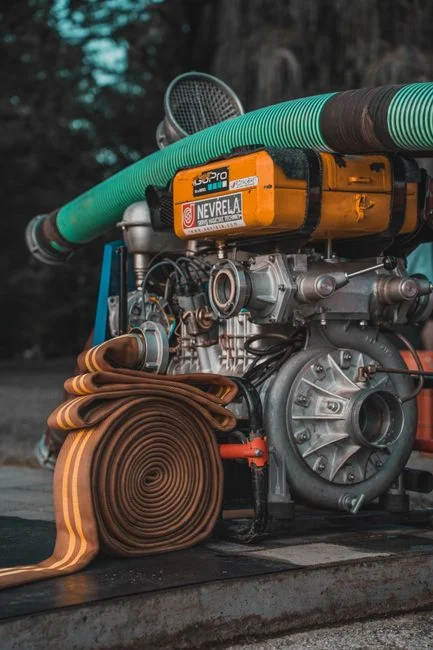
DAF is a likely physical removal stage when a factory produces wastewater containing free oil, FOG, emulsified oil, or a high suspended-solids load, subject to equalization and any necessary upstream gravity separation. The industrial DAF system for suspended solids, FOG, and oil removal should be evaluated on the actual wastewater rather than selected from a generic process description.
These components enter the treatment train only when characterization and treatment objectives justify them. For refinery and petrochemical wastewater, a useful sequence is: API separator for large free-floating oil and heavy sediment; chemical destabilization of emulsions; DAF for remaining oils and fine solids; and biological treatment for dissolved organic pollution.
Upstream oil removal protects downstream biology. Emulsified oil can coat bacteria, prevent oxygen transfer, and destroy the microbial colony. For wastewater dominated by dissolved biodegradable organics, biological treatment should follow appropriate equalization, pH control, and removal of substances harmful to biological processes.
Tertiary treatment depends on the final result required. Chlorine and alum are examples for remaining inorganic compounds and microorganisms; these are not automatic requirements. Factory wastewater reuse may also require polishing steps beyond basic ETP or DAF treatment.
| Wastewater characteristic | Primary concern | Conditional treatment response | Decision to verify |
|---|---|---|---|
| Recoverable free oil, FOG or high suspended solids | Floatables and solids load | Equalization, gravity separation where applicable, then DAF | Can the required recovery or solids removal be demonstrated at peak load? |
| Emulsified oil and fine solids | Oil carryover into biology | Chemical destabilization followed by DAF | Does the selected chemistry match the emulsion and pH range? |
| Dissolved biodegradable organics | Biological treatment demand | Biological ETP stage after suitable pretreatment | Is the wastewater biodegradable and compatible with the selected process? |
| Reuse or sensitive discharge route | Residual contaminants | Tertiary filtration, disinfection or polishing as specified | What exact end-use specification must the effluent meet? |
Where controlled chemical addition is required, specify an PLC-controlled automatic chemical dosing system for coagulants, flocculants, pH adjusters or specialty chemicals. Chemical selection, tankage and controls should follow laboratory and site data rather than a standard recipe.
Collect the inputs needed to size the system
Sizing must satisfy both hydraulics and contaminant loading. A supplier cannot establish that duty from nominal flow or one laboratory sample alone.
Request representative samples across production, cleaning, batch-discharge and shutdown periods. Record average flow, peak flow, batch-dump profile, operating schedule, catchment area and planned production expansion. Peak and batch conditions reveal whether equalization and the selected treatment stage can physically accommodate the wastewater.
The analysis should include oil and grease, total and non-settleable suspended solids, settleable solids, pH, temperature, turbidity, COD, and parameters relevant to the process and permit. For DAF, separate hydraulic treatment rate from contaminant demand: a unit must handle the selected flow and the floatable or solids loading without violating its operating basis.
The cataloged industrial DAF range is 4–300 m³/h across 13 standard models. That range is a catalog statement, not proof that any model suits a particular factory; the model must satisfy the wastewater-specific flow and load basis.
| Design input | Why it matters | Evidence a supplier should receive |
|---|---|---|
| Representative wastewater quality | Defines the treatment barrier and chemical demand | Sampling plan, laboratory analyses and operating-period correlations |
| Hydraulic profile | Tests peak and batch hydraulic feasibility | Average flow, peak flow, batch dumps, schedule and future expansion |
| Existing plant condition | Reveals avoidable duplication and bottlenecks | Equipment records, operating data, maintenance history and site layout |
| Utilities and footprint | Determines whether the proposed train can be installed and operated | Available power, air, water, drainage, access and civil constraints |
| Sludge and froth route | Prevents an untreated residual-stream problem | Expected characteristics, collection, storage, dewatering and disposal route |
| Discharge or reuse specification | Defines the required final result | Permit, sewer-acceptance conditions or approved reuse specification |
Evaluate chemical consumption, air supply, maintenance access and operator availability. If the selected process produces sludge requiring dewatering, the cataloged plate and frame filter press range is 1–500 m²; include it only after defining the sludge quantity and required dewatering duty.
Compare ETP, DAF, and combined treatment options
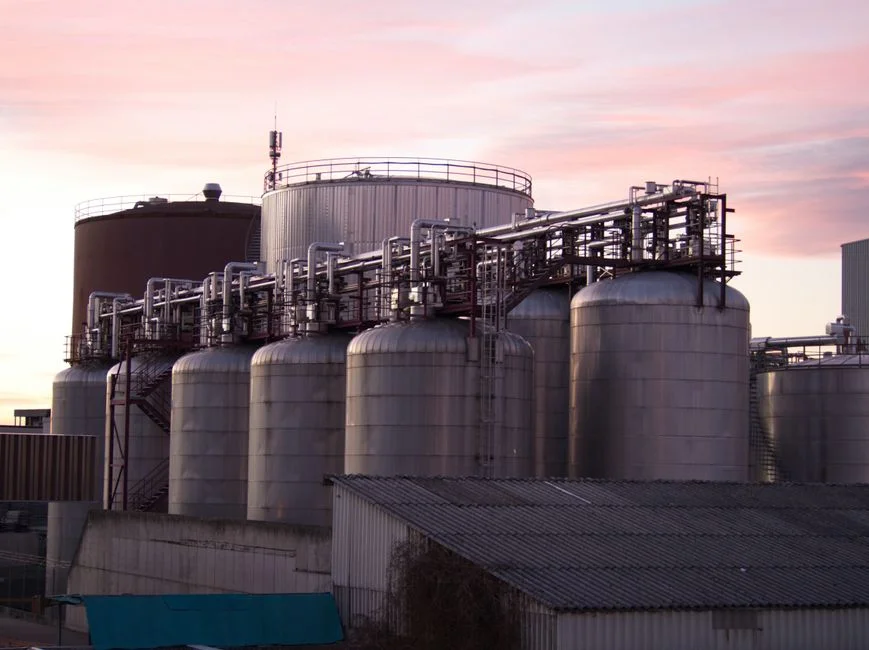
The defensible choice is the smallest process train that reliably satisfies the measured treatment result; added equipment does not remove the need for a suitable wastewater and compliance basis.
| Decision factor | DAF-centered option | Full ETP | Combined train |
|---|---|---|---|
| Treatment purpose | Remove floatables, FOG, suspended solids and colloidal material | Cover physical, chemical, biological and possibly tertiary duties | Remove oily solids before biological treatment |
| Best-fit wastewater profile | Recoverable oil, FOG or solids load | Broader factory profile requiring multiple treatment barriers | Oil or fine solids that could impair biological treatment |
| Stage coverage | Physico-chemical stage only | Primary, secondary and conditional tertiary treatment | DAF pretreatment plus biological ETP and any required polishing |
| Main equipment | Flotation, recycle, air saturation, skimming and controls | Equalization, chemical dosing, reactor, clarifier, sludge and tertiary equipment as required | Combined DAF, chemical control, biological reactor and downstream equipment |
| Residual handling | Froth or sludge removal and disposal | Chemical sludge and biological sludge handling | Froth plus biological sludge handling |
| Operator requirement | Chemical, air, pump and skimmer operation | Broader process control and maintenance | More stages, utilities and coordination |
DAF can stand alone as pretreatment when its objective is interception or removal ahead of another treatment or disposal route. Pair it with biological treatment after gravity separation where necessary, with chemical control of emulsions and before biology where oil or fine solids could impair the process. Use the industrial dissolved air flotation selection guide to compare equipment scope and assumptions.
Equipment selection without the applicable permit, sewer-acceptance requirements or reuse specification remains incomplete. Those documents belong in the design basis and acceptance plan.
Build a supplier-ready enquiry and acceptance plan
A technically defensible enquiry should include wastewater analyses, flow records, a process diagram, the selected duty, utility availability, footprint constraints, discharge or reuse target, sludge-handling expectation and applicable compliance documents. Ask each supplier to state the treatment objective, proposed process sequence, design flow, load basis, materials of construction, controls, instrumentation, utilities and excluded civil or sludge-treatment items.
Define acceptance against the same pollutants and operating conditions used in the design basis. Do not accept a guarantee expressed only as a removal percentage: require the influent condition, sampling method, operating condition and acceptance criterion that give the percentage meaning.
Before comparing commercial proposals, align installation, commissioning, operator training, maintenance, spare-parts and local-service obligations. Confirm delivery milestones against the factory’s installation and production windows, and make exclusions explicit rather than discovering them after award.
Before startup, use the DAF unit troubleshooting guide for operators to prepare the site for pre-commissioning checks, instrument verification, chemical readiness and operating-problem diagnosis.
Frequently Asked Questions
How much does an industrial ETP or DAF system cost for a Manila factory?
No defensible price can be given without the wastewater analysis, flow and load basis, treatment objective,
Frequently Asked Questions
How much does an industrial ETP or DAF system cost for a factory in Manila?
For a standard Dissolved Air Flotation (DAF) unit, capital expenditure typically ranges from PHP 1,500,000 to PHP 5,000,000 depending on the flow capacity (m³/hr) and material of construction (e.g., 304 vs 316 stainless steel). A full-scale industrial Effluent Treatment Plant (ETP) involving biological treatment, secondary clarifiers, and filtration can cost anywhere from PHP 8,000,000 to over PHP 30,000,000 based on the complexity of the influent load.
These figures exclude civil works, such as concrete tank construction, and local installation labor. Operational costs should also be factored, typically ranging from PHP 15 to PHP 50 per cubic meter of treated water depending on chemical dosing requirements and electricity consumption.
What wastewater data should I give a DAF or ETP supplier before requesting a quotation?
To receive an accurate proposal, you must provide a laboratory analysis report covering the following parameters: Chemical Oxygen Demand (COD), Biological Oxygen Demand (BOD5), Total Suspended Solids (TSS), Oil and Grease (O&G), and pH levels. Additionally, specify the peak flow rate (m³/hr), average daily flow (m³/day), and the temperature of the effluent.
It is also critical to state your target effluent standards, specifically whether you are aiming for DENR Administrative Order (DAO) 2016-08 compliance for discharge into Class C, D, or coastal waters. Providing a site layout and information on available space for the ETP footprint will further refine the engineering design.
How do I size a DAF system when my factory has variable flow and batch discharges?
Sizing for variable flow requires the installation of an equalization tank (EQ tank) upstream of the DAF unit. The EQ tank must be sized to hold at least 1.5 to 2 times the maximum expected hourly discharge to dampen hydraulic surges and normalize the pollutant concentration before it enters the DAF system.
For batch discharges, the DAF must be sized based on the maximum volume of the batch released over a set duration, rather than the average daily flow. Automated level sensors and variable frequency drives (VFDs) on the feed pumps are recommended to ensure the DAF maintains a constant hydraulic loading rate, which is critical for effective bubble-floc attachment and solids separation.
Should I buy a DAF system or a complete industrial ETP?
A DAF system is primarily a primary treatment process designed to remove suspended solids, fats, oils, and grease (FOG). You should choose a DAF if your primary objective is to reduce the organic load (COD/BOD) to meet local sewer discharge limits or to protect downstream biological processes from high oil content.
A complete ETP is necessary if your raw effluent exceeds the limits set by DENR DAO 2016-08 for dissolved organics, nitrogen, or phosphorus. If your factory produces high-strength wastewater that cannot be treated by physical separation alone, a DAF should be used as a pretreatment unit followed by a secondary biological system, such as an Activated Sludge Process (ASP) or a Membrane Bioreactor (MBR).
What compliance documents should I check before ordering wastewater treatment equipment in the Philippines?
Before purchasing, ensure the equipment design is compliant with the standards set by the Department of Environment and Natural Resources (DENR) under DAO 2016-08. You should require the supplier to provide detailed engineering drawings signed by a licensed Sanitary Engineer or Mechanical Engineer to facilitate the permitting process.
Furthermore, check if the equipment meets the requirements of the Laguna Lake Development Authority (LLDA) if your factory is located within their jurisdiction, as they often impose stricter discharge limits. Finally, verify that the supplier can provide a Certificate of Conformity or equivalent performance guarantees that align with the Pollution Control Officer’s (PCO) monitoring requirements for your specific discharge permit.