What Rubber Processing Wastewater Does to a MABR
Rubber processing wastewater can be treated as a high-strength, high-nitrogen and sulfur-bearing industrial stream, but the supplied evidence does not establish MABR as a stand-alone commercial treatment for raw rubber effluent. The 2024 MDPI study evaluated an integrated AnMBR and A/O MBR for 225 days, not a stand-alone MABR, and reported COD reduction above 98%, from 22,158 ± 2,859 mg/L to 118 ± 74 mg/L at a total-system hydraulic retention time of 6 days. That result belongs to a specific membrane-biologically integrated configuration; it cannot be transferred directly to a MABR design for a tire, latex, reclaimed-rubber or rubber-products plant.
The wastewater characteristics that make the design difficult are documented in the same study. Concentrated-latex manufacturing can generate high ammonia used for latex stabilization, acidic effluent associated with coagulation, and wash-water or centrifuge-cleaning streams containing suspended rubber, colloids and process chemicals. Together these streams can produce incompatible pH conditions, shock organic loading, high suspended solids, sulfate and ammonia concentrations that increase biological inhibition and membrane-fouling risk.
A membrane aerated biofilm reactor separates two biological functions. According to Fluence’s MABR product information, passive aeration transfers oxygen through oxygen-permeable membranes to a fixed nitrifying biofilm on the wastewater side, while denitrification occurs in the anoxic bulk liquid. This arrangement can support nitrification and denitrification without treating all reactor biomass as suspended activated sludge. It does not, however, remove latex, colloids, oil and grease, sulfate or inhibitory chemicals before they reach the reactor.
The evidence boundary is therefore explicit: MABR principles are established in municipal and comparative studies, while the strongest supplied rubber-specific result concerns an AnMBR/A/O MBR. No supplied source demonstrates a stand-alone MABR treating raw rubber wastewater at a commercial plant. This is the central issue for design review, and the technical details are summarized below.
| Evidence item | What the supplied research establishes | Design implication |
|---|---|---|
| Rubber-specific treatment | Integrated AnMBR/A/O MBR operated over 225 days with COD reduction above 98% (MDPI, 2024) | Use as a benchmark, not as proof of equivalent MABR performance |
| Total-system HRT | 6 days for the integrated AnMBR/A/O MBR (MDPI, 2024) | Do not assign this HRT directly to a stand-alone MABR |
| MABR biological arrangement | Fixed nitrifying biofilm on oxygen-permeable membranes with denitrification in anoxic bulk liquid (Fluence) | Preserve an anoxic volume and define nitrification and denitrification duties |
| Commercial MABR evidence for raw rubber wastewater | Not demonstrated in the supplied research | Require pilot testing and site-specific guarantees |
For broader pretreatment context, the MABR design guide for coffee processing wastewater and MABR wastewater treatment selection guide explain MABR selection principles, but they do not add rubber-specific commercial performance evidence.
Build a Pretreatment-First Treatment Train
The defensible process sequence starts with stream segregation and equalization, followed by solids removal, chemical conditioning, flow and load balancing, biological treatment, and final solids separation. Equalization and coagulation perform different jobs: equalization smooths hydraulic and concentration shocks, while coagulation and flotation remove material that could foul membranes or inhibit biology. Neither substitutes for the other.
- Segregate the streams. Characterize wash water from milled rubber sheets, acidified coagulation effluent, skim serum, centrifuge-cleaning wastewater and other process drains separately before combining them. This is important because concentrated latex manufacturing uses ammonia for stabilization and acidic chemicals for coagulation, as described by MDPI in 2024.
- Equalize flow and load. Use a mixing and storage stage to reduce short-duration peaks in flow, COD, ammonia, sulfate and pH. Hydraulic equalization alone does not remove solids or neutralize chemical additions, so its operating volume and mixing performance must be based on measured production and discharge patterns.
- Remove gross solids. Screening protects downstream pumps and equipment. An industrial mechanical bar screen can capture gross debris, but the design must also address fine latex, colloids and suspended rubber that can pass through coarse screening.
- Apply chemical conditioning and flotation where required. An industrial DAF pretreatment system is relevant where suspended solids, colloids, oil and grease, or latex-rich material must be separated before biological or membrane treatment. The MDPI study used magnetic seed coagulation before its biological system; that documents one tested route, not a universal pretreatment specification.
- Control pH and dose chemicals reproducibly. An automatic chemical dosing system should be sized from jar or pilot tests, not from nominal chemical labels. Coagulant, polymer, acid and alkali demand must be established against representative wastewater.
- Provide downstream solids separation. MABR requires control and removal of suspended solids from the reactor plus at least one downstream separation step, such as filtration or sedimentation, according to the 2022 parallel-plant study by Guimarães, Moraes and Siqueira. Design that clarification or filtration into the overall train rather than treating it as an accessory.
| Process stage | Primary control objective | Minimum project information needed |
|---|---|---|
| Stream segregation and equalization | Limit hydraulic, concentration and pH shocks | Flow hydrograph, production schedule, stream inventory, alkalinity and mixing data |
| Screening, coagulation and flotation | Remove latex, suspended rubber, colloids and oily material | TSS, oil and grease, particle-size distribution, settleability and chemical-demand tests |
| pH and dose control | Protect downstream biology and membrane materials | pH range, alkalinity, coagulation trials and chemical inventory |
| MABR biological stage | Remove biodegradable organics and support nitrogen removal | COD/BOD, ammonia, total nitrogen, sulfate, temperature, dissolved oxygen and load profile |
| Clarification or filtration | Remove solids leaving the biological stage | TSS target, downstream reuse or discharge requirement and solids-handling route |
Before final sizing, obtain measured flow, COD, BOD, ammonia, sulfate, TSS, oil and grease, pH, temperature and process-additive data. Characterize both average and peak conditions. The pretreatment package should be selected from that evidence and then carried into the supplier’s hydraulic, biological and fouling guarantees.
Size the MABR Around Biological and Operating Constraints
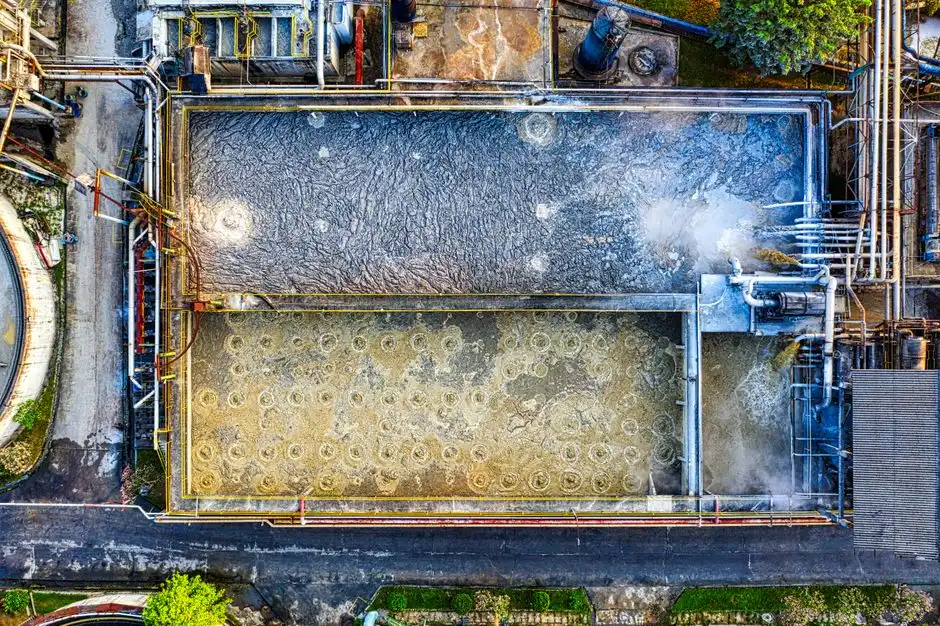
MABR sizing requires site-specific hydraulic, organic and nitrogen loads; generic aerated-biofilm volume factors are insufficient for a rubber plant. The design must define average and peak flow, hydraulic and organic loading, COD/BOD ratio, nitrogen and sulfate profiles, TSS, temperature, pH, alkalinity, required HRT and the downstream effluent or reuse target before reactor dimensions or membrane area can be established.
Reactor zoning has a clear biological basis. The anoxic bulk-liquid volume supports denitrification, while the membrane-supported aerobic zone supplies oxygen to nitrifying biomass. Passive aeration does not replace an anoxic zone: Fluence states that denitrification occurs in the anoxic bulk liquid, and its SUBRE retrofit description notes that a separating wall is required if an existing basin has no anoxic zone. MABR nitrogen-removal performance therefore depends on hydraulics, carbon availability, mixing, biomass condition and solids separation—not only on membrane area.
The 225-day MDPI study provides a boundary marker rather than a transferable design: its integrated AnMBR/A/O MBR operated at a total-system HRT of 6 days. The same study’s Phase 1 anaerobic membrane operated at an organic loading rate of 0.58 ± 0.07 kg COD/m³/day, a transmembrane pressure of 42 ± 4 kPa and a flux of 25 ± 4 LMH while adapting to rubber wastewater constituents (MDPI, 2024). Those values describe that membrane and operating phase; they are not MABR sizing criteria.
They do show why membrane conditions must be treated as process variables. Rubber wastewater may reach a reactor with high suspended solids or poorly conditioned colloids. That increases fouling risk, reduces effective treatment area and can impair the attached nitrifying biofilm. A cleaning strategy must therefore cover membrane condition, chemical compatibility, recovery after cleaning and the consequences of chemical shocks.
| Design input | Why it affects MABR selection | Acceptable basis for procurement |
|---|---|---|
| Average and peak flow | Sets hydraulic loading, equalization and reactor configuration | Measured flow record and documented production scenario |
| COD, BOD and biodegradability | Determines organic demand and the carbon available for denitrification | Representative laboratory analysis and treatability assessment |
| Ammonia and total nitrogen | Defines nitrification and denitrification duties | Time-series profile and required nitrogen-removal target |
| Sulfate and process additives | Can affect biological behavior, redox conditions and material compatibility | Source-specific characterization and toxicity or inhibition review |
| TSS and pretreatment performance | Directly affects fouling and downstream solids handling | Guaranteed clarified-water TSS and identified cleaning method |
| Temperature, pH and alkalinity | Control biological activity and chemical dosing | Design range and worst-case operating condition |
| HRT and downstream target | Defines reactor volume and required polishing | Site-specific design supported by pilot evidence |
Before a supplier guarantees nitrogen removal, energy use or final effluent quality, require a pilot test or site-specific biological treatability assessment. An integrated MBR wastewater treatment system may be relevant for projects requiring integrated biological treatment and membrane solids separation, while an ultrafiltration water treatment system may be specified for polishing. Neither choice removes the need to define pretreatment and the MABR duty.
Compare MABR, MBR, and Integrated Membrane Treatment
MABR and MBR both use membranes, but they perform different functions. MABR uses oxygen-permeable membranes to aerate an attached biofilm and normally retains an anoxic bulk-liquid zone for denitrification. MBR combines activated-sludge biology with submerged membrane filtration, integrating biological treatment and solids separation. That difference drives the comparison: MABR emphasizes passive aeration and nutrient-removal zoning; MBR emphasizes integrated membrane separation.
In the 2022 parallel-plant study, a 1.2 m³/d MABR pilot operated beside a full-scale MBR treating the same raw sewage source. MBR produced higher removal efficiencies for COD, BOD, TSS and total phosphorus. MABR was more efficient in energy use and COD and TKN load removed per reactor volume, while TKN removal results were similar. The study also found that TSS control and removal were essential to MABR performance and that a downstream filtration or sedimentation step was necessary. These results support MABR for compact nutrient-removal applications, but they are municipal-sewage evidence, not rubber-wastewater guarantees.
Rubber-specific membrane evidence shows what a more integrated configuration can achieve. MDPI’s 2024 review reports UF flat-sheet MBR treatment of high-strength skim latex wastewater with COD removal above 96% and nitrogen removal above 60%. It also cites an AAO-MBR-BAF-O₃ process for high-organic, high-ammonia wastewater; under optimal conditions, reported removals were 94.50% for COD, 99.13% for NH₄⁺-N and 78.21% for TN. The excerpt does not provide a separate TOC removal value for that process, so no value should be inferred.
| Decision criterion | MABR | MBR or integrated membrane treatment |
|---|---|---|
| Biological separation | Attached nitrifying biofilm on oxygen-permeable membranes with an anoxic bulk liquid | Activated sludge combined with submerged membrane filtration |
| Solid-liquid separation | Requires downstream filtration or sedimentation | Integrated with the membrane process |
| Parallel-plant evidence | More efficient energy use and COD/TKN load removed per reactor volume | Higher COD, BOD, TSS and total-phosphorus removal efficiencies |
| Rubber-specific evidence in supplied research | No commercial stand-alone demonstration supplied | Integrated AnMBR/A/O MBR tested over 225 days; flat-sheet UF MBR benchmark reported |
| Main risk | Solids carryover, fouling, insufficient anoxic volume and unproven rubber-wastewater loading | Higher membrane and solids-handling complexity; cost implications identified in MDPI |
| Best fit | Projects prioritizing passive aeration, nutrient removal, compact footprint or retrofit potential | Projects prioritizing integrated solids separation, tight solids targets or reuse-oriented treatment |
The choice should follow pretreatment reliability, discharge or reuse requirements, footprint, operator capability and fouling tolerance. It should not follow a universal technology ranking. The MBR versus conventional activated-sludge evaluation provides a separate MBR selection framework, but rubber wastewater still requires its own characterization and pilot basis.
Set Performance Guarantees and Supplier-Selection Criteria
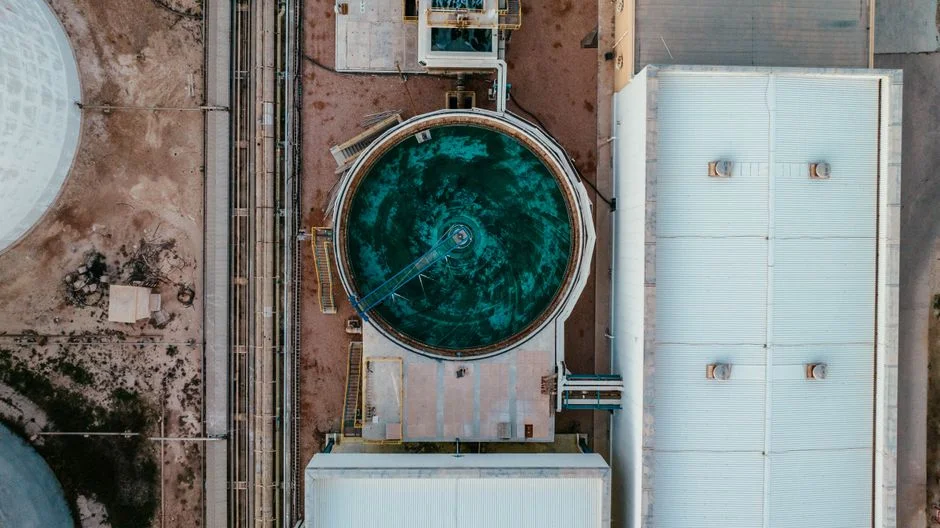
A bid becomes commercially useful only when the supplier defines a guaranteed duty at a measured influent envelope. Require the bidder to state the influent flow range, peak hydraulic condition, temperature range, required HRT, pretreatment assumptions and sampling protocol. If the guarantee applies only to clean, equalized wastewater, state that boundary explicitly.
| Guarantee or submission item | Acceptable contractual content | Buyer check |
|---|---|---|
| Hydraulic capacity | Average and peak flow, operating mode and equalization dependency | Confirm whether chemical and equipment downtime is included |
| COD removal | Influent and effluent limits with defined sampling frequency | Check whether soluble or total COD is the basis |
| Ammonia and total nitrogen | Separate guarantees, operating range and detection limits | Prevent an overall nitrogen guarantee from hiding weak ammonia removal |
| TSS | Clarified-effluent limit and downstream separation responsibility | Identify whether MABR or downstream filtration controls compliance |
| Energy consumption | Boundary load, blower power, mixing and site conditions | Exclude chemical-treatment energy unless included consistently |
| Sludge production | Mass or volume basis and sampling method | Clarify whether chemical sludge is included |
| Membrane cleaning and recovery | Procedure, frequency assumptions and membrane-protection plan | Require a response to high TSS and chemical excursions |
Ask bidders to document their response to upset loading, pH excursions, high TSS, membrane cleaning, biofilm recovery, odor control and spare-parts availability. The reference installation should have comparable wastewater characteristics, temperature, loading and reporting boundaries; an installation with dilute sewage cannot substantiate a high-strength latex claim.
Manufacturer claims require equally careful treatment. Fluence states that its small- to medium-capacity MABR products can save up to 90% of aeration energy compared with conventional plants. This is a manufacturer claim, not a rubber-project guarantee. Fluence also reports up to 30% lower overall plant energy use and results within one to three weeks for SUBRE retrofits; these are retrofit observations and must not be presented as rubber-industry benchmarks.
Before accepting a commercial offer, verify the required auxiliary and replacement components and their specification status. The water-treatment parts and filter-media specification checklist can be used to compare omissions involving valves, media and membrane-support equipment. The final recommendation should depend on demonstrated performance under the stated rubber wastewater envelope, not on generic aeration savings.
Frequently Asked Questions
What does MABR for rubber processing wastewater cost?
The supplied research provides no MABR project cost or price for a rubber-wastewater treatment train. A defensible quotation requires average and peak flow, measured COD, BOD, ammonia, total nitrogen, sulfate, TSS, oil and grease, pH, temperature, required HRT, effluent or reuse targets, pretreatment performance, footprint and utilities. Ask bidders to separate equipment, pretreatment, membrane replacement, chemical dosing, controls, commissioning, sludge handling, energy and long-term maintenance so that the comparison boundaries match.
Can the 6-day HRT from the rubber MBR study be used to size a MABR?
No. The 6-day HRT was the total-system value reported by MDPI in 2024 for an integrated AnMBR/A/O MBR operated over 225 days. It did not represent a stand-alone MABR. Size a MABR from site-specific hydraulic and organic loading, nitrogen and sulfate profiles, temperature, alkalinity, pretreatment performance and the required effluent target, supported by pilot or treatability evidence.
Which supplier should be selected for a rubber wastewater MABR?
Select on documented performance and risk allocation, not on generic energy claims. Require guaranteed hydraulic capacity, COD removal, ammonia removal, total nitrogen removal, TSS, energy use and sludge production, together with defined influent limits and sampling procedures. Review pretreatment assumptions, membrane-cleaning provisions, upset-response procedures and references with comparable industrial wastewater before comparing commercial offers.
Which discharge or reuse limits should the design meet?
The applicable permit, sewer authority or reuse specification must define the final limits because the supplied research contains no universal rubber-wastewater compliance limit. During design development, request the governing effluent requirements and test them against both the MABR outlet and the complete downstream treatment train. If the target requires very low soluble organics, nitrogen or solids, specify the required biological and membrane-polishing stages rather than assigning those duties to MABR alone.