What Changes When AB InBev Acquires a Mexican Brewery?
An acquisition transfers the site’s environmental operating history with the asset, not merely its buildings and production equipment. The buyer must confirm that the existing Mexico discharge authorization, sewer pretreatment approval and other permits remain valid for the legal and operational entity after closing; identify the receiving route; and establish whether the inherited brewery effluent treatment train satisfies binding site conditions. AB InBev’s internal treatment and monitoring practices provide useful benchmarks, but they do not replace permits or regulator determinations. The closing file should distinguish confirmed compliance from unresolved permit, process, monitoring and reuse gaps.
Start by identifying whether the transaction changes the legal owner, operator, corporate parent, production process, discharge point or responsible operating organization. Each change can affect whether a permit remains valid, requires amendment, or must be replaced. The acquirer should obtain the current authorization and its amendments, not rely on a statement that the “permit transfers automatically.” Regulatory confirmation is essential whenever the ownership, operator, process or discharge point changes.
AB InBev’s Voluntary Performance Outstanding (VPO) framework serves as an internal management benchmark. AB InBev’s 2022 CDP Water Security response states that 100% of beverage plants were certified under VPO requirements. That certification does not establish the legal limit, pretreatment standard or groundwater classification applicable to a particular Mexican brewery.
Build the historical record before signing where possible. Request the last three years of permit deviations, laboratory results, monitoring reports, sludge-handling records, chemical inventories and enforcement correspondence, then reconcile them against operating logs. This is the central approach in wastewater due diligence for a Mexican plant acquisition: preserve the operating evidence needed to determine inherited liability and the post-closing compliance position.
Build the Permit and Discharge-Route File
The permit file must establish both who authorizes the discharge and where each stream goes before the buyer evaluates treatment capacity or capital spending.
- Obtain the current Mexico discharge authorization, sewer-use or connection approval, applicable operating conditions, environmental authorizations and amendments.
- Identify the authorization holder and compare that name with the legal owner, plant operator and post-closing entity.
- Map every wastewater stream to municipal collection, direct surface-water discharge, third-party treatment, groundwater or another authorized destination.
- Determine whether the municipal utility or another third party is the regulated discharger, or whether the brewery must satisfy sewer pretreatment approval before connection.
- Record monitoring frequency, parameters, sampling points, reporting deadlines, deviations, corrective actions and enforcement history.
- Obtain regulator confirmation where the transaction changes permit-relevant facts.
Verifying the actual discharge route remains a priority because corporate-level reporting often obscures site-specific realities. AB InBev’s 2022 CDP Water Security response reports that beverage-operation effluent went to fresh surface water at 66.5%, municipal destinations at 29.8% and other destinations at approximately 3.7%. These are group-level figures, not evidence of the acquired plant’s discharge route. The plant-specific flow diagram must reconcile actual streams, discharge meters and permits.
For groundwater use or discharge, obtain the site-specific hydrogeology and authorization documents. No supplied source establishes a plant’s groundwater classification, so it must not be inferred from AB InBev’s corporate disclosure. Similarly, confirm whether the receiving treatment facility has adequate capacity and whether the brewery’s discharge can affect third-party treatment performance.
| Evidence item | What the acquirer must establish | Closing disposition |
|---|---|---|
| Current discharge authorization and amendments | Authorization holder, permitted discharge point, conditions, monitoring and expiry or renewal status | Confirm validity or obtain regulator-approved amendment |
| Sewer-use or pretreatment approval | Whether the brewery must meet local sewer conditions before discharge and whether monitoring is required | Verify applicable requirements and transfer mechanism |
| Stream-by-stream route map | Destination of process, cooling, washing, floor and sanitary wastewater | Reconcile with meters and permits |
| Third-party treatment agreement | Capacity, accepted characteristics, monitoring and responsibility for final discharge | Confirm continuity after closing |
| Historical compliance record | Deviations, corrective actions, regulator correspondence and unresolved matters | Price, condition or remediate before closing |
Test the Inherited Treatment Train Against AB InBev's Practice
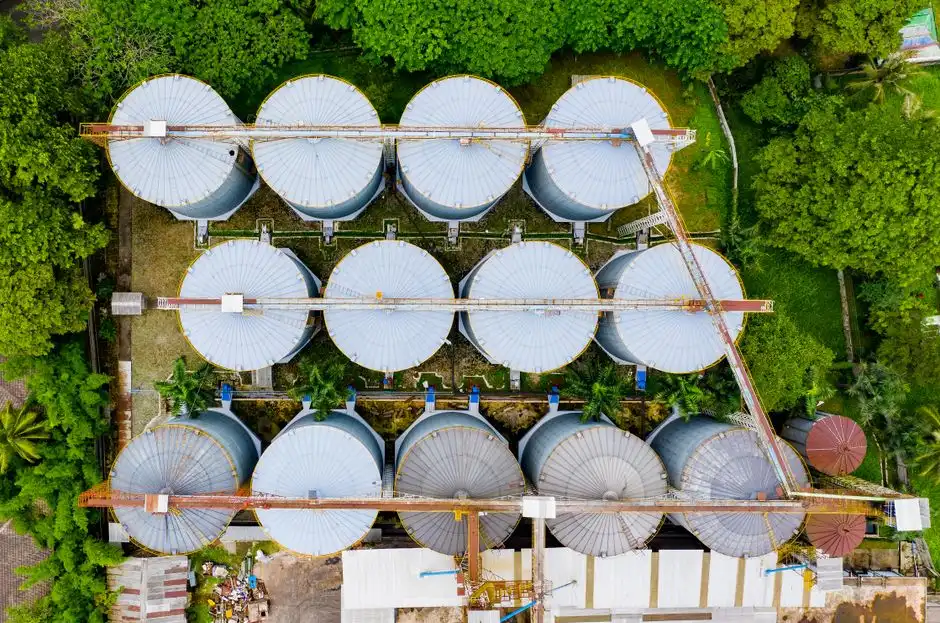
The relevant comparison is between the acquired plant’s physical process and its actual operating record, not between the plant and a generic brewery treatment diagram.
Document the complete flow from segregation, equalization and neutralization through biological treatment, clarification, disinfection, reuse and final discharge. Verify the installed equipment, pipe routing, valves, bypasses and control logic during a site audit. A process drawing alone will not establish what happens during batch discharges, shutdowns or peak production.
AB InBev’s 2022 CDP Water Security response states that more than 97% of effluent is treated through a Biological Treatment System. Its described pattern uses primary treatment to segregate solids, anaerobic reactors to treat 80% of the organic load and aerobic systems to treat the remaining 20%. This is corporate practice, not proof that those units exist at the target brewery. The acquisition team should validate any apparent gap through drawings, operating records, equipment condition and a physical audit.
Measure how the inherited system responds at normal, peak and shutdown conditions. Review hydraulic and organic loading, equalization effectiveness, bypass points, standby equipment, sludge inventory and biological-treatment resilience. The review should also establish whether the plant can separate clean process water from high-strength streams and whether reuse flows are protected from uncontrolled intermingling.
COD or BOD, solids and pH provide the minimum baseline for evaluating the inherited record against AB InBev’s published practice. AB InBev’s 2021 CDP Water Security response identifies COD or BOD, solids and pH as final-effluent metrics that should be monitored daily. Its 2022 response states that most water-quality measures take place daily and that internal monitoring may be applied in some countries where requirements are less stringent.
Reconcile laboratory reports with sampler records, instrument logs, flow data and bypass events. A file that contains monthly results but no operational explanation does not demonstrate continuous control. Where the plant’s monitoring frequency is weaker than AB InBev’s practice, determine whether that reflects the binding permit, a documented risk assessment or an unclosed management gap.
| Review area | Evidence to obtain | Acquisition test |
|---|---|---|
| Process configuration | Approved drawings, equipment list, piping, controls and site-audit record | Confirm the actual flow path and any undocumented bypasses |
| Organic loading | COD or BOD results, production records and batch-discharge data | Test consistency between laboratory results and operating conditions |
| Solids and sludge | Solids records, sludge inventory, handling records and destination evidence | Identify capacity, handling and residual liabilities |
| pH control | Neutralization-system records, calibration and final-effluent results | Confirm control across normal and abnormal operations |
| Monitoring frequency | Schedules, laboratory certificates, online records and permit correspondence | Reconcile actual practice with permit duties and AB InBev benchmarks |
| Resilience | Redundancy, standby arrangements, bypass controls and shutdown procedures | Assess exposure during maintenance and abnormal discharges |
The fenton oxidation system guide can support review of chemical oxidation concepts, but it cannot substitute for stream characterization or a site-specific treatment assessment.
Match Treatment Options to the Acquisition Risk
Treatment investment should follow a defined compliance, reuse or process-control need; it should not be added to the transaction because a particular technology appears in a corporate benchmark.
- Screen protection: Use a GX Series rotary mechanical bar screen when the wastewater contains rags, plastics, fibrous debris or suspended solids that could overload pumps or downstream biological treatment.
- DAF pretreatment: Consider dissolved air flotation when suspended solids, FOG, oil and grease or colloidal material are limiting treatment performance. The supplied catalog covers 4–300 m³/h across 13 standard models.
- MBR evaluation: Evaluate an integrated MBR wastewater treatment system where compact biological treatment and low solids in the effluent are required. The catalog reports capacities from 10 to 2,000 m³/day and a footprint 60% smaller than conventional systems.
- UF polishing: Consider an ultrafiltration system for brewery wastewater polishing where solids removal and membrane pretreatment are required. The catalog specifies 0.03 μm PVDF filtration, chemical-free backwash and air scour, with capacities from 2,000 to 40,000 L/h.
- Tertiary membranes: Assess MF, RO or UF only when regulation, internal reuse quality or a defined process constraint requires them. AB InBev’s 2021 CDP Water Security response cites tertiary treatment where regulation or internal reuse makes it necessary; its 2022 response states that it can support stricter external discharge conditions.
The decision sequence is: establish the requirement, characterize the wastewater, confirm the existing gap, evaluate alternatives, then size the equipment. Catalog flow ranges are selection inputs, not proof that an application will work.
| Confirmed acquisition need | Potential evaluation | Required technical inputs before selection |
|---|---|---|
| Fibrous or solid debris threatens pumps or biological treatment | Rotary mechanical bar screen | Debris characterization, peak flow, channel constraints and disposal route |
| Suspended solids, FOG, oil and grease or colloids limit performance | DAF pretreatment | Stream composition, hydraulic profile, existing recovery and sludge handling |
| Compact biological treatment or low-solids effluent is required | MBR | Flow and load, target quality, footprint, power, sludge handling and reuse demand |
| Solids removal or membrane pretreatment is required | UF | Feed quality, required removal, flow, operating pressure and reject-management route |
| External discharge or internal reuse requires an additional barrier | MF, RO or UF assessment | Binding effluent targets, reuse application, recovery requirement, pretreatment and disposal options |
Obtain measured flow, batch-discharge behavior, effluent targets, available footprint, power supply, chemical use and reuse demand before choosing equipment. Catalog values cannot resolve a permit gap or guarantee process performance.
Close with a Wastewater Readiness Checklist
Close-readiness should produce a documented go, condition or remediate decision for each wastewater issue.
- Authorize the route: Verify permits, authorization ownership, discharge points, sewer pretreatment responsibility and discharge-route capacity.
- Resolve legacy matters: Escalate unresolved deviations, mixed streams, unsupported reuse claims and inconsistencies between laboratory results and operating logs.
- Balance the site: Require a mass and water balance covering incoming water, product losses, wastewater generation, evaporation, sludge, reuse and final discharge.
- Establish the baseline: Confirm representative COD or BOD, solids and pH monitoring before production or process changes, then compare it with AB InBev’s daily-review practice.
- Protect continuity: Verify monitoring and reporting, emergency response, spare parts, standby capacity and regulator communications through closing.
- Assign closure evidence: Give every permit, process, monitoring, reuse or residual-capital gap an owner, deadline and documentary proof of closure.
Do not let the presence of an operator’s VPO certificate compensate for an unresolved permit deviation. Conversely, do not treat every difference from the group treatment pattern as a legal defect. The decision basis must be the site’s binding conditions, measured performance and verified physical assets.
Frequently Asked Questions
Does a Mexico wastewater permit transfer automatically when AB InBev acquires the brewery?
Do not assume automatic transfer. Compare the authorization holder with the post-closing legal owner and operator, and obtain regulator confirmation when ownership, process, operator or discharge-point facts change. The closing file should contain the permit, amendments and written evidence addressing the transaction.
What treatment equipment should be sized for the acquired brewery?
Size only after establishing the stream, measured flow, organic load, batch-discharge behavior and required effluent or reuse quality. DAF, MBR and UF may be technically relevant, but their catalog capacities do not replace site data.
Frequently Asked Questions
What permits and wastewater documents should be reviewed before AB InBev closes a brewery acquisition in Mexico?
Due diligence must prioritize the Discharge Permit (Permiso de Descarga) issued by the National Water Commission (CONAGUA) and the existing Title of Concession for water extraction. Reviewers should also examine the last 24 months of analytical reports for compliance with NOM-001-SEMARNAT-2021, which sets the maximum permissible limits for pollutants in discharges to national waters, and confirm the existence of a valid Registry of Industrial Discharge with the local municipal drainage operator (Organismo Operador).
Additional scrutiny should be applied to the Environmental Impact Authorization (AIA) issued by SEMARNAT, ensuring that the facility’s current wastewater treatment plant (WWTP) footprint and discharge volume remain within the parameters approved during the original site permitting process.
What wastewater treatment system size is needed for an acquired Mexican brewery?
The system capacity must be sized based on a specific water-to-beer ratio, typically targeting an industry-leading benchmark of 2.5 to 3.0 hectoliters of water per hectoliter of beer produced. Engineers should design for a peak hydraulic load based on the facility’s maximum production capacity plus a 20% safety margin to account for CIP (Clean-in-Place) caustic spikes and seasonal production fluctuations.
Chemical Oxygen Demand (COD) loading must be calculated based on the brewery’s specific product mix, as high-gravity brewing or non-alcoholic lines significantly increase organic loads. A typical plant requires a system capable of handling influent COD concentrations ranging from 3,000 to 6,000 mg/L before primary and secondary treatment processes.
Should wastewater equipment upgrades be completed before or after the acquisition closes?
Major infrastructure upgrades should generally be scheduled post-acquisition to allow for a comprehensive audit of the existing assets, though critical non-compliance issues identified during due diligence may necessitate a remediation agreement prior to closing. Addressing upgrades after the acquisition allows the new ownership to integrate the plant into AB InBev’s global technical standards and standardized automation platforms.
However, if the facility is currently in violation of CONAGUA discharge limits, a remediation escrow or a formal "cure period" agreement should be established in the acquisition contract. This ensures that the financial and legal liability for bringing the system into compliance with NOM-001-SEMARNAT-2021 is clearly delineated between the buyer and the seller.
How should an engineering supplier be selected for brewery wastewater upgrades after an acquisition?
Selection should prioritize suppliers with proven experience in high-strength organic wastewater treatment, specifically utilizing Anaerobic Digestion (UASB or EGSB reactors) followed by aerobic polishing to meet stringent discharge standards. Suppliers must demonstrate the ability to provide remote monitoring capabilities that integrate with existing Global Brewery Management Systems.
Vendors should be vetted against their ability to provide local technical support within Mexico to ensure rapid response times for spare parts and chemical calibration. Additionally, preference should be given to firms that offer "turn-key" solutions, including the management of the complex administrative process of updating discharge permits with CONAGUA once the physical system upgrades are operational.
What is the compliance risk of acquiring a Mexican brewery with unresolved wastewater permit deviations?
Acquiring a facility with unresolved deviations carries significant financial risk, as CONAGUA maintains the authority to impose fines ranging from 2,000 to 60,000 times the daily minimum wage under the Federal Law of Rights (Ley Federal de Derechos). Persistent non-compliance can lead to the suspension of water extraction concessions, which would effectively halt all production operations at the site.
Beyond fiscal penalties, the company faces reputational risk and the potential for "closure of discharge" orders. Legal liability for historical environmental contamination is generally transferred to the new owner upon acquisition; therefore, it is standard practice to require a Phase II environmental site assessment to quantify the potential cost of remediation before finalizing the purchase.