Start with KC Water authorization before selecting treatment equipment
Food and beverage plants near Kansas City meet pretreatment limits by starting with KC Water’s industrial discharge authorization, characterizing the wastewater, and installing a treatment train sized for peak production—not average flow. Food processors typically combine screening or equalization, solids and FOG removal, biological treatment for BOD and COD, and controlled pH adjustment. Final equipment requirements depend on the issued permit, waste characteristics, and production profile.
KC Water’s Regulatory Compliance Division administers the KC Water Industrial Pretreatment Program under the Clean Water Act, EPA’s General Pretreatment Regulations at 40 CFR Part 403, Missouri Clean Water Law and rules, and Kansas City Municipal Code Chapter 60, Article IV (KC Water Industrial Pretreatment Program, current webpage). A plant may need an industrial wastewater discharge permit or another discharge authorization even if it does not meet the Significant Industrial User, or SIU, criteria. RCD makes that determination after reviewing the Wastewater Permit Survey.
An industrial user becomes a Significant Industrial User if it is subject to categorical pretreatment standards; uses or discharges an average of at least 25,000 gallons per day of water; discharges a process waste stream equal to at least five percent of the serving POTW’s average dry-weather hydraulic or organic capacity; accepts waste from another location; or is designated because it has a reasonable potential to adversely affect POTW operations or violate pretreatment requirements (KC Water Industrial Pretreatment Program, current webpage).
- Complete the Wastewater Permit Survey and submit it within 30 days of KC Water’s written request.
- Submit the applicable SIU or General Wastewater Discharge Permit Application identified by RCD.
- For categorical facilities, include baseline monitoring report information, the categorical supplement, laboratory records, and required certifications.
- Review the draft permit and companion fact sheet, then address comments before final issuance.
- Comply with the final permit from its effective date.
| Decision point | Plant action | KC Water requirement or evidence |
|---|---|---|
| Authorization status | Submit the Wastewater Permit Survey | Submit within 30 days of KC Water’s written request |
| Permit class | Use the SIU or general application identified by RCD | SIU applications are used for ongoing SIU operations; general applications cover specified non-SIU discharges |
| Categorical status | Include BMR information, categorical supplement, laboratory records, and certifications | Follow the deadlines in the application instructions |
| Design basis | Wait for permit conditions and wastewater characterization | Use the issued permit and fact sheet rather than generic food-industry limits |
Current forms, application instructions, and permit-specific deadlines should be obtained directly from RCD. This is also the point to review the broader requirements affecting a project’s technical scope, including wastewater due diligence during an acquisition; the acquired facility may have a different authorization, permit, or compliance history than the buyer initially assumes.
Characterize the wastewater and production peaks that drive pretreatment design
The issued permit and companion fact sheet are the primary design inputs; generic food-industry treatment targets cannot replace facility-specific local limits or applicable categorical standards. Before sizing equipment, the plant should prepare a source-separated wastewater profile covering production wastewater, cleaning and sanitizing streams, floor and equipment wash, cooling or boiler blowdown, stormwater-derived flow, and hauled waste. Keeping these streams separate during sampling prevents a diluted production result from hiding a concentrated batch or cleaning discharge.
The profile should map each constituent to the function it will demand from the treatment train. Proteins, carbohydrates, and other biodegradable organics drive BOD and COD loading; suspended solids and FOG affect solids capture and flotation; hydrogen sulfide affects odor and biological-system safety; pH and alkalinity influence treatment stability; and nitrogen and phosphorus require assessment where nutrient limits apply. USP Technologies identifies high BOD/COD loads, hydrogen sulfide, pH and alkalinity instability, FOG, suspended solids, and nutrient discharge as recurring food-and-beverage treatment concerns in its Wastewater Treatment in the Food & Beverage Industry guidance, current webpage.
Average flow is not a defensible sizing basis. Veyra’s food-and-beverage guidance states that cleaning cycles, seasonal processing runs, and batch production create loading spikes that can overwhelm systems sized only for average conditions (Veyra, Food and Beverage Water & Wastewater Treatment, current webpage). The plant must therefore document peak production, batch duration, clean-in-place frequency, product changes, flow variation, operating schedule, and planned expansion before finalizing equalization, DAF, biological, and dosing capacity.
| Wastewater source | Data to establish | Design consequence to evaluate |
|---|---|---|
| Production wastewater | Representative BOD, COD, suspended solids, FOG, pH, and other permit parameters | Solids-removal, biological, and monitoring capacity |
| Cleaning and sanitizing streams | Batch duration, chemical constituents, flow, pH, and discharge timing | Equalization, segregation, pH control, and slug-load response |
| Floor and equipment wash | Solids carryover, FOG, cleaning frequency, and washdown routing | Screening, solids removal, and peak hydraulic load |
| Cooling or boiler blowdown | Flow, temperature, pH, alkalinity, and scaling constituents | Segregation, equalization, and treatment compatibility |
| Stormwater-derived flow | Entry route, contaminants, and permit applicability | Segregation and monitoring points |
| Hauled waste | Origin, composition, volume, and receiving authorization | Handling, treatment, and documentation requirements |
Where the research does not establish a concentration for a required permit parameter, request representative laboratory data rather than inserting an assumed range. Product changes, new recipes, and campaign schedules should trigger review of the characterization basis. For complex biological applications, MABR design for vegetable-processing wastewater illustrates why process conditions and loading must be evaluated separately from generic equipment selection.
Build a treatment train that controls solids, organics, FOG, and pH
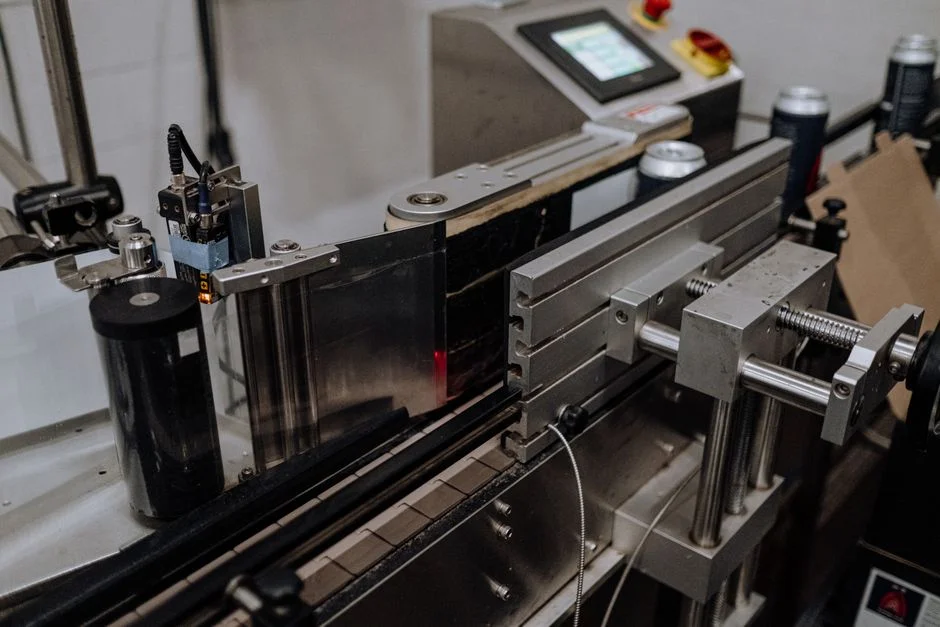
A food-processing pretreatment train should follow the wastewater’s physical and biological sequence: source control and segregation, equalization, screening or solids removal, DAF when floatable solids and FOG are present, biological treatment for biodegradable organics, pH and alkalinity control, and final monitoring before discharge. The permit determines whether every stage is required; representative wastewater and peak-production data determine capacity and control requirements.
DAF removes suspended solids, FOG, oil and grease, and colloidal material from wastewater. USP Technologies specifically identifies DAF use in meat, protein, and dairy applications for separating non-soluble contaminants including suspended solids, fats, oils, and grease (USP Technologies, Wastewater Treatment in the Food & Beverage Industry, current webpage). Biological treatment then addresses biodegradable BOD and COD; supplemental oxygen and alkalinity support may be needed where loading or pH conditions constrain biological performance.
HydropureWater’s DAF system for food-processing pretreatment has a stated capacity of 4 to 300 m³/h across 13 standard models and automatic skimming for food-processing and municipal pretreatment applications. That equipment range does not establish the correct size for a given plant; the design must reconcile the stated model capacity with measured peak flow, required clarification performance, operating redundancy, and equalization strategy.
Automatic chemical addition belongs where the permit and treatment trial establish a need. An automatic chemical dosing system for pH and coagulation control can provide PLC-controlled injection of coagulants, flocculants, pH adjusters, or specialty chemicals. Chemical addition is not automatically required, and feed rate should follow verified process demand rather than a fixed schedule.
| Process stage | Primary function | Critical design and operating evidence |
|---|---|---|
| Source control and segregation | Prevents incompatible streams from mixing | Routing, valve controls, and wastewater profile by source |
| Equalization | Buffers production, cleaning, and batch-release peaks | Peak-flow inventory, operating level, mixing, and standby strategy |
| Screening or solids removal | Removes debris and settleable material | Screen size, solids capture, and waste-disposal route |
| DAF | Removes suspended solids, FOG, oil and grease, and colloidal material | Peak hydraulic load, flotation performance, skimming, and sludge handling |
| Biological treatment | Removes biodegradable organics | BOD/COD loading, oxygen supply, pH, alkalinity, and solids control |
| pH and chemical control | Maintains treatment stability and supports coagulation needs | Permit range, dose-response trial, interlocks, and chemical inventory |
| Final monitoring | Verifies permit compliance before sewer connection | Permit sampling point, analyzers, calibration, alarms, and data records |
Controls should address flow-paced operation, equalization inventory, skimming performance, biological oxygen and solids control, and fail-safe actions for slug loads. A full treatment-engineering design remains necessary; neither a universal DAF configuration nor a generic biological system can be selected from flow alone. For high-organic applications, MBR design for high-organic food-industry wastewater provides a useful frame for assessing solids separation and biological performance together.
Turn monitoring and reporting duties into a compliance operating system
Compliance begins with the issued permit’s sampling points, parameters, frequencies, and reporting periods, not a generic monitoring checklist. The facility should translate each condition into a controlled task with an owner, sampling method, laboratory requirement, due date, escalation rule, and record location. Monitoring results, laboratory reports, sampling records, and required BMP documentation must be retained for at least three years, with longer retention during unresolved litigation or when directed by the applicable authority (KC Water Industrial Pretreatment Program, current webpage).
Change control must be built into production planning. A planned significant change requires a Notice of Change at least 60 days in advance. A change of more than 10 percent in effluent quantity, whether an increase or decrease, is a significant flow change, and substantial changes in wastewater character must also be reported (KC Water Industrial Pretreatment Program, current webpage). Production-based categorical standards may impose additional production-change notification requirements, so the applicable permit instructions must be checked before a campaign, line change, product reformulation, or capacity expansion.
For a sampling-derived violation, notify KC Water within 24 hours after becoming aware and submit required repeat-sampling results within 30 days after awareness, subject to applicable federal exceptions. Facilities should also maintain an accidental or slug-discharge control plan, current notification contacts, spill procedures, and production-change review triggers. KC Water requires applicable changes affecting spill or slug-discharge potential to be reviewed in the ASDCP.
| Compliance event | Required response | Control or evidence |
|---|---|---|
| Planned significant process or wastewater change | Submit Notice of Change at least 60 days in advance | Change-control register and production-change review |
| Flow quantity changes by more than 10 percent | Treat as a significant flow change | Flow trend and authorization decision |
| Substantial change in wastewater character | Report to KC Water | Updated characterization and permit review |
| Sampling-derived violation | Notify within 24 hours after awareness; submit required repeat results within 30 days | Notification record, corrective action, and laboratory reports |
| Spill or slug discharge | Use notification procedures and update the ASDCP when the basis changes | Incident log, notifications, and revised control plan |
| Records | Retain required monitoring and BMP records for at least three years | Controlled records archive with inspection access |
KC Water reports compliance as C for Full Compliance, I for Infrequent Noncompliance, and SNC for Significant Noncompliance. Its enforcement response may progress from phone notifications and compliance meetings to formal notices, administrative orders, emergency action, legal action, permit modification or revocation, and cost recovery (KC Water Industrial Pretreatment Program, current webpage). Real-time measurements can support this system, but real-time wastewater monitoring for permit compliance must be tied to the permit’s actual parameters and sampling requirements rather than treated as automatic proof of compliance.
Use a due-diligence checklist before approving a pretreatment supplier
A defensible supplier proposal must connect the permit to the process basis, equipment sizing, controls, and compliance documentation. A bid stating only average design flow or treatment capacity is incomplete. The bidder should identify the applicable permit limits, wastewater characterization, production schedule, peak flow, redundancy, sludge-handling method, and each upstream and downstream treatment step.
Ask the bidder to demonstrate how the system responds to production spikes, cleaning chemicals, FOG variability, hydrogen sulfide, pH excursions, odor, and equipment outages. Require evidence tied to the actual wastewater and permit, not a generic food-processing reference. Where a proposed technology depends on biological solids separation, small-factory treatment-system selection guidance can help frame the technical questions, but it does not replace plant-specific design.
| Bid package | Required evidence | Approval test |
|---|---|---|
| Process basis | Permit, characterization, production profile, peak flow, redundancy, and sludge handling | Traceable to facility records and the issued permit |
| Peak performance | Treatment response to cleaning, FOG, organic, and slug loads | Supports the documented production scenario |
| Controls and monitoring | Critical measurements, alarms, interlocks, HMI, data export, and compliance records | Supports operation and permit verification |
| Lifecycle inputs | Equipment, foundations, utilities, chemicals, sludge, labor, maintenance, spares, energy, and monitoring | Costs are visible and assigned by responsible party |
| Scope ownership | Sampling, laboratory analysis, reporting, commissioning, training, and service | No gap between supplier scope and permit duty |
Compare bids on lifecycle operating inputs as well as purchase price. Verify which party owns permit interpretation, sampling, laboratory analysis, reporting support, commissioning, training, and continuing service. For permit clarification, use KC Water RCD at [email protected] or (816) 513-0600 rather than relying only on an equipment vendor’s interpretation.
Frequently Asked Questions
How much should a food-processing pretreatment system near Kansas City cost?
Request a scope-based quotation after KC Water identifies the authorization and the plant establishes permit limits, wastewater characterization, peak production, and required redundancy. The quotation should separate equipment, foundations, utilities, chemical use, sludge removal, labor, maintenance, spares, energy, monitoring, commissioning, and service; do not use an unsupported generic price.
How do we size a pretreatment system without over- or undersizing it?
Base sizing on the issued permit, representative laboratory data, peak flow, batch and cleaning schedules, and future production plans. Equalization inventory and treatment capacity must address those peaks; where evidence is missing, request it rather than adopting a generic flow recommendation.
What should a pretreatment supplier demonstrate beyond equipment capacity?
Require a permit-based process basis, peak-performance evidence, alarms, interlocks, data export, sludge handling, and clearly assigned compliance services. Ask how the train responds to cleaning chemicals, FOG variability, pH excursions, odor, and outages.
How can a plant reduce KC Water pretreatment compliance risk?
Create a permit-based calendar for required monitoring, submit significant changes at least 60 days in advance, notify sampling-derived violations within 24 hours, submit required repeat results within 30 days, maintain slug-discharge controls, and retain required records for at least three years (KC Water Industrial Pretreatment Program, current webpage).