What Changes When Danone Acquires a Texas Plant?
There is no single Danone-specific Texas wastewater rule triggered merely by acquiring a plant. Requirements depend on the site’s existing permit, discharge route, operator, wastewater profile, and post-close operations. TCEQ or another Texas authority may require a permit transfer or modification, while a POTW may require industrial-user approval, revised pretreatment limits, or additional monitoring. Before closing, Danone should obtain the controlling permit and sewer documents, map every wastewater pathway, test representative influent and effluent, and compare production, cooling, chemical use, treatment performance, and discharge routing with existing authorization.
The acquisition itself is only the first fact in the review. The controlling questions are whether the facility directly discharges to surface water or sends wastewater to a publicly owned treatment works (POTW), what the existing permit or sewer authorization permits, and whether Danone intends to change the plant’s water demand or waste profile. A change in corporate ownership must be distinguished from a material operational change involving production, power generation, cooling demand, potable-water use, chemicals, wastewater flow, treatment, reuse, or discharge routing.
That distinction affects transaction risk. A transfer of ownership or control may require administrative action or notice. A change in process chemistry, flow, or discharge point may require a permit modification, POTW approval, revised pretreatment requirements, or additional monitoring. The buyer should not authorize a material operating change merely because the same company will own the site after closing.
Danone’s Balclutha milk-processing project in New Zealand is a bounded precedent: SLR Consulting reported that treated wastewater was used to irrigate neighboring farmland and that the work involved land rights, resource consent, Iwi approval, hydrology, and ecology assessments. That project shows how wastewater reuse can require separate rights and approvals; it does not establish a Texas requirement for the acquired plant.
This is a due-diligence framework, not site-specific legal advice. The existing permit, POTW documents, controlling authority, and proposed post-close operations determine the actual obligations.
Direct Discharge and POTW Discharge Require Different Approvals
A direct discharger and an indirect discharger occupy different approval tracks, and the acquisition team must determine which track applies before commissioning treatment equipment or committing to post-close production.
| Decision point | Direct discharge to surface water | Indirect discharge to a POTW |
|---|---|---|
| Controlling authorization | Site-specific NPDES permit issued by TCEQ or another applicable Texas authority | Industrial-user agreement, permit, or equivalent POTW authorization |
| Documents to obtain | Complete NPDES permit, modifications, transfer application, discharge monitoring reports, self-monitoring records, monitoring plan, compliance schedules, and authority correspondence | Industrial-user agreement, pretreatment rules and limits, permit status, monitoring and sampling requirements, discharge location, and fee or surcharge provisions |
| Potential post-close issue | Transfer or modification may be required; the permit may contain site-specific effluent limits, monitoring frequencies, whole effluent toxicity requirements, and operating conditions | POTW may require industrial-user approval, revised pretreatment limits, or additional monitoring if the industrial waste profile changes |
| Evidence needed before commitment | Complete permit history and current compliance record | Current sewer rules, individual limits, monitoring obligations, and authorization history |
For a direct discharger, the complete NPDES permit file is indispensable. General regulatory knowledge cannot reconstruct the site’s authorized discharge conditions. The buyer should identify the issuing authority, confirm the permit status, and review transfer or change-of-control provisions. It should also obtain monitoring results, self-monitoring records, compliance schedules, correspondence, and any consent order or enforcement history.
For an indirect discharger, the POTW’s industrial-user agreement or permit is the controlling site document. Sewer use rules may impose categorical or site-specific pretreatment requirements, sampling procedures, discharge-location restrictions, monitoring, and fees or surcharges. A change in food-processing chemistry or flow can require a revised agreement or limits even if the legal entity remains the same.
No site-specific permit or POTW limits were supplied for this review, so no numeric effluent limit can be stated reliably. The buyer should obtain those values from the controlling documents and use them in the treatment and transaction analysis.
Build the Permit and Compliance File Before Closing

The complete permit file should be a pre-closing deliverable because it determines whether the acquired treatment system has a lawful operating path.
For a direct discharger, assemble the complete NPDES permit, all modifications, the transfer application, discharge monitoring reports, self-monitoring records, monitoring plan, compliance schedules, and correspondence with the Texas permitting authority. For a POTW discharger, obtain the industrial-user permit or agreement, current pretreatment limits, local sewer-use rules, monitoring and sampling obligations, and the discharge authorization history.
Read each document for transfer, modification, notification, and change-of-control provisions. Do not assume that closing itself completes the required approval or that a transfer application is the only filing needed. Counsel should determine which actions are conditions to continued authorization and which can follow closing.
The compliance review should identify open violations, monitoring gaps, reporting exceptions, consent orders, overdue corrective actions, and historical exceedances. These findings may create successor liability, seller remediation duties, or an inability to meet permit or sewer conditions after closing. They should not be buried in an environmental schedule without a named owner and resolution date.
Preserve records before closing. The permit, monitoring, laboratory, maintenance, training, and authority-correspondence files should have a named wastewater lead and an agreed custody schedule. The transaction team should distinguish records needed for regulatory compliance from equipment records needed to establish the condition and capacity of the treatment asset.
A useful pre-closing sequence is:
- Identify the discharge route and controlling authority.
- Obtain the complete permit or industrial-user file.
- Reconcile monitoring and laboratory records against required sampling and reporting.
- Review violations, orders, corrective actions, and change provisions.
- Assign custody and responsibility for unresolved obligations.
Map the Water Balance and Wastewater Profile
A wastewater approval review cannot reliably assess post-close operations without a water balance and representative wastewater characterization.
Diagram every wastewater pathway before evaluating the permit file. Build the balance from freshwater make-up, process usage, cooling-tower evaporation and blowdown, wastewater generation, reuse, and final discharge. The diagram should show where treatment occurs, where sludge or concentrates leave the site, and whether any stream changes destination after closing.
Compare the existing permit and sewer limits with Danone’s proposed production, cooling, chemical inventory, wastewater flow, treatment process, and discharge point. If the proposed operation changes the quantity, chemistry, or routing of the discharge, confirm with the controlling authority whether a permit modification, industrial-user approval, or revised monitoring obligation applies before selecting treatment equipment.
| Review input | Information to request | Transaction decision supported |
|---|---|---|
| Water balance | Freshwater make-up, process use, evaporation, blowdown, generation, reuse, and final discharge | Hydraulic loading and whether the planned operation fits the current authorization |
| Representative wastewater chemistry | Flow, pH, temperature, BOD, TSS, TDS, conductivity, oil and grease, metals, ammonia, and process-specific regulated constituents | Treatment selection, pretreatment need, and whether revised limits or monitoring may be required |
| Process inventory | Cleaning chemicals, sanitizers, floor and equipment washwater, cooling and boiler blowdown, production losses, and dairy or process-specific constituents | Industrial-waste profile, sampling scope, and treatment-process compatibility |
| Post-close operating plan | Proposed production, cooling, chemicals, reuse, treatment operation, and discharge routing | Permit-transfer or modification decision and capital scope |
The listed parameters are a screening scope, not a claim that every parameter applies to this transaction or that a numeric limit exists. The food and beverage wastewater characterization for sewer compliance provides a related workflow, but the acquired plant’s controlling permit and POTW documents must supply the applicable requirements.
For food processing, do not overlook cleaning chemicals, sanitizers, washwater, cooling and boiler blowdown, production losses, or dairy and process-specific constituents. These streams can change the load entering existing equipment even when total plant production appears unchanged. The water balance and chemistry therefore precede an equipment decision.
Test the Acquired Treatment System as a Transaction Asset
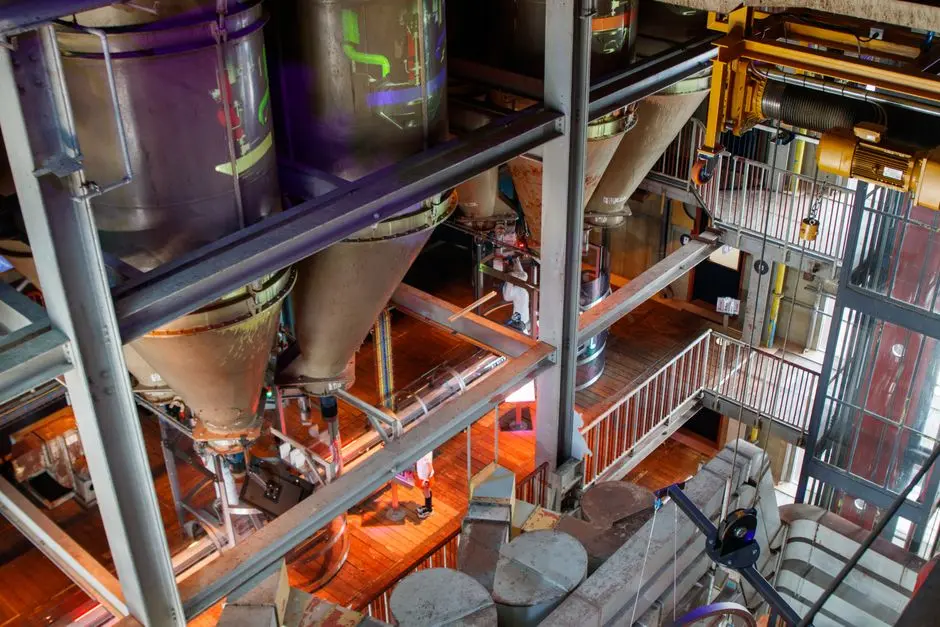
The treatment system should be classified as a usable asset only if representative testing shows that it can meet the applicable discharge or reuse requirements under the post-close water balance and wastewater chemistry.
Evaluate physical condition, hydraulic capacity, process reliability, controls, instrumentation, chemical and sludge handling, redundancy, maintenance history, operator competence, and available expansion space. Testing should establish a baseline rather than rely on seller summaries or historical design assumptions. A treatment train that passed under the prior operating pattern may not perform acceptably with a changed product mix, cleaning regime, cooling demand, or discharge schedule.
Select treatment from the contaminant profile and required effluent quality. A integrated MBR wastewater treatment system combines biological treatment and solids separation where a compact footprint is needed. The supplied planning benchmarks for this equipment are filtration below 1 μm, a footprint 60% smaller than conventional systems, and a capacity range of 10 to 2,000 m³/day. These are general planning figures, not quotations or site-specific design guarantees.
Do not assume that a biological membrane system is the appropriate first step for every food-processing wastewater stream. High suspended solids, oil and grease, or colloidal matter may justify physical pretreatment before biological treatment or reuse. A DAF system for food-processing wastewater should be evaluated against the actual contaminant profile, not selected by process name alone.
Evaluate recovery, pretreatment requirements, energy demand, sludge handling, and concentrate disposition using the site chemistry. The industrial ETP versus DAF selection guide provides a useful comparison framework, while the permit, sewer limits, and representative testing determine the final decision.
Make Wastewater Readiness a Closing Condition
Closing does not establish wastewater operating readiness, so unresolved permit or treatment issues should be resolved before the buyer assumes operational control.
| Unresolved issue | Preferred transaction treatment |
|---|---|
| Permit transfer or modification is incomplete | Closing condition, seller covenant, or escrow supported by counsel |
| Outstanding monitoring, violations, or corrective actions | Seller responsibility with a defined cure, reserve, or indemnity |
| Treatment capacity or performance is inadequate | Price adjustment, seller-funded capital repair, or a pre-closing performance condition |
| Sludge disposal, contamination, or reuse obligations remain unresolved | Specific indemnity, escrow, or closing condition |
| Operational ownership after closing is unclear | Named wastewater lead and documented handover before closing |
Before closing, confirm permit status, appoint a wastewater lead, preserve historical records, establish baseline water and energy balances, and prohibit unauthorized changes to production, cooling, chemicals, treatment operation, or discharge routing. Do not authorize a material production or wastewater change until the controlling authority confirms whether a transfer, modification, approval, or new monitoring obligation applies.
Allocate responsibility for permit-transfer completion, outstanding monitoring, violations, capital repairs, sludge disposal, contamination, and wastewater reuse obligations through purchase-price adjustments, escrow, seller covenants, indemnities, or closing conditions, as advised by counsel. An acquired system that cannot reliably meet the required discharge or reuse performance should be treated as a purchase-price or seller-funding issue, not merely an operating-capital decision.
Build a 30-, 60-, and 90-day post-closing plan for permit records, sampling, training, maintenance, reporting, and first-cycle performance verification. These intervals are management milestones, not legal deadlines. Their purpose is to test whether the handover remains effective after the transaction team leaves the site.
Frequently Asked Questions
Does Danone need a new wastewater permit after buying a Texas plant?
Not necessarily. The existing permit or industrial-user file and Danone’s proposed operating changes determine whether an NPDES permit transfer, permit modification, POTW approval, revised pretreatment limits, or no substantive permit change applies. Confirm the path with the controlling authority before making a material production, chemical, cooling, treatment, or discharge-routing change.
Which wastewater records should Danone request before closing?
For direct discharge, request the complete NPDES permit, modifications, transfer records, discharge monitoring reports, self-monitoring records, monitoring plan, compliance schedules, and authority correspondence. For POTW discharge, request the industrial-user agreement or permit, current pretreatment limits, sewer-use rules, monitoring and sampling requirements, discharge authorization history, and fee or surcharge provisions.
How should treatment equipment be sized and selected for the acquired plant?
Base selection on the post-close water balance, representative influent and effluent chemistry, required discharge or reuse quality, hydraulic loading, and required reliability. Obtain site-specific flow, constituent, and limit data before choosing biological, membrane, flotation, or other treatment. The treatment supplier should confirm performance against those inputs rather than provide a generic capacity statement.
What is the most important cost check before signing?
Request a scoped estimate that separates permit-transfer work, monitoring and testing, pretreatment, treatment capacity, controls and instrumentation, sludge or concentrate disposal, energy, and contingency. No site-specific quotation was supplied, so the buyer should not rely on a generic equipment price. Require the estimate to identify exclusions, assumptions, lead-time dependencies, and performance guarantees, then compare the result with the proposed escrow, purchase-price adjustment, and seller funding.
When does an acquisition create a wastewater capital liability?
Warning signs include inadequate hydraulic capacity, inability to meet permit or sewer limits, missing pretreatment, unreliable controls, insufficient sludge handling, and unresolved compliance issues. A liability also arises if Danone’s post-close water or waste profile differs materially from the tested condition. Those findings should be quantified through a site-specific scope and allocated before closing.