Which Wastewater Stream Drives the Decision
For transportation-equipment wastewater in Greenville, MBR is usually the stronger candidate when low-solids effluent, a compact installation or defined water reuse is required. Conventional activated sludge can be more economical when the wastewater is readily treatable, adequate land is available and simpler operation is preferred. Both use biological treatment, but MBR separates solids with membranes instead of a secondary clarifier. The correct choice depends on measured flow and loads, wastewater streams, pretreatment needs, current discharge or reuse requirements, available space and lifecycle operating cost—not the process label alone.
Begin at the process boundary, not the treatment vendor’s catalog. Vehicle or trailer fabrication, metal finishing, coating, paint preparation, parts washing, equipment washing, floor drainage and sanitary flows should be sampled separately wherever practical. Each can contain a different combination of suspended solids, oils, cleaning chemicals, metals and biodegradable organics. Combining them before characterization can hide the stream that governs treatment demand. A practical transportation equipment plant pretreatment requirements review should also identify whether contaminants can be excluded at source.
The sampling plan must cover production shifts, washdown periods, storm events, peak daily flow and minimum night flow. Targeted event samples are important where a short wash cycle produces a concentrated discharge that a time-weighted composite could conceal. For each event, record the originating process, cleaning chemistry, duration and discharge destination.
The supplied research does not establish treatment performance for Greenville transportation-equipment streams. It also does not support a Greenville capacity, contaminant load or treatment price. Those conclusions require site data; a bench test, pilot trial or documented vendor trial on the actual stream is stronger evidence than extrapolation from other industries.
| Plant stream | Likely constituents to investigate | First decision |
|---|---|---|
| Parts or equipment washing | Suspended solids, oils, cleaning chemicals, biodegradable organics | Characterize independently; evaluate screening, equalization and chemical compatibility |
| Metal finishing | Metals, acids or alkalis, suspended solids, process rinses | Determine source control and process-specific treatment |
| Coating and paint preparation | Solids, organics, coatings residues and wash chemicals | Establish whether segregation or dedicated pretreatment is required |
| Fabrication and floor drainage | Suspended solids, metals and variable washdown contributions | Map clean, dirty and storm-derived drainage areas |
| Sanitary flow | Biodegradable organics, nutrients and pathogens | Evaluate separately where practical; do not let it conceal production peaks |
Audit the Wastewater Before Comparing Treatment Systems
A defensible MBR or conventional activated-sludge comparison starts with a measured wastewater audit, because neither peak flow nor contaminant load can be inferred from the plant description. Measure peak and minimum flow and wastewater temperature; these inputs affect hydraulic and biological loading, equalization needs and equipment configuration. Then characterize suspended solids, oil and grease, BOD and pH because they influence biological loading, settling behavior, pretreatment selection and membrane-fouling risk.
Inventory cleaning chemicals and process-specific contaminants rather than treating “water” as a single medium. Identify toxicity, membrane compatibility, persistent materials and the possibility of source control or segregation. Metals and other contaminants that are not adequately addressed by biology require a defined process step or exclusion from the biological train.
Document the discharge point, current permit or sewer requirements and intended reuse destination. The receiving authority’s current requirements—not membrane pore size—must establish the acceptance basis. If the proposed route is direct sewer discharge, compare clarification and filtration against those limits. If water will be reused in a process, obtain that process’s quality specification, including any parameters beyond suspended solids.
Use event and composite data together. A composite can characterize sustained discharge conditions, while targeted samples can reveal wash-cycle spikes that determine equalization, pretreatment or equipment-protection requirements. The 2026 MBR wastewater cost per m³ guide provides a commercial framework for evaluating treatment concepts, not a substitute for local characterization.
No defensible Greenville flow, contaminant load, system capacity or project price can be calculated from the supplied research. Those outputs remain open until the plant provides representative measurements, the receiving authority confirms applicable requirements and bidders state their design basis.
| Audit input | Decision supported | Information required |
|---|---|---|
| Flow profile | Equalization, hydraulic sizing and treatment capacity | Peak flow, minimum night flow, shift and washdown data |
| Water quality | Biological loading, clarification and fouling risk | Suspended solids, oil and grease, BOD, pH and temperature |
| Chemical inventory | Source control, segregation and material compatibility | Products, concentrations, batch volumes and discharge points |
| Receiving requirements | Effluent objectives and polishing needs | Current permit or sewer rules and reuse specification |
How MBR and Conventional Activated Sludge Separate Solids
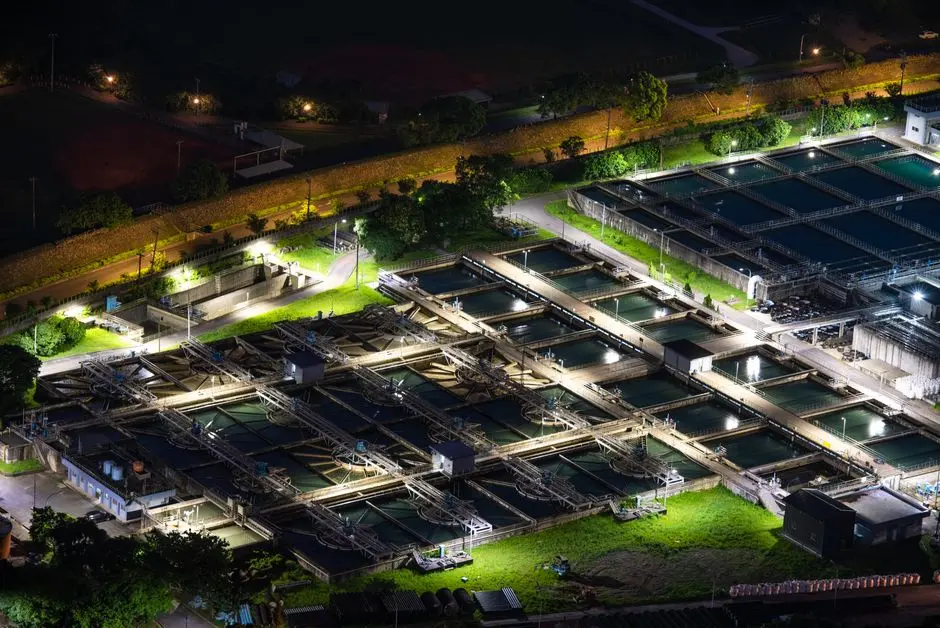
Conventional activated sludge uses biological treatment followed by gravity settling in a secondary clarifier, while an industrial membrane bioreactor combines biological treatment with membrane separation. That mechanism difference determines the equipment, space and maintenance obligations; it does not by itself establish the better process for a specific plant.
Conventional activated-sludge effluent quality depends on biological performance, clarifier design, hydraulic loading and solids capture. The process normally requires basins for biological treatment, a dedicated secondary clarifier and provisions for aeration and sludge handling. Clarifier performance remains sensitive to settling behavior, density changes and hydraulic disturbance.
An industrial membrane bioreactor retains biomass and separates solids through membrane modules rather than a separate gravity clarifier. HydropureWater specifies submerged PVDF filtration below 1 μm for its integrated MBR membrane bioreactor. The configuration eliminates the separate clarifier but adds membrane modules, aeration scouring, cleaning controls, integrity monitoring and replacement planning. Upstream solids, oils, scaling compounds and incompatible chemistry therefore matter directly to membrane operation.
Academic evidence supports application-specific evaluation. A Memranes study published in 2026 examined MBR and activated-sludge alternatives for decentralized treatment in arid regions; it discussed stricter discharge requirements, sensitive locations and reuse as reasons to improve hygienic effluent quality. Its community wastewater context is not evidence of performance for Greenville transportation equipment. Likewise, the supplied pharmaceutical-comparison citation could not be substantiated from its supplied excerpt and should not be used to support a process ranking.
Membrane cutoff reduces particles retained by the membrane; it does not establish suitability for every reuse application. End-use testing remains necessary. Confirm the receiving process specification, perform application-specific testing and obtain any required approval before committing to a reuse claim.
Transportation Wastewater Parameter Comparison
The preliminary comparison should distinguish verified process mechanisms from vendor catalog claims and unverified site predictions. MBR offers tighter solids control and can reduce the space devoted to separation, while conventional activated sludge retains a familiar settling-based train and may remain preferable for readily treatable wastewater headed to direct permitted discharge.
HydropureWater’s verified product catalog states that its integrated MBR occupies 60% less footprint than conventional systems and covers 10 to 2,000 m³/day. These are vendor claims, not a Greenville footprint prediction or a basis for sizing. The installed comparison must include pretreatment, aeration, sludge handling, maintenance clearances and building requirements.
The DF-series equipment reference lists 0.1 μm PVDF membranes, configurations from 80 to 225 m² and output from 32 to 135 m³/day. It also states energy use 10–20 times below external cross-flow systems. That comparison is specifically against external cross-flow systems; it is not evidence that MBR uses less energy than every conventional activated-sludge installation.
| Parameter | Industrial MBR | Conventional activated sludge |
|---|---|---|
| Solids separation | Membrane filtration; vendor specifies 0.1 μm PVDF for DF-series modules | Gravity settling in a secondary clarifier |
| Integrated catalog footprint claim | HydropureWater states 60% less than conventional systems | No matching supplied catalog claim |
| Catalog capacity references | Integrated system: 10 to 2,000 m³/day; DF-series: 32 to 135 m³/day | Site-specific capacity must be established from the wastewater audit |
| Principal sensitivities | Biology plus membrane fouling, scouring, cleaning and module maintenance | Biology, settling, aeration, hydraulic loading and sludge handling |
| Effluent control | Low-solids filtration may support defined reuse after application-specific testing | Clarification may suffice for direct permitted discharge if current limits are met |
| Space | Potentially compact separation, but the complete train must be measured | Requires land for biological basins, clarification and sludge handling |
| Lifecycle scope | Include membranes, cleaning, replacement modules, controls, labor and sludge handling | Include basins, aeration, clarification, labor, utilities and sludge handling |
Route Each Stream Through Pretreatment
Pretreatment should remove contaminants that would overload biology, impair clarification or foul membranes. The correct route follows the measured stream, not a standard train applied to every plant. Upstream control can determine whether MBR is technically viable because membranes retain solids that a conventional process may remove in a secondary clarifier.
Use a rotary mechanical bar screen when rags, plastics, fibrous debris or other suspended material could obstruct biological treatment, pumps or membranes. Select the screen and capacity from measured debris and flow data; a catalog maximum cannot establish the duty. HydropureWater’s rotary mechanical bar screen is one equipment reference for this assessment.
Evaluate DAF when oil, grease, floatables or colloidal material are present. DAF pretreatment for oil, grease and floatables should therefore be treated as a conditional step, not a default component. Confirm contaminant dominance and the downstream quality target before including it.
Handle cleaning-chemical shocks through source control, segregation, equalization or chemical-specific treatment. Equalization may buffer short discharges, but it does not neutralize incompatible chemicals or persistent contaminants. Route metals and other process-specific pollutants to an appropriate treatment step or exclude them from the biological train rather than assuming MBR or activated sludge alone will remove them.
Confirm discharge or reuse limits before selecting final treatment. A train can be technically operable and still fail to comply with the applicable receiving requirements.
| Stream condition | Potential treatment response | Basis for selection |
|---|---|---|
| Rags, plastics or fibrous debris | Rotary mechanical screening | Measured debris type, peak flow and downstream protection need |
| Oil, grease, floatables or colloidal solids | DAF evaluation | Contaminant analysis and downstream treatment target |
| Cleaning-chemical shock or incompatible material | Source control, segregation, equalization or chemical-specific treatment | Chemical inventory, toxicity and membrane compatibility |
| Metals or persistent contaminants | Process-specific treatment or exclusion | Contaminant fate and confirmed discharge or reuse limits |
Match the Treatment Train to the End Use
The end use determines the required solids-removal performance. For direct permitted discharge, compare clarification against membrane filtration using the receiving authority’s current requirements and the measured wastewater profile. If the required limit is already met by a well-designed conventional train, additional filtration may not be justified.
For industrial process-water reuse, define the receiving process and its quality specification before selecting MBR. Membrane retention may provide a cleaner stream, but additional treatment can still be required for dissolved constituents, specific metals, residual cleaning chemicals or process-sensitive properties. Ask the receiving process owner what parameters govern use and what test method or acceptance protocol it accepts.
For higher-purity reuse, evaluate UF as a downstream polishing option only where its duty is supported. HydropureWater’s UF system is specified with 0.03 μm hollow-fiber membranes, a 2,000 to 40,000 L/h range and a stated turbidity limit. Those catalog specifications do not establish compatibility with Greenville wastewater or suitability for a particular reuse.
HydropureWater’s integrated MBR filtration below 1 μm does not establish suitability for every reuse application. Filtration performance and reuse approval are separate questions. Make end-use testing and receiving-authority confirmation mandatory before committing to reuse claims or commercial guarantees.
Build a Weighted MBR Selection Decision
The preferred process should be the option with the highest weighted score after the wastewater audit, permit review and end-use definition—not the option presumed superior before those inputs are available. Assign weights collaboratively to reuse potential, available footprint, effluent consistency, pretreatment needs, operator capability, lifecycle cost and delivery schedule. A plant pursuing process-water reuse should not give reuse the same importance as a plant considering direct sewer discharge.
Score each option only after measured data are available. Favour MBR where low-solids effluent or defined reuse has high value, space is constrained, feed quality is controlled and operators can maintain membranes. Favour conventional activated sludge where the wastewater is readily treatable, the outcome is direct permitted discharge, adequate land is available and simpler separation, capital procurement and operation dominate.
Require every bidder to state design flow, pretreatment assumptions, membrane type, footprint basis, O&M staffing, cleaning frequency, membrane-life assumptions, utilities, sludge handling, commissioning requirements and exclusions. Ask how the footprint was measured and whether it includes operating clearances. For conventional systems, ask for clarifier and basin data rather than accepting a generic package comparison.
| Criterion | MBR tends to score well when | Conventional activated sludge tends to score well when |
|---|---|---|
| Reuse potential | A defined process requires low-solids effluent and application-specific treatment is acceptable | Direct permitted discharge is the outcome |
| Footprint | Available area is constrained and pretreatment plus clearances still fit | Land is available and a conventional layout is practical |
| Feed and pretreatment | Source control is effective and upstream contaminants are controlled | Wastewater is readily treatable without membrane-sensitive contaminants |
| Operator capability | Staff can maintain membranes and interpret operating trends | Existing operations favor aeration, settling and sludge handling |
| Lifecycle cost | Solids control, reuse value and compactness offset membrane-related commitments | Simpler separation and lower process complexity dominate |
Select the highest weighted score only after confirming current Greenville discharge or reuse requirements with the receiving authority. Generic national limits are not a substitute for the applicable permit or sewer rules. The MBR versus activated sludge decision framework supports this weighted comparison, but its mining-wastewater context does not establish Greenville performance.
Compare Itemized Bids and Lifecycle Commitments
A procurement comparison must normalize both proposals over the same planning horizon and scope. Include pretreatment, utilities, sludge disposal, membrane cleaning and replacement, operator labor, structural and civil work, and land or building requirements. A generic cost per cubic metre is not a bid unless its flow basis, load basis, treatment standard and included scope are explicit.
Use the 2026 MBR wastewater cost per m³ guide to structure cost categories, but require Greenville-specific quotations. The supplied research contains no defensible local project price because flow, loads, pretreatment needs, discharge route, footprint, utilities and reuse targets are unknown.
Request separate pricing for process equipment, pretreatment, civil and structural work, utilities, sludge handling, operator labor, membrane cleaning and replacement, commissioning and exclusions. For conventional systems, include biological basins, aeration, secondary clarification and associated civil work. For MBR, include membrane modules, controls, cleaning chemicals or services, replacement modules and integrity-related monitoring.
Frequently Asked Questions
What capacity should an MBR or activated-sludge system have for a Greenville transportation-equipment plant?
Capacity must be established from measured peak flow, contaminant load and the confirmed effluent specification. HydropureWater’s integrated catalog range of 10 to 2,000 m³/day and DF-series output of 32 to 135 m³/day are product references, not site sizing. Before requesting a capacity proposal, provide the production and washdown schedule, event samples, equalization assumptions and receiving requirements.
How much should the treatment system cost?
No defensible Greenville project price can be calculated from the supplied research. Request equal-scope quotations covering process equipment, pretreatment, civil and structural work, utilities, sludge handling, operator labor, membrane cleaning and replacement, commissioning and exclusions. Compare both options over the same planning horizon and state whether the price assumes direct sewer discharge or reuse.
How should suppliers be selected?
Compare technical bids against the same design basis rather than selecting on package price or catalog capacity. Require each bidder to identify the design flow, biological and membrane basis, pretreatment assumptions, footprint, utilities, staffing, cleaning regime, replacement assumptions, controls, guarantees and permit basis. Give stronger weight to a documented trial on the actual industrial stream than to general product literature.
Does MBR filtration make water suitable for reuse?
No. HydropureWater specifies filtration below 1 μm for its integrated MBR, but that specification does not establish suitability for every industrial reuse. Define the receiving process and its water-quality requirements, test the actual treated stream and confirm acceptance with the process owner. Additional UF or other polishing should be evaluated only against the end-use specification.
Does choosing MBR or conventional activated sludge establish permit compliance?
No. Compliance depends on the actual wastewater characteristics, treatment performance, discharge point and current permit or sewer conditions. Confirm those requirements directly with the receiving authority before finalizing the technology basis, and require the supplier to identify any permit assumptions or exclusions in its proposal.