How to Choose a Packaged Sewage Treatment Plant in Muscat
For most Muscat housing developments, an integrated A/O biological contact oxidation package is the practical starting point when its published 1–80 m³/h duty range matches the verified design flow. MBR becomes the stronger candidate where filtration below 1 μm, advanced reuse or a constrained treatment footprint justifies added process and maintenance complexity. Selection should begin with verified wastewater flow, groundwater and flood exposure, maintenance access, odor constraints, effluent objectives and the permitted discharge route—not population alone. The developer should obtain the applicable Muscat authority requirements before selecting equipment, then require bidders to demonstrate process duty, automation, sludge handling and expansion against the development basis.
Build the design-flow schedule from verified wastewater-generation data for each occupancy phase, including average daily flow, peak factor, groundwater infiltration, rainfall-related inflow and future development. Do not derive plant capacity from an unverified per-capita figure. Clarify whether effluent will enter a sewer, be reused for irrigation or another approved purpose, and confirm the legal quality and route before selecting the process.
Record the available footprint, maintenance access, power supply, noise limits, odor boundary, groundwater level and flood exposure. The location of the sewer connection or effluent outfall is a design constraint, not an afterthought. The same sequence applies to packaged sewage treatment plant selection for housing developments and packaged sewage plant options for housing: verify the project basis first, then screen technology and scope.
Muscat Site Conditions That Change the Plant Design
Muscat’s wadis, high-water-table areas and rapid urban growth require site-specific assessments that a standard package layout does not resolve. Parsons’ Al Seeb Wastewater Project included flood protection because Muscat’s wadis are dry rivers that flood during rain, a vacuum sewer system in high-water-table areas, and an enclosed treatment plant with odor control to meet a no-odor boundary requirement (Parsons, Al Seeb Wastewater Project–Muscat, Oman; source supplied without a publication date).
A package installation below grade therefore needs a reviewed finished level relative to flood conditions, access-cover arrangement, buoyancy protection, groundwater effects and the hydraulic route to the plant. Odor performance should become an explicit acceptance criterion where homes or public spaces lie near the boundary. The wider domestic sewage treatment equipment guide can support generic equipment checks, but it cannot replace Muscat-specific flood and authority review.
Parsons also reports that rapid urbanization caused the Al Seeb system’s capacity to expand and the treatment-plant location and sewer mains to change. That supports reserving treatment capacity, route access and construction sequencing for later phases. The Al Seeb program covered approximately 490 km² and served 350,000 residents, demonstrating the coordination scale of Greater Muscat planning; it does not establish the size of an individual housing package.
| Muscat condition | Documented local evidence | Package-plant design response |
|---|---|---|
| Wadi and rainfall flooding | Parsons included flood protection for Muscat’s wadi geography. | Assess site levels, access, protection and the effluent route under design flood conditions. |
| High groundwater | Parsons used a vacuum system in high-water-table areas. | Assess infiltration, buoyancy, covers, pumping and hydraulic access. |
| Odor boundary | Parsons enclosed the Al Seeb plant and applied odor-control solutions to achieve no odor at the facility boundary. | Define odor-control scope and measurable acceptance criteria. |
| Urban expansion | Parsons reports expanded capacity and changed treatment-plant and sewer-main locations. | Reserve treatment, route and construction capacity for later phases. |
| Effluent regulation | The supplied research provides no universal Muscat package-STP effluent limit. | Obtain the permit or authority condition applicable to the selected discharge or reuse route. |
A/O Package Plant or MBR System for a Housing Development
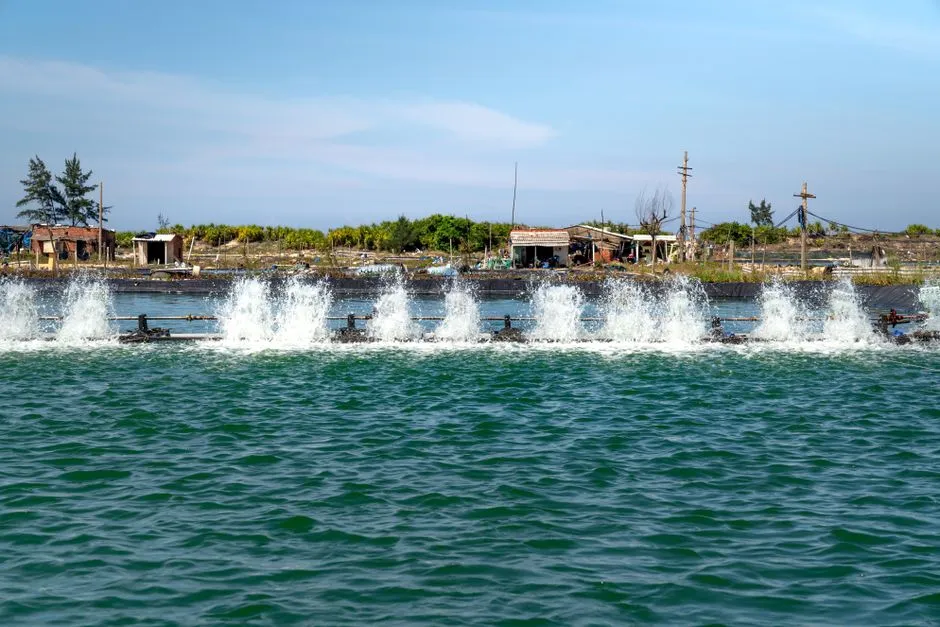
An integrated A/O package is normally the simpler baseline for a residential duty within the published range, while MBR is justified by a specific effluent or reuse requirement rather than by technology preference. The underground WSZ A/O sewage treatment plant combines anoxic/aerobic biological contact oxidation, sedimentation and disinfection in one buried package. HydropureWater’s product information describes it as fully automated, requiring no routine operator, with a published capacity of 1–80 m³/h.
The WSZ can be installed below grade with landscaping above or mounted on a trailer for mobile deployment. That flexibility can preserve usable housing land, although final excavation, support, access and civil works remain project-specific. By comparison, the MBR wastewater treatment system combines activated sludge with submerged PVDF membrane filtration, provides filtration below 1 μm and has a published capacity of 10–2,000 m³/day.
HydropureWater states that the MBR system has a 60% smaller footprint than conventional systems. Evaluate that claim against the complete train: pumps, aeration, controls, sludge handling and maintenance clearances still affect the required site area.
| Selection item | A/O WSZ package | MBR system |
|---|---|---|
| Published capacity | 1–80 m³/h, according to HydropureWater product information. | 10–2,000 m³/day, according to HydropureWater product information. |
| Treatment configuration | Integrated anoxic/aerobic contact oxidation, sedimentation and disinfection. | Activated sludge with submerged PVDF membrane filtration. |
| Filtration claim | No filtration below 1 μm is stated in the supplied product information. | Filtration below 1 μm. |
| Installation concept | Below grade with landscaping above, or trailer-mounted for mobile deployment. | Site arrangement requires a complete treatment-train layout. |
| Primary selection advantage | Integrated biological treatment, sedimentation and disinfection within a simple automated package. | Advanced separation for reuse or tight solids requirements, subject to site and maintenance review. |
| Main tender check | Demonstrate that the process meets the route-specific effluent requirement and development duty. | Demonstrate membrane fouling control, cleaning, replacement and complete footprint. |
Use A/O where the design duty fits the WSZ range and the required outcome can be met by the integrated process. Consider MBR where advanced reuse, very low suspended solids or footprint constraints justify greater process complexity. Before selection, require a process flow diagram, duty basis, guarantee point, residual-sludge route and confirmation of the relevant discharge or reuse condition.
Size the Plant from Demand, Infiltration and Future Phases
Sizing must compare calculated hydraulic duty with each candidate’s published capacity basis and retain a documented path for later phases. The WSZ envelope is 1–80 m³/h, while the MBR envelope is 10–2,000 m³/day. These figures use different time bases and cannot be compared as if they were equivalent. Suppliers must state the conversion and operating basis used to demonstrate compliance.
Create a phase-by-phase flow schedule using verified wastewater generation, groundwater infiltration, seasonal effects and occupancy assumptions. The tender should require average flow, peak flow, design loading, hydraulic retention assumptions, redundancy, duty/standby strategy and expansion provisions. The supplied product information does not provide hydraulic loading rates, so each bidder must calculate and substantiate them.
Construction phasing must be explicit. Parsons reports that the Al Seeb system had to expand capacity and relocate the treatment plant and sewer mains as urbanization progressed (Parsons, Al Seeb Wastewater Project–Muscat, Oman; source supplied without a publication date). A housing plant should therefore avoid committing the entire site or discharge corridor to an inflexible first phase.
| Required tender input | Buyer action | Acceptable supplier response |
|---|---|---|
| Design-flow schedule | Provide verified demand, infiltration, peak method and phase assumptions. | Calculate and show average and peak duty for each phase. |
| Capacity envelope | Identify the proposed package and its published flow basis. | Show unit conversions and confirm that proposed duty fits the selected configuration. |
| Process loading | State wastewater characteristics and design requirements. | Provide hydraulic and process loading calculations; no rates may be inferred from the supplied catalog. |
| Redundancy | Decide the required treatment-continuity strategy. | Define duty/standby arrangement and failure response. |
| Expansion | Provide planned occupancy and development phases. | Show modular expansion, available route and site provisions. |
| Phasing | Separate committed and future works. | Identify temporary connection, testing and commissioning arrangements for each phase. |
The catalog establishes modular and mobile options for WSZ, but it does not establish the correct redundancy for an individual development. Make redundancy an explicit design decision rather than accepting a standard configuration by default.
Compare the Complete Project Scope Before Purchasing

The commercial comparison must cover the installed system, because a packaged unit price does not represent the project’s civil, utility, commissioning or compliance obligations. Include inlet and outlet works, pumping, installation, access covers, odor control, electrical supply, controls, lighting, fencing, landscaping, testing and commissioning. Require bidders to separate equipment from site-specific civil works and external sewer or discharge infrastructure.
Ask each supplier for the proposed process flow, hydraulic basis, equipment schedule, control narrative, training scope, spare-parts list, maintenance plan and performance-test method. The installed-scope comparison for wastewater treatment procurement provides a useful discipline for separating technology performance from site delivery.
Parsons reports that six contracts in the Al Seeb program were coordinated under uniform quality-assurance and quality-control practices, supported by more than 140 construction-management and quality-assurance personnel. The transferable lesson is interface control: treatment, sewer, civil, electrical and odor-control packages must use coordinated drawings, test procedures and responsibility matrices.
| Bid package | Minimum information required | Commercial treatment |
|---|---|---|
| Process equipment | Process flow, equipment schedule, duty basis and guarantee point. | Itemized supplier price and exclusions. |
| Civil and installation | Excavation, supports, access, fencing, landscaping and finished levels. | Separate site-work price. |
| Inlet, outlet and pumping | Pumps, controls, rising mains, connection and testing. | Separate works and power requirements. |
| Electrical and controls | Supply, panels, lighting, alarms, power reliability and controls narrative. | Identify electrical interface and exclusions. |
| Odor and solids | Odor provisions, residual-sludge route, handling and removal. | Include full operating responsibility. |
| Commissioning and support | Test method, training, spares, warranty and local support. | State duration, response and lifecycle support. |
The supplied research contains no Muscat package-plant price and no project-specific operating-cost figures. Request an itemized lifecycle-cost offer rather than relying on an unsupported price range. Installation, power reliability, sludge removal, odor management and future access are lifecycle requirements, not optional extras.
A Practical Decision Framework for Muscat Developers
A defensible Muscat selection proceeds through seven controlled steps, with each decision tied to verified site or authority information.
- Fix the design basis. Establish phase-by-phase wastewater flow, peak-flow method, infiltration, occupancy and wastewater characteristics.
- Confirm the legal route. Obtain the required effluent quality and approved discharge or reuse condition from the relevant Muscat authority.
- Screen capacity. If the duty falls outside the WSZ 1–80 m³/h range, or advanced reuse requires filtration below 1 μm, review the MBR 10–2,000 m³/day alternative and other engineered options.
- Test A/O suitability. Check site constraints, maintenance access, odor control, sludge handling, automation and future expansion against the underground WSZ A/O treatment package.
- Test MBR suitability. Check reuse quality, footprint, membrane maintenance, power demand, process complexity and available space against the submerged-membrane MBR option.
- Compare installed bids. Assess complete scope, commissioning evidence, performance guarantees, maintenance support and lifecycle obligations—not nominal capacity alone.
- Freeze the signed basis. Confirm all authority and designer-specific requirements before placing the order.
The housing-development selection sequence can be adapted as a tender checklist, while the domestic sewage treatment equipment guide can support preliminary equipment screening. Neither substitutes for Muscat-specific flow data, site assessment, the relevant permit or designer review.
The practical conclusion is conditional: use A/O as the baseline where the verified duty fits its published range and the route-specific objective can be met; escalate to MBR where advanced separation or reuse justifies it. The unresolved items must remain explicit in the tender: design flows, groundwater and flood levels, permit limits, reuse criteria, authority acceptance, loading calculations, redundancy and complete installed cost.
Frequently Asked Questions
How much does a packaged sewage treatment plant cost for a Muscat housing development?
The supplied sources provide no Muscat package-plant price or project-specific operating-cost figure. Request itemized quotations covering treatment equipment, civil works, inlet and outlet works, pumping, controls, installation, commissioning, sludge management, maintenance, spares and lifecycle support. Check that exclusions identify external sewer infrastructure, authority charges and future-phase work.
Should a housing development choose A/O or MBR?
Use A/O as the baseline when the calculated duty fits the published 1–80 m³/h WSZ range and the required effluent outcome supports integrated biological treatment, sedimentation and disinfection. Review MBR when filtration below 1 μm, advanced reuse or a constrained footprint justifies membrane maintenance, additional controls and greater process complexity. Confirm the route-specific requirement before choosing.
What documents should a supplier provide before selection?
Require the design-flow basis, process flow diagram, hydraulic and loading calculations, equipment schedule, controls description, odor provisions, residual-sludge route, installation drawing, commissioning plan, performance-test method, warranty boundary and local spare-parts support. Check that the guarantee point matches the permit or reuse specification and that every civil and electrical interface is assigned.
Can a packaged sewage treatment plant be installed below ground in a Muscat housing development?
The WSZ package is designed for below-grade installation with landscaping above, according to HydropureWater product information. The final design must still address groundwater, buoyancy, access, flood level, odor and local civil requirements. Do not treat the catalog configuration as approval of the installation location.
Is a municipal sewer connection always required?
The supplied evidence describes municipal sewer and connection activity in Oman but does not establish one mandatory route for every private development. The owner must confirm the permitted discharge or reuse route with the relevant authority before selecting equipment. A supplier should price and design around that confirmed route, not assume a connection is available or unnecessary.