Start with the estate's wastewater and discharge requirements
No packaged sewage treatment plant can be selected reliably until the development has a verified flow basis, an approved discharge route and a defined operating responsibility. HydropureWater’s 2025 Abuja guide describes package plants serving 1–80 m³/day and cites typical effluent requirements of BOD below 30 mg/L and TSS below 50 mg/L. Its WSZ catalogue, however, states 1–80 m³/h, so the selected unit’s daily and hydraulic ratings require written confirmation. For an underground WSZ package sewage treatment plant, specify the treatment objective and installation conditions before comparing prices.
The estimator should collect measured or otherwise verified wastewater-generation data for the phase being designed. That basis must cover average daily flow, peak demand, present and future occupancy, and wastewater contributions from any commercial or institutional use. The supplied research contains no design per-capita wastewater-generation factor, so inserting an assumed rate into the tender documents would create an unsupported capacity. Obtain a project-specific generation factor, flow monitoring data or a designer-approved calculation.
The intended discharge point determines the required effluent specification. For ordinary discharge, HydropureWater’s 2025 article gives typical limits of BOD below 30 mg/L and TSS below 50 mg/L. It identifies MBR configurations producing less than 10 mg/L BOD and TSS for suitable reuse applications. The buyer must confirm which limit will be written into the discharge permit and whether reuse has a separate quality requirement.
| Procurement input | Evidence required before selection |
|---|---|
| Wastewater flow | Verified average daily flow, peak factor, current occupancy, phased growth and non-residential contributions |
| Effluent objective | Approved discharge point, permit limits, reuse requirement and required sampling parameters |
| Site constraints | Available footprint, access route, utilities, excavation conditions and maintenance clearances |
| Ownership | Named operator, sludge route, spare-parts plan, power and backup arrangements |
| Approvals | Applicable FCT authority, permit pathway, easements and discharge authorization |
Do not infer hydraulic performance from a removal percentage. Require the designer or supplier to provide a project-specific flow and mass-loading basis, identify the design flow and process capacity, and explain how the unit will handle peak and sustained loading.
Choose between a central sewer, septic tanks and an onsite package plant
A central sewer connection is not automatically available merely because a centralized treatment facility exists in Abuja. A 2026 facility-based study of the Wupa Sewage Treatment Plant reports that its domestic, institutional and small-scale industrial wastewater arrives through a gravity sewer network, yet many residents remain unconnected and use septic tanks. The same study describes Wupa’s treatment stages as preliminary treatment, primary sedimentation, secondary activated sludge, tertiary filtration and disinfection, with sludge management. Central infrastructure therefore covers a defined network area; connection feasibility must be checked for the estate itself.
For a site with no available connection, an impractical connection route, or an unreliable municipal service, a package plant can transfer treatment responsibility to the developer’s appointed operator. It does not remove the need for responsible sludge handling, scheduled maintenance and a lawful discharge route.
| Infrastructure option | Principal suitability | Buyer must resolve |
|---|---|---|
| Central sewer connection | Estate lies within a serviceable sewer network with an available connection | Connection approval, capacity at the receiving system, easements, connection cost and ongoing service responsibility |
| Septic tanks | Sites where dispersed disposal is permissible and the receiving environment can accommodate it | Ground conditions, emptying frequency, residual sludge, public-health controls and regulatory acceptance |
| Onsite package plant | Estates needing an independent, compact treatment route | Design flow, effluent permit, operator, maintenance contract, sludge route and long-term spares |
Responsibility differs materially. The 2026 Wupa study attributes the central plant’s maintenance to the Abuja Environmental Protection Board, which managed a maintenance budget of approximately ₦500 million per quarter in 2023. An estate package plant has no equivalent public operator unless one is formally contracted. Assign ownership, operating authority, maintenance response, sludge removal and laboratory testing in the development documentation before award.
Size the treatment train from measured project inputs
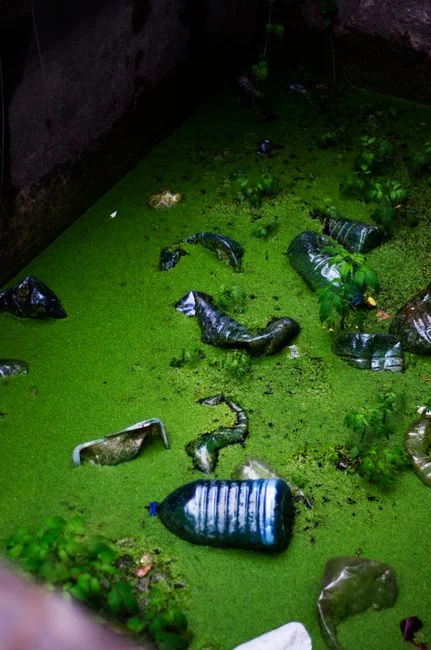
Package-plant capacity must be calculated from the project’s verified wastewater flow and loading rather than selected from a catalogue headline. The sizing sequence is: establish design flow; apply a justified peak basis; assess organic and hydraulic loading; define the effluent target; select the process configuration; and determine the required standby or redundancy arrangement. Redundancy cannot be assigned from the general catalogue range; it must reflect the developer’s risk tolerance, maintenance access and operating model.
The supplied research contains no design per-capita wastewater-generation factor. The estimator must therefore obtain a project-specific factor or measured flow data instead of inserting an unsupported rate. This applies even where the number of dwellings is known, because occupancy assumptions, non-domestic flows and phasing also affect the hydraulic and biological design.
HydropureWater’s 2025 article describes package plants handling 1–80 m³/day, with indicative bands of 1–10, 10–50 and 50–80 m³/day. By contrast, the WSZ product catalogue states 1–80 m³/h for residential communities and other applications. Because 80 m³/h is not equivalent to 80 m³/day, the manufacturer must confirm in writing the rated daily load, hydraulic peak capacity and selected configuration. The discrepancy is a clarification item, not permission to choose the larger figure.
The WSZ process is described as preliminary and biological contact oxidation, followed by sedimentation and disinfection within one buried package. A proposal should connect those process stages to the design flow and required effluent specification. It should also state power demand, backup arrangements, sludge production, noise performance and maintenance access.
| Required proposal item | Question the answer must resolve |
|---|---|
| Design flow | What verified daily flow, peak flow and organic loading did the supplier size the unit for? |
| Capacity rating | Are all ratings expressed in m³/day, with a separately stated hydraulic peak? |
| Process basis | How do contact oxidation, sedimentation and disinfection meet the specified effluent? |
| Redundancy | Is there standby capacity, duty/standby equipment or another defined contingency? |
| Operations | What power, backup power, sludge, noise and maintenance provisions are included? |
Before comparing the WSZ underground treatment configuration with alternatives, obtain a project-specific process design rather than treating the catalogue capacity range as a completed engineering calculation.
Compare A/O, MBR and SBR package treatment
A/O, MBR and SBR should be compared against the estate’s guaranteed effluent, available space and operating resources, not against generalized performance claims. HydropureWater’s 2025 article identifies A/O biological contact oxidation as a common package-plant configuration and cites 90–95% BOD and TSS removal. It also identifies MBR as the higher-quality option, with less than 10 mg/L BOD and TSS for suitable reuse applications. Percentage removal does not provide a complete guarantee: the buyer needs absolute effluent limits, the test method, sample location and acceptance conditions.
An MBR combines activated-sludge treatment with submerged membrane filtration. HydropureWater identifies disinfection options including ozone and chlorine dioxide for pathogen control and states more than 99% pathogen kill for those options. The actual stage fitted must be stated; the headline figure should not be applied automatically to a different configuration.
The WSZ catalogue supports underground installation for residential communities and fully automated operation. An underground WSZ package sewage treatment plant can therefore suit an estate where land and visual impact are constrained. The alternative MBR membrane bioreactor wastewater treatment system offers the cited higher-quality treatment route, but its membrane process introduces additional mechanical and operational requirements that must be priced and assigned to an operator.
SBR is also identified as a package treatment option in HydropureWater’s 2025 article, but the supplied research gives no specific Abuja performance range for SBR. Request the same guaranteed effluent data, maintenance schedule, control philosophy and operating staffing information supplied for A/O and MBR.
| Decision factor | A/O package treatment | MBR package treatment | SBR package treatment |
|---|---|---|---|
| Treatment approach | Anaerobic, anoxic and aerobic biological treatment | Activated sludge combined with submerged membrane filtration | Sequencing batch reactor |
| Source-backed performance | 90–95% BOD and TSS removal, according to HydropureWater’s 2025 article | Less than 10 mg/L BOD and TSS for suitable reuse applications, according to the same article | No specific Abuja performance range in the supplied research |
| Site fit | Compatible with the underground WSZ format described for residential communities | Requires more attention to membrane maintenance and associated plant equipment | Confirm module arrangement, land take and operating cycle |
| Procurement proof | Guaranteed BOD, TSS and disinfection results | Guaranteed BOD, TSS, membrane performance and service conditions | Comparable guaranteed effluent and cycle data |
Make the final process decision from guaranteed output, sample protocol, maintenance schedule, local service response and the reuse or discharge obligation. The disinfection stage must be clearly identified rather than inferred from the general treatment claim.
Build the 2026 capital and ownership case
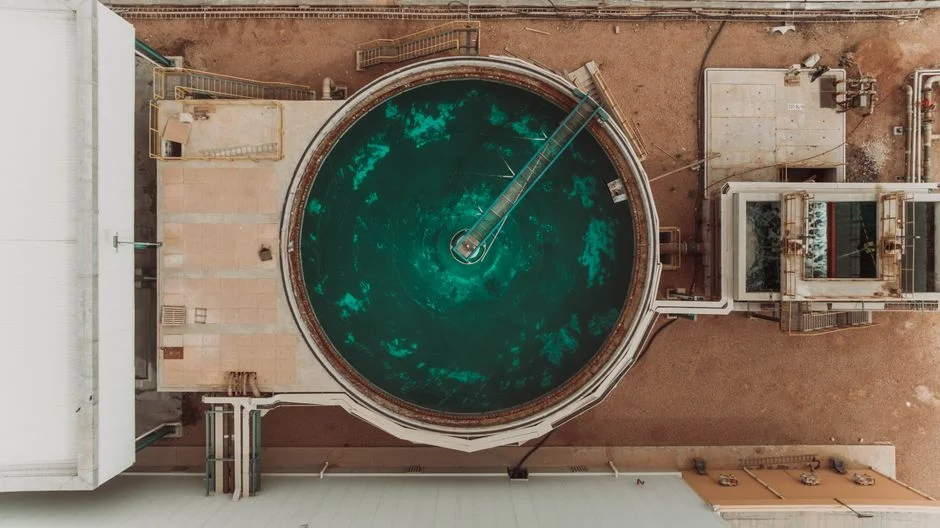
HydropureWater’s 2025 Abuja article provides indicative package-plant bands of ₦15–25 million for 1–10 m³/day, ₦28–60 million for 10–50 m³/day and ₦70–110 million for 50–80 m³/day. These are screening benchmarks, not quotations for an Abuja estate. The same source excludes land and major civil works, so a developer budget that uses the equipment range alone will omit substantial site costs.
HydropureWater states an approximate cost split of 70% equipment, 15% shipping to Lagos port, 10% customs duties and 5% local installation. The quotation should preserve that distinction while clearly identifying site-specific exclusions. Excavation, incoming and outgoing piping, power supply, backup arrangements, access roads, perimeter works, sludge handling, commissioning, approvals and testing may all sit outside the supplier’s basic scope.
| Budget component | Treatment in the 2026 estimate |
|---|---|
| Equipment | Apply HydropureWater’s 2025 capacity bands only as an initial screening allowance |
| Freight and import | Show shipping to Lagos port and customs duties separately, using the supplier’s actual quotation |
| Installation | Separate local installation from major civil works and identify who holds each scope |
| Site infrastructure | Price excavation, piping, power, backup, access, perimeter works and sludge handling |
| Commissioning and handover | Include testing, training, documentation, approval support and performance demonstration |
| Ownership | Budget consumables, effluent testing, preventive maintenance, sludge removal and wearing-part replacement |
HydropureWater’s 2025 article gives a 15–25-year operational lifespan for a well-designed and properly maintained package sewage treatment system. Use that only as a planning benchmark; it does not remove the need to replace pumps, blowers and other wearing components. The supplier should provide the recommended maintenance schedule, consumables list, replacement assumptions, warranty exclusions and annual service price.
Verify the supplier and approve before ordering
A valid purchase order should be conditional on project-specific technical evidence, not generalized process claims. Request effluent test reports from comparable installed projects showing BOD, TSS and fecal coliforms, with the operating conditions and test methods identified. A percentage-removal statement cannot substitute for guaranteed absolute effluent values.
Verify the proposed system against Nigerian Industrial Standards, including the NIS 522:2014 reference cited by HydropureWater’s 2025 article. The developer must also obtain confirmation of the exact permit and approval pathway applicable to the site; citing a national standard does not establish that the discharge location or proposed reuse is authorized.
Ask the supplier to document FCT service coverage, local spare-parts availability, response times, operator training, warranty exclusions and the preventive-maintenance schedule. Confirm whether service is provided directly or through a named local partner, and identify the entity responsible when an alarm or process failure requires urgent attendance.
| Pre-order check | Required evidence or decision |
|---|---|
| Hydraulic design | Project-specific process design and written confirmation of daily load and peak capacity |
| Compliance | Applicable approval, permit pathway and compliant effluent specification |
| Performance | Comparable installed-project reports and agreed acceptance testing |
| Installation | Approved discharge point, power and backup design, access and installation method |
| Scope allocation | Civil works, sludge management, testing, regulator liaison, training and long-term operation clearly priced or excluded |
Do not release the final order until the selected configuration, scope boundary and performance test match the approved project basis. This avoids accepting a unit whose catalogue rating, site infrastructure or operating support does not match the estate.
Frequently Asked Questions
What size package sewage treatment plant does a housing development in Abuja need?
There is no defensible size based only on the number of dwellings. Obtain a project-specific wastewater-generation factor or measured flow, then design for verified daily flow, peak loading and development phasing. Require the supplier to state whether its rating is in m³/day or m³/h and to confirm the selected unit’s daily capacity and hydraulic peak in writing.
How much does a package sewage treatment plant cost for an Abuja estate in 2026?
Use HydropureWater’s 2025 ranges only for initial screening: ₦15–25 million for 1–10 m³/day, ₦28–60 million for 10–50 m³/day and ₦70–110 million for 50–80 m³/day. Request a supplier quotation that separates equipment, freight, duties, installation, civil works, commissioning, sludge removal and annual maintenance because land and major civil works are excluded from the published bands.
Should an Abuja housing development choose A/O or MBR treatment?
Choose A/O where its guaranteed effluent meets the approved discharge requirement and the site prioritizes compact underground treatment. Consider MBR where the permit or reuse specification requires the cited lower BOD and TSS performance, provided the developer funds the added mechanical maintenance and controls. Compare guaranteed output rather than percentage removal.
What must a supplier prove before the developer accepts the plant?
Require a project-specific process design, hydraulic confirmation, approved discharge point, installation and backup-power details, comparable effluent reports, and an agreed performance test. Also obtain the applicable regulatory approvals, warranty terms, preventive-maintenance schedule, FCT service arrangements and a written list of excluded civil, sludge-management and operating responsibilities.
How long does a packaged sewage treatment system last, and what needs maintenance?
HydropureWater’s 2025 article states a 15–25-year operational lifespan for a well-designed and properly maintained system. Use this as a planning benchmark, not a replacement schedule. Require the supplier to identify pumps, blowers, membranes where applicable, controls, sludge removal, consumables and inspection tasks, together with their recommended frequencies.