Start with the sewer-connection and discharge-route decision
For an Amsterdam housing development without a practical municipal sewer connection, the best preliminary choice is a buried A/O package plant, such as the WSZ series, for conventional domestic sewage. Use an MBR instead when space is severely constrained, high-quality reuse is required, or the permit specifies demanding solids and nutrient limits. The design must be sized from the development’s wastewater flow and load—not the number of homes alone—and reviewed against BBL Article 4.153, the Waterwet and any discharge permit issued by the responsible water board. Indicative Dutch 2026 equipment ranges are €8,000–€18,000 for an SBR/MBBR IBA and €15,000–€35,000 for a packaged MBR, excluding plot-side civil works.
Confirm the sewer route before evaluating packaged equipment. HydropureWater’s 2026 Dutch guidance instructs developers to ask the gemeente whether a sewer is available within 40 m of the plot boundary; where a practical connection exists, connection is preferred to decentralized sewage treatment. A multi-home development also needs more than a scaled-up residential IBA: determine whether collective environmental approval, a connection agreement or a dedicated discharge permit applies.
The Dutch regulatory route depends on where the treated water goes. A municipal sewer is the preferred route. Soil infiltration requires BBL compliance, a percolation assessment and gemeente sign-off. Surface-water discharge brings the regional water board into the approval process under the Waterwet. The gemeente applies the building-level requirements of BBL Article 4.153, while the water board becomes the discharge-permit authority when effluent reaches surface water.
Request four evidence sets before selecting a package: the current omgevingsvergunning conditions, groundwater information, soil-percolation results and the permitted discharge route. If sewer-heat recovery is planned, record any temperature constraints at the proposed abstraction point. The Dutch residential wastewater treatment and IBA requirements provide the starting framework, but site-specific consultation with both authorities remains necessary.
Build a development-scale wastewater design basis
HydropureWater’s 2026 Dutch guide uses 120 L per person per day as the preliminary average dry-weather flow and a peak factor of approximately 1.25. Apply those factors to the development’s person-equivalent load, then replace the screening assumptions with verified occupancy schedules, wastewater-generation data and any commercial or laundry flows before detailed design.
For the guide’s four-person household, the source calculation is 120 L × 4 PE × 1.25 = 0.6 m³/d peak and 0.48 m³/d average. The same worked example gives 4 PE × 60 g/d = 240 g BOD/d. For the housing scheme, replace the four-PE household with the development’s person-equivalent load and retain the calculation structure so bidders can check every assumption.
| Design input | Screening basis | Project evidence required |
|---|---|---|
| Average dry-weather flow | 120 L/person/day | Occupancy schedule and confirmed wastewater-generation factors |
| Peak flow | 120 L/person/day × 1.25 | Measured or calculated peak profile |
| BOD load | 60 g/person/day in the source household example | Development-wide person-equivalent load and influent testing |
| Influent concentrations | BOD 250–400 mg/L; COD 500–800 mg/L; TSS 250–350 mg/L; NH4-N 40–60 mg/L; total Kjeldahl nitrogen 60–80 mg/L | Representative wastewater analysis and permit loads |
The concentration envelope is a screening range from HydropureWater’s 2026 guide, not a substitute for site data. The design also needs a hydraulic profile covering average daily flow, peak flow, stormwater exclusion, backwash and reject water, sludge removal, odour control and emergency storage. Match the plant’s treatment steps to the wastewater treatment process design steps, then require wastewater testing, site surveys and permit conditions to override all preliminary values.
Compare A/O, SBR and MBR package architectures
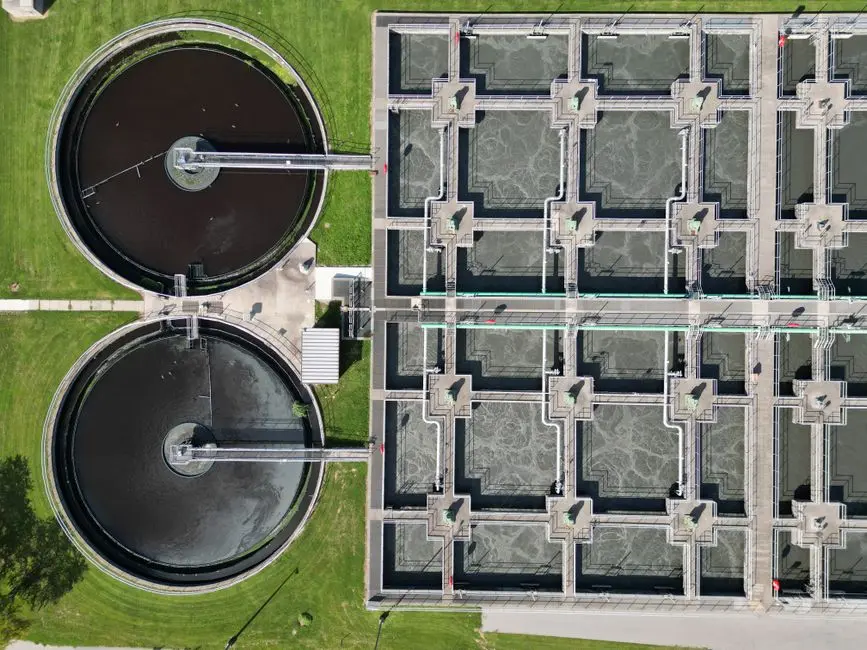
The WSZ configuration combines anoxic and aerobic biological contact oxidation, sedimentation and disinfection in one buried package, with the supplied catalogue giving a capacity range of 1–80 m³/h. The buried A/O package sewage treatment plant can sit below grade with landscaping above or use a trailer-mounted arrangement for mobile deployment, making it relevant to compact sites, phased handover and temporary construction treatment.
MBR provides a different design basis. The supplied catalogue gives the packaged MBR a duty of 10–2,000 m³/day, submerged PVDF membranes and a footprint stated to be 60% smaller than a conventional system. The packaged MBR wastewater treatment system is therefore normally justified by land availability, reuse requirements or solids-removal performance—not by flow alone.
| Issue | Buried A/O or SBR package | Packaged MBR |
|---|---|---|
| Core arrangement | Integrated anoxic/aerobic treatment, sedimentation and disinfection | Biological treatment with submerged PVDF membrane solids separation |
| Typical selection driver | Conventional domestic sewage at an economical capital cost | Tight land, reuse or stringent solids and nutrient requirements |
| Volume comparison | Approximately 200 L working volume per PE at 8–10 hours HRT in the cited source example | 80–120 L aeration volume per PE in the cited packaged MBR example |
| Installation | Buried below grade or trailer-mounted where mobility is needed | Compact package installation; catalogue states a 60% footprint reduction versus a conventional system |
The process sequence should be screening and pretreatment where required, biological treatment, solids separation, disinfection, discharge and sludge management. Sludge is not a residual issue: HydropureWater’s Dutch guide describes a plate-frame press rated at 0.5–1.0 m³/h as suitable for batch dewatering of residential sludge volumes. The [plate-frame filter press](/product/9-plate-frame-filter-press.html) should be assessed against the development’s sludge-production and removal schedule.
Match the package plant to Amsterdam site constraints
HydropureWater’s 2026 Dutch guide states that urban plots under 200 m² almost always lead to a packaged MBR. For an Amsterdam housing scheme, land value and public-realm expectations favour a buried package where the treatment duty allows it. Plant location must still preserve access for lifting, maintenance, sludge removal and emergency response without turning the installation into an above-ground operational enclosure.
Phased construction can justify staged capacity. ClearFox’s housing-development guidance describes modular containerized systems that can be expanded as phases are completed. Compare one permanent installation designed for final build-out against modules installed in phases; the choice should reflect lead time, interim loading, redundant capacity and the date on which each residential phase becomes operational.
Resolve odour, noise, landscaping and future maintainability at proposal stage, before the civil layout becomes fixed. Also separate or protect the nearby municipal sewer, stormwater system, drinking-water network and any planned district-energy connection.
Sewer-heat recovery adds a biological constraint. The Amsterdam sewer-heat project reported by Earth Island warns that sewage temperature cannot be reduced excessively because bacteria must remain active for purification. If heat extraction is contemplated, agree the abstraction location, flow rate and temperature limit with the asset owner and confirm that the proposed treatment plant remains hydraulically and biologically effective.
Set the permit, monitoring and handover requirements
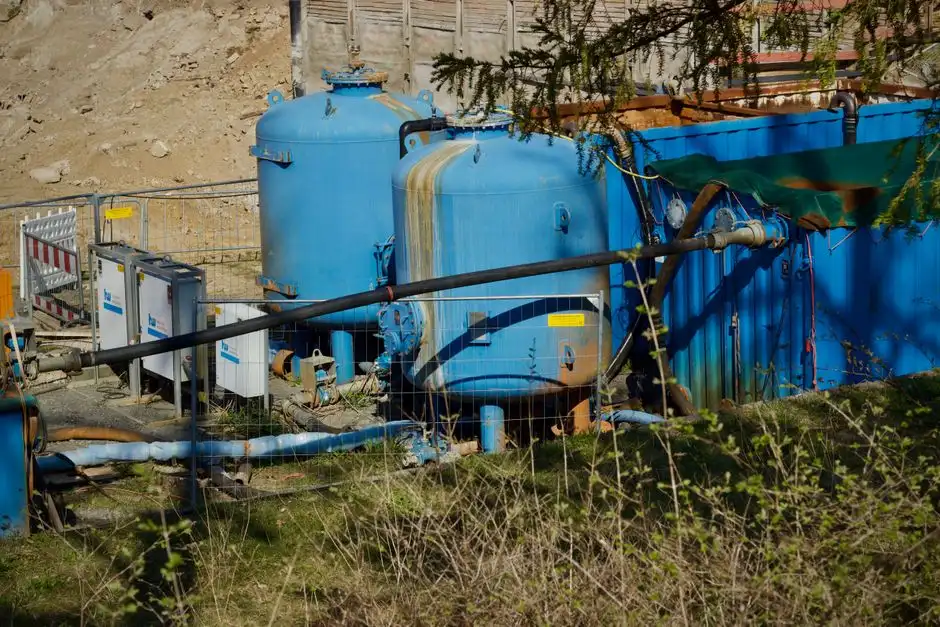
HydropureWater’s 2026 Dutch guide gives BOD ≤25 mg/L, COD ≤125 mg/L, TSS ≤30 mg/L, total N ≤15 mg/L and total P ≤2 mg/L as residential design screening targets. These are not universal Amsterdam consent conditions: the applicable permit may impose different or additional limits. The tender must identify the legally binding values and the evidence needed to demonstrate compliance.
Place the sampling point after final treatment and disinfection, then specify sampling frequency, analytical methods, reporting responsibility and remedial action. The same Dutch guide reports annual service for units up to 5 PE and quarterly desludging or performance checks above 5 PE; treat these as cited Dutch guidance rather than assumed permit conditions.
| Handover item | Minimum tender evidence |
|---|---|
| Performance | Effluent guarantees tied to the actual discharge permit and representative influent basis |
| Monitoring | Final-effluent sampling arrangement, instruments, calibration, reporting and alarm escalation |
| Installation | Supplier identification of BRL-14010 or BRL-K10001 certification responsibility where that route applies |
| Commissioning | Hydraulic tests, start-up records, training, demonstrated treatment performance and operating manual |
| Operations | Sludge handling, emergency storage, emergency power, spare parts, remote monitoring and multi-year service responsibility |
Require the supplier to state who holds each obligation. A [2026 Dutch residential treatment guide](/blog/7839-residential-wastewater-treatment-in-netherlands-2026-engineering-guide.html) supports the BRL certification and maintenance approach, but the municipality and water board determine the applicable approvals and conditions for the development.
Build the procurement scope and compare indicative costs
HydropureWater’s 2026 Dutch guide gives indicative installed-and-commissioned ranges of €8,000–€18,000 for an SBR/MBBR IBA and €15,000–€35,000 for a packaged MBR. Both include installation, commissioning and one year of service but exclude plot-side civil works. The guide also gives annual operating costs of €50–€800 depending on technology; actual OPEX depends on load, energy, chemicals, sludge removal, monitoring and service contracts.
| Cost or scope item | Buyer instruction |
|---|---|
| Package plant | Price the treatment train, rated duty, controls and performance guarantee separately |
| Plot-side works | Price inlet works, effluent pipework, pumping, electrical supply and civil works separately |
| Approvals and handover | Price permits, commissioning evidence, operator training and documentation separately |
| Lifecycle | Price energy, chemicals, sludge removal, monitoring, spares and the multi-year service contract |
| Phasing | Compare a final-build-out plant with modules installed as housing phases complete |
Use the ClearFox modular-capacity observation as a procurement consideration, not a universal price adjustment. The [housing-development package sewage plant comparison](/blog/13441-what-packaged-sewage-treatment-plant-fits-kathmandu-housing-2026.html) provides a structured way to compare permanent and phased configurations, while the [2026 packaged-plant comparison](/blog/13428-what-packaged-sewage-treatment-plant-fits-yangon-housing-2026.html) illustrates the need for a common quotation basis.
Do not claim a sustainability premium or energy return without a site-specific calculation. The supplied academic framework by Anupama Regmi Chalise, Selection of Sustainability Indicators for Wastewater Treatment Technologies (2014), assesses options across environment, society, economy and technology; it provides a framework rather than evidence of an Amsterdam project outcome.
Frequently Asked Questions
Which packaged sewage treatment plant is most suitable for an Amsterdam housing development?
A buried A/O package is generally the best starting point for ordinary domestic sewage because it integrates biological treatment, sedimentation and disinfection. Select an MBR where land is tightly constrained, reuse is required or the permit makes demanding solids and nutrient performance decisive. Final selection must follow the discharge route, site constraints and verified influent design basis.
How should a packaged sewage plant be sized for a housing development?
Size it from verified average and peak flow, wastewater load, permit limits and site constraints—not from the number of homes alone. HydropureWater’s 2026 Dutch guide uses Q = 120 L × PE × 1.25 for hydraulic screening and 60 g BOD/person/day for its household loading example. Replace the household PE with the development-wide load and confirm the result through wastewater testing and site survey.
Frequently Asked Questions
What is the best packaged sewage treatment plant for a housing development in Amsterdam?
For high-density housing in Amsterdam, Membrane Bioreactor (MBR) systems are generally considered the best fit due to their compact footprint and superior effluent quality. Given Amsterdam’s strict environmental regulations and the potential for water reuse in urban greening, MBR technology provides the necessary filtration to meet stringent discharge standards that conventional activated sludge systems often struggle to achieve in confined spaces.
How do you size a package sewage plant for a housing development in the Netherlands?
Sizing is calculated based on Population Equivalent (PE), where one PE typically represents an organic load of 60 grams of BOD5 per day and a hydraulic load of 150 liters per day. In the Netherlands, engineers must account for the NEN-EN 12566 standards, incorporating specific peak flow factors and the high groundwater levels typical of the Amsterdam region to ensure hydraulic capacity handles storm-water infiltration and peak residential usage periods.
How much does a packaged sewage treatment plant cost for a housing development in 2026?
Capital expenditure for a packaged plant in 2026 typically ranges from €1,500 to €2,500 per Population Equivalent (PE), depending on the treatment technology and site-specific integration requirements. Operational costs, including energy consumption, sludge disposal, and mandatory quarterly monitoring, generally add an additional 15% to 20% of the initial capital cost annually, reflecting current inflation in energy and labor markets in the Dutch construction sector.
Should we choose an A/O package plant or an MBR system for an Amsterdam housing project?
An Anoxic/Oxic (A/O) system is more cost-effective for larger, horizontal developments where space is not a constraint, as it relies on secondary clarification which requires significant surface area. However, for Amsterdam’s urban projects, an MBR system is superior; it eliminates the need for secondary clarifiers and produces an effluent quality suitable for non-potable reuse, which aligns with municipal circular water mandates and compensates for its higher energy intensity.
What should we require from a wastewater treatment plant supplier before tendering in the Netherlands?
Suppliers must provide CE marking under the NEN-EN 12566-3 standard and demonstrate compliance with local Water Board (Waterschap) discharge permits, which often require total nitrogen (TN) levels below 10 mg/l and total phosphorus (TP) levels below 1 mg/l. Additionally, require a guaranteed service level agreement (SLA) that includes remote telemetry access, 24/7 technical support, and proof of local spare parts availability to ensure compliance with Dutch environmental reporting requirements.