
What Makes Surabaya Sewage Treatment Projects Different?
Domestic sewage treatment in Surabaya should be selected from confirmed wastewater characteristics, required flow, available land, installation constraints, discharge route and long-term operating arrangements—not from headline capacity alone. Research on Asemrowo shows the value of site-specific planning: investigators used field observations, questionnaires from 105 randomly sampled respondents and wastewater analysis before designing shallow sewerage in 4 blocks. A feasible Surabaya solution may use A/O package treatment, MBBR, MBR or a decentralized sewer-and-plant arrangement. HydropureWater’s WSZ series offers a buried option for sites with limited surface space, while MBR is appropriate where compactness, membrane-level filtration and reuse potential are priorities.
For a housing development, hotel, hospital, factory campus or community facility, treatment selection is both an infrastructure decision and a site engineering problem. Network coverage, community sanitation, available land, groundwater conditions, discharge access and operating capacity can determine whether the proposed arrangement is feasible at all.
The local evidence establishes that context rather than a single plant catalogue. The Kenjeran study by Sustinere Journal of Environment and Sustainability examined 4 sub-districts: Bulak Banteng, Tanah Kali Kedinding, Sidotopo Wetan and Tambak Wedi. It identified open defecation in Bulak Banteng, Tanah Kali Kedinding and Tambak Wedi, using field surveys, interviews and comparison with existing conditions, standards and regulations.
A supplier therefore needs more than a rated daily flow. The request for information should include the wastewater source, measured or estimated flow records, land and access constraints, sewer or septic-tank arrangements, intended effluent destination and applicable permit conditions. A regional domestic sewage treatment guide can support this sequence, but it cannot replace project-specific information.
The evidence has limits. The Kenjeran and Asemrowo studies provide historical planning context, while the communal-WWTP sustainability assessment was published in 2017. Current design still requires updated field data, confirmation of current regulatory requirements and verification of site conditions.
Local Design Lessons from Asemrowo and Kenjeran
The Asemrowo design demonstrates that wastewater characterization and observed sanitation conditions must precede equipment selection. Rosari and Purwanti’s 2020 study reported 1,113 households still defecating openly and 89.6% of the community having a private latrine, then based its design on field observations, random questionnaires answered by 105 respondents and wastewater analysis.
That collection logic matters. A desktop estimate based only on population or building floor area would not reproduce the study’s basis for sizing and routing the network. The treatment proposal organized shallow sewerage into 4 blocks. Pipe diameters in the reported plan were 114 mm, 140 mm, 216 mm and 267 mm. Blocks A, B and C were assigned aerobic biofilter and clarifier systems, while Block D used aerobic biofilter treatment.
| Asemrowo design item | Reported basis | Procurement lesson |
|---|---|---|
| Primary information | Field observations, 105 questionnaires and wastewater analysis | Require current measured or defensibly documented site data. |
| Collection system | Shallow sewerage divided into 4 blocks | Do not reuse the study layout without redesigning routes, easements and flows. |
| Pipe diameters | 114 mm, 140 mm, 216 mm and 267 mm | Study-specific values are not a substitute for current hydraulic design. |
| Blocks A, B and C | Aerobic biofilter and clarifier systems | Compare treatment trains against the actual site and operating requirements. |
| Block D | Aerobic biofilter | Evaluate each cluster separately rather than forcing one plant layout. |
The study referenced Surabaya City Regulation No. 12 of 2016 concerning Water Quality Management and Wastewater Control and Indonesian Minister of Environment and Forestry Regulation No. 68 of 2016 concerning domestic wastewater quality standards, as reported by Rosari and Purwanti in 2020. Before including either reference in an approval package, the project team must verify whether it has been replaced or supplemented by current requirements. No current effluent limit should be inferred from this historical study.
Compare A/O, MBBR, MBR and Decentralized Systems
The appropriate process follows from the governing site constraint: surface area, treatment compactness, network fragmentation, solids handling, discharge quality requirements and operating responsibility. None of these architectures can be selected responsibly from a capacity label alone.
| Option | Supported configuration | Where it merits consideration | Bid information required |
|---|---|---|---|
| A/O package plant | HydropureWater’s WSZ series combines anoxic/aerobic biological contact oxidation, sedimentation and disinfection in one buried package. Its rated capacity is 1–80 m³/h, and it is fully automated and described as requiring no operator (HydropureWater verified product catalog, 2026). | Sites with limited surface space where a fully buried arrangement and a packaged treatment train are suitable. | Design flow, footprint, excavation, structural loading, access, utilities, control scope and O&M obligations. |
| MBBR | An attachable or packaged biological-carrier option with flexible process configuration. | Projects needing an adaptable biological stage within a broader treatment train. | Carrier selection, loading basis, blower arrangement, footprint, media handling and maintainability. |
| MBR | HydropureWater’s integrated system combines activated sludge treatment with submerged PVDF membrane filtration. It is stated to handle 10–2,000 m³/day, filter below 1 μm and occupy 60% less footprint than conventional systems (HydropureWater verified product catalog, 2026). | Constrained sites where compact polishing or reuse potential is strategically important. | Membrane configuration, duty cycle, aeration, cleaning access, electrical supply and concentrated-solids handling. |
| Decentralized sewer-and-plant system | The Asemrowo study coordinated shallow sewerage with treatment blocks. | Isolated clusters where collection network extension is the dominant constraint. | Routes, easements, block flows, pumping, odor control, ownership and local operating arrangements. |
For a compact and low-surface-impact site, evaluate the buried A/O package sewage treatment plant. Where membrane-separated solids handling and compact polishing are strategically important, evaluate the integrated MBR sewage treatment system. For MBBR, the MBBR domestic sewage design guide explains the process context, but bidders should provide project-specific carrier and blower data rather than unsupported loading rates.
HydropureWater’s DF-series flat-sheet modules are stated to have a 0.1 μm pore size, available areas of 80–225 m² and production of 32–135 m³/day (HydropureWater verified product catalog, 2026). Module configuration must be reconciled with the complete plant flow, operating duty cycle and cleaning strategy; a module’s stated production is not a complete-plant design.
Build the Sizing Basis Before Ordering Equipment
A defensible quotation starts with service boundaries, not a product selection. The buyer must know exactly what will enter the plant, how much wastewater will arrive, what the receiving route requires and who will operate the system.
- Define service boundaries. Separate domestic sewage, stormwater, canteen wastewater, laundry effluent, industrial process water and groundwater infiltration.
- Establish flow. Request measured flow data where available and document contributing population, occupancy pattern, operating hours, peak factors and seasonal variation. Do not derive design flow from an unsupported generic conversion factor.
- Characterize influent. Obtain COD, BOD, TSS, fats and oils and other relevant parameters through sampling or defensible historical records. Do not state removal efficiencies or effluent limits absent from the project evidence.
- Confirm hydraulics. Provide surveyed levels, available footprint, excavation access, groundwater information, lifting plan and access route. The WSZ can be installed below grade with landscaping above, according to the HydropureWater verified product catalog for 2026.
- Define the outlet. Identify the receiving sewer, open-water discharge point or planned reuse application, then confirm the current authority’s applicable conditions.
- Set operating boundaries. Name who will monitor the plant, remove solids, inspect membranes or bio-media, maintain blowers and pumps, and respond to alarms.
| Design input | Evidence required | Decision unlocked |
|---|---|---|
| Service boundary | Sewer plan, site drainage plan and source inventory | Prevents treatment units from receiving unintended streams. |
| Flow basis | Measured data or a documented occupancy-based derivation | Establishes hydraulic and treatment capacity. |
| Influent quality | Sampling or defensible historical records | Defines biological loading, solids separation and pretreatment needs. |
| Site constraints | Survey, groundwater information, access and lifting plan | Determines buried, above-ground or distributed configuration. |
| Discharge and reuse | Confirmed destination and current authority requirements | Sets the required treatment and documentation scope. |
| Operating model | Named roles, budget and escalation process | Connects equipment selection to long-term performance. |
Before accepting a flow calculation, request the assumptions behind it. A vendor should distinguish measured data, client-supplied information, engineering assumptions and items still to be developed. That discipline is more useful than a polished nameplate capacity.
Plan Installation, Commissioning and O&M in Surabaya
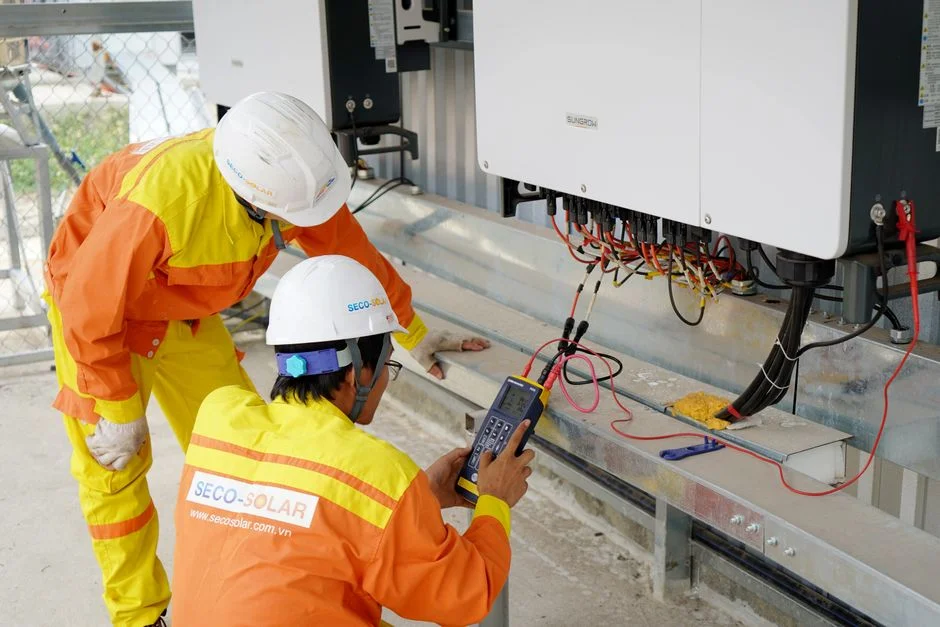
The project sequence should run from site and regulatory verification through wastewater characterization, technology selection, civil and structural design, factory acceptance, installation and connection, wet commissioning, performance verification, handover and the O&M schedule. Each stage needs an owner and acceptance record.
For a buried WSZ installation, approve the civil design only after checking excavation, structural loading, underground services, lifting and maintenance access, drainage, ventilation, control access and surface restoration. These are site interfaces, not automatic assumptions based on the package being buried.
For MBR installations, verify membrane access, backwash or cleaning provisions, aeration, electrical supply, controls and the plan for separating and managing the concentrated solids stream. The municipal MBR design and buying guide should not be used if its URL differs from the approved internal reference; for packaged plant selection, the packaged sewage plant selection for housing developments provides a useful question framework.
The 2017 communal-WWTP study by Bahar and colleagues reported sustainability index scores of 84.32 for environmental quality and 62.61 for technical performance, while economic and institutional dimensions scored 43.24 and 39.67, respectively (IOP Conference Series: Earth and Environmental Science, 2017). These results do not predict a current project’s performance, but they expose a governance issue: environmental intent alone does not secure adequate technical, financial or institutional capacity.
Therefore, name an O&M owner, a budget owner and an escalation process. Require the supplier’s proposal to state commissioning acceptance criteria, operator training, spare-parts availability, maintenance intervals, alarm handling, remote-control scope and performance documentation. If the supplier cannot assign these obligations, the commercial price does not represent the operational risk.
Questions to Ask Before Approving a Supplier Quotation?
Make quotations comparable by requiring each bidder to answer the same technical and commercial questions. First, confirm process type, rated-flow basis, design flow, treatment train, dimensions, civil interface, power demand, automation scope, offered effluent standard, sludge handling, commissioning deliverables and warranty.
Second, request the equipment basis of design and mark every input as measured, client-supplied, assumed or left for design development. This exposes differences hidden by the same quoted daily capacity.
Third, obtain a site-exclusion and civil-works list covering the collection network, incoming sewer connection, pump station, outlet works, power supply, access roads, landscaping and the disposal route for residuals. A treatment-plant price without these interfaces is incomplete.
Fourth, require a five-year operating-cost breakdown covering energy, media or membrane replacement, chemicals, routine servicing, sludge removal and major maintenance. Do not approve a total price until duty and scope align. No verified Surabaya equipment or installation price is available in the supplied research, so any budget should remain an open request until bidders provide comparable costs.
Finally, ask bidders to identify the applicable current approvals and discharge requirements. The client should confirm them with the relevant Surabaya authority rather than relying on historical study references or a supplier’s general compliance statement.
Frequently Asked Questions
Which sewage treatment technology is most suitable for a Surabaya development?
Choose from the dominant site constraint rather than a universal technology. A buried A/O package can suit limited surface space; MBR merits evaluation where compact polishing and reuse potential are important; MBBR can provide a flexible biological stage; and decentralized sewer-and-plant arrangements suit isolated clusters. Confirm the decision with current flow, influent, land, outlet and O&M data.
How much wastewater capacity does the equipment need?
Size the complete plant from measured flow data where available, documented occupancy and operating patterns, peak factors, seasonal variation and the wastewater stream included within the service boundary. The WSZ series covers 1–80 m³/h, while the integrated MBR system covers 10–2,000 m³/day, according to the HydropureWater verified product catalog for 2026. Those product ranges are not substitutes for project sizing.
How should a buyer compare supplier quotations and control cost?
Require the same scope from every bidder: equipment basis, design flow, treatment train, civil interfaces, power and automation, residuals handling, commissioning, warranty and five-year operating costs. Request both the capital-price breakdown and an itemized five-year estimate for energy, replacement items, chemicals, servicing, sludge removal and major maintenance. No verified Surabaya price is supplied, so the buyer should obtain quotations rather than apply an unsupported generic figure.
What compliance risk should be checked before ordering?
Confirm the discharge destination and current requirements with the relevant Surabaya authority. The Asemrowo study cited Surabaya City Regulation No. 12 of 2016 and Minister of Environment and Forestry Regulation No. 68 of 2016, but those historical references do not establish the applicable 2026 requirement. Do not accept an unverified current effluent limit in the specification or contract.