
What Makes Hotel and Resort Wastewater Treatment Different in Indonesia?
Hotel and resort wastewater treatment in Indonesia must handle domestic sewage with sharp peaks from occupancy changes, kitchens and laundry while protecting beaches, coral reefs and groundwater. Practical options include buried or containerized A/O, A²/O and MBR package plants. Mingkai reports capacities from 5–200 m³/day, with MBR identified as the highest-quality option for near-zero suspended solids and reuse in gardens, golf courses or irrigation. Selection requires site data, wastewater analysis, peak-flow assessment and applicable local discharge or reuse requirements.
Hotel domestic sewage is not adequately represented by an average daily flow alone. Occupancy surges can change the incoming load quickly, while kitchen and laundry operation can concentrate flow into shorter periods. Mingkai describes these as sharp daily peaks and identifies them as a defining feature of resort wastewater treatment (Mingkai Water Treatment, 2026). Equipment selection must therefore state how the biological process and any equalization arrangement handle those peaks.
Receiving conditions raise the engineering stakes. On Bali, Lombok and other island destinations, Mingkai notes that discharges may occur close to beaches, coral reefs and groundwater, making BOD, suspended-solids and pathogen control especially important (Mingkai Water Treatment, 2026). These are site-specific receiving risks that cannot be resolved by selecting a process from a capacity table alone.
Water conservation and wastewater management form part of a wider green-hotel programme rather than a separate environmental function. A review focused on Java and Bali found that both areas lead green-hotel use in Indonesia, while also identifying room for further improvement in practice (NHI Hospitality International Journal, 2024). Before requesting a quotation, buyers should provide current and peak occupancy, operating hours, kitchen and laundry schedules, flow records and planned growth.
Build the Wastewater and Capacity Basis
A defensible quotation requires an operating and site basis, not a hotel brand name or guest-room count alone. The supplier should identify the design flow, peak-flow treatment strategy and equalization assumptions used in its proposal. This is particularly important for hotel domestic sewage because Mingkai identifies sharp daily peaks from occupancy surges, kitchens and laundry (Mingkai Water Treatment, 2026).
- Request the operating data: current and peak occupancy, average daily water consumption, wastewater flow records, kitchen and laundry flows, operating hours and planned expansion.
- Request the wastewater evidence: analytical results covering the parameters relevant to biological treatment, solids removal, disinfection and the intended reuse application.
- Request the site constraints: available footprint, access routes, burial depth, groundwater level, receiving point, reuse destination and power availability.
- Request the complete process scope: collection, headworks, equalization, biological treatment, disinfection, effluent storage, reuse distribution and final discharge.
Mingkai publishes a treatment-water-volume range of 5–200 m³/day for resort and hotel applications (Mingkai Water Treatment, 2026). Treat this as a published supplier range, not a universal sizing rule. The selected capacity must follow the project’s flow data and treatment objectives.
Equalization and biological treatment should be addressed together. The supplier needs to explain how morning occupancy discharge, kitchen discharge and laundry flows affect the selected process, including how sustained loading differs from short peaks. For projects where wastewater characteristics or loading exceed the supplier’s published range, ask for the design basis and supporting calculations rather than accepting the catalogue range as proof of suitability.
| Input for the quotation | What the supplier should state | Buyer check |
|---|---|---|
| Occupancy and operating pattern | Design flow, peak-flow basis and equalization strategy | Does the proposal distinguish average flow from peak conditions? |
| Kitchen, laundry and other subsystem flows | Sizing assumptions and treatment implications | Are peak periods and operating schedules identified? |
| Wastewater analysis | Parameters used for process and reuse design | Were representative samples tested? |
| Site and receiving environment | Burial, installation, access and discharge assumptions | Are groundwater and receiving-point risks addressed? |
| Growth and reuse plans | Reserve capacity and treatment train | Can the plant adapt to changing occupancy or reuse? |
Where the treatment train includes biological media, the MBBR domestic sewage design and buying guide provides an additional reference for evaluating biological process selection and supplier documentation.
Choose Between A/O, A²/O and MBR
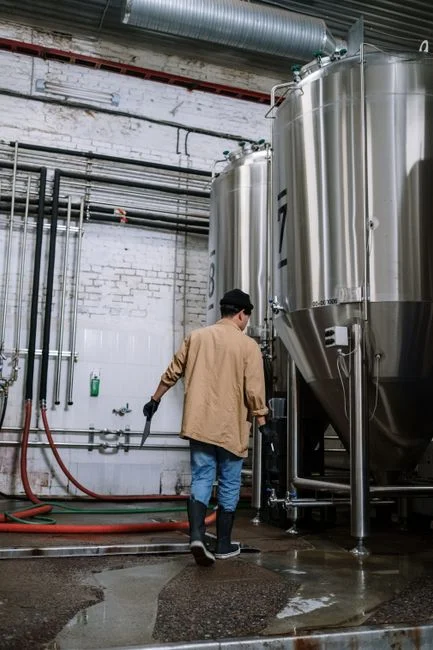
A/O, A²/O and MBR should be selected by matching treatment objectives to the receiving environment, reuse target, footprint and budget. Mingkai identifies A/O as the economy option, A²/O as the option where nutrient removal is required, and MBR as the option for the highest effluent quality, including near-zero suspended solids (Mingkai Water Treatment, 2026). The supplied process sequence is biological treatment by one of these routes, followed by disinfection.
A/O is the appropriate first candidate when basic biological treatment and discharge objectives are priorities and economic considerations dominate. A²/O adds a process stage intended for nutrient removal, but the required performance and local receiving conditions must be confirmed rather than inferred from the process label alone. MBR becomes the stronger candidate when the reuse application requires the lowest suspended-solids outcome or when land availability restricts conventional separation and filtration arrangements.
| Decision factor | A/O | A²/O | MBR |
|---|---|---|---|
| Primary selection basis | Economy-oriented biological treatment | Treatment where nutrient removal is required | Highest published effluent quality for sensitive reuse |
| Suspended solids | Must be defined for the project | Must be defined for the project | Mingkai describes near-zero suspended solids |
| Reuse relevance | Consider where discharge objectives and economics favor it | Consider where discharge objectives and economics favor it | Strongest published match for garden, golf-course and irrigation reuse |
| Site consideration | Evaluate footprint and collection arrangement | Evaluate footprint and collection arrangement | Evaluate footprint, pretreatment and membrane maintenance access |
| Approval requirement | Wastewater analysis, target and local requirements | Wastewater analysis, nutrient target and local requirements | Wastewater analysis, reuse target and local requirements |
The underground WSZ integrated sewage treatment plant uses anoxic/aerobic biological contact oxidation, sedimentation and disinfection in one buried package unit. It is fully automated and designed to operate without an operator according to the product catalog. This arrangement can remove visible treatment equipment from guest-facing areas, but excavation, groundwater, access, lifting and maintenance arrangements still require project-specific review.
The integrated MBR wastewater treatment system combines activated sludge with submerged PVDF membrane filtration. Its product catalog specifies filtration below 1 μm, a footprint 60% smaller than conventional systems, and available capacity of 10–2,000 m³/day. These are catalogue specifications, not project guarantees. The final choice must still be checked against wastewater analysis, reuse objectives, local standards and receiving conditions. Mingkai states that approval should follow site conditions, water analysis and applicable local discharge or reuse requirements (Mingkai Water Treatment, 2026).
Design for Island Sites, Guest Areas and Water Reuse
Physical placement can determine whether an otherwise suitable treatment train becomes operationally impractical. Mingkai states that open ponds and bulky equipment are often unsuitable for space-constrained properties (Mingkai Water Treatment, 2026). Buyers should include landscaping constraints, guest circulation, noise limits, odor control and maintenance access in the site brief rather than treating the plant footprint as an isolated drawing.
Buried installation can keep the treatment package out of the guest-facing landscape while retaining landscaping above it, according to the WSZ product catalog. The alternative for island delivery is a containerized plant. Mingkai reports that containerized plants can ship by sea freight to islands, install in a matter of days with minimal civil works, and are designed for low noise and no odor near guest areas (Mingkai Water Treatment, 2026). “Install in a matter of days” describes the supplier’s published installation characteristic; it does not remove the need to verify local logistics, foundations, connections and approvals.
- Define the intended application: identify whether the treated water is for discharge, garden irrigation, golf-course irrigation or another reuse destination.
- Establish the required effluent quality: translate the destination and applicable requirements into measurable treatment objectives.
- Test the wastewater: confirm that the analytical results support the proposed biological process and reuse train.
- Select the treatment train: match A/O, A²/O or MBR to those objectives, site constraints and lifecycle requirements.
- Validate suitability: review the proposed performance with the receiving environment and relevant local requirements.
For landscape reuse wastewater, Mingkai identifies MBR as the strongest published match because of its near-zero suspended-solids description (Mingkai Water Treatment, 2026). A/O and A²/O remain candidates where discharge objectives and economics favor them. Reuse suitability must not be inferred from process name alone; it also depends on the selected system specification and the requirements applying to the intended use.
For larger MBR arrangements, the DF module for larger MBR designs is described in the product catalog as using 0.1 μm flat-sheet membranes, with configurations of 80–225 m² and outputs of 32–135 m³/day. These published dimensions and outputs require confirmation against the project’s hydraulic and organic loading, module arrangement and treatment objectives.
Evaluate Suppliers, Installation and Lifecycle Risk
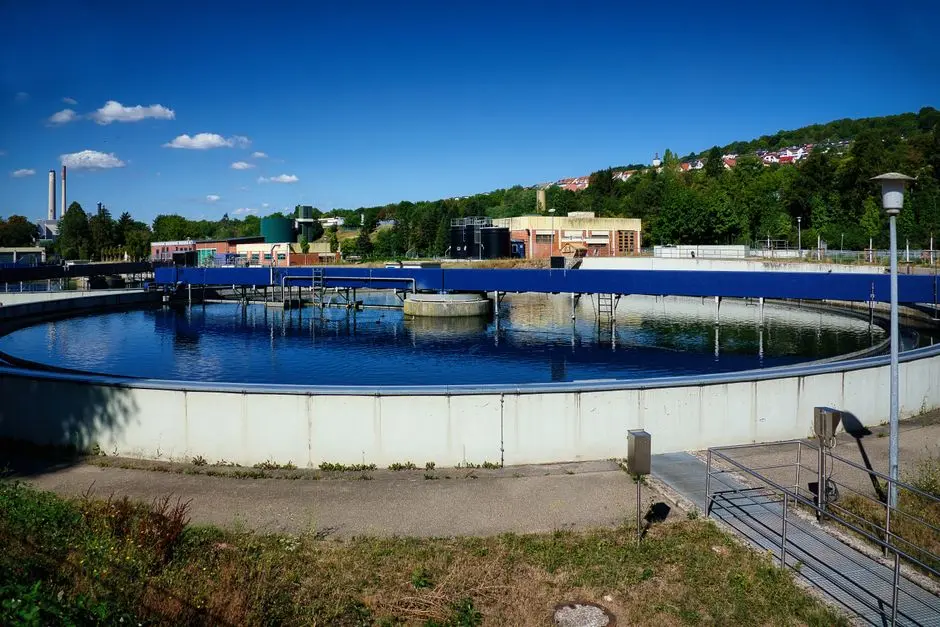
A comparable quotation should expose the design flow, peak-flow strategy, process description, disinfection method, effluent targets and underlying assumptions. If these items differ between offers, the apparent price difference may simply reflect different scopes. Procurement should request site-specific installation, civil-work, commissioning and training information rather than comparing package prices alone.
Ask whether each plant is buried, containerized or surface-mounted. Confirm the automatic operating sequence, local-control arrangement, sludge or solids handling, maintenance access, spare-parts availability and technical support. These checks address lifecycle risk after delivery, particularly where a specialist or replacement component must reach an island property.
| Published comparison point | Scope stated in the product catalog | Buyer verification |
|---|---|---|
| WSZ | 1–80 m³/h | Confirm units, treatment duty and project peak-flow basis |
| Integrated MBR | 10–2,000 m³/day | Confirm selected configuration and wastewater loading |
| DF module | 32–135 m³/day across 80–225 m² configurations | Confirm module arrangement, flux conditions and ancillary equipment |
These published capacities are not interchangeable sizing outputs because they describe different equipment and scopes. The WSZ series specifications and ROI overview provides a technical reference for reviewing supplier claims, but the offer must still be tied to the project’s design flow and site conditions.
Approval of the final treatment train should be conditional on representative wastewater analysis, confirmed site conditions and applicable local discharge or reuse requirements, as Mingkai recommends (Mingkai Water Treatment, 2026). No supplier should select equipment from occupancy branding alone. Require the supplier to explain every design assumption and identify where a different proposal may be needed.
Frequently Asked Questions
How much does hotel wastewater treatment cost in Indonesia?
There is no research-supported price for these systems in Indonesia, so a reliable quotation cannot be produced from occupancy alone. Request itemized pricing for equipment, transport, foundations and civil works, collection and discharge connections, installation, commissioning, training, spares, maintenance and sludge or solids handling. Ask each bidder to state which exclusions and site assumptions apply.
What size wastewater treatment system does a hotel or resort in Indonesia need?
Size the plant from the design flow and peak-flow strategy, not from published catalogue limits. Provide current and peak occupancy, flow records, kitchen and laundry schedules, operating hours, water-analysis results, growth plans and reuse requirements. Mingkai’s 5–200 m³/day range is a published supplier range for resort and hotel applications (Mingkai Water Treatment, 2026), not a design rule for every property.
Should an Indonesian resort choose A/O, A²/O or MBR treatment?
Choose A/O when economy-oriented biological treatment and discharge objectives dominate, A²/O where nutrient removal is required, and MBR where the highest published effluent quality or a more demanding landscape-reuse target is needed (Mingkai Water Treatment, 20