What Changes When UMC Takes Control of an Indian Plant?
When UMC acquires a plant in India, the buyer must review the site’s existing Pollution Control Board consents, municipal sewer or pretreatment agreements, effluent limits, monitoring records, hazardous-waste and sludge obligations, and approvals for planned reuse. A change in corporate control does not automatically replace Indian compliance or transfer another company’s environmental standards. For each approval, UMC should confirm with the relevant authority whether it must be transferred, amended or reapplied. Treatment decisions should follow representative flow and contaminant data, the approved discharge or reuse route, and current consent conditions—not the acquisition alone.
The transaction should therefore be treated as a change in responsibility around an existing operating record, not as the creation of a fresh compliance basis. The enforceable position remains the plant’s current Indian consents, applicable sewer rules, receiving conditions and approvals for the intended reuse. An acquisition may also change production capacity, process configuration, wastewater chemistry, flow allocation or the proposed destination of treated water. If those conditions change, the previous authorization may not adequately describe future operations.
UMC should classify each approval by the feature that controls it: the legal entity holding the consent, the operator responsible for compliance, or the site and process configuration authorized. That classification determines whether UMC needs a consent transfer, a consent amendment or a fresh application. The relevant Indian regulator and sewer authority must confirm the position for each approval; the legal answer cannot be inferred from UMC’s corporate structure alone. The framework is set out in the India plant-acquisition wastewater due-diligence guide.
UMC’s wider water strategy may justify evaluating reuse, recovery and water-loss reduction, but it does not establish an Indian effluent limit. As strategic context only, Saudi Aramco states that its Water Conservation Policy was created in 2011 and updated in 2020. Aramco also reported 78.5 million cubic meters of freshwater consumption at wholly owned and operated facilities in 2025, 5.4% below 83.0 million cubic meters in 2024, according to its Conservation of water resources page accessed for the review in 2026. Neither disclosure is an acquisition-site limit.
Before closing, unresolved transfers, amendments or reapplications should become explicit transaction decisions: a condition precedent, an indemnity, a price adjustment or a funded remediation item. If existing authorization, monitoring or treatment capacity may become inadequate under UMC’s operating configuration, the corresponding permit and capital actions should be scheduled before closing rather than left in a general technical report.
Build a Wastewater Approval and Discharge Matrix
The governing approval depends on the waste stream and its destination, so UMC should map process, cooling, wash, laboratory, domestic sewage, stormwater and contaminated stormwater separately. For every stream, record its source, characteristics, operating pattern, destination, governing document and treatment objective. A stream suitable for sewer discharge may still be unsuitable for direct discharge or reuse without additional controls.
| Waste stream and route | Document or authority to verify | Diligence and treatment focus |
|---|---|---|
| Process, cooling and wash water to municipal sewer | Industrial pretreatment approval, sewer agreement and local industrial-user rules | Compare actual characteristics with prohibited, restricted and locally permitted industrial wastes; verify pretreatment conditions, connection requirements and monitoring. |
| Direct or controlled discharge | Current site consent and approved discharge point | Use the consent limits, monitoring requirements and receiving-water conditions; do not infer unstated numerical limits. |
| Process-water reuse | Approval applicable to the receiving use | Confirm process suitability, public-health exposure where relevant, treatment validation, monitoring and approval; a discharge-quality report alone is not authorization. |
| Domestic sewage | Applicable sewer connection and site approvals | Confirm segregation, destination and treatment responsibility. |
| Clean and contaminated stormwater | Site consent, collection controls and approved treatment or disposal route | Record segregation, event frequency, contaminant range, collection integrity and discharge route. |
| Laboratory drains and equipment-cleaning wastewater | Applicable site consent, pretreatment rules and waste classification | Establish whether the stream is reusable, sewer-dischargeable, directly dischargeable or requires controlled handling. |
| Hazardous waste and sludge | Applicable waste classification and authorized-handler records | Track classification, manifests, storage, transport and final disposal or recovery separately from reusable effluent. |
For municipal sewer discharge, the local authority’s prohibited, restricted and locally permitted industrial-waste rules must be applied to the actual waste characteristics. The applicable industrial pretreatment approval and agreement should also be checked. The October 2026 wastewater expansion overview provides broader sector context, but it does not determine a plant’s local sewer conditions.
For direct or controlled discharge, the current site consent, its monitoring requirements, the receiving-water conditions and the approved discharge point control the assessment. Reuse requires a separate examination of the receiving use and the approval applicable to that use. Chemical removal, disinfection or filtration performance alone does not establish legal authorization or public-health compliance.
Hazardous waste and sludge require their own record trail. UMC should obtain applicable classification decisions, manifests, storage arrangements, authorized-handler documentation and final-disposal or recovery records. Missing records should be carried into the pre-closing risk register rather than assumed away.
Turn the Permit Review into Closing Conditions
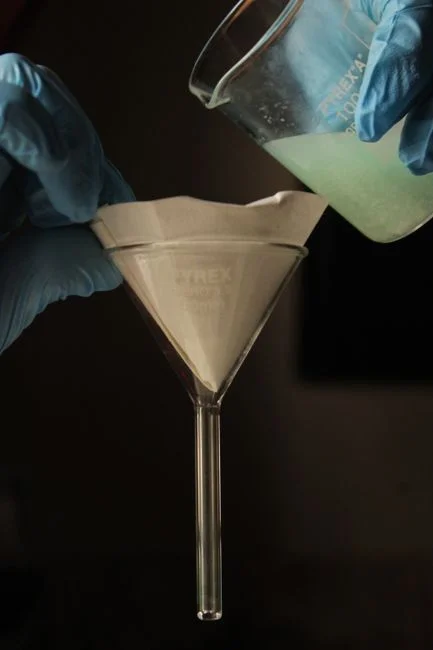
An environmental review is transactionally useful only when documentary gaps and operating liabilities are converted into allocated risks. UMC should create a pre-closing wastewater register covering each Pollution Control Board consent and its approval history, municipal sewer or pretreatment agreements, discharge points, monitoring returns, inspection records and appeals. This is the foundation of a defensible factory wastewater due-diligence process.
Every unresolved transfer, amendment or reapplication should have an identified decision before closing. Depending on the exposure, it may require a condition precedent, seller indemnity, price adjustment, escrowed remediation or a funded capital commitment. Leaving these matters in an advisory report transfers an undefined liability to the buyer.
The evidence request should include flow and laboratory monitoring, production correlations, bypass records, sludge manifests, authorized-handler documentation, collection-system drawings and commissioning records. Monitoring records should be tested against the current consent and sewer conditions rather than reviewed only for completeness.
An unapproved discharge route, material exceedance, unexplained bypass, missing sludge records or inadequate collection and treatment capacity should trigger an independent compliance review. Where the site has a history of exceedances, bypasses, tank or pipeline failures, illegal disposal or incomplete records, UMC should not assume that the acquisition price already compensates for that history.
Treatment and permit actions should be scheduled before closing when existing authorization, monitoring or capital commitments may become inadequate under UMC’s operating configuration. If capacity, monitoring, sludge handling or the approved discharge route is deficient, the responsible party, cost and completion condition should be explicit. This avoids closing a transaction with a known compliance gap while treating the eventual upgrade as an ordinary post-closing improvement.
Size Treatment from Verified Flow, Load and Final Use
Treatment should be sized from a current, representative wastewater mass-and-load balance, not from the acquisition alone or a supplier’s standard range. UMC should reconcile meter records, production rates, bypasses and laboratory results. The data request must cover average and peak flows, batch or continuous operating patterns, representative contaminant loads, consent limits, downstream treatment requirements and the intended reuse endpoint.
The treatment logic follows the stream map: characterize the source; test and balance flow; remove oil and suspended solids where needed; treat biodegradable and toxic constituents; control residual contaminants; and verify the final route. Equipment selection follows this duty definition; it does not create the duty.
| Treatment function | Equipment or assessment basis | Selection constraint |
|---|---|---|
| Fibrous-debris removal | Rotary mechanical bar screen | Use where fibrous material warrants removal and downstream pumps or biological processes need protection. |
| Oil, FOG, colloids and suspended-solids removal | Industrial DAF wastewater treatment system | HydropureWater’s DAF catalog covers 4–300 m³/h across 13 standard models; verify actual flow and contaminant load before selecting a model. |
| Compact biological treatment with membrane solids separation | MBR membrane bioreactor for industrial wastewater or WSZ package | The MBR system is rated at 10–2,000 m³/day; WSZ is rated at 1–80 m³/h. Neither rating substitutes for verified flow and load. |
| Fine separation for reuse | Ultrafiltration | The supplied UF catalog spans 2,000–40,000 L/h, permits 0.03-micron separation and accepts feed turbidity up to 300 ppm. Confirm the required water quality and upstream fouling controls. |
| Sludge dewatering | Plate-and-frame filter press | The catalog spans filtration areas from 1 m² to 500 m². Select from verified sludge characteristics, cake objective and operating constraints. |
A DAF system is relevant where oil, FOG, colloids or suspended solids must be removed before biological treatment or discharge. For compact biological treatment with membrane solids separation, the submerged MBR cost and sizing guide provides a framework for comparing capacity, lifecycle and fouling obligations.
Ultrafiltration is relevant where the required separation is 0.03 micron and the objective is removal of bacteria, colloids and suspended solids without chemicals. The RO versus UF membrane selection comparison should be used to determine whether UF is sufficient or whether additional treatment is required for the intended endpoint.
Sludge treatment belongs in the same decision. The plate-and-frame filter press configuration must follow the sludge properties, required cake performance, cake-handling route and availability of operating resources.
Do not import the Jazan refinery precedent of 1,000 m³/hour biological treatment and 550 m³/h each for deoiling and metal removal, as reported by Water Technology Online in the supplied research. It defines a project-specific scope, not a universal Indian acquisition specification. Equivalent site-duty verification is required before adopting any of those capacities.
Evaluate Reuse Upgrades as a Separate Investment Stage

Reuse should be separated from mandatory compliance work because the receiving use, treatment requirement and approval may justify an investment that is not required to cure a current violation. UMC should first establish a site baseline for freshwater consumption, wastewater generation, reuse, discharge, water losses and energy use. That baseline separates compliance deficiencies from efficiency opportunities.
Evaluate reuse in descending order of feasibility: internal process substitution; process-water recovery; utility recovery; landscaping or other approved non-contact uses; and higher-quality applications requiring additional treatment and approval. Each route needs process suitability, additional monitoring, treatment validation and the applicable regulatory approval.
The capital plan should have three stages. Immediate compliance and safety corrections cover unauthorized routes, monitoring deficiencies, collection weaknesses and treatment needed for lawful operation. Acquisition-critical capacity and reliability upgrades address duties that existing equipment cannot meet under UMC’s configuration. Longer-term reuse and water-efficiency projects follow only after operating data establishes the technical duty and business case.
Each upgrade should be evaluated as a complete operating system. Metering, chemical dosing, automated controls, sludge handling, monitoring and the operating plan determine whether performance is dependable; an advanced treatment unit alone does not establish it.
The supplied research contains no plant-specific wastewater cost basis for a UMC acquisition. Accordingly, any budget request should be based on comparable bids prepared from verified flows, analyses, operating hours, reuse targets, receiving conditions, sludge route, monitoring requirements and performance guarantees. Corporate freshwater disclosures should not be converted into an assumed plant cost or design limit.
Procurement Questions That Prevent a Treatment Mismatch
A supplier should be selected against the verified site duty, not against a standard product range or an attractive initial water-quality result. UMC should request compliance evidence, pilot or performance data, references for comparable industrial duties, commissioning and O&M support, chemical and sludge-handling provisions, and a clear warranty scope.
Proposals should define performance guarantees, chemical consumption, sludge yield, energy use, spare parts, operator competency and monitoring obligations. The buyer should also define the operating pattern, expansion assumptions, receiving conditions and final route in the procurement scope. Without those inputs, bids are not directly comparable.
For membrane-based treatment, request lifecycle and fouling controls rather than evaluating initial permeate quality alone. The assessment should cover cleaning requirements, feed-water constraints, membrane replacement provisions and the consequences of contamination or scaling.
For sludge dewatering, provide verified sludge properties, the required cake objective, cake-handling route and operating-resource constraints before comparing manual, hydraulic and PLC-controlled configurations. The submerged MBR cost and sizing guide illustrates why lifecycle assumptions belong in the commercial comparison.
Frequently Asked Questions
Does UMC need new wastewater permits merely because it acquires the plant?
No. The acquisition does not automatically create a fresh compliance basis. UMC must determine, with the relevant authorities, whether each existing Pollution Control Board consent, sewer agreement and related approval requires transfer, amendment or reapplication. The India plant-acquisition wastewater due-diligence guide outlines how those decisions should be documented.
What wastewater data is required to size treatment for the acquired plant?
Request verified average and peak flows, batch or continuous operating patterns, representative contaminant loads, consent limits, downstream requirements and the intended reuse endpoint. Meter data, production correlations, laboratory results, bypass records and treatment drawings should be reconciled in a wastewater mass-and-load balance. A generic flow range or design-flow figure alone is inadequate.
How should UMC estimate the wastewater treatment budget for the acquisition?
The supplied research provides no plant-specific cost basis. Obtain comparable bids using the verified duty, reuse target, receiving conditions, sludge route, monitoring obligations and required guarantees. Include installation, commissioning, chemicals, sludge handling, energy, spares, operator competence and lifecycle obligations so that the proposals address the complete installed requirement.
Which treatment system should UMC select before the acquisition closes?
Resolve the governing limits, stream characterization, final route, reliability requirements and expansion assumptions first. Then compare DAF, MBR, WSZ, UF and sludge-dewatering options by function: DAF addresses oil, FOG, colloids and suspended solids; MBR and WSZ provide biological treatment configurations; UF supplies fine separation; and a filter press addresses sludge dewatering. Catalog limits do not determine the site duty.
What should UMC request from an equipment supplier?
Require compliance evidence, comparable-duty references, pilot or performance data, commissioning and O&M support, lifecycle and fouling controls, chemical and sludge provisions, warranty scope and quantified performance guarantees. The supplier should price and guarantee the verified operating duty rather than only a standard configuration. The commercial comparison should follow the same rule.
Related Equipment
- industrial DAF wastewater treatment system — specifications, capacity range, and technical data