What changes when UMC acquires a Texas plant?
When UMC acquires a plant in Texas, wastewater requirements do not automatically change merely because ownership changes. UMC must determine whether the transaction alters the responsible party, operator, facility information, permit conditions, permitted flow, discharge points, or production configuration. Each stream must then be assigned to a direct-discharge permit, a municipal sewer or industrial-user authorization, or an industrial reclaimed-water route under 30 Tex. Admin. Code Chapter 210 where applicable. The buyer should obtain the complete permit file, sewer agreements, monitoring and enforcement records, and written agency positions before closing, while allocating historical treatment, remediation, capital, and closure liabilities in the acquisition agreement.
The transaction analysis should begin with site facts, not UMC’s industry label. The controlling questions are whether the owner, operator, responsible-party contact, corporate structure, facility description, compliance status, permitted flow, discharge points, or production configuration will change. The diligence file should include permits, sewer and industrial-user agreements, pretreatment approvals, monitoring reports, deviations, enforcement notices, pending applications, capital plans, closure estimates, and site plans.
Do not assume that an existing permit transfers automatically or that filing an application guarantees approval. Ask the issuing authority to identify the required TCEQ permit transfer, amendment, new application, or revised certification, and obtain its written position where available. Align the approval sequence with the closing schedule rather than treating a filing receipt as an effective authorization.
Historical sampling must be tied to the acquired operating configuration. If production, wastewater chemistry, flow allocation, or control equipment has changed, the earlier compliance record may not represent future performance. The approach in plant-acquisition wastewater due diligence remains useful, but every conclusion must be tested against the controlling Texas documents.
Map every wastewater stream to its legal route
Each candidate stream must be characterized by its source, destination, contaminants, flow, treatment status, monitoring history, and governing authority before equipment is evaluated. The review should identify only streams that actually exist at the site, including process rinse and wash water, equipment-cleaning wastewater, laboratory drains, cooling-tower blowdown, non-contact cooling water, once-through cooling water, domestic sewage, and stormwater.
EPA’s Summary of Texas’ Water Reuse Guideline or Regulation for Industry states that 30 Tex. Admin. Code § 210.52 distinguishes industrial wastewater from process wastewater. It describes process wastewater as water that directly contacts, or results from the production or use of, raw materials, intermediate products, finished products, by-products, or waste products. The same source defines non-contact cooling water as water that does not contact process materials or products and once-through cooling water as water passed through main cooling condensers in one or two passes to remove waste heat.
| Wastewater stream characterization | Evidence required | Legal route to test |
|---|---|---|
| Process rinse, wash, cleaning, or laboratory wastewater | Flow records, laboratory reports, chain-of-custody information, sampling plan, and contamination profile | Direct discharge, authorized municipal-sewer discharge, or Chapter 210 reuse, as supported by the facts |
| Cooling-tower blowdown | Source process, chemical additions, flow, concentration history, and monitoring records | Route-specific authorization with applicable discharge controls |
| Non-contact or once-through cooling water | Whether materials or products are contacted, cooling configuration, flow, and destination | Route-specific authorization based on the documented discharge or reuse arrangement |
| Domestic sewage | Connection authorization, flow, capacity arrangement, and local service requirements | Domestic or authorized non-domestic sewer connection, as applicable |
| Stormwater | Site drainage map, regulated-area assessment, permit coverage, and inspection history | Site stormwater authorization or another documented disposition |
Use three decision routes. Route A is direct discharge to surface water. Route B is indirect discharge through a municipal sewer. Route C is on-site treatment followed by an authorized industrial reuse. One route does not resolve the entire site: a plant may have several streams and several destinations.
Do not infer Texas effluent limits or semiconductor wastewater concentrations from non-Texas project information. EPA’s Texas summary also warns that state requirements govern if the summary conflicts with current state law, so the controlling permit, Chapter 210 rule, sewer authority documents, and agency record must control.
Direct discharge requires a site-specific TCEQ review

The existing direct-discharge authorization must be reviewed against the receiving water, each outfall, applicable limitations, monitoring points, groundwater-protection conditions, and the permit status for the exact Texas site. A facility description or permitted category is not enough; UMC needs the operative permit and its approval history.
Ask TCEQ whether the acquisition changes the responsible party, permit conditions, facility description, or compliance status, and whether the transaction requires a TCEQ permit transfer, amendment, new application, or revised certification. Obtain discharge-monitoring reports, deviations, enforcement notices, pending correspondence, outstanding capital plans, and any required closure or remediation instrument.
Treatment must be sized from actual flow and analytical data, not from a generic semiconductor or industrial profile. The supplied research contains no Texas site-specific limits, concentrations, permit fees, or acquisition costs. Before requesting an equipment budget, the project team needs the governing limitations, stream characterization, reliability requirements, monitoring obligations, and expansion assumptions.
Schedule treatment and permit actions before closing if the existing authorization, monitoring program, or capital commitments could become inadequate under UMC’s acquired configuration. If treatment capacity, controls, or monitoring changes are required, document whether construction, commissioning, and agency acceptance are conditions to closing, interim operating arrangements, or post-closing obligations with clear dates and responsible parties.
The direct-discharge decision is therefore: if the permit and site configuration remain valid after the transfer, complete the required regulatory action; if they do not, define the approval, capital work, interim controls, and liability allocation before assigning the closing date.
Municipal sewer discharge depends on each non-domestic connection
Every non-domestic connection must have a documented municipal authorization. UMC should identify the receiving sewer authority and obtain its industrial-user rules, permitted discharge characteristics, local limits, monitoring obligations, surcharge triggers, connection requirements, and treatment-capacity position. An industrial connection is not automatically authorized merely because it existed before closing.
EPA’s Texas summary states that 30 Tex. Admin. Code § 210.55 generally does not apply effluent sampling except to cooling-tower blowdown, while § 210.56 permits additional limitations or increased monitoring. UMC must still obtain the sewer authority’s actual requirements for each stream; the summary does not replace the governing sewer rules or connection authorization.
| Indirect-discharge closing check | Buyer action | Risk if unresolved |
|---|---|---|
| Connection authorization | Confirm that every non-domestic connection is permitted or otherwise authorized | Unauthorized discharge and uncertain right to continue the connection |
| Industrial-user status | Determine whether the acquisition changes the user, waste profile, flow, production configuration, or compliance history | Unresolved amendment, new application, or revised operating conditions |
| Local limits and pretreatment | Obtain applicable limits, control requirements, monitoring rules, surcharges, and connection conditions | Unpriced pretreatment, monitoring, and operating cost |
| Receiving capacity | Request the sewer authority’s treatment-capacity and future-expansion position | Capacity constraint after closing |
| Wastewater stream identity | Map each process, cooling, laboratory, and other non-domestic stream to its authorized destination | Mischaracterization or mixing of regulated flows |
The transaction model should include sewer-capacity headroom, pretreatment equipment, monitoring, surcharges, and future-expansion assumptions. Historical compliance does not answer whether the acquired production configuration remains acceptable to the sewer authority; obtain a written position where the authorization, waste profile, or capacity may change.
The municipal-sewer decision is: if each connection is documented and remains acceptable, preserve the authorization and incorporate its compliance obligations into the operating plan; if authorization, capacity, or pretreatment status is unresolved, make the written resolution and required capital work a closing condition.
Industrial reuse is an additional route, not a shortcut

EPA’s Texas summary identifies 30 Tex. Admin. Code §§ 210.51–210.60 as the framework for industrial reclaimed-water authorization, including Level I and Level II authorization under § 210.53. This route should be tested only after characterizing the source, proposed end use, treatment train, alternative disposal method, monitoring, and closure responsibility.
A Level I producer must use a qualifying waste onsite, have an alternative primary disposal method, and use an end use listed in § 210.56(b)(2). An acquired plant does not qualify automatically. UMC must document the waste stream, onsite use, end-use category, treatment basis, and fallback disposal method before treating Chapter 210 as a viable route.
EPA’s Texas summary states that Level II authorization does not change general or individual permit limits or requirements for an industrial wastewater discharge activity. Reuse therefore does not displace applicable direct-discharge controls. The same summary explains that applicable Clean Water Act provisions and state water-quality standards must also be met, as summarized in the EPA Texas reuse summary cited in the supplied research.
The § 210.59 location-risk review can prevent an otherwise technically feasible project from proceeding. EPA’s summary states that the executive director may deny or suspend authorization based on potential or actual adverse impacts or proximity to sensitive locations, including public parks, schools, springs, aquifers, water-supply wells, surface-water intakes, treatment-plant intakes, potable-water storage facilities, and sewage-treatment plants.
Build the reuse business case around verified source characterization, proposed end use, treatment train, risk assessment, alternative disposal method, monitoring, capital, and responsibility for closure. If the plant retains a permitted direct discharge or sewer connection, document which streams move to reuse, which remain under the original authorization, and what changes are required to prevent cross-claims or unpermitted discharge.
Apply cross-connection and misuse controls to the reuse system
Reclaimed-water safeguards must be incorporated before equipment selection because they affect piping layout, equipment location, controls, signage, and commissioning. EPA’s Texas summary attributes the following controls to 30 Tex. Admin. Code § 210.25.
| Reuse-system control | Requirement stated in EPA’s Texas summary | Diligence evidence |
|---|---|---|
| Potable-water separation | Reclaimed-water piping must be separated nine feet horizontally from potable-water piping | Plan, profile, material specification, and field-verification protocol |
| Parallel sewer separation | Reclaimed-water piping must be separated three feet horizontally from parallel sewer lines | Utility drawings and conflict-resolution record |
| Pipe identification | Exposed reclaimed-water piping and piping within buildings must be purple; exposed piping must be labeled in white with “NON-POTABLE WATER” | Material submittals, labels, and installation inspection plan |
| Public warning | Provide English-and-Spanish “Reclaimed Water, Do Not Drink” signs at storage areas and hose bibs or faucets, unless the area is secured against public access | Site plan, access-control assessment, and sign schedule |
| Hose connection control | Reclaimed-water hose bibs and faucets must prevent connection to a standard water hose and must be painted purple | Product specification, submittal, and commissioning check |
These are design requirements for the reuse proposal, not options to add after equipment selection. They should be included in the drawings, specification, contractor scope, inspection plan, and operating procedures.
Chemical dosing and UV disinfection may form part of a selected treatment train. An automatic chemical dosing system and a UV water-treatment system should be evaluated against the verified treatment objective and monitoring basis; neither product establishes permit compliance by itself.
Turn permit findings into a treatment and procurement plan
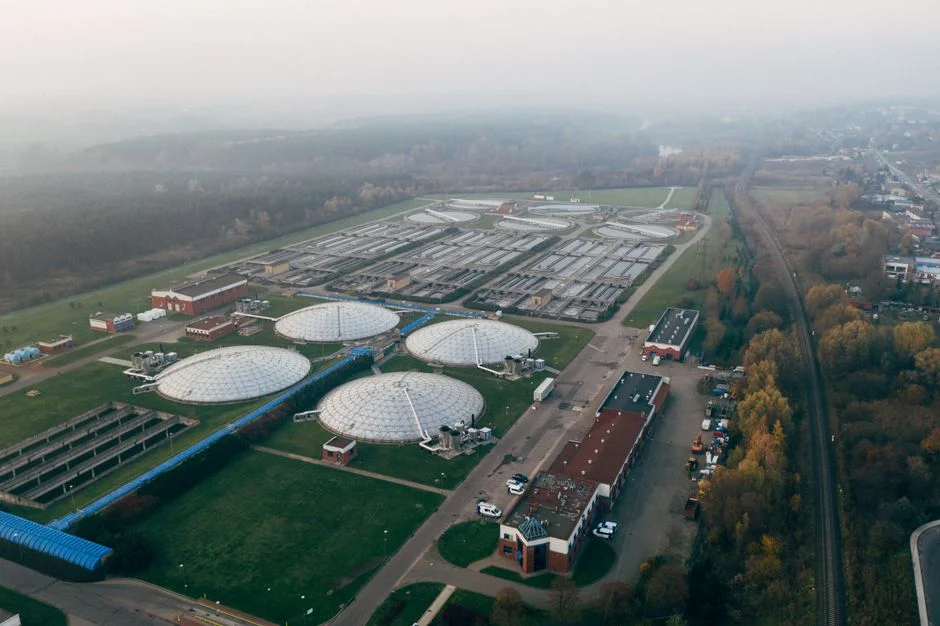
Equipment selection should follow—not precede—resolution of governing limits, stream-by-stream characterization, reliability requirements, treatment objectives, monitoring obligations, reuse criteria, and expansion assumptions. A supplier’s generic process description cannot substitute for the permit, sewer authorization, reuse authorization, or agency correspondence.
| Treatment-path question | Evidence needed before screening | Potential equipment pathway |
|---|---|---|
| Does the treatment objective require removal of suspended solids, oil and grease, FOG, or colloidal matter? | Flow, analytical profile, governing limit, and treatment objective | An industrial DAF wastewater treatment system may be technically relevant, but suitability cannot be established without the data |
| Does the stream require biological treatment and low-solids separation? | Influent chemistry, biodegradability, flow variation, solids loading, and permit or reuse criteria | An MBR membrane bioreactor for industrial wastewater may be relevant, subject to those project-specific inputs |
| Does the selected train require chemical addition or disinfection? | Treatment objective, dosing basis, monitoring requirement, and site utilities | Chemical dosing and UV systems may be components of the train, not proof of compliance |
The supplier screening package should include actual flow data, laboratory results, governing authorization, treatment objectives, site-capacity constraints, reliability and operating assumptions, monitoring provisions, scope boundaries, capital-cost assumptions, and schedule commitments. The DAF versus clarifier selection for semiconductor wastewater can support technical review, but the acquired plant’s actual wastewater profile must control.
The supplied research provides no Texas project-cost basis for a UMC acquisition. Request a scoped budget only after characterization, permit-path selection, treatment-objective definition, site-capacity review, and agency consultation. A 2026 wastewater treatment plant cost breakdown may help structure the estimate request, but it is not evidence of this plant’s cost.
Resolve closing risk and allocate liabilities in the agreement
The closing-readiness register should assign every wastewater issue to an owner, required evidence, agency action, effective date, and contract treatment. A dated record of permits, operating evidence, agency status, and unpriced liabilities is more useful than a general compliance representation.
| Register field | Required entry |
|---|---|
| Authorization | Permit or agreement number, issuing authority, authorized party, covered stream, effective date, and status |
| Approval action | Transfer, amendment, new application, revised certification, or written agency position required |
| Compliance evidence | Monitoring reports, analytical results, deviations, enforcement notices, pending correspondence, and capital plans |
| Treatment gate | Flow and contaminant basis, treatment objective, equipment scope, monitoring, reliability, and expansion assumptions |
| Closing treatment | Condition precedent, interim arrangement, post-closing covenant, or expressly allocated retained liability |
| Contract allocation | Historical violations, remediation, treatment capital, closure funding, monitoring, and future compliance responsibility |
A regulatory transfer application is not proof that approval will issue. The agreement should state conditions, sequencing, closing risk, and any interim operating arrangement. If an authorization or agency determination is unresolved, counsel should decide whether closing must wait, whether an escrow or holdback is required, and which party bears the cost of an operating contingency.
Regulatory language identifies the administrative responsible party; it does not decide which buyer bears historical violations, remediation expense, treatment capital, or closure funding. Those are underwriting and purchase-agreement issues. A written agency position should resolve uncertainty over transfers, amendments, new applications, revised certifications, and effective dates.
Closing deliverables should include the complete permit file, evidence of required approvals, updated contact information, capital plans, compliance representations, and defined responsibility for unresolved agency correspondence. The document request should cover permits, sewer agreements, plans, monitoring reports, analytical results, deviations, enforcement histories, reuse authorizations, vendor contracts, capital plans, closure estimates, and pending correspondence.
Frequently Asked Questions
What wastewater requirements apply when UMC acquires a plant in Texas?
UMC must determine the legal route for every stream: direct discharge, indirect discharge through a municipal sewer, or authorized industrial reuse. The answer depends on the site’s controlling permits, sewer agreements, Chapter 210 applicability, stream characterization, compliance history, and the transaction’s effect on the responsible party and operating configuration. A written agency position is the preferred closing evidence when transfer or amendment treatment is uncertain.
How much will wastewater treatment cost for the acquisition?
The supplied research provides no Texas-specific UMC acquisition cost, so a responsible estimate cannot be issued yet. Before requesting a scoped budget, UMC should obtain stream-level flow and analytical data, governing limits, permit-path decisions, treatment objectives, monitoring obligations, site-capacity constraints, and agency positions. Costing should then distinguish treatment equipment, reuse safeguards, sewer pretreatment and surcharges, monitoring, permitting support, interim operation, closure, and contingency.
How should treatment equipment be sized for the acquired plant?
Size from actual flow, analytical results, governing limits, treatment objectives, and operating assumptions—not from the plant’s industry label or a generic semiconductor profile. The supplier package should identify the design basis, monitoring provisions, reliability requirements, expansion assumptions, and scope boundaries so that competing proposals can be evaluated on the same technical basis.
What approval timing risk should UMC include in the closing schedule?
Require a written agency position and an approval sequence matched to the closing date. Filing a transfer application does not establish that approval will issue before closing. The purchase agreement should identify any interim operating arrangement, condition precedent, post-closing covenant, and responsible party if an authorization remains unresolved.
How should UMC select a wastewater treatment supplier?
Select against the established treatment path, not a product list. Request a path-specific technical basis, governing-limit compliance matrix, scope boundaries, monitoring provisions, capital-cost assumptions, construction and commissioning schedule, and compliance-support responsibilities. Include the plant-acquisition wastewater due diligence structure in the bid package so each proposal addresses the same diligence outputs.