
What Changes When UMC Takes Control of the Plant?
UMC's acquisition of a Malaysian plant does not, by itself, create a new wastewater category or prove that the existing permit transfers automatically. Before closing, UMC must verify the site's valid Department of Environment approval, permit holder, discharge route, receiving-authority requirements, effluent limits, monitoring programme and outstanding compliance matters. The environmental due diligence should reconcile wastewater flow, reuse, discharge and sludge records; assess each stream separately; and obtain written confirmation from the Malaysia Department of Environment and the relevant sewer, drainage or other receiving authority regarding change-of-control obligations. Any treatment upgrade must then be selected from measured flow, wastewater characteristics and permit conditions—not from the acquisition alone or a generic semiconductor assumption.
The supplied research establishes no automatic rule under which an existing Malaysian environmental approval transfers to UMC merely because ownership changes. The legal baseline is the Environmental Quality Act 1974 and the Environmental Quality (Industrial Effluent) Regulations 2009, but neither the corporate transaction nor a secondary summary determines the plant’s enforceable conditions. UMC must inspect the current site consent, applicable legislation, current DOE guidance and receiving-authority requirements.
The transaction team should identify the permit holder, approval validity, covered activity, authorised discharge point, operating conditions, monitoring duties and any change-of-control notification or consent requirement. It must also determine who becomes the continuing operator for sampling, reporting, maintenance, incident response and record retention after closing.
Pre-closing exceedances, penalties, contamination and sludge liabilities remain historical matters requiring allocation between the parties. Post-closing sampling, reporting, maintenance and permit performance become UMC’s operating responsibilities. The evidentiary distinction should be documented in the purchase agreement rather than inferred from the closing date. The Malaysia plant-acquisition wastewater due-diligence guide illustrates the same evidence-chain approach, but UMC’s own plant documents and regulator confirmations remain necessary.
Build the Regulatory Baseline Before Signing
A defensible regulatory baseline requires the complete approval chain, not only a copy of the permit’s cover page. Request the current environmental approval or licence, site plan, approved process-flow diagram, discharge coordinates and written consent. The document set should identify every discharge route and the activity covered by the consent.
Obtain all DOE correspondence, inspection reports, non-compliance notices, breach records and outstanding corrective actions. Request the complete monitoring and laboratory history rather than a selected set of recent compliant results. For each permit parameter, reconcile the sampling point, frequency, analytical method, reporting format, calibration requirement and chain-of-custody rule. The supplied research contains no UMC-specific monitoring schedule, so these requirements must come from the written consent and current authority direction.
Ask the Malaysia Department of Environment and the relevant sewer, drainage or other receiving authority to confirm in writing the approval status, any change-of-control notification or consent requirement, continuing operating conditions and unresolved matters. This is necessary because the supplied research does not identify a plant-specific approval or approve a transfer.
The legal-position map must also include sewer, drainage or other discharge agreements, connection conditions, fees, disputes, pretreatment requirements and authority correspondence. Missing documents should remain open diligence items with a named owner; an absence of correspondence must not be recorded as evidence of compliance.
| Evidence to obtain | What it establishes | Transaction owner |
|---|---|---|
| Current approval, consent, site plan, process-flow diagram and discharge coordinates | Permit holder, covered activity, authorised discharge route and site-specific conditions | Malaysian counsel and EHS |
| DOE correspondence, inspections, notices and corrective-action files | Regulatory history and unresolved permit conditions | EHS and transaction lead |
| Monitoring programme, laboratory reports and chain-of-custody records | Whether required parameters were sampled, reported and retained | EHS, laboratory and operations |
| Flow-meter records, reuse data and sludge records | The wastewater mass balance and disposal trail | Operations and instrumentation |
| Sewer, drainage or receiving-authority agreements and correspondence | Connection, pretreatment, fee, dispute and authority obligations | Counsel and engineering |
Confirm the Discharge Point and Applicable Effluent Standard
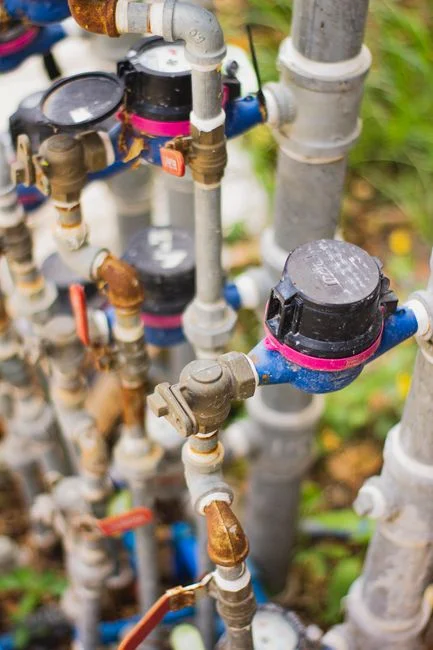
Accurate flow measurement and site assessment must precede assignment of an effluent standard. Totalmas’ 2026 industrial compliance guide identifies those as the first steps for determining the applicable standard, but its explanation is not a substitute for UMC’s current consent or confirmation from the relevant authorities.
Map the receiving water body, authorised discharge point, nearby water-supply intakes and the upstream or downstream relationship relevant to the Standard A versus Standard B assessment. Do not infer the standard from the plant’s address, corporate description or nominal production capacity.
Totalmas associates Standard A with factories upstream of water-supply intakes and Standard B with factories downstream. The supplied research gives an associated BOD value of 20 mg/L for Standard A and 50 mg/L for Standard B. These are not the complete regulatory specification for UMC’s plant and must not be used alone for equipment sizing.
Obtain DOE or receiving-authority confirmation before assigning a standard or incorporating either value into a treatment design basis. The approval schedule must control the actual parameter list, limits and monitoring obligations.
| Question | Required evidence | Decision consequence |
|---|---|---|
| Where does the authorised discharge enter? | Approved site plan, process-flow diagram, discharge coordinates and receiving-water identification | Establishes the correct regulatory context |
| Which water-supply intake relationship applies? | Upstream and downstream intake mapping confirmed by the relevant authority | Supports the Standard A or Standard B assessment |
| What does the written consent require? | Current parameter schedule, limits, sampling points, frequencies and reporting format | Controls the enforceable compliance obligation |
| What flow supports the assessment? | Calibrated flow records reconciled with discharge records | Supports classification, mass reporting and capacity assessment |
Reconcile Every Wastewater Stream and Its Evidence
The supplied research provides no UMC-specific contaminant concentrations or flow rates. Each stream must therefore be characterised by source, variability, flow, contaminants, treatment objective and responsible operator. Do not average incompatible streams into one compliance case, and do not use the site’s corporate description as a substitute for sampling.
Prepare a wastewater mass balance connecting measured inflow to on-site reuse, treatment, sewer discharge, sludge generation and any other disposal destination. The balance must reconcile daily discharge quantities, including cubic-metre and kilogram conversions where used for mass reporting, as described by Totalmas in 2026. Any unexplained route should be treated as an open compliance and capacity issue.
Check the identity, installation, units and calibration status of each flow meter, then reconcile its readings with discharge and reuse records. Nominal plant capacity is not evidence of the applicable standard. Totalmas warned in 2026 that calibration drift can create false readings or conceal a genuine exceedance.
Review sampling results, chain-of-custody records, laboratory accreditation, calibration files, inspection and maintenance records, bypass logs, exceedance assessments and corrective actions. Missing results and invalid samples require documented investigation rather than retrospective replacement.
Compare the inherited treatment train with the methods identified in Micron’s 2020 sustainability report—membrane filtration, ion-resin adsorption, precipitation, bio-oxidation and neutralisation—but assess demonstrated performance, controls and operating practices rather than unit names. The industrial ETP and DAF selection guide can structure the review, while the MBR versus conventional treatment decision tree helps test whether membrane separation fits the measured objective.
Convert Findings into Closing Conditions and Remediation
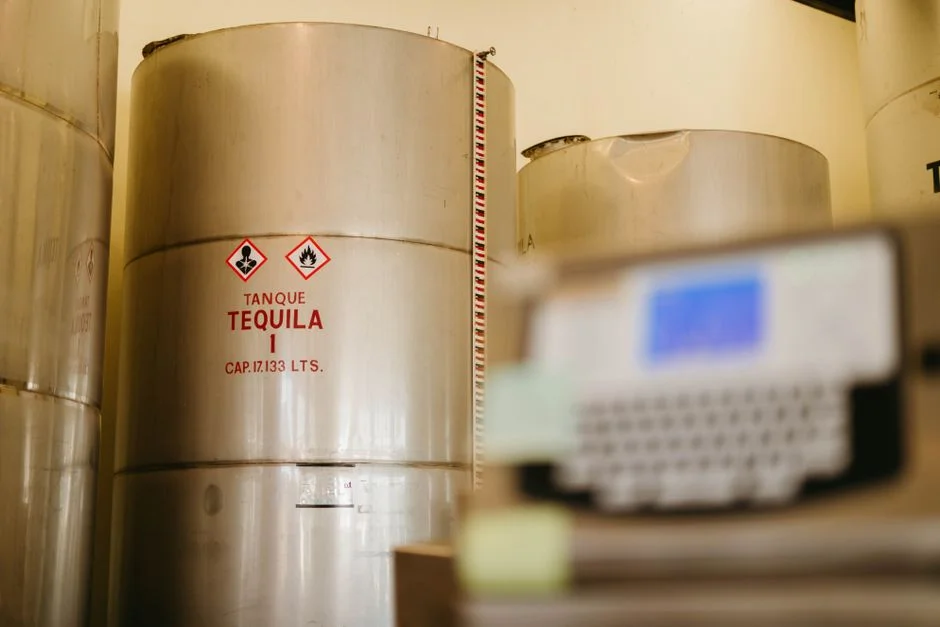
Every diligence finding should be converted into a transaction decision, a funded action or a preserved claim. Permit-critical and compliance-critical matters should become closing conditions or require an approved remediation plan with milestones, responsible parties and evidence of completion. Operational findings need funded corrective actions, while improvement-only items should remain separate so they do not obscure inherited liabilities.
The purchase agreement should disclose every environmental notice, inspection, exceedance, monitoring gap, permit breach and pending agency or receiving-authority matter, including matters that did not result in a fine. Enforcement outcomes are not a complete measure of historical environmental risk.
Allocate responsibility for pre-closing contamination, exceedances, penalties, remediation costs, sludge liabilities and third-party claims. Preserve laboratory results, flow records, calibration files, bypass logs, notices, authority correspondence and waste-disposal documents to establish the closing-date baseline.
Totalmas reports in 2026 that the Environmental Quality (Amendment) Act 2024 provides mandatory imprisonment of up to five years and fines from RM50,000 to RM10 million for pollution of inland waters. The commercial source cannot establish how those provisions apply to UMC’s site; obtain current Malaysian legal advice and regulatory confirmation rather than including an assumed penalty allocation.
| Finding class | Closing treatment | Required record |
|---|---|---|
| Permit-critical | Condition precedent, consent or approved remediation with completion evidence | Approval, authority confirmation and compliance plan |
| Compliance-critical | Condition, funded remediation, indemnity or preserved claim | Notice, exceedance record, laboratory evidence and corrective-action file |
| Operational | Post-closing capital or maintenance plan with owner and target date | Maintenance, calibration, bypass and operating logs |
| Improvement-only | Separate business case; avoid treating it as a compliance concession | Feasibility, cost and benefit analysis |
Select Treatment from Measured Problems and Permit Conditions
Treatment selection must follow the wastewater mass balance and the inherited train’s performance. For solids, oil and grease, or colloidal material, evaluate an industrial DAF system for suspended solids and oil removal. HydropureWater’s DAF range is 4–300 m³/h across 13 standard models, but those specifications do not establish the required capacity or performance at UMC’s site.
Where biological solids separation or reuse-grade polishing is required, evaluate an MBR wastewater treatment system for industrial reuse. HydropureWater’s MBR range is 10–2,000 m³/day with effluent below 1 μm. Require the supplier to demonstrate how that operating envelope relates to the measured stream and required effluent quality.
Where the objective is bacteria, colloid or suspended-solids removal without chemical addition, evaluate UF. HydropureWater’s UF range is 2,000–40,000 L/h, with 0.03 micron PVDF membranes and acceptance of up to 300 ppm turbidity. These specifications must be checked against the feed condition and system integration.
Where chemical demand is part of the objective, evaluate controlled automatic dosing. HydropureWater offers skid-mounted, PLC-controlled chemical dosing systems; the design must address chemical demand, storage, controls and containment. Where separated solids create a disposal obligation, evaluate sludge dewatering. HydropureWater’s plate and frame filter presses range from 1 m² to 500 m² filtration area, subject to measured sludge volume and solids characteristics.
| Measured trigger | Equipment to evaluate | Design basis and compliance role |
|---|---|---|
| Suspended solids, oil and grease or colloidal material | DAF | Measured contaminant profile, flow and separation objective |
| Biological solids separation or reuse-grade polishing | MBR | Feed characteristics, required effluent quality and existing-train integration |
| Bacteria, colloids or suspended solids without chemical use | UF | Particle loading, flow, membrane compatibility and operating envelope |
| Defined chemical demand | Automatic dosing system | Chemical demand, storage, control sequence and containment |
| Disposal obligation from separated solids | Plate and frame filter press | Sludge volume, solids characteristics and disposal route |
Every supplier should state its sizing inputs, performance basis, compliance role, installation boundary, commissioning evidence, O&M requirements, monitoring support and exclusions. Equipment capacity is not a compliance solution; the selected system must match measured flow, wastewater characteristics, treatment objective and permit condition.
Obtain Written Regulatory Confirmation Before Closing
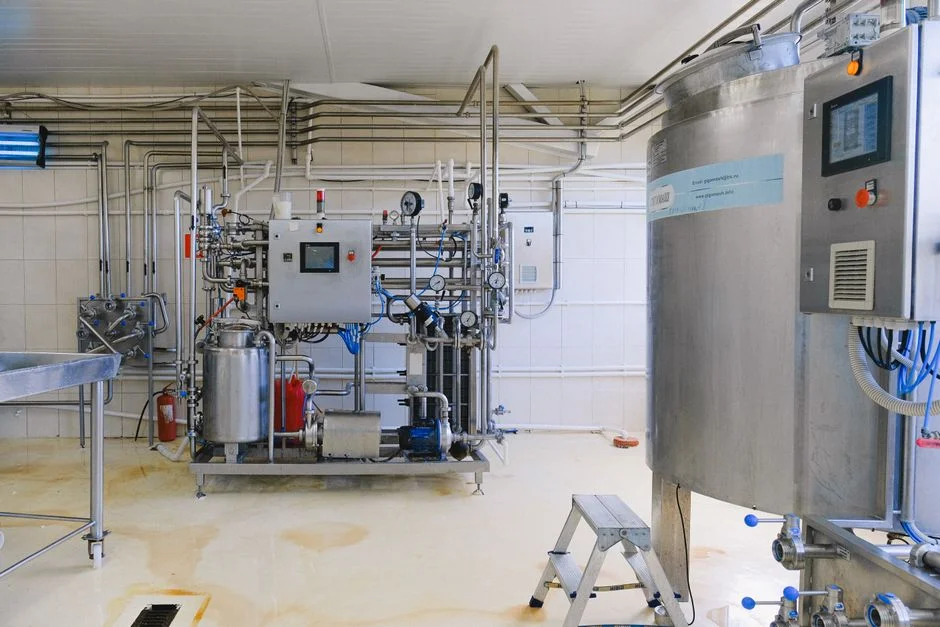
Before assuming operational responsibility, UMC should obtain written confirmation from the Malaysia Department of Environment and the relevant receiving authority regarding the existing approval, any change-of-control notification or consent, continuing operating obligations and outstanding compliance matters. The written consent, not an assumed corporate-transfer rule, should establish the enforcement baseline.
Assign custody after closing for every sample, instrument, laboratory report, authority submission and corrective action. Preserve a closing-date baseline that links flow records, results, calibration evidence, notices, bypass events and waste-disposal documents. Define escalation for missing data, invalid samples, instrument failure and suspected exceedance.
The purchase agreement and post-closing cooperation plan should address regulator access, document preservation, consent-transfer analysis, required filings and remediation. Missing information should remain an explicit condition or risk allocation; it should not be treated as evidence that no obligation exists.
Frequently Asked Questions
Does UMC’s existing Malaysian environmental approval transfer automatically after the acquisition?
No automatic transfer rule is established by the supplied research. UMC should obtain written confirmation from the Malaysia Department of Environment and the relevant receiving authority regarding the existing approval, any change-of-control notification or consent, continuing operating conditions and outstanding matters.
What information is needed to price a wastewater treatment upgrade?
Request current wastewater analyses, measured flow, permit conditions, drawings, site constraints, installation scope and future production plans. The research does not support a reliable acquisition-specific price. A supplier should separate equipment sizing, civil works, controls, commissioning, validation, O&M assumptions and exclusions in its quotation.
How should UMC size treatment rather than relying on nameplate throughput?
Select the system from measured flow, contaminant profile, treatment objective, permit condition, existing-train integration and monitoring role. Characterise each stream first, then define the required unit process and its interface with the inherited system. Nameplate capacity alone establishes neither classification nor compliance.
What should UMC require from wastewater equipment suppliers?
Ask each supplier to state its sizing inputs, performance basis, compliance role, installation boundary, commissioning evidence, O&M requirements, monitoring support and exclusions. Require proof that the proposed operating range fits UMC’s measured feed and that performance will be demonstrated through accepted commissioning tests.
How should historical exceedances affect the transaction?
UMC should require disclosure of every exceedance, monitoring gap, notice, permit breach and pending authority matter, whether or not it resulted in a fine. Allocate pre-closing liability, preserve the closing-date record and obtain current Malaysian legal advice on any enforcement exposure, including the reported 2024 penalties.
Related Equipment
- MBR wastewater treatment system for industrial reuse — specifications, capacity range, and technical data