Start with the development’s treatment duty, not a product name
The best-fit packaged sewage treatment plant for a Kuwait City housing development is the system that meets measured peak flow, wastewater characteristics, the approved effluent destination and the reuse plan—not a universal model. An underground A/O package is a candidate where a compact, buried and automated installation is the priority. MBR is a candidate where tighter solids separation, reuse requirements or footprint constraints justify added complexity. MBBR has Kuwait precedent, but final selection still requires current permit review, influent testing, hydraulic modelling and supplier guarantees.
Do not size the plant from the number of housing units alone. Establish wastewater generation by development phase, then identify the design peak, minimum operating condition and any seasonal or phased variation. The EJournal Publishing study Multi-criteria Assessment of Onsite Packaged Wastewater Treatment Systems states that onsite systems operate under significant variations in influent quantity and quality, so suitability must be assessed before installation and operation.
Request a current characterization covering flow, BOD, COD, suspended solids, fats, oil and grease, pH, temperature, salinity or TDS, and any substances relevant to the proposed reuse or discharge route. Confirm with the relevant Kuwait authority whether final effluent will enter a sewer, support permitted reuse, be applied under a controlled route, or follow another approved pathway.
| Design input | Evidence required before screening |
|---|---|
| Hydraulic duty | Phase-by-phase wastewater generation, design peak, minimum operating condition, infiltration and groundwater assumptions |
| Organic and solids load | Measured flow, BOD, COD and suspended solids |
| Local wastewater characteristics | Fats, oil and grease, pH, temperature, salinity or TDS and project-specific contaminants |
| Final effluent route | Current permit, receiving authority, reuse destination and applicable discharge or reuse conditions |
Veolia’s Kuwait deployment used distributed package plants to reduce the extent of the sewer network, lower capital cost and provide deployment flexibility, according to its project announcement. Those benefits do not remove the need to test the sewage, model the site and verify the receiving route. The underground WSZ packaged sewage treatment plant and integrated MBR membrane bioreactor should therefore be screened against the same project inputs.
Use Kuwait precedent to narrow the viable technology set
Veolia’s Kuwait program demonstrates that packaged biological treatment can be deployed across multiple housing communities without relying on one central plant. The program covered 53 units: 23 AnoxKaldnes MBBR package plants with a combined treatment capacity of 17,000 m³/day in Sabah Al Ahmad City, 27 package plants totalling 23,000 m³/day in West Abdullah City and three provisional units at other locations, as stated in Veolia Water Technologies’ project announcement.
The wider treatment scope included Multiflo clarification, Hydrotech drum filters, UV disinfection and Hubgrade digital monitoring with remote reporting. Veolia also reported that the first units would be delivered in early 2021 and all 53 units would be delivered in less than 12 months. These facts establish a Kuwait deployment and delivery precedent for MBBR, not a universal configuration for another development.
For a Kuwait City housing project, the transferable lesson is architectural: treatment can be distributed in compact packages, with network extent reduced and deployment sequenced around community growth. The non-transferable details are the unit count, aggregate capacity, treatment train, price and schedule. Those must be established for the actual site and phased wastewater demand.
MBBR remains credible where a supplier can provide relevant Kuwait or comparable hot-climate operating evidence, defined guarantees and a defensible process basis. The Veolia evidence is stronger than a generic product claim because it identifies the process, project scope, number of units, capacities and delivery program. It still does not establish that the same package would be optimal for a smaller or differently phased Kuwait City site.
Compare underground A/O, MBR and MBBR for housing applications
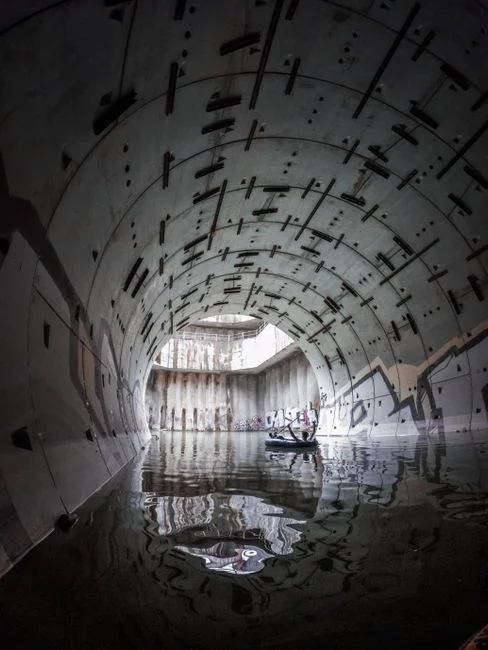
The three main packaged architectures differ in process complexity, physical arrangement and the evidence needed to justify selection. The appropriate comparison is therefore between project requirements and supplier guarantees, not a universal ranking.
For the WSZ series, HydropureWater specifies a capacity range of 1–80 m³/h and an integrated sequence comprising anoxic/aerobic biological contact oxidation, sedimentation and disinfection in a buried package. Its deployment characteristics include below-grade installation with landscaping above, fully automated operation without a dedicated operator, and applicability to residential communities and other decentralized treatment applications.
For the integrated MBR membrane bioreactor, HydropureWater specifies 10–2,000 m³/day. The system combines activated sludge with submerged PVDF membrane filtration, and the supplier describes the resulting filtration as sub-micron. This configuration is attractive where compactness and tighter solids separation matter, although membrane maintenance, pretreatment, fouling control, power and replacement provisions must be included in the lifecycle assessment.
| Architecture | Published configuration | Screening emphasis |
|---|---|---|
| Underground A/O | WSZ range of 1–80 m³/h; anoxic/aerobic contact oxidation, sedimentation and disinfection in a buried package | Buried footprint, automated operation, residential application, influent and reuse compatibility |
| MBR | 10–2,000 m³/day; activated sludge plus submerged PVDF membrane filtration; supplier-described sub-micron filtration | Solids separation, reuse or footprint value, membrane maintenance and power requirements |
| MBBR | Kuwait reference: 23 AnoxKaldnes MBBR packages at 17,000 m³/day in Sabah Al Ahmad City and 27 packages at 23,000 m³/day in West Abdullah City | Relevant deployment evidence, biological loading, hydraulics, controls, media and performance guarantees |
MBBR should not be selected simply because Kuwait has a major reference program. For a specific development, the supplier must demonstrate that its proposed configuration matches the submitted influent data, flow regime, site constraints and effluent duty. Likewise, MBR should not be selected solely because its filtration specification sounds more advanced; the required reuse or discharge outcome must justify the added process and maintenance obligations.
Include clarification, filtration and UV disinfection only where the reuse or discharge pathway requires them. Veolia’s Kuwait scope included Hydrotech drum filters and UV disinfection, but the Veolia Water Technologies announcement does not make those stages automatic requirements for every housing package.
Verify capacity through a staged design workflow
Capacity becomes verifiable only after the design basis, process checks and site constraints are closed. Six stages provide an auditable route from concept to procurement.
- Establish the wastewater-generation basis. Compile the development’s wastewater demand, occupancy assumptions, phasing, infiltration or groundwater assumptions, design peak and minimum operating condition.
- Characterize the influent. Implement a sampling program and determine whether concentrations, temperature, salinity, TDS, fats, oil and grease or other substances fall outside ordinary domestic-sewage assumptions.
- Check each process train. Compare the supplier’s guaranteed capacity, hydraulic retention, biological loading, solids separation, disinfection and reuse performance against the verified duty.
- Resolve site constraints. Confirm excavation, access, traffic loading, groundwater, noise, odour control, power availability, backup power and sludge removal.
- Confirm approvals before ordering. Establish the permit path and receiving authority. The 2023 EJournal Publishing Sulaibiya study found that its RO-reject stream met Kuwait Environment Public Authority requirements except for BOD, TDS and total phosphate, demonstrating that a different stream can remain non-compliant even when other parameters pass.
- Write performance into the supply contract. Require commissioning, performance testing, operator training, spare-parts support and remote or local monitoring provisions.
| Stage | Required decision record |
|---|---|
| Hydraulic basis | Approved flow dataset, phasing schedule and design conditions |
| Influent characterization | Sampling plan, analytical results and load calculations |
| Process verification | Hydraulic and biological checks, solids separation, disinfection and reuse or discharge assessment |
| Site and construction review | Civil access, excavation, groundwater, utilities, drainage, odour, noise and sludge-removal plan |
| Regulatory check | Permit route, receiving authority and applicable current conditions |
| Commissioning | Acceptance test, training record, monitoring arrangement and warranty deliverables |
The process flow should cover influent collection; screening or pretreatment; biological treatment; clarification or membrane separation; disinfection where required; final reuse or discharge; and controlled sludge removal. Equipment such as a rotary mechanical bar screen or UV sterilizer should appear only where the selected train and receiving route justify it.
Select the supplier and commercial structure that reduces delivery risk
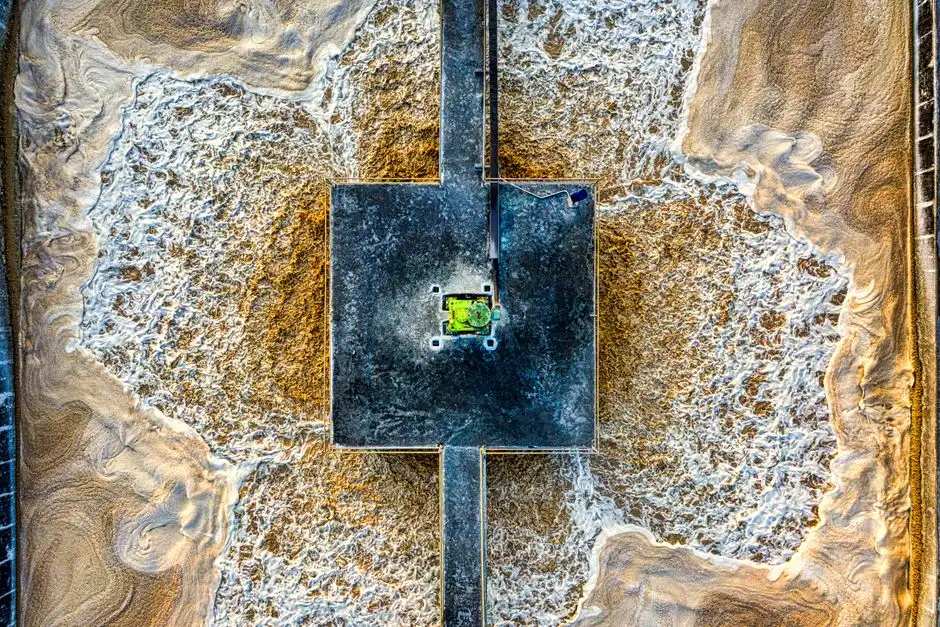
A technically suitable package still becomes a poor procurement if its scope, guarantees or schedule are unclear. Require the supplier to commit to a guaranteed design flow supported by the submitted influent data, rather than a population estimate or marketing description.
Ask each bidder to disclose the proposed unit count, treatment capacity per unit, process stages, disinfection method, controls, monitoring, installation method and commissioning acceptance criteria. Request evidence of Kuwait or comparable hot-climate deployments. The Veolia record demonstrates a major Kuwait MBBR program, but supplier-specific claims must be checked against project references and commissioning records.
Request a price breakdown separating equipment, civil works, installation, commissioning, power and control systems, sludge handling, monitoring, training, spares and warranty support. The supplied research contains no verified packaged-plant price for a Kuwait City housing development, so a defensible budget must come from site-specific quotations using the same scope across bidders.
The Veolia delivery program is a schedule benchmark, not a promised lead time: its company announcement reported first deliveries in early 2021 and all 53 units in less than 12 months. The Kuwait packaged wastewater treatment buyer’s guide provides a useful structure for comparing commercial scope, but final assumptions must be verified against current site, permit and supplier information.
Contractual guarantees should cover effluent performance, mechanical completion, the demonstration period, fault response, spare-parts availability and training. Do not accept performance statements that omit the influent basis, flow condition, sampling method or receiving requirement. That would make compliance untestable when the plant operates under the project’s actual conditions.
Match the treatment route to the reuse and discharge outcome
The selected treatment route must follow the water’s final destination. A sewer connection, irrigation reuse, another reuse application and controlled disposal impose different treatment and documentation duties, so the receiving authority must be identified before process selection is frozen.
Veolia’s Kuwait program included Multiflo clarification, Hydrotech drum filters and UV disinfection, with treated effluent intended for irrigation according to the company announcement. Those stages demonstrate what was included in that project; they do not automatically define the treatment train for another development.
Do not assume biological treatment alone satisfies a reuse specification. Clarification, filtration and disinfection should be assessed against the intended application and current permit conditions. For example, the UV disinfection package is relevant only if the approved reuse or discharge route requires that barrier.
The 2023 Sulaibiya RO-reject study reinforces the need to assess each waste stream independently: the sampled brine met Kuwait Environment Public Authority requirements except for BOD, TDS and total phosphate. Its possible routes included deep-well injection, seawater discharge, sewer disposal and land application, showing why the receiving pathway must be defined rather than inferred.
Likewise, any stated reuse advantage of packaged treatment is a design objective to verify. The supplier should identify the monitored parameters, intended use, applicable conditions and evidence needed to demonstrate compliance.
Make the final selection against one decision matrix
A defensible recommendation results from scoring the same requirements across all candidates, with permitability and guaranteed performance carrying more weight than headline price. Use the matrix after the design inputs are complete; before then, it is a screening tool rather than a procurement award.
| Decision criterion | Evidence to score | Decision weight |
|---|---|---|
| Flow and load | Guaranteed performance against measured and phased duty | Mandatory |
| Effluent and reuse | Treatment train tied to the approved destination | Mandatory |
| Site and climate | Civil works, groundwater, access, power, noise and odour controls | High |
| Footprint and automation | Installed arrangement, controls and monitoring | High |
| Service and spares | Local response, training, spares and warranty support | High |
| Delivery and capital cost | Comparable quotations and a committed programme | High after mandatory pass |
| Lifecycle operation | Maintenance, sludge removal, power, consumables and media or membrane obligations | High |
The practical starting hypothesis is WSZ underground A/O for a standard residential installation seeking a buried, compact and automated solution; MBR where tighter solids separation, reuse or footprint value supports the additional process complexity; and MBBR where the supplier can demonstrate relevant deployment and guarantees. Confirm that hypothesis through the matrix, current approvals and site-specific design before naming the selected plant.
Frequently Asked Questions
How much does a packaged sewage treatment plant cost for a Kuwait City housing development?
No verified packaged-plant price is available in the supplied research for this specific development, so an unsupported budget range would be misleading. Request site-specific quotations with the same defined scope: equipment, civil works, installation, commissioning, power and controls, sludge handling, monitoring, training, spares and warranty support. Compare those quotations against the selected process, guaranteed flow and delivery programme.
Should a housing development choose WSZ underground A/O or packaged MBR?
Start with WSZ underground A/O when the project prioritizes a buried, compact, automated package and the reuse or discharge route does not require the tighter solids separation associated with MBR. Choose MBR only where the specified effluent duty, reuse plan or footprint constraint justifies membrane filtration and the associated pretreatment, maintenance, power and replacement obligations. Verify either decision against the influent testing and current permit conditions.
How many packaged treatment units are needed for a Kuwait housing project?
The unit count depends on the measured design peak, each package’s guaranteed duty, minimum operating condition and development phasing. The Veolia Water Technologies announcement provides reference deployments—23 MBBR packages at 17,000 m³/day and 27 packages at 23,000 m³/day—but these cannot be transferred to another site. Require the supplier to calculate the count from the project flow dataset and state the operating rationale for standby or staged capacity.
What evidence should a wastewater supplier provide before being shortlisted?
Ask for a guaranteed flow and load basis, the complete process train, disinfection method, controls and monitoring, installation method, commissioning criteria and contractual warranty. Request relevant Kuwait or comparable hot-climate references, a site-specific commercial breakdown and a delivery programme. Treat the Veolia MBBR deployment as external precedent; verify each bidder’s own record separately.
Can treated sewage from a Kuwait City housing development be reused for irrigation?
Possibly, but biological treatment alone is not sufficient evidence of irrigation compliance. Confirm the permitted reuse route and required treatment train with the relevant Kuwait authority, then verify the final effluent against current reuse conditions. Veolia’s Kuwait announcement describes irrigation reuse supported by clarification, drum filtration and UV disinfection, but that project scope must be adapted to the development’s actual destination and permit.